• Skip to primary navigation
  • Skip to main content
  • Skip to primary sidebar

Earth Wise

A look at our changing environment.

  • Home
  • About Earth Wise
  • Where to Listen
  • All Articles
  • Show Search
Hide Search
You are here: Home / Archives for fly

fly

Can birds outfly climate change?

July 8, 2025 By EarthWise Leave a Comment

Birds cannot outfly climate change

As global temperatures continue to rise and ecosystems shift, animals are left with limited options. They must either adjust to the changing conditions in their habitats or relocate to cooler environments. For many species, neither choice is easy – or sometimes even possible.

Ecologists had long assumed birds were among the most adaptable species in a warming world simply because they can fly to higher altitudes or towards global poles. But a new study by researchers from Yale University found that even birds are struggling to stay ahead of rising global temperatures.

The study, which was recently published in the journal Nature Ecology and Evolution, analyzed 20 years of data from 406 bird species across North America. They found that while most birds did shift their ranges northward – by about 40 to 50 miles on average during the summer – the changes weren’t enough to keep up with the rapid pace of climate change.

Birds still experienced significant warming in their new areas when compared with temperatures in their original home range.  In fact, warming was about 1.35 degrees Celsius more in summer, and a striking 3.7 degrees more in winter. And some species, especially those with limited flight ranges or specific habitat needs, like the cactus wren, didn’t move at all.

Highly mobile birds like the blue-winged warbler did better, avoiding nearly two degrees of warming by traveling more than 100 miles north. But even they couldn’t completely dodge the heat.

The findings raise serious concerns about whether less mobile species can survive in a warming world, and underscores the urgent need to better understand and manage those most vulnerable to climate-driven extinction.

**********

Web Links

Even birds can’t outfly climate change

Photo, posted March 1, 2023, courtesy of Henry via Flickr.

Earth Wise is a production of WAMC Northeast Public Radio
The Plight Of Monarch Butterflies | Earth Wise

April 20, 2022 By EarthWise Leave a Comment

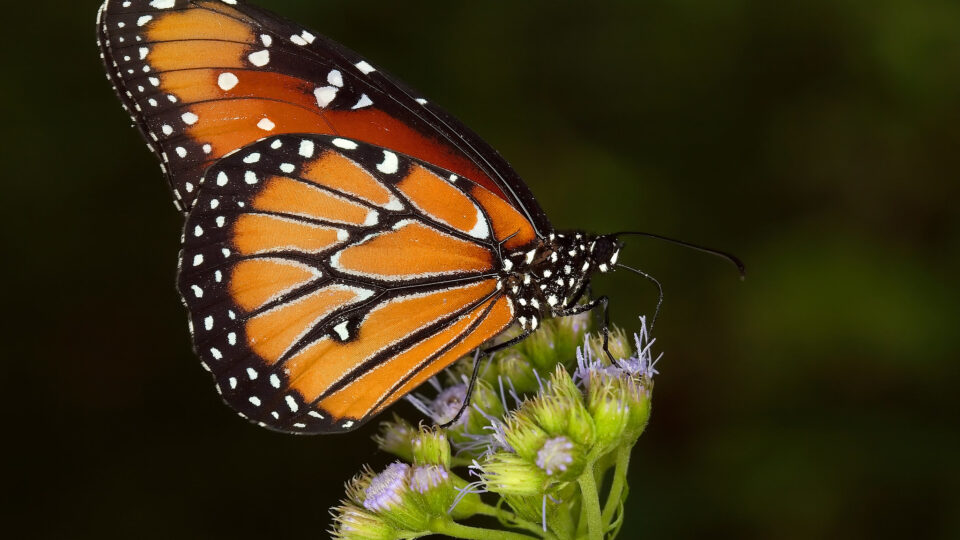
The monarch butterfly is one of the world’s best-known butterflies and has become the symbol for a whole class of imperiled pollinators.  Populations of the iconic orange-and-black insects have declined dramatically in recent decades. 

According to the U.S. Fish and Wildlife Service, the eastern monarch population has dropped 88% between 1996 and 2020.  Habitat loss, pesticide use, and global climate change are some of the factors driving monarch butterfly population declines. 

According to a new study led by scientists at Emory University, monarch butterflies are also increasingly plagued by a debilitating parasite.  The study, which was recently published in The Journal of Animal Ecology, reviewed 50 years of data on the infection rate of wild monarch butterflies by the protozoan Ophryocystis elektrosirrha (or O.E.).  The research team found that the O.E. infection rate had increased from less than 1% of the eastern monarch population in 1968 to as much as 10% today.

The O.E. parasite invades the gut of monarch caterpillars.  If the adult butterfly leaves the pupal stage with a severe parasitic infection, it begins oozing fluids from its body and dies. If the infection is lighter and the butterfly survives, it will not fly as well or live as long as uninfected butterflies.  

The study found that one of the contributors to the rise in parasitism is the increased density of monarchs in places where they lay their eggs.  The increased density may be due to several factors, including the loss of habitat, the widespread planting of non-native milkweed, and by people raising large numbers of monarchs in confined spaces. 

If the infection rate continues to increase, monarch butterfly populations will likely continue to plummet. 

**********

Web Links

Monarch butterflies increasingly plagued by parasites

Plight of the Monarch

Saving The Monarch Butterfly

Photo, posted September 18, 2008, courtesy of Roy Niswanger via Flickr.

Earth Wise is a production of WAMC Northeast Public Radio.

The Spotted Lantern Fly Is A Big Problem | Earth Wise

October 27, 2021 By EarthWise Leave a Comment

The spotted lantern fly poses a big threat to agriculture

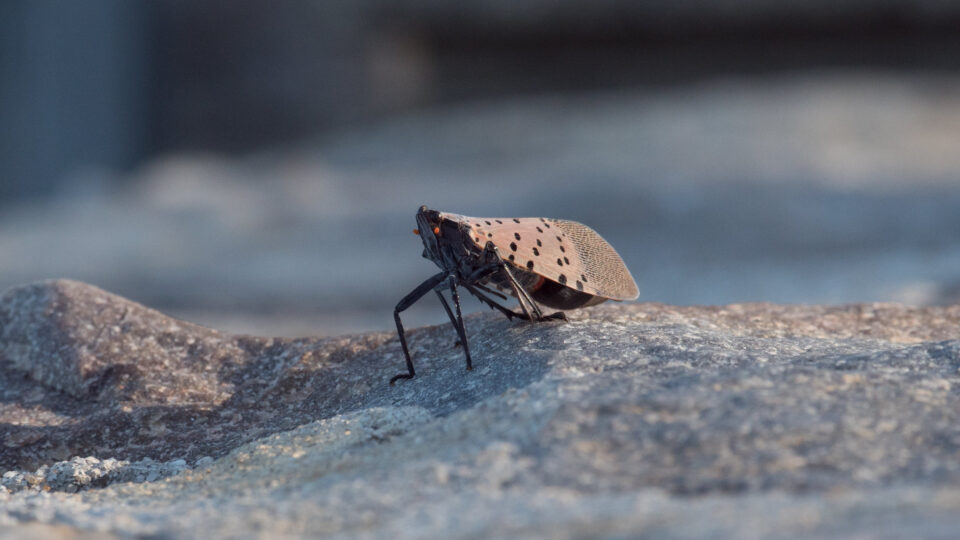
The spotted lanternfly is an invasive pest from Asia that arrived in the United States seven years ago.  It is a handsome and colorful insect, but it feeds on the sap of more than 70 plant species, leaving them susceptible to disease and destruction from other natural antagonists.  It destroys fruit crops, trees, and plants by hopping from plant to plant, crop to crop, and tree to tree.

Several states have established quarantines aimed at preventing the spread of the insects.  Pennsylvania, where they were first detected in the U.S., issued an Order of Quarantine and Treatment that imposes fines and even potential criminal penalties on anyone who intentionally moves a spotted lanternfly, at any stage of its life, from one sort of location to another.  The insects hop and fly only short distances, but they can hitch a ride on vehicles, clothing, and other objects that people bring with them.  They have now spread to at least nine states, primarily in the Northeast.

Lanternflies arrived in New York City last year and quickly made it to the Most Wanted List for environmentalists.  The City’s Parks Department says: “If you see a spotted lanternfly, squish it, dispose of it, and report it to us.”  New York’s Department of Agriculture has asked people in the Finger Lakes region, home of numerous vineyards, to collect specimens and provide specifics on where they were found.

Lanternflies are harmless to humans, but they threaten everything from oak, walnut, and poplar trees to grapes, almonds, and fruit orchards.  As the species continues to spread across the country, federal and state officials have a unified message:  if you come across a spotted lanternfly, kill it.

**********

Web Links

Die, Beautiful Spotted Lanternfly, Die

Photo, posted August 30, 2018, courtesy of the USDA via Flickr.

Earth Wise is a production of WAMC Northeast Public Radio.

Air Travel And Global Warming

September 25, 2017 By EarthWise Leave a Comment

https://earthwiseradio.org/wp-content/uploads/2017/09/EW-09-25-17-Air-Travel-and-Global-Warming.mp3

Air travel is pretty carbon intensive.  For those of us who take plane trips, it represents a substantial part of our individual carbon footprints. It isn’t that plane travel is inefficient fuel-wise on a miles-per-gallon-per-passenger basis compared with driving, for example.  It is just that we go so much farther on planes.   Currently, aviation accounts for only a few percent of overall carbon emissions, but that is changing for two reasons.

[Read more…] about Air Travel And Global Warming

Primary Sidebar

Recent Episodes

  • An uninsurable future
  • Clean energy and jobs
  • Insect declines in remote regions
  • Fossil fuel producing nations ignoring climate goals
  • Trouble for clownfishes

WAMC Northeast Public Radio

WAMC/Northeast Public Radio is a regional public radio network serving parts of seven northeastern states (more...)

Copyright © 2026 ·