• Skip to primary navigation
  • Skip to main content
  • Skip to primary sidebar

Earth Wise

A look at our changing environment.

  • Home
  • About Earth Wise
  • Where to Listen
  • All Articles
  • Show Search
Hide Search
You are here: Home / Archives for fishing gear

fishing gear

Lots of female turtles

November 3, 2023 By EarthWise Leave a Comment

Climate change threatening the future of green sea turtles

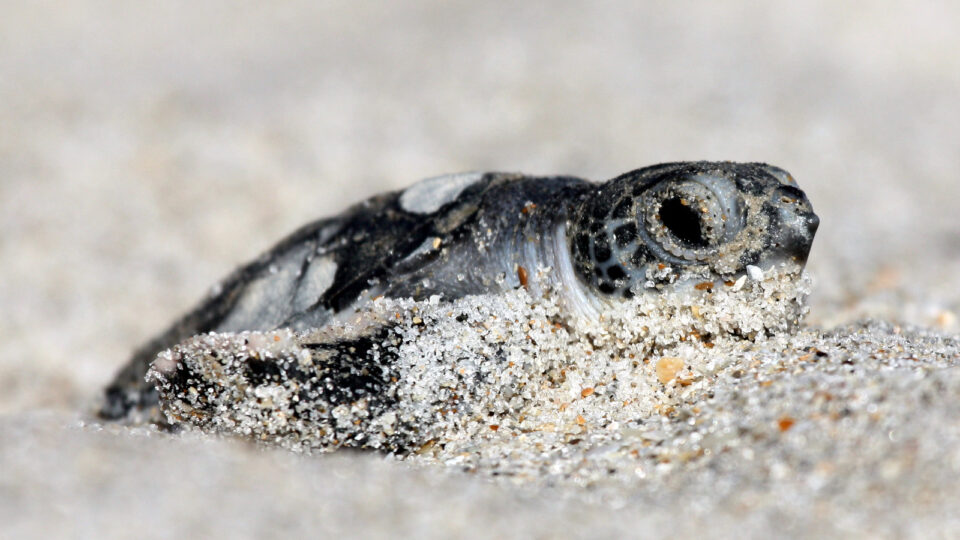
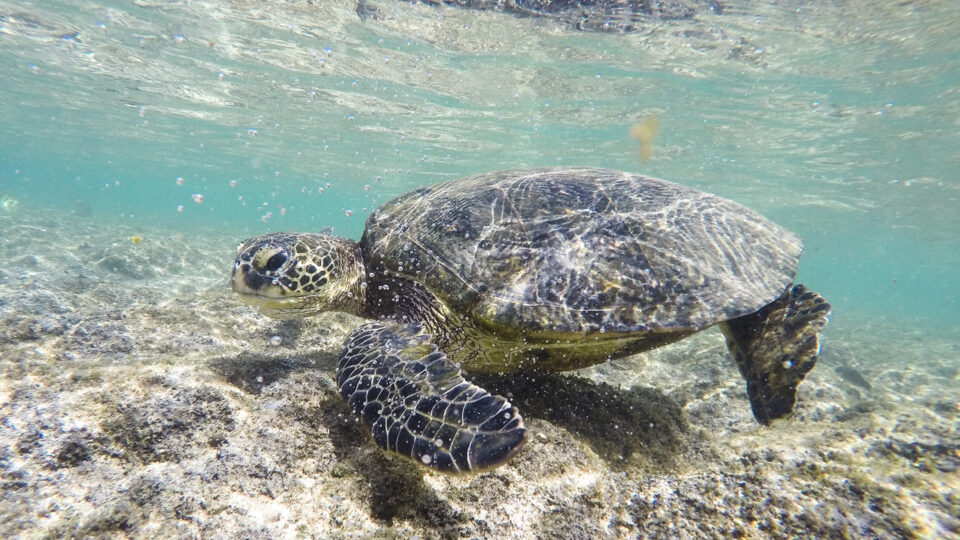
Green sea turtles were listed under the Endangered Species Act in 1978.  Since that time, there have been conservation measures put in place in many locations.  One such place is Florida, where restrictions on beachfront development and careful monitoring of turtle nests has helped to get hatchlings safely into the water.  A gill net ban in 1995 sharply reduced the number of young turtles killed by fishing gear.

All of this has resulted in what is described as an explosion in turtle populations in Florida.  Volunteers monitoring the 2023 nesting season on Florida’s beaches have counted more than 74,000 nests.  That beats the previous record – set in 2017 – by an incredible 40%.

Unfortunately, this does not represent a guaranteed great future for the species.  Sea turtles are particularly sensitive to the warming climate.  The sex of a baby sea turtle is not determined by DNA, but rather by the temperature of the sand in which its egg develops.  Cooler temperatures mean more males; warmer ones mean more females.

In recent years, the proportion of male green sea turtles has dwindled substantially.  In the past few seasons, between 87 percent and 100 percent of the hatchlings tested in Florida have been female.

In the short term, the skewed sex ratio might be a boon for the species.  Lots of females laying lots of eggs means lots of turtles.  Sea turtles don’t reach sexual maturity until their twenties or thirties.  So, for the next few decades, there are likely to be growing numbers of turtle nests.  But down the line, there is going to be a real problem.  Where will for all the female turtles find the mates to populate the species in the future?

**********

Web Links

Florida Turtle Nests Are Recovering. When They Hatch, Expect Mostly Girls.

Photo, posted October 5, 2011, courtesy of Keenan Adams / USFWS via Flickr.

Earth Wise is a production of WAMC Northeast Public Radio
Lighted Nets Protect Marine Wildlife | Earth Wise

March 16, 2022 By EarthWise Leave a Comment

Adding light to marine nets to protect wildlife

Gillnets are walls or curtains of netting that hang in the water to trap fish.  They are one of the most extensively used fishing gear in coastal regions throughout the world’s oceans.  While they are very effective at catching targeted fish species, they are not discriminating.  As a result, they carry significant risk of bycatch – the accidental capture of unwanted species as well as other interactions with various marine animals.

Researchers from The Wildlife Conservation Society, NOAA Fisheries, Arizona State University, and the National Fisheries and Aquaculture Institute of Mexico have recently published a study showing that using lighted gillnets reduced overall bycatch by 63%, including a 95% reduction in sharks, skates, and rays, and an 81% reduction in Humboldt squid. 

Gillnets often catch endangered, threatened, and protected species such as sharks, sea turtles, marine mammals, and seabirds, as well as unwanted species and non-marketable juvenile target fish species.  The bycatch animals are often dead or injured and are generally dumped overboard.

Illuminating gillnets with LED lights has emerged over the past decade as an effective tool to reduce bycatch of endangered sea turtles.  The new study is the first detailed examination of the effectiveness of illumination for other vulnerable species.

Gillnets are ubiquitous because they are inexpensive and catch everything that passes them.  Global populations of sharks, skates, and rays have declined as a result of bycatch and illegal fishing. The results of this study are encouraging because they provide a practical solution for increasing the selectivity of gillnets and avoiding bycatch. 

**********

Web Links

Lighted Nets Dramatically Reduce Bycatch of Sharks and Other Wildlife While Making Fishing More Efficient

Photo, posted September 19, 2015, courtesy of Jim Bahn via Flickr.

Earth Wise is a production of WAMC Northeast Public Radio.

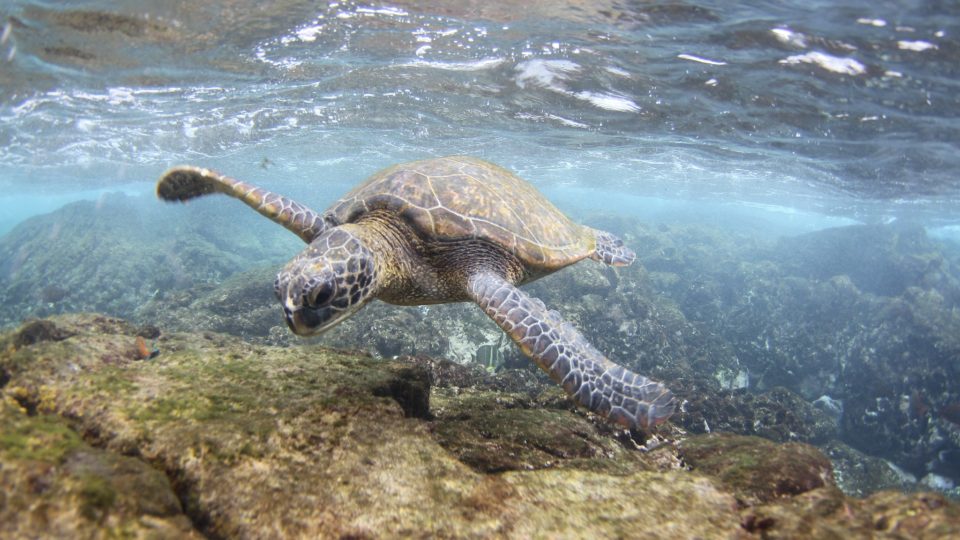
Keeping Lights On For Turtles

August 8, 2019 By EarthWise Leave a Comment

Gillnets are one of the most common types of fishing gear and are used extensively in most places where people fish for food.  They operate by suspending a wall of netting in the water column.

Unfortunately, they are not selective in the species they catch.  Sea turtles are one of the most common bycatch species that become entangled in these nets.  When turtles are caught in gillnets, they can drown and die.  Marine mammals, seabirds, and sharks are also frequently caught in gillnets.

Recently, researchers have been experimenting with illuminating the nets with LED lights to see if increasing net visibility reduces sea turtle bycatch.

Studies in Mexico show green sea turtle bycatch is reduced between 40-60% with no changes in target catch.  Studies in Peru show green sea turtle bycatch is reduced between 65-80% with no changes in target catch.  Studies in Indonesia show green olive ridley, and hawksbill sea turtle bycatch is reduced by 60% with increases in target catch and catch value.

Recent research shows that net illumination also reduces bycatch of other protected species such as seabirds, sharks and rays, as well as dolphins and porpoises.

The use of illuminated gillnets could prove beneficial to both sea turtles and fisherman by reducing the bycatch that can damage fishing gear. 

Studies are now underway off the coast of North Carolina, where state gillnet fisheries are carefully managed to reduce turtle bycatch.  Initial studies show that net illumination does not change target catch rates and may even decrease the bycatch of unwanted fish species.  When it comes to protecting sea turtles, it looks like a good idea to keep the lights on.

**********

Web Links

Illuminated Nets Could Provide A Brighter Future For Sea Turtles

Photo, posted June 2, 2016, courtesy of NOAA via Flickr.

Earth Wise is a production of WAMC Northeast Public Radio.

Where Does The Plastic Go?

October 15, 2018 By EarthWise Leave a Comment

https://earthwiseradio.org/wp-content/uploads/2018/09/EW-10-15-18-Where-Does-Plastic-Go.mp3

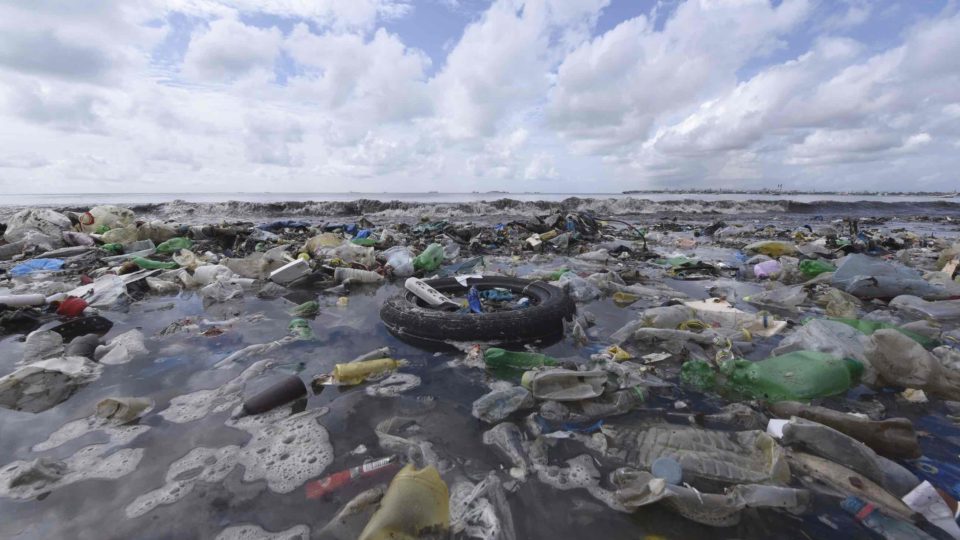
The glut of plastic in the oceans is a global problem.  About 9 million tons of plastic enter the oceans each year.  Much of it is discarded fishing gear, plastic bags, and other macroscopic objects.  But a great deal of it is in the form of microplastics or small particles.  Some microplastics come from cosmetics and other products containing them but a lot of them are the result of larger plastic objects breaking down into small particles.

[Read more…] about Where Does The Plastic Go?

The Great Pacific Garbage Patch

May 9, 2018 By EarthWise Leave a Comment

https://earthwiseradio.org/wp-content/uploads/2018/04/EW-05-09-18-The-Great-Pacific-Garbage-Patch.mp3

The Great Pacific Garbage Patch is the world’s largest collection of floating trash.  It lies between California and Hawaii and is popularly described as being larger than Texas.  It was discovered in 1997 by a yachtsman who sailed through a mess of floating plastic bottles and other debris while on a voyage between Hawaii and Los Angeles.

[Read more…] about The Great Pacific Garbage Patch

North Atlantic Right Whales

January 12, 2018 By EarthWise Leave a Comment

https://earthwiseradio.org/wp-content/uploads/2017/12/EW-01-12-18-North-Atlantic-Right-Whales.mp3

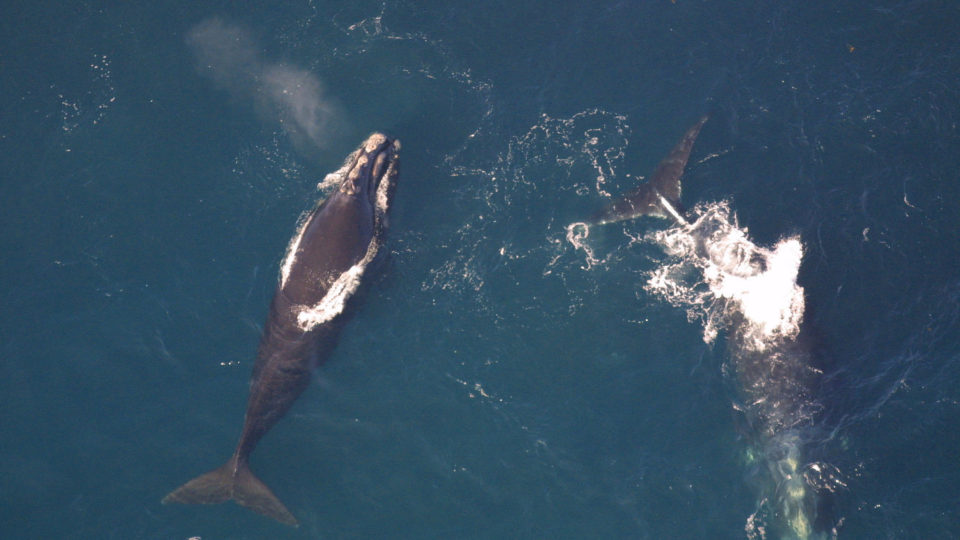
North Atlantic right whales are one of the rarest marine mammals in the world.  In fact, according to the National Oceanic and Atmospheric Administration, there are only about 450 of the whales left.  Measuring approximately 50 feet long and weighing close to 100,000 pounds, North Atlantic right whales are now more critically endangered than mountain gorillas, black rhinos, and giant pandas.

[Read more…] about North Atlantic Right Whales

Primary Sidebar

Recent Episodes

  • An uninsurable future
  • Clean energy and jobs
  • Insect declines in remote regions
  • Fossil fuel producing nations ignoring climate goals
  • Trouble for clownfishes

WAMC Northeast Public Radio

WAMC/Northeast Public Radio is a regional public radio network serving parts of seven northeastern states (more...)

Copyright © 2026 ·