• Skip to primary navigation
  • Skip to main content
  • Skip to primary sidebar

Earth Wise

A look at our changing environment.

  • Home
  • About Earth Wise
  • Where to Listen
  • All Articles
  • Show Search
Hide Search
You are here: Home / Archives for field

field

A sustainable and climate-friendly food

November 22, 2024 By EarthWise Leave a Comment

Researchers predict that climate change will negatively impact the yield and nutritional quality of most staple food crops, including rice, corn, and soybeans, due to factors like extreme weather events, rising temperatures, and altered precipitation patterns, potentially leading to reduced food security globally.   

As a result, many experts contend that alternative food sources – like insect farming and seaweed aquaculture – are part of the solution.  Additionally, expanding production of climate resilient food crops will also have an important role to play in global food security.

According to a new international study led by researchers from University of Vienna in Austria, chickpeas – also known as garbanzo beans – are a drought-resistant legume plant with a high protein content that can help combat food insecurity amid climate change.

In the study, which was recently published in the journal Plant Biotechnology, the researchers investigated the natural variations of different chickpea genotypes and their resistance to drought stress and achieved promising results.  The research team managed to grow many different chickpea varieties under drought stress in a field experiment outside of Vienna. The results demonstrate that chickpeas are a great alternative legume plant that can complement grain farming systems in urban areas.

The study highlights how the decline of plant genetic diversity poses a major threat to plant productivity and harvests.  In fact, while there are approximately 7,000 edible crops, two-thirds of global food production is based on just nine crop species. 

According to the research team, highly nutritious and drought-resistant legumes such as chickpeas are a “food of the future.”

**********

Web Links

Chickpeas – sustainable and climate-friendly foods of the future

Photo, posted March 21, 2020, courtesy of Ajay Suresh via Flickr.

Earth Wise is a production of WAMC Northeast Public Radio

Water from thin air

September 6, 2024 By EarthWise Leave a Comment

Creating drinking water from thin air

The Earth’s atmosphere contains enormous amounts of water.  Being able to efficiently and economically extract some of it to provide drinking water would be extremely beneficial to the billions of people across the globe who face chronic water shortages.

There are existing technologies for atmospheric water harvesting – or AWH.  But there are downsides associated with size, cost, and efficiency.   A new device developed by mechanical engineering researchers at the University of Utah has the potential to provide a new drinking water source in arid places.

The device is a compact, rapid-cycling, fuel-fired AWH device.  It relies on adsorbent materials that draw water molecules out of non-humid air and then applies heat to release those molecules into liquid form.

Hygroscopic materials are those that have an affinity for water and soak it up at every opportunity.  Such materials are used, for example, in disposable diapers.  The Utah device makes use of metal organic frameworks, which have enormous amounts of surface area on the molecular scale.

The initial work on the Utah device targeted a small compact water generation unit for soldiers in the field.  Instead of lugging around a large canteen filled with water, the small unit can produce water on demand.  The prototype was able to produce 5 liters of water per day per kilogram of adsorbent material.  Within three days in the field, the system outperforms packing water.  The heat required to precipitate the liquid water was provided by a standard-issue Army camping stove.

Non-military needs are the ultimate application for the device.  The researchers have applied for a patent for what they hope will be a potential solution to a persistent global problem.

*********

Web Links

Producing water out of thin air

Photo, posted August 9, 2012, courtesy of Enid Martindale via Flickr.

Earth Wise is a production of WAMC Northeast Public Radio
Detecting dangerous chemicals with plants

December 11, 2023 By EarthWise Leave a Comment

Researchers developing a method to detect toxins using plants

Researchers at University of California Riverside have been studying how to enable plants to sense and react to a chemical in the environment without damaging their ability to function in all other respects.  Why do this?  The idea is to be able to use plants as environmental sensors that can detect the presence of harmful substances.

The impetus for the work is presence of a protein in plants that senses a plant hormone called abscisic acid (or ABA) that helps plants acclimate to environmental changes.  During drought, plants produce ABA causing the plant to produce ABA receptor proteins that close pores in its leaves and stems, keeping in moisture.

The UCR researchers demonstrated that these ABA receptor proteins can be trained to bind to chemicals other than ABA.  This ability enabled them to create sensors for many chemicals, including banned pesticides.

In their recent publication, they demonstrated a green plant that turns bright red in the presence of azinphos-ethyl, a banned pesticide.  The goal is to easily detect chemicals in the environment from a distance.  A field of these plants would provide an obvious visual indicator of the use of a banned pesticide.  The researchers also demonstrated the ability to turn a variety of yeast into a sensor that could respond to two different chemicals at the same time.

Ultimately, it would be extremely valuable to design plants that sense dozens of chemicals to they could be used as living sensors that persist for years and provide environmental information.  The sensor plants are not being grown commercially at this time.  That will require regulatory approvals that are likely to take years.  But the discovery opens up real possibilities.

**********

Web Links

Plants transformed into detectors of dangerous chemicals

Photo, posted August 29, 2013, courtesy of the United Soybean Board via Flickr.

Earth Wise is a production of WAMC Northeast Public Radio
Corn Ethanol And The Climate | Earth Wise

March 29, 2022 By EarthWise 1 Comment

Corn ethanol hurts - not helps - the planet

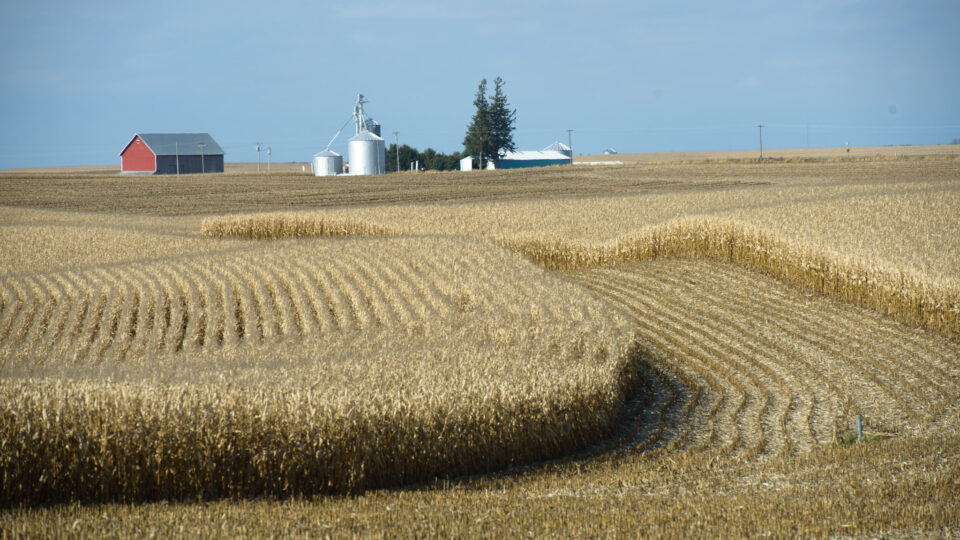
The Renewable Fuel Standard legislation, first passed in 2005 and updated in 2007, requires billions of gallons of renewable fuel to be added to the country’s transportation fuel supplies.  It created the world’s largest biofuels program.

The standard was hailed as a major victory for the climate as well as a way to reduce our dependence upon foreign oil.

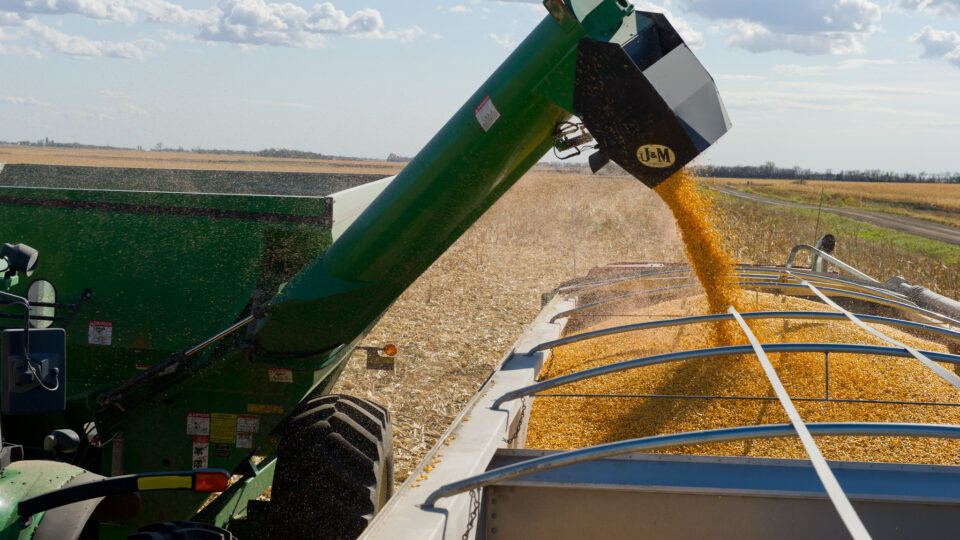
The intent of the legislation was to encourage various forms of renewable fuels – especially cellulosic ethanol from plant and wood fiber – to become an increasing part of the fuel mix.  That has yet to happen.  Instead, corn ethanol has been the backbone of the program.

Back in 2007, the EPA determined that ethanol from corn would lead to a 20% reduction in greenhouse gases compared to gasoline.  But the next year, a study published in the journal Nature projected that corn ethanol would double greenhouse gas emissions over 30 years because demand for corn would drive farmers to plow up increasing amounts of carbon-rich forest and grassland.

A new study published by researchers at the University of Wisconsin, Madison, has again concluded that corn-based ethanol may actually be worse for the climate than fossil-based gasoline as well as having other environmental downsides.  According to the study, since the fuel standard was passed, farmers have expanded corn production on nearly 7 million acres each year, causing the conversion of lands to cropland.  The result is that the carbon intensity of corn ethanol could be as much as 24% higher than gasoline.

The issue is still being debated in Congress, but if these results are verified, the time has come to revamp the terms of the renewable fuel standard.

**********

Web Links

Corn-Based Ethanol May Be Worse For the Climate Than Gasoline, a New Study Finds

Trots den höga effektiviteten leder inte vissa patienter som tar läkemedlet till en förbättring av erektion. Detta beror på felaktig användning av medicinen eller på att ED helt enkelt är en följd online apotek viagra av en annan sjukdom. I sådana fall är det obligatoriskt att konsultera och undersöka en läkare.

Photo, posted October 23, 2011, courtesy of the United Soybean Board via Flickr.

Earth Wise is a production of WAMC Northeast Public Radio.

Accelerating Sugarcane Growth

September 21, 2018 By EarthWise Leave a Comment

https://earthwiseradio.org/wp-content/uploads/2018/09/EW-09-21-18-Accelerating-Sugarcane-Growth.mp3

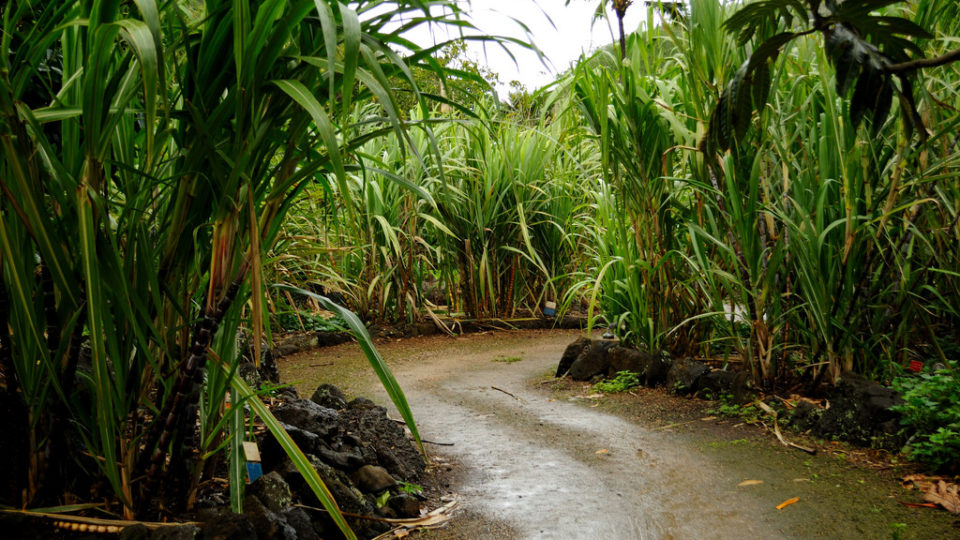
Brazil is the world’s second largest producer of ethanol fuel behind the United States.  More than that, it has the first sustainable biofuel economy, which is based on sugarcane ethanol, not corn ethanol.  It is sustainable because of Brazil’s advanced agri-industrial technology and its enormous amount of arable land.   Furthermore, producing sugarcane ethanol is far more energy-efficient than corn ethanol. It actually makes energy sense to produce it.

[Read more…] about Accelerating Sugarcane Growth

Primary Sidebar

Recent Episodes

  • An uninsurable future
  • Clean energy and jobs
  • Insect declines in remote regions
  • Fossil fuel producing nations ignoring climate goals
  • Trouble for clownfishes

WAMC Northeast Public Radio

WAMC/Northeast Public Radio is a regional public radio network serving parts of seven northeastern states (more...)

Copyright © 2026 ·