• Skip to primary navigation
  • Skip to main content
  • Skip to primary sidebar

Earth Wise

A look at our changing environment.

  • Home
  • About Earth Wise
  • Where to Listen
  • All Articles
  • Show Search
Hide Search
You are here: Home / Archives for february

february

Marine Heat Waves | Earth Wise

August 17, 2023 By EarthWise Leave a Comment

Marine heat waves are devastating

In late July, the ocean temperature measured in Florida Bay, between the southern end of the Florida mainland and the Florida Keys, was 101.1 degrees Fahrenheit, a possible world record for sea surface temperature.  There is no official record keeping for ocean temperatures, but the highest previous reading ever reported was 99.7 degrees in the middle of Kuwait Bay in 2020. 

What is going on is a marine heat wave and marine heat waves can last for weeks, months, or even years.  The current Gulf of Mexico marine heat wave has been present for several months, beginning in February or March.  Experimental forecasts by the National Oceanic and Atmospheric Administration say the extreme ocean temperatures in the area may persist through at least October.

The ocean absorbs 90% of the excess heat associated with global warming.  Therefore, marine heat waves all over the planet are becoming warmer over time.  The current marine heat wave would likely have occurred even without climate change, but because of it, the event is extraordinarily warm.

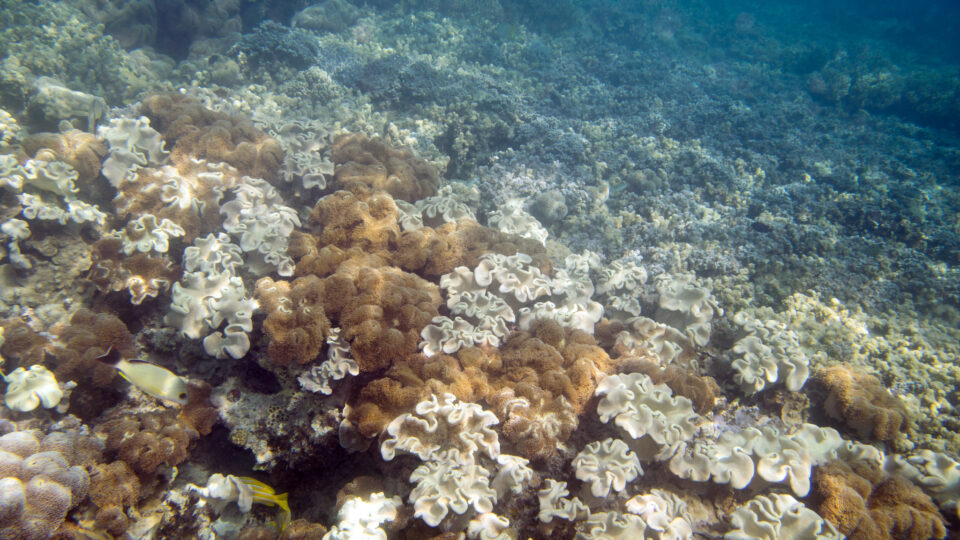
Marine heat waves cause stress to corals and other marine ecosystems.  Exposure to extreme temperatures for long periods of time causes corals to eject the algae that live inside of them, resulting in white or pale coral.  This coral bleaching leaves the coral without food and will ultimately kill it.

In general, extreme heat can be destructive and deadly for marine ecosystems.  A massive marine heat wave known as “the Blob” took hold in 2013-2016 in the northeastern Pacific Ocean and led to an ecological cascade of fishery collapses, toxic algal blooms, and record numbers of humpback whale entanglements.

**********

Web Links

The ongoing marine heat waves in U.S. waters, explained

Photo, posted December 25, 2016, courtesy of Paul Asman and Jill Lenoble via Flickr.

Earth Wise is a production of WAMC Northeast Public Radio
Spring Is Coming Earlier In Britain | Earth Wise

March 1, 2022 By EarthWise Leave a Comment

Climate change is causing spring to arrive earlier

The United Kingdom has some of the most detailed records of seasonal changes anywhere in the world.  Since the 18th century, observations of seasonal changes have been recorded by scientists, naturalists, amateur and professional gardeners, and organizations such as the Royal Meteorological Society.  Researchers at two British institutions have collected and collated these records into a database they call Nature’s Calendar, which currently has about 3.5 million records going back to 1736.

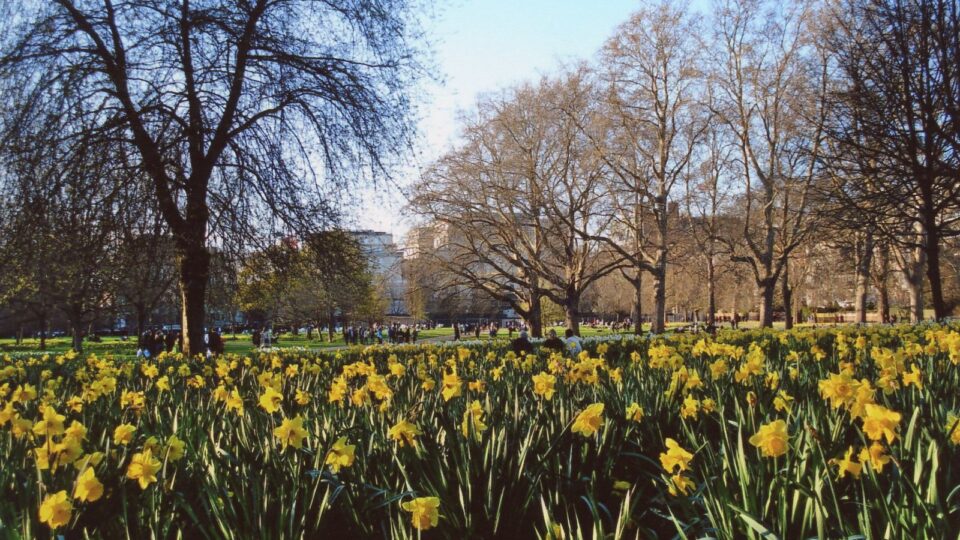
By analyzing more than 400,000 observations of 406 plant species in Nature’s Calendar, they found that the average first flowering date from 1987 to 2019 is a full month earlier than the average from 1753 to 1986.  The change correlates very well with rising global temperatures.

The ecological risks associated with earlier flowering times are high.  When plants flower too early, a late frost can kill them – a phenomenon most gardeners have experienced at some point or another.  Beyond that, plants, insects, birds, and other wildlife have co-evolved to be synchronized with plants in their development stages.  A certain plant flowers and attracts a certain kind of insect, which then attracts a particular kind of bird, and so on.  If plants get out of sync with the animals in the ecosystem and the animals can’t change their behavior quickly enough, it can lead to species collapse.

If global temperatures continue to increase at their current rate, spring in the UK could eventually start in February, creating serious problems for many of the species that inhabit forests, gardens, and farms.  The dangers of climate change are not just about extreme weather.

**********

Web Links

UK plants flowering a month earlier due to climate change

Photo, posted February 1, 2012, courtesy of Mandy via Flickr.

Earth Wise is a production of WAMC Northeast Public Radio.

Climate Change And The Winter Olympics | Earth Wise

February 8, 2022 By EarthWise Leave a Comment

Climate change is threatening winter sports

According to a new study led by researchers from the University of Waterloo in Canada, climate change will limit where the Winter Olympics can be held as winter changes across the Northern Hemisphere. 

The international research team found that by the end of the century only one of the 21 cities that have previously hosted the Winter Olympics would be able to reliably provide fair and safe conditions for winter sports if global greenhouse gas emissions are not dramatically reduced. 

However, if the emissions targets set forth in the Paris Climate Agreement can be reached, the number of climate-reliable host cities for the Winter Olympics would jump to eight.

In the study, which was recently published in the journal Current Issues in Tourism, the researchers reviewed historical climate data from the 1920s to today, as well as future climate change scenarios for the 2050s and 2080s.  The researchers also surveyed international athletes and coaches, and found that 89% of them felt that changing weather patterns are already affecting competition conditions. 

The average February daytime temperature of host cities has been steadily increasing.  At the winter games held between the 1920s and 1950s, the average temperature was 32.7°F.  It rose to 37.6°F at games between the 1960s and 1990s, and has spiked to 43.3°F in the games held in the twenty-first century.  The planet is projected to warm another 3.6°F to 7.9°F this century depending on our ability to mitigate greenhouse gas emissions.

Reducing global greenhouse gas emissions is critical to ensure that there remain places across the globe to host the Winter Olympics.

**********

Web Links

Climate change threatens future Winter Olympics

Photo, posted February 21, 2010, courtesy of Michael via Flickr.

Earth Wise is a production of WAMC Northeast Public Radio.

Cold And Snow From Global Warming

April 4, 2018 By EarthWise Leave a Comment

https://earthwiseradio.org/wp-content/uploads/2018/04/EW-04-04-18-Cold-from-Global-Warming.mp3

The Arctic has been experiencing record warm temperatures and record low sea ice levels.  During February, there were nine days in a row with temperatures averaging 27 degrees above normal and often above freezing.  Over the previous 20 years, there were only two previous readings above freezing in February – once in 2011 and once last year.

[Read more…] about Cold And Snow From Global Warming

Primary Sidebar

Recent Episodes

  • An uninsurable future
  • Clean energy and jobs
  • Insect declines in remote regions
  • Fossil fuel producing nations ignoring climate goals
  • Trouble for clownfishes

WAMC Northeast Public Radio

WAMC/Northeast Public Radio is a regional public radio network serving parts of seven northeastern states (more...)

Copyright © 2026 ·