• Skip to primary navigation
  • Skip to main content
  • Skip to primary sidebar

Earth Wise

A look at our changing environment.

  • Home
  • About Earth Wise
  • Where to Listen
  • All Articles
  • Show Search
Hide Search
You are here: Home / Archives for expedition

expedition

Return Of The Fin Whale | Earth Wise

August 15, 2022 By EarthWise Leave a Comment

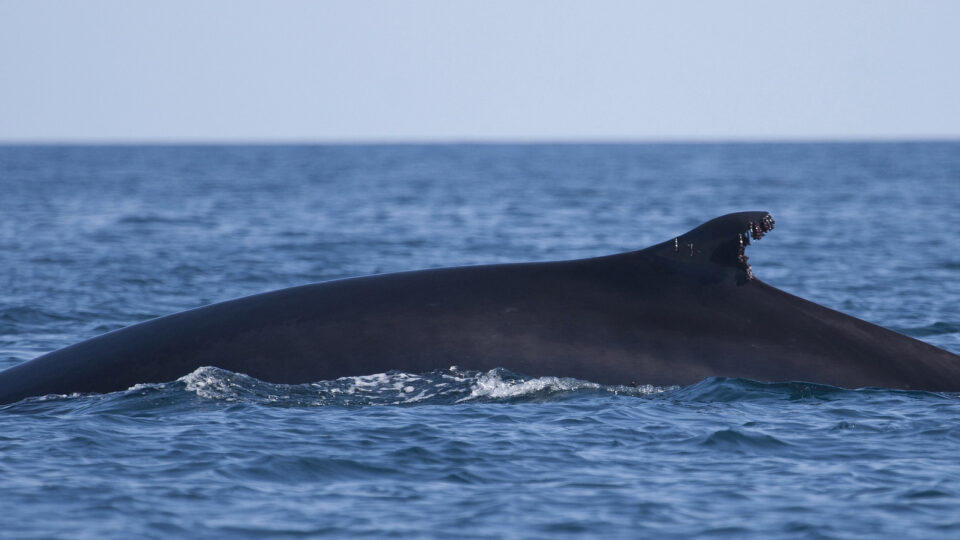
Fin whales making a comeback

The fin whale is the second largest whale species and therefore the second largest creature on Earth.  They can grow to more than 80 feet in length.  From 1904 to 1976, there was massive industrial whaling in the Southern Ocean surrounding Antarctica.  During that period, whalers killed about 700,000 fin whales, reducing their population by 99%.  The species was nearly extinct.

In 1982, the International Whaling Commission voted to ban commercial whaling.  Since that time, fin whales started to make a comeback in their historical feeding grounds.

During a nine-week expedition in the waters around the Antarctic Peninsula, researchers encountered the largest gathering of fin whales ever documented.  About 150 fin whales were seen diving and lunging against the water’s surface.  It was a feeding frenzy triggered by large amounts of krill in the water.  The actions of the whales are known as a “whale pump” that drives the krill to the surface.  Not only does it provide huge amounts of food for the whales but also for other animals, including seabirds and seals.

Forty years after the commercial whaling ban, the number of fin whales has been increasing.  Large groups were observed in a 2013 survey.  Aerial surveys in 2018 and 2019 recorded 100 groups of fin whales, usually composed of a just a handful of individuals.  They did document eight large groups of up to 150 individuals.

Not all species of whales have rebounded so successfully since the whaling ban.  The rebound in fin whale population is not only good for the whales, but for the entire ecosystem in the Southern Ocean.  It is a glimmer of good news in a time of great challenges for global biodiversity and for marine life in particular.

**********

Web Links

Once Facing Extinction, Massive Fin Whales Have Returned to Antarctic Waters

Photo, posted November 15, 2007, courtesy of Gregory Smith via Flickr.

Earth Wise is a production of WAMC Northeast Public Radio.
The ‘Biggest Ever’ Arctic Expedition

October 3, 2019 By EarthWise Leave a Comment

The Arctic is warming faster than any other region on Earth.  In fact, it’s warming at a rate of almost twice the global average.  And, since what happens in the Arctic doesn’t stay in the Arctic, the world is already feeling the effects: rising sea levels, changes in climate and precipitation patterns, increasing severe weather events, and so on. 

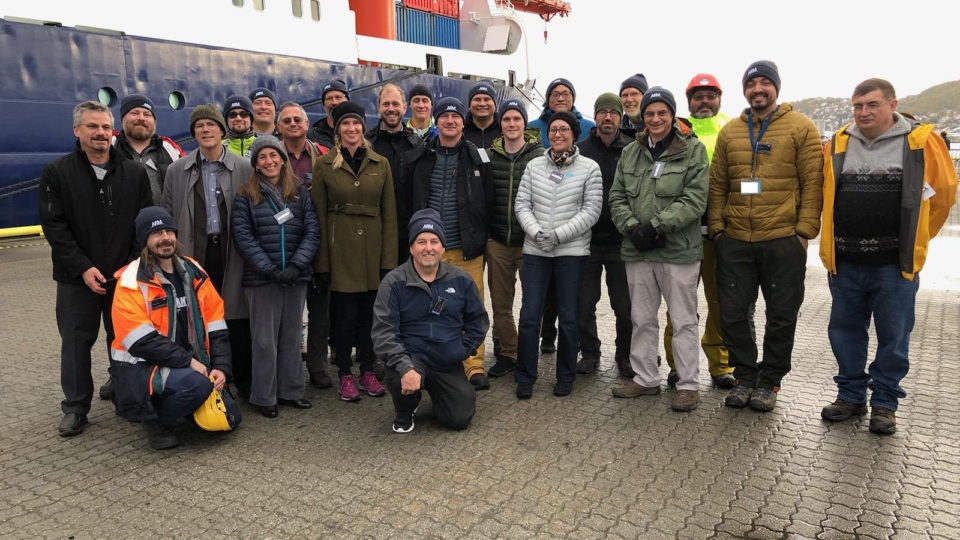
As a result, researchers from more than a dozen countries have launched the biggest and most complex expedition ever attempted in the Arctic.  They plan to freeze Germany’s largest research vessel, the Polarstern, into Arctic sea ice, where it will remain trapped for twelve months.  The ship will drift with the sea ice as the sea ice drifts.  The vessel will serve as a research laboratory, hosting a rotating crew of 300 scientists.  The ice, the ocean, the atmosphere, and even the wildlife will all be sampled.  This year-long journey will give researchers their closest look at how the polar climate and its fragile ecosystems are changing. 

Led by the Alfred Wegener Institute for Polar and Marine Research in Germany, the Multidisciplinary drifting Observatory for the Study of Arctic Climate project (or MOSAiC) is expected to cost about $150 million. 

One major goal of MOSAiC is to improve strikingly uncertain climate projections for the Arctic.  Climate models disagree on how much more the Arctic will warm as the concentration of greenhouse gases in the atmosphere rises and sea ice shrinks.  Some project a 5ºC rise by 2100 relative to the 1986-2005 average.  Others predict a 10ºC increase. 

Understanding the complex processes occurring in the Arctic is essential for projecting the future impacts of climate change. 

**********

Web Links

Climate scientists prepare for largest ever Arctic expedition

Climate change: Polarstern leaves for ‘biggest ever’ Arctic expedition

Image courtesy of the U.S. Department of Energy Atmospheric Radiation Measurement (ARM) user facility.

Earth Wise is a production of WAMC Northeast Public Radio.

Wildlife Rediscoveries

March 30, 2017 By EarthWise

https://earthwiseradio.org/wp-content/uploads/2017/03/EW-03-30-17-Wildlife-Rediscoveries-1.mp3

We recently brought you the rediscovery story of cave squeakers.  These tiny frogs, known for their high-pitched whistling calls, were native to the mountainous region of eastern Zimbabwe but had not been seen since 1962.  That all changed in late 2016, when researchers found four cave squeakers, confirming that after 58 years the species was not extinct.  Cave squeakers remain critically endangered according to the IUCN’s Red List of Endangered Species. 

[Read more…] about Wildlife Rediscoveries

Primary Sidebar

Recent Episodes

  • An uninsurable future
  • Clean energy and jobs
  • Insect declines in remote regions
  • Fossil fuel producing nations ignoring climate goals
  • Trouble for clownfishes

WAMC Northeast Public Radio

WAMC/Northeast Public Radio is a regional public radio network serving parts of seven northeastern states (more...)

Copyright © 2026 ·