• Skip to primary navigation
  • Skip to main content
  • Skip to primary sidebar

Earth Wise

A look at our changing environment.

  • Home
  • About Earth Wise
  • Where to Listen
  • All Articles
  • Show Search
Hide Search
You are here: Home / Archives for europeans

europeans

Redefining the perfect beach

April 30, 2025 By EarthWise Leave a Comment

Resort developers are rethinking what constitutes a perfect beach

The iconic image of the “perfect” tropical beach is fine white sand, a few coconut palm trees, a gently sloping beach, and unobstructed views of the blue sea.  This image came about to a great extent from fascination with Polynesian scenery at the time of World War II.   And because of this imagery, beach resorts around the world have tried to achieve this look, often by reengineering and altering natural ecosystems to meet this artificial standard of perfection.

But natural tropical and subtropical beaches with their mangrove forests and seagrass meadows are complex ecosystems that support biodiversity, provide protection from storms, and capture carbon in significant amounts from the atmosphere.

With all this relandscaping of beaches, by the end of the 20th century, 35% of the world’s mangrove forests and 29% of its seagrasses were gone.  Mangroves sequester 10 times more carbon than mature tropical forests and sea grass can pull in up to 15 times as much.

In recent years, some resort developers are starting to embrace having beachscapes in their more natural states.  They are planting or preserving native vegetation and allowing sea grass to flourish.  The Six Senses Laamu resort in the Maldives, a major luxury tourist destination, was a trendsetter in this way. 

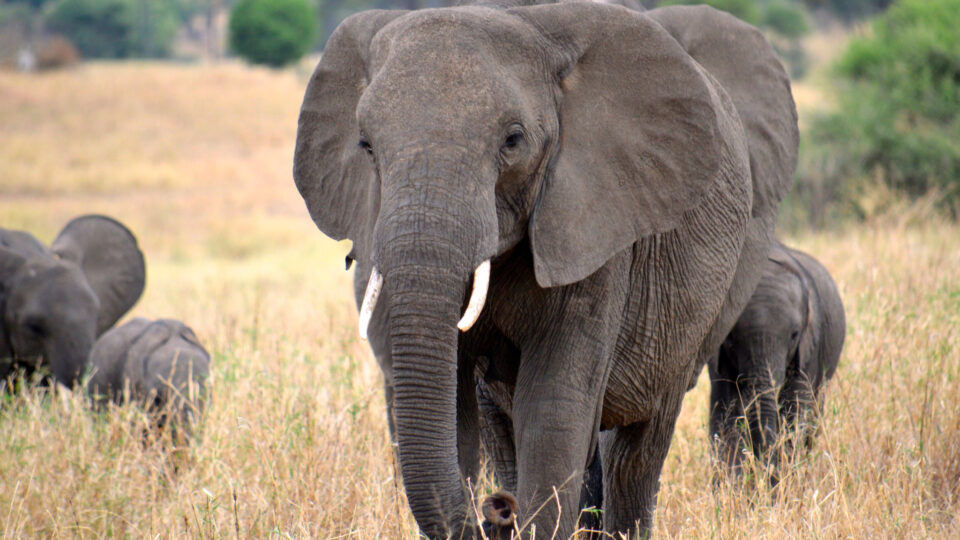
Coconut palms do little to prevent sand erosion, block wind, or even provide much shade.  In a warming world with increasingly powerful storms, they offer little protection for the world’s beaches.  They are not even native to the Caribbean, where they are now ubiquitous, having been introduced by Europeans.

Many resort developers are now rethinking the description of the perfect beach.

**********

Web Links

Your Resort’s ‘Perfect’ Beach Is a Lie

Photo, posted March 2, 2011, courtesy of Breezy Baldwin via Flickr.

Earth Wise is a production of WAMC Northeast Public Radio
Manatees are not Florida natives

December 20, 2024 By EarthWise 1 Comment

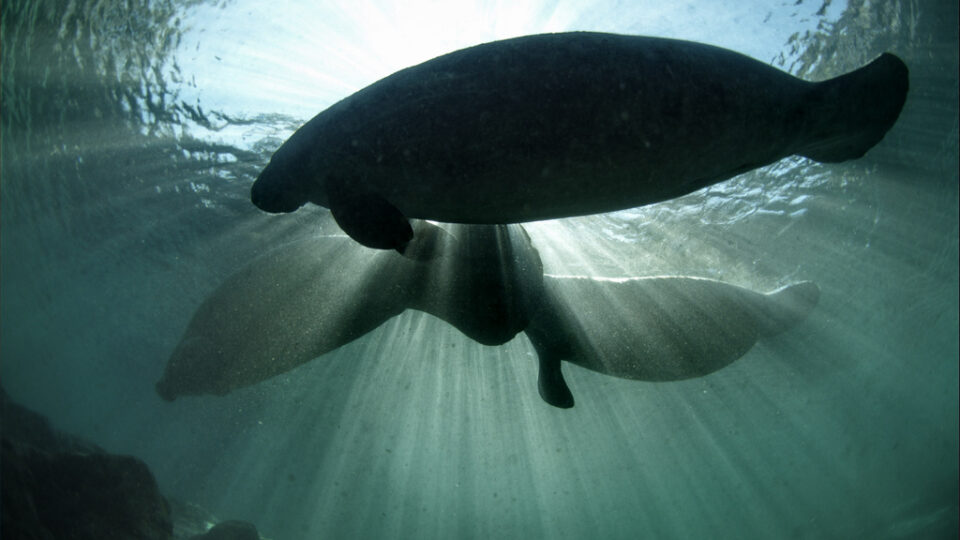
Manatees might not be native to Florida

Florida is very proud of its manatees.  It has a county named after them and has pictures of them on license plates.  These gentle creatures are part of Florida culture.  But recent research indicates that manatees – also known as sea cows – might only be relatively recent residents of the Sunshine State.

Manatees have been spotted in Florida waters for several centuries but might have only been tourists visiting briefly before returning to their home waters in the Caribbean in places like Cuba.

The new research suggests that manatees might not have actually taken up residence in Florida until after Europeans colonized the area in the 1500s.  There is a rarity of manatee bones on archaeological sites that date back further.  It was particularly striking that Crystal River, which is an epicenter for modern manatee populations, had little evidence of their presence in earlier times.

Even into the early 1900s, Florida newspaper reports treated manatee sightings as a spectacle rather than a common occurrence.  In the 1920s and 1930s, there started to be more routine sightings in places like yacht basins and canal harbors.  In the 1950s, manatees became more plentiful in Tampa Bay and Crystal River. The warming waters and human activities creating shallow warm water refuges increased manatee populations, particularly near places like power plants.

The current Florida manatee population is between 8,000 and 12,000 and is classified as threatened under the Endangered Species Act, an improvement over its previous endangered status.  But pollution is killing a lot of the seagrass that they eat, and their safety is by no means assured.

**********

Web Links

Why manatees are likely not Florida natives

Photo, posted March 25, 2012, courtesy of David Hinkel / USFWS via Flickr.

Earth Wise is a production of WAMC Northeast Public Radio

How to reduce pollution from food production

January 17, 2024 By EarthWise Leave a Comment

Present in animal manure and synthetic fertilizers, nitrogen is an essential nutrient for plant growth and is a critical input to enhance agricultural productivity on farms around the world.  But excessive and inefficient use of this nutrient is widespread.  In fact, up to 80% of it leaks into the environment, mostly in various polluting forms of nitrogen: ammonia and nitrogen oxides (which are harmful air pollutants), nitrous oxide (a potent greenhouse gas), and nitrate (which affects water quality).

A new report prepared for the United Nations has put forth some solutions to greatly reduce nitrogen pollution from agriculture in Europe.  A group of researchers coordinated by the U.K. Centre for Ecology & Hydrology, the European Commission, the Copenhagen Business School, and the National Institute for Public Health and the Environment of The Netherlands produced the report.

In it, the research team puts forth its recipe to reduce nitrogen pollution in Europe.  The report’s ingredients include:

  • Reducing by 50% the average European meat and dairy consumption
  • More efficient fertilizer application and manure storage
  • Reducing food production demand by reducing food waste by retailers and consumers
  • Better wastewater treatment to capture nitrogen from sewage
  • Adopting policies addressing food production and consumption to transition them towards more sustainable systems

Taking action to reduce nitrogen pollution will require a holistic approach involving farmers, policymakers, retailers, water companies, and individuals. 

Do Europeans have an appetite for change?

**********

Web Links

Scientists provide recipe to halve pollution from food production

Photo, posted March 10, 2022, courtesy of USDA NRCS Montana via Flickr.

Earth Wise is a production of WAMC Northeast Public Radio
A Giant Tortoise Is Not Extinct | Earth Wise

July 4, 2022 By EarthWise Leave a Comment

The Galapagos Islands are famous for their tortoises, among many other things. A few million years ago, some giant tortoises from South America were somehow carried across hundreds of miles of ocean to the islands – perhaps on driftwood during storms.  Tortoises don’t swim, so any that made to an island could only breed with others on that same island.   The result was rapid evolution of tortoise species in the Galapagos.  Today, there are 14 different species of giant tortoises there.

Centuries ago, tortoise populations in the Galapagos were decimated by European sailors who hunted them for food.   The giant reptiles could be kept alive on ships with little food or water, so they became a great source of meat.

On the island of Fernandina, there was a species of Galapagos tortoise known as the “fantastic giant tortoise.”  Only a single one of these was ever found and that was in 1906.  It ended up being preserved as a museum specimen.

In 2019, a female tortoise living on Fernandina was located and genome sequencing has only recently been successfully completed for that living specimen and the century-old one in the museum which compared them to sequences of the other 13 species of Galapagos tortoise.  That analysis showed that the two were indeed the same species and are distinct from all the others.

The female tortoise, who has been named Fernanda, now resides at the Galapagos National Park Tortoise Center, which is a rescue and breeding facility.  She is well over 50 years old.  Recent tracks and scat on Fernandina Island provide evidence that there may still be others of her kind.  The experts are trying to do what they can to keep the species alive.

**********

Web Links

‘Fantastic giant tortoise,’ believed extinct, confirmed alive in the Galápagos

Photo, posted January 1, 2019, courtesy of Pedro Szekely via Flickr.

Earth Wise is a production of WAMC Northeast Public Radio.

What Does Conservation Really Mean? | Earth Wise

June 2, 2021 By EarthWise Leave a Comment

Determining the most important species to preserve and protect

There is a great deal of interest in protecting nature and, in many cases, restoring aspects of nature that have been lost.  But what do these things really mean?

What is most important?  Protecting iconic species?  Strengthening nature’s resilience?  Several recent scientific papers address these questions and come up with rather different answers.

It isn’t even clear what constitutes a pristine ecosystem.  According to some experts, ecosystems that have lost most of their large mammal species, for example, cannot be considered intact.  By that standard, only a tiny fraction of the world’s ecosystems remains intact.

Other experts contend that preserving individual species is not what really matters.  Studies have shown that many ecosystems have undergone and continue to undergo massive species shifts over time with frequent extinctions along the way.  Nevertheless, the ecosystems continue to flourish with new species replacing others to perform the various functions required.

Some perspectives consider intact ecosystems to be those devoid of human influence.  But that notion is not universally held.   There is the idea that most of the world’s ecosystems were essentially untouched until perhaps 500 years ago when European exploration expanded greatly.  But the reality is that even 12,000 years ago, nearly three-quarters of terrestrial nature was inhabited, used, and shaped by people.  However, those human interactions were similar to how many indigenous and local peoples across the globe still live, not like the interactions of modern civilization that result in massive changes to ecosystems.

**********

Web Links

Species or Ecosystems: How Best to Restore the Natural World?

Photo, posted November 21, 2003, courtesy of Megan Coughlin via Flickr.

Earth Wise is a production of WAMC Northeast Public Radio.

Primary Sidebar

Recent Episodes

  • An uninsurable future
  • Clean energy and jobs
  • Insect declines in remote regions
  • Fossil fuel producing nations ignoring climate goals
  • Trouble for clownfishes

WAMC Northeast Public Radio

WAMC/Northeast Public Radio is a regional public radio network serving parts of seven northeastern states (more...)

Copyright © 2026 ·