• Skip to primary navigation
  • Skip to main content
  • Skip to primary sidebar

Earth Wise

A look at our changing environment.

  • Home
  • About Earth Wise
  • Where to Listen
  • All Articles
  • Show Search
Hide Search
You are here: Home / Archives for energy

energy

Reliability of renewable energy

February 25, 2025 By EarthWise Leave a Comment

Renewable energy is reliable

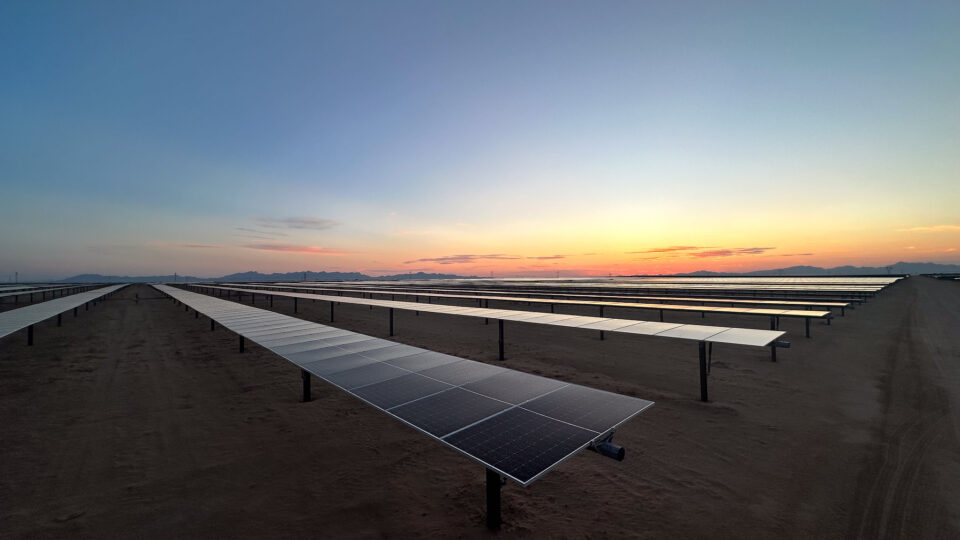
Naysayers about renewable energy often claim that it is unreliable.  It is true that the sun sets every night and sometimes the wind doesn’t blow.  But with the growing use of battery banks to store excess power generated by renewables, the lack of reliability of renewable energy is turning out to be a myth.

A new study published in the journal Renewable Energy looked at the deployment of renewable energy in California last year.  From late winter to early summer, renewable sources supplied 100% of the state’s electricity demands for up to 10 hours on 98 out of 116 days.  There were no blackouts during that time thanks in part to the presence of battery backup power.  During peak generation periods, the renewables provided as much as 162% of the grid’s needs. 

The main finding of the study is that the electricity grid can be kept stable even as it adds more and more renewables.  Beyond that, every major renewable energy source – geothermal, hydroelectric, wind, and especially solar – is on average lower in cost than fossil fuels.

Despite the low cost of renewable energy, Californians pay the second highest rates for electricity in the country.  Part of the reason is that electrical equipment from utilities has set off wildfires, notably the 2018 Camp Fire that devastated the town of Paradise and killed 85 people.  California’s utilities are now passing the costs that come from lawsuits and from burying transmission lines to their customers.  Overhead power lines are especially prone to falling in high winds and igniting fires.

**********

Web Links

California just debunked a big myth about renewable energy

Photo, posted December 16, 2024, courtesy of EDF Renewables / Bureau of Land Management California via Flickr.

Earth Wise is a production of WAMC Northeast Public Radio
Vertical-axis wind turbines

February 19, 2025 By EarthWise Leave a Comment

Developing vertical-axis wind turbine technology

Nearly all wind turbines in use today are horizonal axis wind turbines.  They are a familiar sight with their three giant rotor blades spinning about an axis high above the ground attached to a nacelle containing the gearbox and generator. 

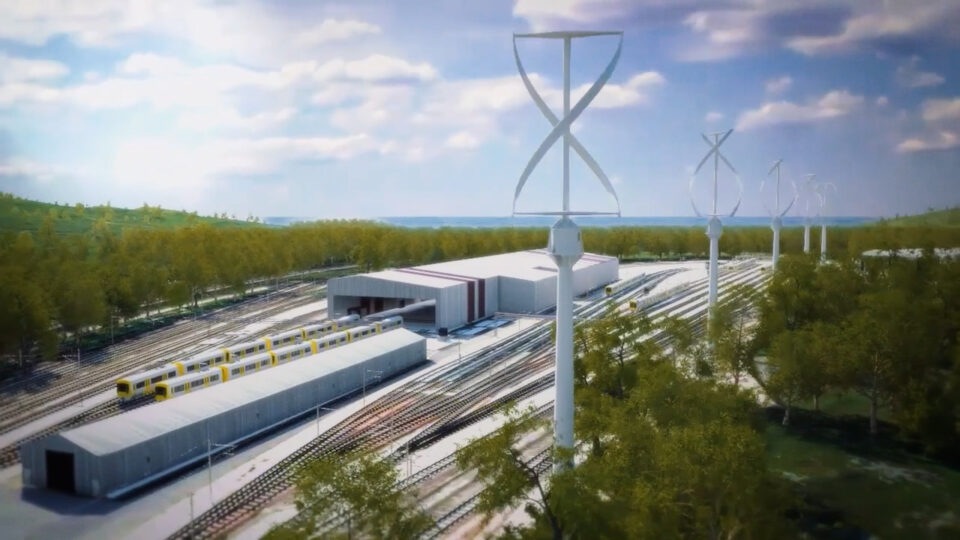
A vertical-axis wind turbine has its rotor shaft transverse to the wind; that is, the shaft rises up from the ground and the gearbox and generator are located close to the ground.

This type of wind turbine does not need to be pointed into the wind, which eliminates the need for wind-sensing and orienting mechanisms.  It is also considerably quieter in operation than horizontal axis wind turbines.  Vertical-axis wind turbines have enjoyed minimal success to date because of a variety of problems including reliability issues and complications related to how they respond to changing wind conditions.

A next-generation vertical wind turbine is going on trial in Australia as part of a research collaboration between Flinders University in South Australia and the start-up company VAWT-X Energy.  The 6KW prototype will be installed at a field site in Australia’s Fleurieu Peninsula.

According to the developers, the new turbine design will be as efficient, or even more efficient, as existing horizontal turbines and will be able to thrive across diverse environments including being part of urban infrastructure where their relative quiet is a real advantage.   Such turbines would be more accessible for applications like off-grid power and sustainable energy solutions for small businesses and farms.  The developers claim the technology can also be scaled up for large-scale windfarms.

**********

Web Links

Progress with new-look wind turbine

Photo courtesy of VAWT-X Energy.

Earth Wise is a production of WAMC Northeast Public Radio

Electricity demand from data centers

February 17, 2025 By EarthWise Leave a Comment

Data centers are dedicated facilities containing computers and their related hardware equipment such as servers, data storage drives, and network equipment; they are the physical facilities that store digital data.  Data centers are one of the most energy-intensive building types, consuming 10 to 50 times more energy per floor space than a typical commercial office building.  With the explosive growth of artificial intelligence technology, data center energy use is expanding rapidly.

A new report by the Department of Energy’s Lawrence Berkeley National Laboratory outlines the energy use of data centers from 2014 to 2028.  The report estimates that data center load growth has tripled over the past decade and is likely to double or triple again by 2028.

Data centers consumed about 4.4% of total U.S. electricity in 2023 and are projected to consume between 6.7% and 12% of total U.S. electricity by 2028. Most of the increased power demand of data centers is due to the growth in AI servers.  Artificial intelligence requires increasingly powerful chips and intense, power-hungry cooling systems.

There have been revolutionary changes in artificial intelligence technology in just the past couple of years and its role in society has dramatically expanded.  With that expansion has come a dramatic change in the energy usage by the data industry and innovative solutions are needed to allow data centers to meet their growing demand for energy.

**********

Web Links

Berkeley Lab Report Evaluates Increase in Electricity Demand from Data Centers

Photo, posted August 31, 2024, courtesy of Aileen Devlin / Jefferson Lab via Flickr.

Earth Wise is a production of WAMC Northeast Public Radio
Empire Wind moves forward

February 13, 2025 By EarthWise Leave a Comment

Empire Wind, an offshore wind project, is moving forward

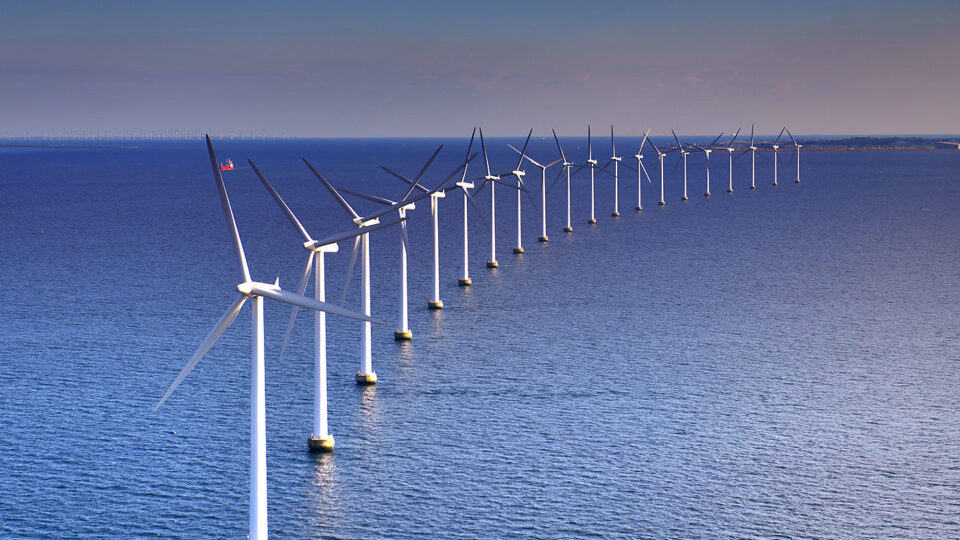
Empire Wind 1, the first offshore wind project that will connect to the New York City grid, has received the financing needed to move forward.  Equinor, the Norwegian state-owned multinational energy company developing the project, closed on a more than $3 billion financing package.

The wind farm will span 80,000 acres in an area 15-30 miles southeast of Long Island.  When completed, it will have a capacity of 810 megawatts.  Equinor has executed a Purchase and Sale Agreement with the New York State Energy Research and Development Authority to purchase power from Empire Wind 1 for 25 years at a strike price of $155/MWh. The operations and maintenance hub for Empire Wind 1 will be at the South Brooklyn Marine Terminal.  Commercial operation is expected by 2027.

The previously-planned Empire Wind 2 project was terminated a year ago because of inflation, interest rates, and supply chain disruptions.  More broadly, the U.S. offshore wind industry has been struggling for the past year. 

With the return of President Donald Trump to the White House, there is much greater uncertainty facing the industry.  As a result of the election, Attentive Energy, a planned 3-gigawatt wind project off the coasts of New York and New Jersey has been put on pause.  Trump’s public disdain for offshore wind energy is likely to create a major slowdown in the growth of the offshore wind pipeline.  On the other hand, the new administration is less likely to have much influence on projects already in progress including 4 gigawatts under active construction and more than 50 gigawatts in other stages of development.

**********

Web Links

Empire Wind 1 secures $3B+ financing package, enters ‘full execution mode’

Photo, posted May 2, 2022, courtesy of California Energy Commission via Flickr.

Earth Wise is a production of WAMC Northeast Public Radio

A green battery from industrial waste

February 11, 2025 By EarthWise Leave a Comment

Flow batteries are rechargeable batteries in which liquid electrolytes flow through one or more chemical cells from one or more tanks.  The electrolytes are redox pairs, that is, chemical compounds that can reversibly undergo reduction and oxidation reactions.  The most common redox electrolytes include elements like vanadium, chromium, iron, zinc, and bromine.  Flow batteries can provide large amounts of both electrical power and stored energy based on the size of the electrolyte tanks.  As a result, they can be scaled up far more readily than other battery technologies. 

Flow batteries are safe, stable, long-lasting, and their electrolytes can easily be refilled.  They have significant potential for use in utility-scale storage for renewable energy systems.

Researchers at Northwestern University have developed a redox flow battery based on an organic industrial-scale waste product.  The material – triphenylphosphine oxide or TPPO – is produced in the thousands of tons each year.  It is byproduct of producing a variety of substances including some vitamins, pharmaceuticals, agrochemicals, and other bulk chemicals.  For the most part, TPPO is of little use and must be carefully discarded.

The current market for redox flow batteries is very small but is expected to grow over time as the need for utility-scale energy storage continues to expand.  A battery technology based on a waste material that is already produced in high volume and that must otherwise be disposed of with caution would have significant advantages.

**********

Web Links

Green battery discovery turns trash into treasure

Photo, posted January 12, 2015, courtesy of California Energy Commission via Flickr.

Earth Wise is a production of WAMC Northeast Public Radio

Drying rivers and hydropower

February 7, 2025 By EarthWise Leave a Comment

Drying rivers threaten hydropower around the world

A decade ago, Ecuador began a major transition to using hydroelectric power.  Like in many other South American countries, the presence of abundant rivers could supply large amounts of energy and drive economic expansion and lead to a new era of prosperity.

This ambitious plan has run into the impacts of climate change.  An extraordinary drought has engulfed much of South America, drying rivers and reservoirs, and has put Ecuador’s power grid on the brink of collapse. 

Since September, daily energy cuts in Ecuador have lasted as long as 14 hours.  An industry group says that the nation is losing $12 million in productivity and sales for every hour the power is out.  Just a few years ago, Ecuador was making great strides in reducing poverty.  Now, as the energy crisis has increased its grip on the country, much of what was achieved is being lost.

Ecuador’s situation is not unique.  In recent years, abnormally dry weather in multiple places has resulted in extreme low water levels in rivers, reducing hydropower resources in Norway, Canada, Turkey, and even rainforest-rich Costa Rica.

Overall, more than one billion people live in countries where more than half of their energy comes from hydroelectric plants.  With a warming climate and increasing incidence of extreme weather events like drought, it is likely that hydropower will become a less reliable energy source.  More than a quarter of all hydroelectric dams are in places with a medium to high risk of water scarcity by 2050. 

**********

Web Links

The Rivers Run Dry and the Lights Go Out: A Warming Nation’s Doom Loop

Photo, posted January 15, 2020, courtesy of Pedro Szekely via Flickr.

Earth Wise is a production of WAMC Northeast Public Radio

The human footprint on Earth

February 6, 2025 By EarthWise Leave a Comment

The Earth is a pretty big place, and it is easy to think that humans and their activities occupy very little of it.  But the impact of human activities on our planet continues to grow.  Recent satellite images from NASA’s Earth Observatory show the staggering extent of the human footprint on Earth.

Agriculture is a major part of it.  Farms and pastures take up almost half of the world’s habitable land – land not covered by ice or desert.  Greenhouses have recently proliferated tremendously and now cover 3.2 million acres, an area the size of Connecticut, and they even have effects on local climates.

More than half of the world’s population now lives in cities, which are expanding rapidly.  Enormous cities in Asia are changing the landscape in places like Thailand and Indonesia.  Apart from taking up lots of land, many of the world’s cities are immersed in clouds of air pollution that they generate.

Greenhouse gas emissions continue to grow, and temperatures continue to rise.  The effects of this on the planet are increasingly evident.  Seas are rising, ice is melting, glaciers shrink away, and wildfires continue to burn.  The massive wildfires in and around Los Angeles have made major changes in the local landscape.  Rising seas have flooded coastal wetlands and elsewhere, rivers and lakes have shrunk.

There are also human impacts visible from space that represent positive signs.  Large solar arrays supply the cheapest form of energy in most parts of the world and the number and size of solar installations are at a record high.   These solar installations provide some hope that global warming can be slowed.

**********

Web Links

The Growing Human Footprint on Earth, as Seen from Space

Photo, posted July 28, 2012, courtesy of Beth Scupham via Flickr.

Earth Wise is a production of WAMC Northeast Public Radio

The year in energy

February 5, 2025 By EarthWise Leave a Comment

Last year saw some major trends in the global energy sector. Perhaps the most dramatic was the shift to renewable power, which continued to outpace the projections of both financial analysts and industry experts.  2024 saw new highs in renewable installation, largely due to China, which accounted for more than half of all the solar power installed globally.  Huge solar installations also came online in California and Nevada during the year.  On the other hand, the amount of coal burning for the year also exceeded expert predictions, also largely due to China.

A second trend was increasing sales of electric vehicles, which reached a new high, although short of expectations.  A major driving force in EV sales is the dropping price of lithium-ion batteries, which fell by 20% in 2024.  Again, China was a major factor with roughly half of all its domestic vehicle sales being electric.

Coal’s decline is being slowed by the rising demand for electricity.  The increased use of electric heating and cooling along with the increasing use of EVs are major factors.  But the proliferation of energy-hungry data centers incorporating artificial intelligence capabilities is driving up the demand for power even more. 

Perhaps the clearest indication of the future for global energy comes from investors, who put about $2 trillion into clean energy last year.  That is twice as much as invested in oil, coal, and natural gas.

The history of energy has seen the Age of Coal and the Age of Oil.  By all indications, we are now heading into the Age of Electricity.

**********

Web Links

The Year in Energy in Four Charts

Photo, posted November 23, 2024, courtesy of Mussi Katz via Flickr.

Earth Wise is a production of WAMC Northeast Public Radio

Storing carbon in buildings

February 4, 2025 By EarthWise Leave a Comment

According to a new study by researchers at the University of California, Davis and Stanford University, construction materials used in buildings have the potential to lock away billions of tons of carbon dioxide.  The study, published in Science, shows that storing CO2 in buildings could be a major contributor to efforts to reduce greenhouse gas emissions.

Overall efforts in carbon sequestration take carbon dioxide – either as it’s being produced or once it’s already in the atmosphere – and store it away.  Storing it might involve injecting it into underground caverns or deep in the ocean.  Alternatively, storing it might involve converting it into a stable form using chemical reactions.  These various strategies involve both practical challenges and potential environmental risks.

The new study suggests that many materials that are already produced in large quantities have the potential to store carbon dioxide.  These include concrete, asphalt, plastics, wood, and brick.  More than 30 billion tons of these materials are produced worldwide every year.

Ways to accomplish carbon storage include adding biochar into concrete, using artificial rocks loaded with carbon as concrete and asphalt aggregates, plastic and asphalt binders based on biomass instead of petroleum, and including biomass fiber into bricks. 

The largest potential is using carbonated aggregates to make concrete.  Concrete is by far the world’s most popular building material with more than 20 billion tons being produced each year.

The feedstocks for these ways to store carbon in building materials are mostly low-value waste materials, so the economics of implementing these carbon sequestering strategies are likely to be quite favorable.

**********

Web Links

Storing Carbon in Buildings Could Help Address Climate Change

Photo, posted October 19, 2022, courtesy of Alexandre Prevot via Flickr.

Earth Wise is a production of WAMC Northeast Public Radio

Curbing food waste

February 3, 2025 By EarthWise Leave a Comment

Efforts to curb food waste are failing

According to the U.S. Department of Agriculture, as much as 40% of the food supply in the United States is wasted.  In fact, Americans generate more food waste than all but two countries.

To address this problem, the federal government announced a goal nearly a decade ago to cut food waste in half by 2030 compared to 2016 levels.  Doing so would bring food waste down to approximately 164 pounds per person annually.

However, according to a new study led by researchers from the University of California – Davis, since 2016, per capita food waste has actually increased instead of decreasing. 

The study, which was recently published in the journal Nature Food, looked at how state policies align with federal targets.  The research team found that state policies focus more on recycling methods, such as composting and anaerobic digestion, rather than on prevention and rescue strategies, like food donations or repurposing food for animal feed.

In 2021, the EPA revised its definition of food waste to no longer include recycling methods.  But when food is wasted, the resources used to grow the food, including energy, water, and fertilizer, are also wasted. 

In the study, the researchers analyzed state-level food waste reduction efforts across four areas: prevention, rescue, repurposing, and recycling.  They found that recycling policies offered the most potential for diversion. Despite this, most states still fell short of the federal goal of 164 pounds per person annually. 

According to the research team, more comprehensive policies to address food waste must be implemented as soon as possible.

**********

Web Links

States Struggle to Curb Food Waste Despite Policies

Photo, posted June 28, 2021, courtesy of Ivan Radic via Flickr.

Earth Wise is a production of WAMC Northeast Public Radio
A big year for battery storage

January 29, 2025 By EarthWise Leave a Comment

2024 was a big year for battery storage

A decade ago, the ability of utilities to store large amounts of electricity in batteries was basically nonexistent.  In the past several years, growth in battery storage systems has exploded.  As of the end of November, the US had about 24 gigawatt-hours of storage capacity in place.  This is 71% more than just a year ago.  Nearly half of the battery storage in the US is located in California.  Texas, Arizona, and Nevada are also leaders in deploying battery storage.

Battery storage allows solar and wind generating plants to keep operating when there is reduced demand for their output and have the electricity that they produce be available later when demand rises.  Storing this excess electricity essentially extends the hours of the day when clean energy can be used.

Equally important, the existence of battery storage reduces the need for peaker plants, the fossil-fueled power plants that only turn on at times of peak demand, such as during hot afternoons.

There are 1,000 peaker plants in the US and they are generally heavily polluting, inefficient, and expensive to operate.  Some 63 million people live within a three-mile radius of one of them and are exposed to harmful pollutants like nitrogen oxides and sulfur dioxide.  Peaker plants also release more greenhouse gases than other power plants do for every unit of electricity they generate.

Many battery storage facilities are co-located with, or otherwise support, solar energy plants.  The amount of solar energy in the US is growing rapidly and surpassed the 100-gigawatt mark in 2024.  As solar power continues to expand, so will battery energy storage.

**********

Web Links

Battery projects soared again in 2024

Photo, posted August 3, 2024, courtesy of the Bureau of Ocean Energy Management via Flickr.

Earth Wise is a production of WAMC Northeast Public Radio

Energy storage with iron-air batteries

January 24, 2025 By EarthWise Leave a Comment

The Cambridge Energy Storage Project in Cambridge, Minnesota will be the first commercial deployment of iron-air battery technology.  Developed by startup company Form Energy, the battery system will provide 1.5 MW and 150 MWh of multi-day energy storage.

Iron-air batteries are based on the principle of reversible rusting.  When discharging, the battery releases energy by breathing in oxygen from the air and converting iron metal to rust.  When charging, the battery takes up electrical current that converts rust back into iron and breathes out oxygen.

An individual iron-air battery module is about the size of a washer/dryer set and contains about 50 individual cells filled with a water-based, non-flammable electrolyte.  For a utility-scale system like that being built in Cambridge, modules are grouped together in enclosures and hundreds of enclosures grouped together in megawatt-scale power blocks.  A one-megawatt low-density system would take up about half an acre of land.  High-density systems would be capable of producing more than 3 MW per acre. 

The technology has lower costs compared to lithium-ion battery technology but may be best suited as complementary with it since lithium-ion is primarily used for short-duration energy storage while air-iron can store energy for several days.

The system is expected to be operational by late 2025.  Great River Energy, the operator of the system, plans to conduct a multi-year study to evaluate the system’s performance and potential for broader development. 

**********

Web Links

Minnesota co-op breaks ground on multi-day energy storage project

Photo courtesy of Form Energy.

Earth Wise is a production of WAMC Northeast Public Radio

Investing in carbon capture

January 22, 2025 By EarthWise Leave a Comment

The interests of billionaires seldom seem to coincide with our own.  In fact, they often seem to be quite the opposite.  But there are a number of billionaires who are trying to help the world combat climate change.  Yes, they want to make money doing it, but doing it is nevertheless in everyone’s interest.

A group headed by Bill Gates that included some of the wealthiest people from around the world met last summer in London to evaluate companies working to mitigate the effects of climate change.  These included companies developing carbon dioxide removal technologies.  Stripping carbon dioxide out of the atmosphere is an obvious way to deal with the fact that we continue to dump too much of it into the atmosphere –   obvious, but extremely difficult to do at any scale that makes a difference.

Companies working on carbon capture have raised more than $5 billion since 2018.  There are hundreds of companies working on it and investors include billionaires, venture capitalists, private equity firms, and major corporations.  Companies like Microsoft, Google, and United Airlines have committed billions of dollars to purchase removal credits:  payments to companies for removing carbon dioxide.

There are only a few dozen carbon removal facilities operational today and together they only capture a tiny fraction of the carbon dioxide humans release into the atmosphere.  The hope is that such facilities will scale up in size and number so that they will make a real dent in the problem.  But it will take many years at best, and the planet doesn’t have that much time.  To make a difference, carbon emissions must be reduced as quickly as possible.

**********

Web Links

The New Climate Gold Rush: Scrubbing Carbon From the Sky

Photo, posted April 19, 2020, courtesy of Greg Rubenstein via Flickr.

Earth Wise is a production of WAMC Northeast Public Radio

Wrong trees in the wrong places

January 20, 2025 By EarthWise Leave a Comment

Temperatures in cities are rising around the world and urban heat stress is already a major problem.  Extensive surfaces of man-made materials absorb the sun’s energy, and lead to temperatures well above those in the surrounding countryside.  This is known as the urban heat island effect, and it can lead to greater energy use, higher air pollution levels, and a greater risk of heat-related illnesses, as well as death. 

Some cities have already started implementing mitigation strategies, with tree planting prominent among them.  Planting trees can cool the climate by absorbing carbon dioxide, providing shade, and releasing water vapor, which lowers air and surface temperatures. 

However, while trees can cool cities significantly during the day, new research from the University of Cambridge in the U.K. shows that tree canopies can also trap heat and raise temperatures at night. 

According to the study, which was recently published in the journal Communications Earth & Environment, planting the wrong species or the wrong combination of trees in suboptimal locations or arrangements can limit their benefits.

The researchers found that in temperate climates, trees can cool cities by up to 6°C during the day but can increase nighttime temperatures by 1.5°C.  Cities with open layouts in temperate and tropical climates benefit from a mix of evergreen and deciduous trees, enhancing cooling by 0.5°C more than in cities with only deciduous or evergreen trees. 

The researchers hope their findings will help urban planners choose the best combinations of trees and planting locations to combat urban heat stress.

**********

Web Links

Wrong trees in the wrong place can make cities hotter at night, study reveals

Photo, posted October 29, 2017, courtesy of Lars Plougmann via Flickr.

Earth Wise is a production of WAMC Northeast Public Radio

Tourism and greenhouse gas emissions

January 17, 2025 By EarthWise Leave a Comment

Tourism is a major contributor to global greenhouse gas emissions, accounting for about 9% of the global total.  Over the past 15 years, its emissions have grown more than twice as fast as those of the rest of the global economy.

Unless the tourism industry finds ways to slow down its growing emissions, those emissions will continue to increase by 3 to 4% each year, meaning that they will double every 20 years.  The major drivers behind tourism’s growing emissions have been slow improvements in tourism-related technologies coupled with the rapid growth in demand.

Transportation is tourism’s main source of greenhouse gas emissions.  Planes and cars generate the most carbon dioxide but there are contributions from tour buses, boat rides, ferries, and trains as well.  The increasing demand for international travel has been the largest contributor to the growth of tourism-related emissions.  But just as people’s homes generate emissions from energy use, so do hotels and other lodging used on vacations.

The United States, China, and India are responsible for 60% of the total increase in tourism’s carbon footprint.  Generally speaking, it is the world’s wealthiest nations that have the most tourists exploring the world.

Researchers from Australia’s University of Queensland recommended several measures to slow the growth of tourism’s carbon emissions.  These include reducing long-haul flights, imposing carbon dioxide taxes, setting carbon budgets, and the use of alternative transportation fuels.  At the local level, tourism businesses making use of renewable energy sources and electric vehicles would help.

**********

Web Links

Tourism leads the pack in growing carbon emissions

Photo, posted September 14, 2014, courtesy of Gary Campbell-Hall via Flickr.

Earth Wise is a production of WAMC Northeast Public Radio

Fertilizer from thin air

January 16, 2025 By EarthWise Leave a Comment

Creating fertilizer from thin air

Ammonia is one of the largest-volume synthetic chemicals produced in the world. Globally, manufacturing plants produce about 200 million tons of it each year.  About 70% of ammonia is used to produce fertilizers.

Most ammonia is produced using the Haber-Bosch process, which converts hydrogen and nitrogen into ammonia.  The process is energy-hungry, running at over 900 degrees Fahrenheit, and therefore results in lots of greenhouse gas emissions – about 1% of the world’s annual CO2 emissions.

Researchers at Stanford University and King Fahd University in Saudi Arabia have developed a prototype device that can produce ammonia using wind energy to draw air through a mesh.  The method allows sustainable production of ammonia using the nitrogen in the air.

The process gets nitrogen from the air along with hydrogen from water vapor.  A mesh coated with catalysts facilitates the necessary chemical reactions.  The process operates at room temperature and standard atmospheric pressure, eliminating the need  for the high temperatures and high pressures of the Haber-Bosch process.

In principle, farmers could run a portable device onsite, eliminating the need to purchase and ship fertilizer from a manufacturer. 

The device is two or three years away from being market ready.  The developers are designing increasingly large mesh systems to produce greater quantities of ammonia.  Ammonia has more uses beyond fertilizers including its use as an energy carrier that can store and transport energy more efficiently than hydrogen gas.

**********

Web Links

New device produces critical fertilizer ingredient from thin air, cutting carbon emissions

Photo, posted September 2, 2013, courtesy of Chafer Machinery via Flickr.

Earth Wise is a production of WAMC Northeast Public Radio
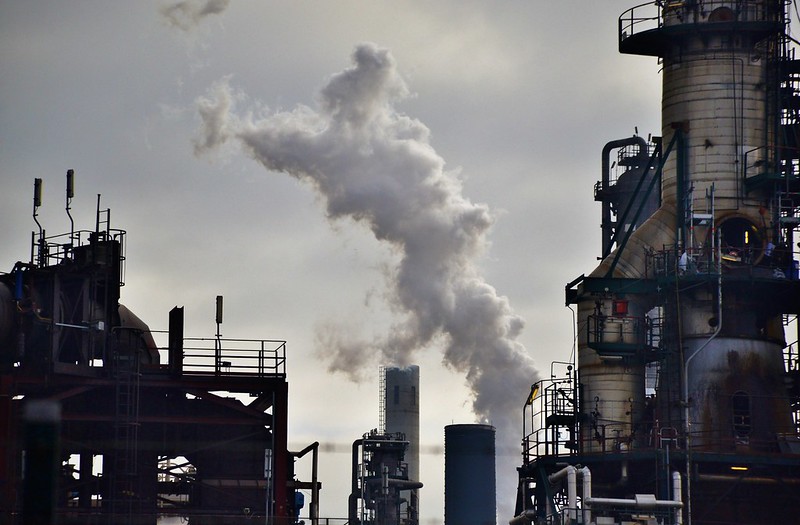
Thermal batteries for heavy industry

January 3, 2025 By EarthWise Leave a Comment

Researchers are developing thermal batteries for heavy industry

Heavy industries like cement, steel, chemicals, and paper require large amounts of heat and, for the most part, that heat comes from burning fossil fuels.  Other sectors of the economy have been making progress in reducing carbon emissions, but heavy industry has not found easy answers for supplying the heat it needs for manufacturing.

Researchers at MIT have developed a way to supply heat that only uses electricity, which in principle can come from carbon-free sources.  The idea is to use thermal batteries.  These are basically an electrically conductive equivalent of ceramic firebricks, which have been used to store heat for centuries in fireplaces and ovens.

A spinout company called Electrified Thermal Solutions has demonstrated that its firebricks can store heat efficiently for hours and release it by heating air or gas up to 3,272 degrees Fahrenheit. 

The firebrick arrays are contained in insulated, off-the-shelf metal boxes.  The standard system can collect and release about 5 megawatts of energy and store about 25 megawatt-hours.  The thermal battery can run hotter and last longer than any other electric heating solution on the market.

Using this technology can be a way to take advantage of the low cost of electricity in off-peak hours.  In the so-called wind belt in the middle of the U.S., electricity prices can even be negative at times.  Using the firebrick technology – called the Joule Hive Thermal Battery – it can be possible to provide industrial heating capability at very competitive prices, and that doesn’t even factor in the positive climate impact.

**********

Web Links

Decarbonizing heavy industry with thermal batteries

Photo, posted April 19, 2019, courtesy of Hans M. via Flickr.

Earth Wise is a production of WAMC Northeast Public Radio
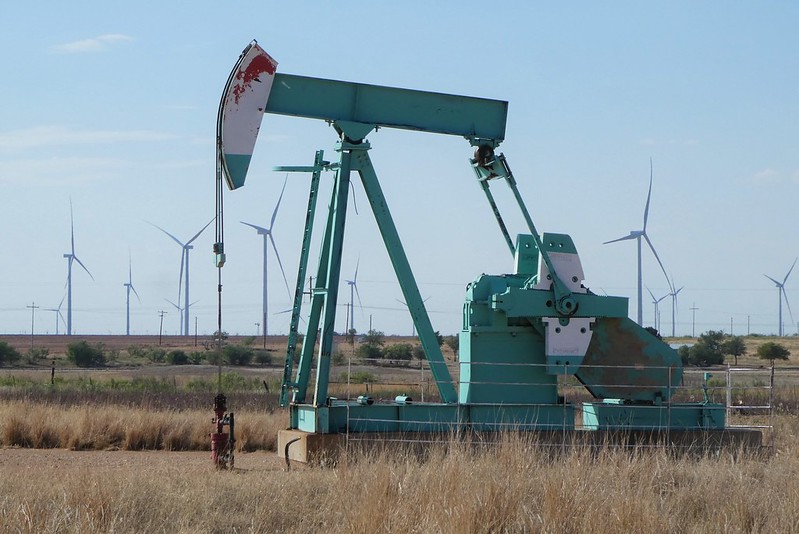
Artificial intelligence and lost oil wells

January 2, 2025 By EarthWise Leave a Comment

Using artificial intelligence to find lost and abandoned oil wells

There have been commercial oil and gas wells across the United States for 170 years.  Researchers estimate that there are between two and three million wells that have been abandoned.  There are hundreds of thousands of them, across 27 states, that are “orphaned,” meaning that they are uncapped, unproductive, and nobody is responsible to manage their leakage or pollution.

Many are undocumented orphaned wells – UOWs – that are not listed in formal records and are basically out of sight and out of mind.  Besides having nobody responsible for them, nobody even knows where they are.  But they are potential sources of oil and chemical leaks into nearby water sources and can send toxic substances like benzene and hydrogen sulfide into the air. 

Researchers are using modern tools like drones, laser imaging, and advanced sensors to try to locate UOWs.  But these wells are scattered over an area of more than three million square miles.

To better predict where to look for undocumented wells, researchers are combining historical topographic maps with artificial intelligence. The US Geological Survey has scanned 190,000 topographic maps made between 1884 and 2006.  AI is being used to find the symbols for oil and gas wells on the maps.  People can recognize these symbols easily, but there are just too many maps to look at.  The problem is equivalent to finding a needle in a haystack; there is just an awful lot of hay to look through.

Abandoned wells are a big problem and it will take lots of modern technology to try to solve it.

**********

Web Links

AI Helps Researchers Dig Through Old Maps to Find Lost Oil and Gas Wells

Photo, posted August 16, 2022, courtesy of Larry Syverson via Flickr.

Earth Wise is a production of WAMC Northeast Public Radio
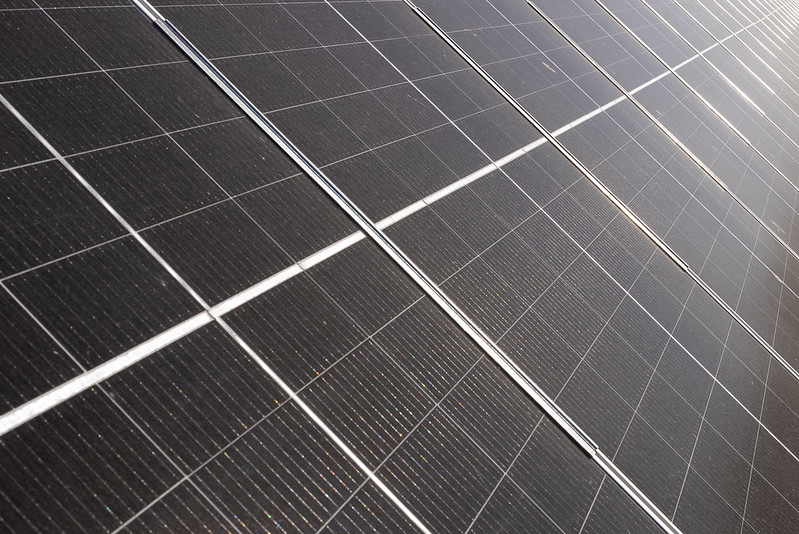
A solar peaker plant

January 1, 2025 By EarthWise Leave a Comment

Developing a solar power peaker plant

Peaker plants are power plants that the grid makes use of during times of particularly high electricity demand.  The power they supply is typically high in cost and usually high in greenhouse gas emissions.  When operating the electricity grid, power sources are generally called upon in order of marginal cost.  Only when demand is very high do grid operators make use of the highest-cost assets that tend to be fossil-fueled power plants that can start and ramp up quickly. 

For years, there has been the idea that solar-powered peaker plants could eventually replace the polluting fossil-fueled ones.  Recently, the renewable energy developer, owner, and operator Arevon Energy began commercial operations of the Vikings Solar-plus-Storage Project in Imperial County, California.  It is the first utility-scale solar peaker plant in the United States.

The plant utilizes a 157-megawatt solar array combined with 150 MW and 600 MWh of battery energy storage.  It can shift low-cost daytime solar energy to higher-cost peak demand periods.  The result is a lowered cost of electricity for nearly one million customers of San Diego Community Power.

The project contradicts the often-held notion that renewable energy is inherently unreliable.  It can provide carbon-free electricity at specific times of critical need.  Typical hybrid solar + storage plants provide electricity during daylight hours and store only excess generation in their battery systems.  The Vikings project is specifically designed to shift the entirety of its generation from solar hours to the peak demand period.

**********

Web Links

Arevon fires up the first solar + storage peaker plant in the U.S.

Photo, posted October 15, 2024, courtesy of Jay Inslee via Flickr.

Earth Wise is a production of WAMC Northeast Public Radio
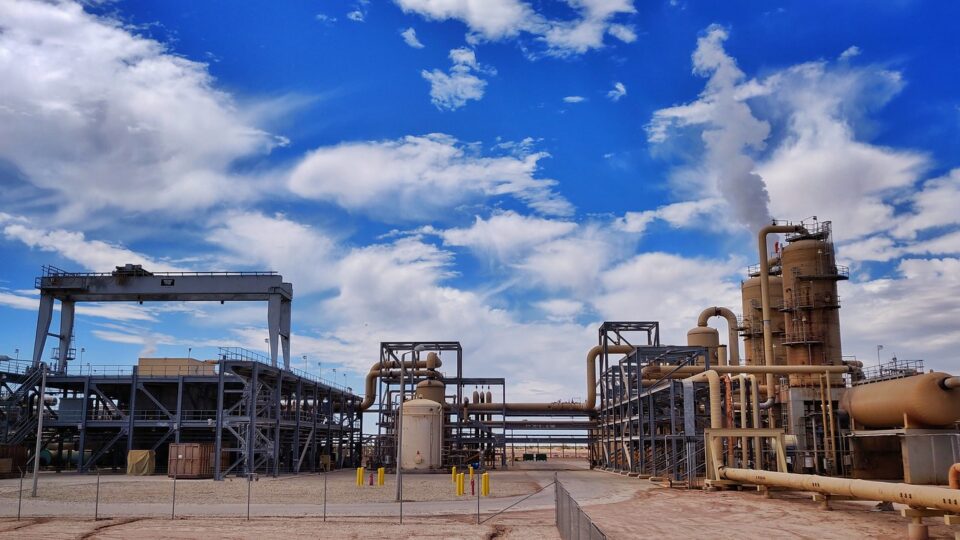
Neighborhood geothermal energy

December 30, 2024 By EarthWise Leave a Comment

Residential geothermal energy makes use of the constant, year-round temperature of the earth below the surface to efficiently provide both heating and cooling for a home.  In the summer, the cool earth beneath a house sits at about 55 degrees and can be tapped into with a heat pump to provide cooling.  In the winter, that 55-degree underground expanse provides a much warmer source of air to heat instead of the often freezing-cold air outside.  Geothermal systems are appealing because they use far less energy than other sources of heating and cooling.

Using geothermal energy to heat and cool buildings is nothing new.  But after years of planning and months of drilling into the ground, the first neighborhood-scale geothermal heating and cooling project has come online in Framingham, Massachusetts.

The project ties together 31 residential and five commercial buildings that share the underground infrastructure needed to heat and cool them.  This sort of shared geothermal system has previously been used on college campuses and similar places, but never before across a neighborhood in the United States.

The $14 million project, built by Eversource, broke ground in June 2023, and comprises 90 boreholes or wells drilled 600-700 feet underground. Approximately 135 customers are connected to the system, including low- and moderate-income customers, apartment buildings, a gas station, and a kitchen cabinet showroom.

A total of 13 states, including Massachusetts and New York, are considering pilot projects or advancing legislation that would allow gas utilities to develop networked geothermal heating and cooling.

**********

Web Links

First-in-the-Nation Geothermal Heating and Cooling System Comes to Massachusetts

Photo, posted September 30, 2019, courtesy of Stephen D. Strowes via Flickr.

Earth Wise is a production of WAMC Northeast Public Radio

  • « Go to Previous Page
  • Page 1
  • Page 2
  • Page 3
  • Page 4
  • Page 5
  • Page 6
  • Interim pages omitted …
  • Page 36
  • Go to Next Page »

Primary Sidebar

Recent Episodes

  • An uninsurable future
  • Clean energy and jobs
  • Insect declines in remote regions
  • Fossil fuel producing nations ignoring climate goals
  • Trouble for clownfishes

WAMC Northeast Public Radio

WAMC/Northeast Public Radio is a regional public radio network serving parts of seven northeastern states (more...)

Copyright © 2026 ·