
• Skip to primary navigation
  • Skip to main content
  • Skip to primary sidebar

Earth Wise

A look at our changing environment.

  • Home
  • About Earth Wise
  • Where to Listen
  • All Articles
  • Show Search
Hide Search
You are here: Home / Archives for energy density

energy density

A structural battery

October 25, 2024 By EarthWise Leave a Comment

The size and especially the weight of batteries is a critical factor for most things that use them.  Battery weight is a key limitation for computers and cell phones. It is even more of a limitation for electric cars, ships, or planes.

If the battery of a device or vehicle can also function as a load-bearing structure, its weight and energy consumption can be dramatically reduced.  This concept of a structural battery is sometimes called massless energy storage.  It has the potential to halve the weight of a laptop computer, make cell phones as thin as a credit card, and increase the range of an electric car by as much as 70%.

Researchers at Chalmers University in Sweden have been working on structural battery technology for many years.  Their first published results in 2018 showed how stiff, strong carbon fibers could be used for chemical storage of electrical energy.

Since then, they have been creating batteries with increasing energy density.  Their latest versions still have only a quarter of the capacity of today’s lithium-ion batteries. But if batteries can be part of the structure of a vehicle, for example, and can be made of lightweight materials like carbon fiber, then the overall weight of the vehicle can be greatly reduced and not nearly as much energy will be needed to power it.

The goal of the Chalmers research is to achieve battery performance that makes it possible to commercialize the technology.  There is a lot of engineering work to be done before these structural batteries can go from laboratory proofs of concept to real world use.  But the potential is quite promising.

**********

Web Links

World’s strongest battery paves way for light, energy-efficient vehicles

Photo, posted August 8, 2024, courtesy of NOI Techpark via Flickr.

Earth Wise is a production of WAMC Northeast Public Radio
Solid-state batteries for cars

September 19, 2024 By EarthWise Leave a Comment

Battery-powered electric vehicles have historically faced the challenges of limited driving range and long charging time.  In recent years, both of these limitations have been largely overcome for many if not most drivers.  Popular EVs on the market can go 300 miles and more on a charge and today’s fastest charging networks can add 200 miles of range in 20 minutes.  But many people want even more range and even faster charging.  Both of these things will happen in the not-too-distant future.

Multiple companies are working on solid-state batteries, which hold more energy in a given volume than current batteries.  The lithium-ion batteries that power today’s EVs (as well as our phones and computers) have a liquid or gel electrolyte.  Solid-state batteries use a solid ceramic or polymer electrolyte that provides higher energy density, faster charging times, and reduced fire risk as well.

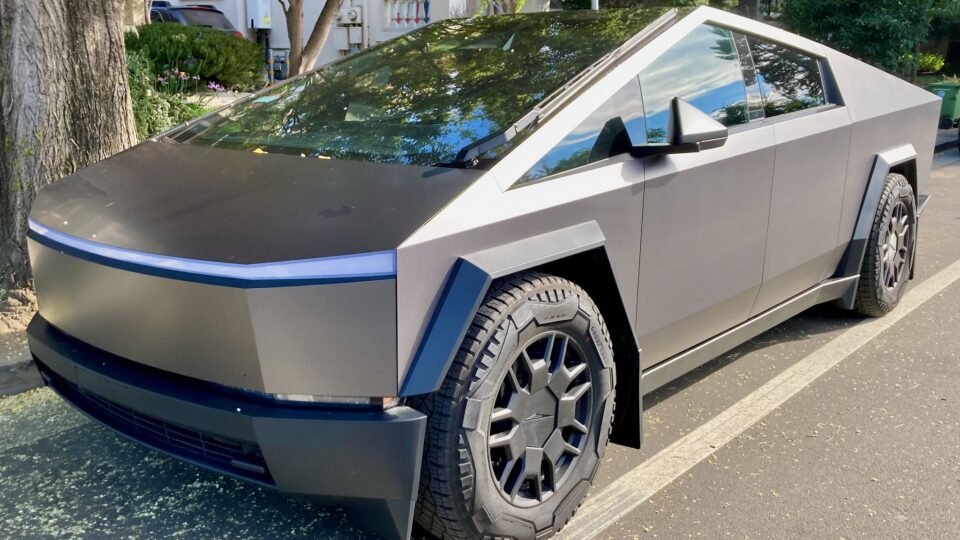
Samsung announced that it will produce solid-state batteries for vehicles by 2027.  Toyota says it is on track to develop a solid-state battery by 2027 or 2028.  California-based QuantumScape has an agreement to supply solid-state batteries to Volkswagen for mass production.  Tesla has not said what it is doing with regard to solid-state batteries, but it is likely that it’s also pursuing the technology.

The upshot of all of this is that EV ranges are likely to increase dramatically over the next several years leading to the availability of vehicles that can go 600 miles or more on a charge.  Given that the cost of EVs is already rapidly becoming at least competitive with if not lower than that of gasoline-powered cars, the days of internal combustion are becoming numbered.

**********

Web Links

Want an EV With 600 Miles of Range? It’s Coming

Photo, posted August 17, 2024, courtesy of Bill Abbott via Flickr.

Earth Wise is a production of WAMC Northeast Public Radio
Sodium-ion batteries

January 31, 2024 By EarthWise Leave a Comment

The transition away from fossil fuels is driving a rapidly increasing need for batteries.  Both electric vehicles and energy storage for the electric grid are enormous consumers of batteries.  At present, lithium-ion batteries are almost universally used for these purposes.  They have been getting better all the time and cheaper all the time and are likely to be the answer for the foreseeable future.  But they are not perfect.

Lithium is only found in a relatively small number of places and mining and extracting it is fairly expensive and environmentally unfriendly.  Lithium-ion batteries also frequently contain cobalt, which has its own set of problems.  There are also safety issues related to the flammability of lithium-ion batteries. 

As a result, there continue to be numerous efforts to identify and develop alternative battery technologies.  One of these is sodium-ion batteries, which are similar in many ways to lithium-ion batteries but in which sodium replaces lithium as the cathode material.

Sodium is extremely common – it’s found in ordinary salt – and sodium-ion batteries have a high energy density and are easy to produce.  They should have a long lifetime and have a more benign environmental impact than lithium-ion.  Many companies and researchers are working on sodium-ion batteries and are making good progress.

A study by Chalmers University in Sweden looked at the potential for sodium-ion batteries and found that the batteries are particularly promising for use in energy storage even in their current state of development and could eventually be used in cars.  Whether sodium-ion batteries can be good enough and cheap enough quickly enough to give lithium-ion a run for its money remains to be seen.

**********

Web Links

Resource-efficient and climate-friendly with sodium-ion batteries

Photo, posted March 12, 2013, courtesy of Chris Hunkeler via Flickr.

Earth Wise is a production of WAMC Northeast Public Radio

Liquid Fuels From Carbon Dioxide | Earth Wise

January 5, 2022 By EarthWise Leave a Comment

Converting carbon dioxide into liquid fuels

Most of the world’s energy demands are still being met by burning fossil fuels, thereby releasing carbon dioxide into the atmosphere.  The energy system is in the midst of a transition to renewable sources such as solar and wind power, but it will be quite some time before fossil fuels are only a minor part of energy production.  To reduce global warming, it will be necessary to prevent the carbon dioxide from fossil fuels from entering the atmosphere by capturing it and either locking it away or making use of it.

Recent research at several Chinese universities has developed a novel electrocatalyst that efficiently converts CO2 to liquid fuels containing multiple carbon atoms.  The main products of the high-efficiency reaction are ethanol, acetone, and n-butanol.  Previous electrocatalystic methods have mostly produced simpler hydrocarbons – namely, ones with only a single carbon atom.  The fuels the new catalyst produces are much more useful.

The catalyst is made from thin ribbons of a copper/titanium alloy that are etched with hydrofluoric acid to remove the titanium from the surface.  The process results in a material with a porous copper surface on an amorphous CuTi alloy.  The substance exhibits remarkably high activity, selectivity, and stability for catalyzing the reactions leading to the production of the hydrocarbon fuels.

Converting carbon dioxide into liquid fuels would be advantageous because they have high energy density and are safe to store and transport.  Apart from preventing carbon dioxide from entering the atmosphere, the process could also be a way to make use of excess energy produced by solar and wind generation by essentially storing that energy in the form of liquid fuels.

**********

Web Links

Liquid Fuels from Carbon Dioxide

Photo courtesy of Angewandte Chemie via Wiley-VCH.

Earth Wise is a production of WAMC Northeast Public Radio.

An All-Electric Plane

November 14, 2017 By EarthWise Leave a Comment

https://earthwiseradio.org/wp-content/uploads/2017/11/EW-11-14-17-An-All-Electric-Plane.mp3

The British discount airline EasyJet recently announced a partnership with American company Wright Electric to develop an all-electric commercial airplane that they said could be flying within 10 years.  The goal of the partnership is to develop aircraft with a maximum range of 335 miles, which is long enough for many of the European routes that EasyJet flies from its hub in England.

[Read more…] about An All-Electric Plane

Primary Sidebar

Recent Episodes

  • An uninsurable future
  • Clean energy and jobs
  • Insect declines in remote regions
  • Fossil fuel producing nations ignoring climate goals
  • Trouble for clownfishes

WAMC Northeast Public Radio

WAMC/Northeast Public Radio is a regional public radio network serving parts of seven northeastern states (more...)

Copyright © 2026 ·