• Skip to primary navigation
  • Skip to main content
  • Skip to primary sidebar

Earth Wise

A look at our changing environment.

  • Home
  • About Earth Wise
  • Where to Listen
  • All Articles
  • Show Search
Hide Search
You are here: Home / Archives for eco-friendly

eco-friendly

Better blue LEDs

August 27, 2025 By EarthWise Leave a Comment

Developing better blue LEDs

LEDs have become the standard source of energy-efficient lighting.  They make use of semiconductors to turn electricity into light.  Depending upon the materials used to make them, LEDs produce different colors.  In the early 1990s, the first blue LEDs were discovered, ultimately earning the Nobel Prize in physics, and enabling LEDs to produce white light, which is essential for general lighting applications.

Blue LEDs have shortcomings.  Some have issues with stability, scalability, cost, efficiency, complexity in manufacturing, or have environmental concerns because of the use of toxic components. 

Researchers at Rutgers University in collaboration with scientists at several other institutions have found a way to make blue LEDs more efficient and sustainable.  These LEDs use a new type of hybrid material that is a combination of copper iodide with organic molecules.  The impressive performance of these LEDs was achieved through an innovative technique called dual interfacial hydrogen-bond passivation.  This new manufacturing technique boosts the performance of LEDs by a factor of four.

The material has several advantages.  It has a very high photoluminescence quantum yield, which means that it converts nearly all the photoenergy it receives into blue light.  The LEDs last longer than many others and they work well in larger-scale applications, maintaining high efficiency.  The materials are eco-friendly and cost-effective.

According to the researchers, this new approach could be a versatile strategy for generating high-performance LEDs that can pave the way for better, brighter, and longer-lasting LEDs.

**********

Web Links

Scientists Develop Deep-Blue LEDs Expected to Greatly Enhance General Lighting

Photo, posted February 1, 2021, courtesy of Ivan Radic via Flickr.

Earth Wise is a production of WAMC Northeast Public Radio

More eco-friendly desalination

May 14, 2025 By EarthWise Leave a Comment

There are about 16,000 operational desalination plants, located across 177 countries, which generate an estimated 25 billion gallons of fresh water daily.

For every gallon of drinking water produced at a typical desalination plant, one and a half gallons of brine are produced.  Much of it is stored in ponds until the water evaporates, leaving behind solid salt or concentrated brine for further treatment.  There are various other techniques for concentrating brines, but they are energy-intensive and environmentally problematic.  The process called electrodialysis uses electrified membranes to concentrate salts. 

Water flows into many channels separated by membranes, each of which has the opposite electrical charge of its neighbors.  Positive salt ions move towards negatively charged electrodes and negative ions move toward positive electrodes.  Two streams result, one containing purified water and one containing concentrated brine.

This eliminates the need for evaporation ponds, but existing electrodialysis membranes either result in leakage of salts into the environment or are too slow, making the process impractical for large-scale use.

Researchers at the University of Michigan have developed a new kind of membrane for electrodialysis.  The new membranes don’t leak and are ten times more conductive than those on the market today which means that they can move more salt using less power.  The membranes can be customized to suit a broad range of water types, which may help make desalination a more sustainable solution to the world’s growing water crisis.

**********

Web Links

Making desalination more eco-friendly: New membranes could help eliminate brine waste

Photo, posted February 4, 2012, courtesy of David Martinez Vicente via Flickr.

Earth Wise is a production of WAMC Northeast Public Radio

An eco-friendly detergent

May 8, 2025 By EarthWise Leave a Comment

Researchers developing an eco-friendly detergent

Household products such as laundry detergents and dishwasher tablets are an indispensable part of everyday life, but such products contain all sorts of chemicals that have undesirable properties.  Many are difficult to break down when they enter the environment, and some add nutrients that trigger environmentally harmful algal blooms.   The ingredient lists for even what are described as environmentally friendly cleansing products can be filled with lots of polysyllabic chemicals with unknown potential impacts.  Detergents made from harmless stuff are often difficult to make, hard to rinse off, and sometimes potentially damaging to fabrics.

Researchers at Tianjin University in China have developed an environmentally friendly detergent made of tiny wood fibers and corn protein that removes stains from clothes and dishes as well as commercial products.

The researchers combined cellulose nanofibers from wood with zein protein, which is taken from corn, to produce an emulsion.  The cellulose can attract and repel water and can form emulsions and attract various kinds of stains.  The zein protein helps to stabilize the emulsion and trap oils.

They tested the new detergent by cleaning cotton cloth and dishes stained with ink, chili oil, and tomato paste.  They compared the results against commercial laundry detergent and dish soap.  Their new detergent was somewhat less effective than the commercial products when used at 1% concentration but was more effective when used at a 5% concentration. 

The results suggest that this natural detergent could be an efficient, cost-effective, and sustainable alternative to the synthetic cleaning agents that currently dominate the market.

**********

Web Links

Researchers create eco-friendly detergent from wood fiber and corn protein

Photo, posted July 31, 2009, courtesy of Mei Anne Mendoza via Flickr.

Earth Wise is a production of WAMC Northeast Public Radio

Sustainable New Year’s resolutions

December 29, 2023 By EarthWise Leave a Comment

Sustainable resolutions for the new year

Every year, millions of people around the world make resolutions to spark positive change in the new year.  Popular resolutions include improving health and fitness, traveling more, spending less, and so on. With 2024 just around the corner, here are six resolution ideas to reduce our climate impact: 

Shop More Sustainably.  Choose eco-friendly brands and products with minimal environmental impact, including locally-produced goods and reusable items whenever possible. 

Switch To Clean Energy.  Purchase green power, install renewable energy systems to generate electricity, or switch to renewable resources for home and water heating and cooling needs. 

Reduce Food Waste.  Food waste is a significant global issue with environmental, economic, and social implications.  In the U.S., an estimated 30-40% of the total food supply is never eaten.  Meal plan and only shop for what you need.  And freeze any leftovers.   

Adopt A More Plant-Based Diet.  Transition to a more plant-based diet in order to shrink the ecological footprint of food production.  Resource-intensive animal-based foods like meat, dairy, and eggs are one of the chief contributors to climate change. 

Reduce the Carbon Footprint of Transportation.  Opt for eco-friendly transportation and energy-efficient practices in order to lower emissions.  Examples include driving a battery-electric car and utilizing public transportation. 

Get Involved In Conservation Advocacy.  Support and engage in environmental causes, and help promote conservation and sustainable practices. 

As we ring in the new year, let’s raise our glasses to a cleaner and greener 2024.

**********

Web Links

Photo, posted August 3, 2018, courtesy of Ella Olsson via Flickr.

Earth Wise is a production of WAMC Northeast Public Radio
Transparent Wood | Earth Wise

June 14, 2021 By EarthWise Leave a Comment

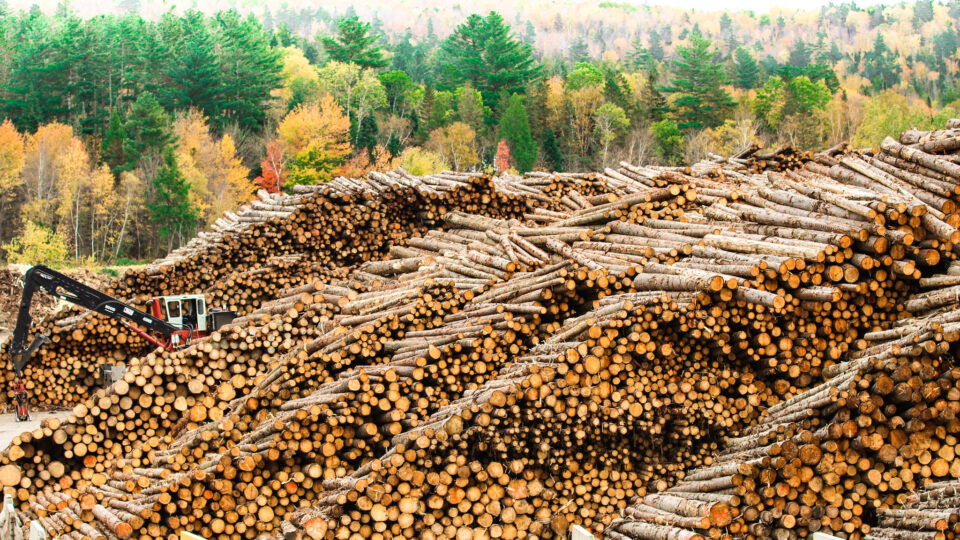
Making eco-friendly transparent wood

In recent years, there have been efforts to change the nature of wood to give it new properties.  People have demonstrated so-called augmented wood with integrated electronics, energy storage capabilities, and other properties.  Several different groups of researchers have developed wood that is actually transparent.

In 2016, researchers at KTH Royal Institute of Technology in Stockholm demonstrated transparent wood made by selectively extracting lignin – the substance that makes up the cell walls of wood -and replacing it with a polymer.  The result is a new material that is weatherproof, fairly fire resistant, stronger than wood, lighter than wood, and transparent.

When the lignin is removed from wood, the empty pores left behind need to be filled with something that restores the wood’s strength.  The early versions of transparent wood used polymethyl methacrylate – essentially acrylic plastic – for this purpose.  But that material is made from petroleum, so it is not an environmentally desirable approach.

Recently, the KTH researchers have successfully tested an eco-friendly alternative:  limonene acrylate, which is a monomer made from renewable citrus, such as peel waste that can be recycled from the orange juice industry.

There are many potential applications for transparent wood as a structural material.  These include load-bearing windows, skylights, and semi-transparent facades that are strong and thermally insulating and yet permit light to enter. 

Transparent wood would be a very attractive material for many applications in that it comes from renewable sources and offers excellent mechanical properties including strength, toughness, low density, and low thermal conductivity.

**********

Web Links

Citrus derivative makes transparent wood 100 percent renewable

Photo, posted October 12, 2018, courtesy of Mussi Katz via Flickr.

Earth Wise is a production of WAMC Northeast Public Radio.

Eco-Friendly Agriculture

October 21, 2019 By EarthWise Leave a Comment

Modern agriculture has steadily destroyed native grasslands, among other ecosystems.  In fact, farming is one of the most ecologically destructive things that humans do.  But we do have to eat.  In response, there is a growing movement for agrarian reform, from grain farming on the prairie, to agroforestry, to raising livestock more sustainably.  Efforts are accelerating to develop a kinder, gentler agriculture adapted to a changing world.

One such effort has come from the Land Institute, an organization in Kansas that works on natural systems agriculture, which seeks to retain the ecological stability of the prairie with its perennial seed plants along with a grain and seed yield comparable to that from annual crops.

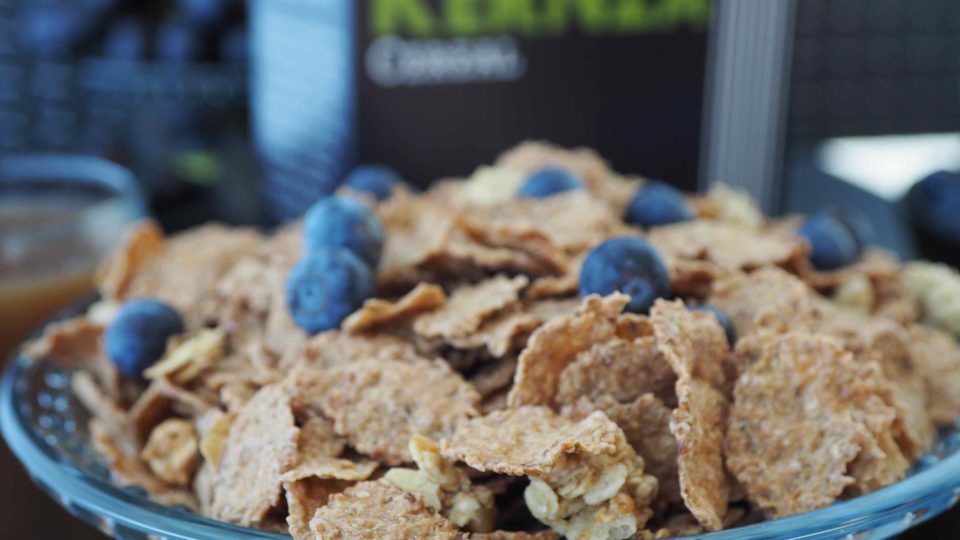
After four decades of effort, the institute has introduced its first commercial grain, a trademarked variety called Kernza.  Kernza is a domesticated perennial wild grass – a so-called intermediate wheatgrass – that has a long, slender head that resembles wheat seeds.  People describe its taste as sweet and nutty.   Kernza is already being made into a cereal called Honey Toasted Kernza by Cascadian Farms.  Patagonia Provisions – a spin-off from the clothing company – is making beer from the new grain.

Although Kernza is already being grown and sold commercially, it is not yet ready for prime time.  Last year, there were only about 1,000 acres in cultivation and the yield is only a third to a tenth of the yield of wheat. 

Developing a sustainable perennial polyculture of edible plants would have major benefits such as not having to plow every year, plants developing large root systems that can reach water far beneath the surface and, without annual plowing, having soil carbon remain in the ground.

**********

Web Links

With New Perennial Grain, a Step Forward for Eco-Friendly Agriculture

Photo courtesy of Cascadian Farms/General Mills.

Earth Wise is a production of WAMC Northeast Public Radio.

A Green Way To Turn Blue

August 5, 2019 By EarthWise Leave a Comment

Indigo dye is what is used to color denim cloth and blue jeans.  Historically, the dye came from a tropical plant most often found on the Indian subcontinent.  Eventually, it became economically favorable to synthesize the dye instead and almost all of the 50,000 tons of the dye used annually is synthetic.

The processes used to make synthetic indigo are efficient and inexpensive, but they often require toxic chemicals and create a lot of dangerous waste.  Researchers at the Department of Energy’s Joint BioEnergy Institute have now developed an eco-friendly production platform for a blue pigment called indigoidine.  It has a similarly vividly saturated blue hue as synthetic indigo.

The researchers were investigating the ability of various fungal strains to express large enzymes known as NRPSs.  They chose an NRPS that converts two amino acid molecules into indigoidine – a blue pigment – in order to make it easy to tell if the strain engineering had worked.  Having the culture turn blue was an effective indicator.

Their primary interest was not the pigment but when they saw just how blue the culture was for one particular fungus, they realized that the fungal strain did not just produce indigoidine; it produced large amounts of it.

Thus they have found a way to efficiently produce a blue pigment that uses inexpensive, sustainable carbon sources instead of harsh chemicals.  There is already a great deal of interest from the textile industry, where many companies are eager for more sustainably sourced pigments because customers are increasingly aware of the impacts of conventional dyes.

Thanks to a talented fungus called Rhodosporidium toruloides, there may now be a green way to turn blue.

**********

Web Links

Blue Pigment from Engineered Fungi Could Help Turn the Textile Industry Green

Photo, posted March 7, 2006, courtesy of Willi Heidelbach via Flickr.

Earth Wise is a production of WAMC Northeast Public Radio.

Packaging From The Sea

August 19, 2016 By WAMC WEB

https://earthwiseradio.org/wp-content/uploads/2016/07/EW-08-19-16-Packaging-from-the-Sea.mp3

Waste due to excess packaging of the products we buy is a real problem.  It is one that most of us are conscious of and more and more businesses are making efforts toward eco-friendly packaging.  There is increased use of cardboard, which is recyclable.  Most of us try to reduce our waste through recycling.  But as we buy more things online and have a growing variety of things delivered to our homes, it is a struggle to receive the things we order in good condition and not end up with piles of packaging materials.

[Read more…] about Packaging From The Sea

Biodegradable Bottles

April 21, 2016 By WAMC WEB

https://earthwiseradio.org/wp-content/uploads/2016/04/EW-04-21-16-Biodegradable-Bottles.mp3

Plastics are the ubiquitous workhorse material of the modern economy.  Their use has increased 20-fold in the past half century, and production of plastics is expected to double again in the next 20 years.

[Read more…] about Biodegradable Bottles

Primary Sidebar

Recent Episodes

  • An uninsurable future
  • Clean energy and jobs
  • Insect declines in remote regions
  • Fossil fuel producing nations ignoring climate goals
  • Trouble for clownfishes

WAMC Northeast Public Radio

WAMC/Northeast Public Radio is a regional public radio network serving parts of seven northeastern states (more...)

Copyright © 2026 ·