• Skip to primary navigation
  • Skip to main content
  • Skip to primary sidebar

Earth Wise

A look at our changing environment.

  • Home
  • About Earth Wise
  • Where to Listen
  • All Articles
  • Show Search
Hide Search
You are here: Home / Archives for earlier

earlier

The cicadas are coming

June 18, 2025 By EarthWise Leave a Comment

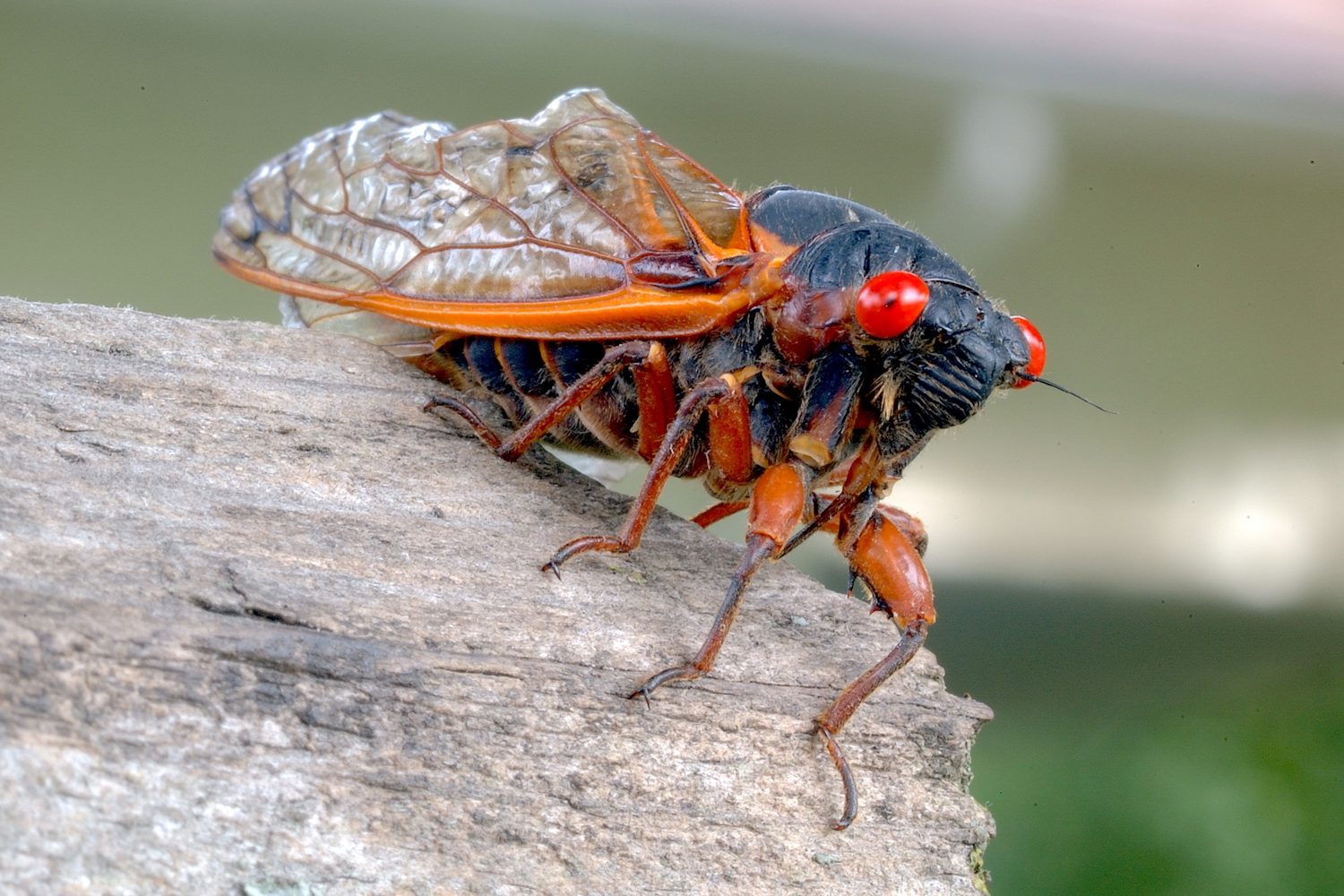
After hiding underground for the last 17 years, billions of cicadas are taking to the skies this summer.  This batch of insects, known as Brood XIV, will cover more of the U.S. than any other 17-year brood.  New York and at least 13 other states – Georgia, Kentucky, Maryland, Massachusetts, New Jersey, North Carolina, Ohio, Pennsylvania, South Carolina, Tennessee, Virginia, West Virginia, and parts of Indiana are being serenaded by the sound of cicadas in May and June.

There are 15 broods of periodical cicadas that emerge every 13 or 17 years.  They come out when soil temperatures reach 64 degrees.  Around the world there are annual cicadas while periodical cicadas can only be found in the eastern United States.

Once the insects emerge, they will issue their noisy, chirping mating calls for just a few weeks before they lay eggs and die.  The offspring from the eggs will burrow underground and remain dormant or in the nymph stage feeding on tree roots for another 17 years.  Surfacing in vast numbers is a way to overwhelm predators and ensure that at least some cicadas survive to reproduce. 

The emergence of these insects provides a bounty of food to squirrels, lizards, birds, and other creatures.  A study found that once cicadas emerge, the population of cuckoos, blue jays, and red-bellied woodpeckers grows.

As the climate changes, the timing of cicada cycles may also change.  Warmer weather will lead to cicadas emerging earlier in the year.  Eventually, even the time they spend underground may shorten.

**********

Web Links

After 17 Years Underground, Massive Cicada Brood to Swarm U.S.

Photo, posted July 16, 2017, courtesy of Renee Grayson via Flickr.

Earth Wise is a production of WAMC Northeast Public Radio

Toxic algae and West Coast marine life

June 5, 2025 By EarthWise Leave a Comment

Over the first several months of this year, hundreds of sea lions, dolphins, and seabirds have fallen ill or died after eating sardines or anchovies that had been feeding on an algal bloom along the California coast since winter.  The biotoxin in the algae accumulates in the feeder fish.

Two cases of whales dying from the biotoxin have been confirmed by two nonprofit organizations tasked with testing dead mammals.  These were a humpback that washed ashore in Huntington Beach in January and a minke whale found dead in Long Beach in April.

This is the fourth year a row that California has experienced major algal blooms.  Warmer waters are causing blooms to be bigger and more damaging than they have been before.  They enter into new areas and contaminate the food web for longer.  The warmer waters accelerate algae growth that is further fueled by nutrients that rise to the surface from deeper colder waters driven by winds that blow parallel to the coast.  This year’s algae event started earlier than usual and is lasting longer than normal.

More than a dozen animal rescue and rehabilitation groups that form NOAA’s West Coast Marine Mammal Stranding Network are providing resources to try to respond to the situation.  At the Marine Mammal Care Center in Los Angeles, more than 80 sea lions and seals were being treated for domoic acid poisoning, the result of ingesting algae neurotoxin.  Since February, it has cared for more than 300 poisoned animals.

Marine mammals are sentinel species for humans who also consume seafood.  The West Coast ocean ecosystem is currently filled with toxins.

**********

Web Links

California Toxic Algal Bloom Blamed for Months-long Marine Life Poisoning

Photo, posted March 26, 2025, courtesy of Marnee Jill via Flickr.

Earth Wise is a production of WAMC Northeast Public Radio
Climate change and an iconic Florida bird

December 31, 2024 By EarthWise Leave a Comment

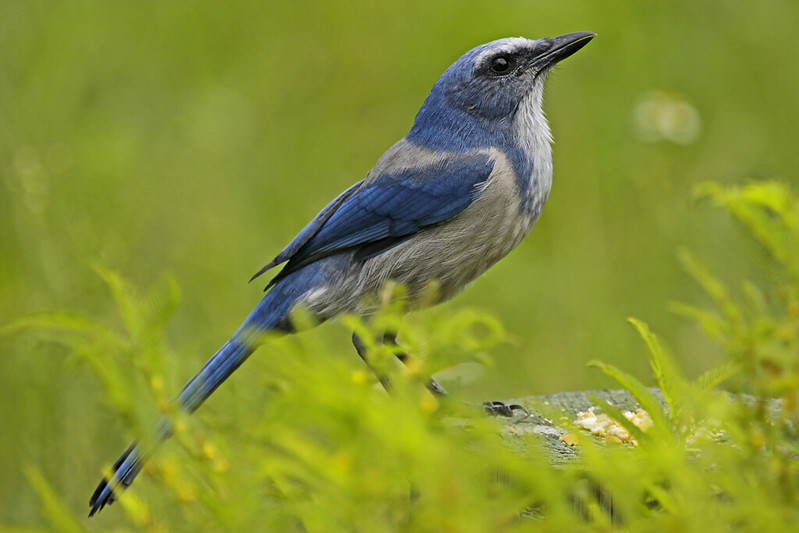
The Florida scrub-jay is a medium-sized bird native to Florida, known for its striking blue plumage and distinctive call. It is the only bird species that is entirely endemic to Florida, found mainly in the scrubby, sandy habitats of the central and southern part of the Sunshine State.

But extensive development, habitat fragmentation, and habitat degradation have caused the scrub-jay population to decline significantly over the past century. 

Another threat facing the Florida scrub-jay is climate change.  According to a new study by researchers from the Archbold Biological Station and the Cornell Lab of Ornithology, warmer winters driven by climate change are causing Florida scrub-jays to nest one week earlier than they did in 1981.  This seemingly innocuous change has reduced the number of offspring raised annually by 25% since 1981. 

The research team examined 37 years of data to assess the impacts of warming on reproductive efforts.  From 1981 to 2018, the average winter temperature at Archbold Biological Station in Florida increased by 2.5 degrees Fahrenheit.  Despite increases in the number of nests built and eggs laid over the longer breeding season, Florida scrub-jays are not producing more young. 

The researchers hypothesize that warmer temperatures make the nests susceptible to predation by snakes for a longer period of the Florida spring than in the past.  The findings, which were recently published in the journal Ornithology, suggest that climate change could dampen the success of conservation efforts for this threatened species.

**********

Web Links

Long-term study reveals warming climates threaten Florida scrub-jay

Florida Scrub-Jay

Photo, posted October 15, 2018, courtesy of Judy Gallagher via Flickr.

Earth Wise is a production of WAMC Northeast Public Radio
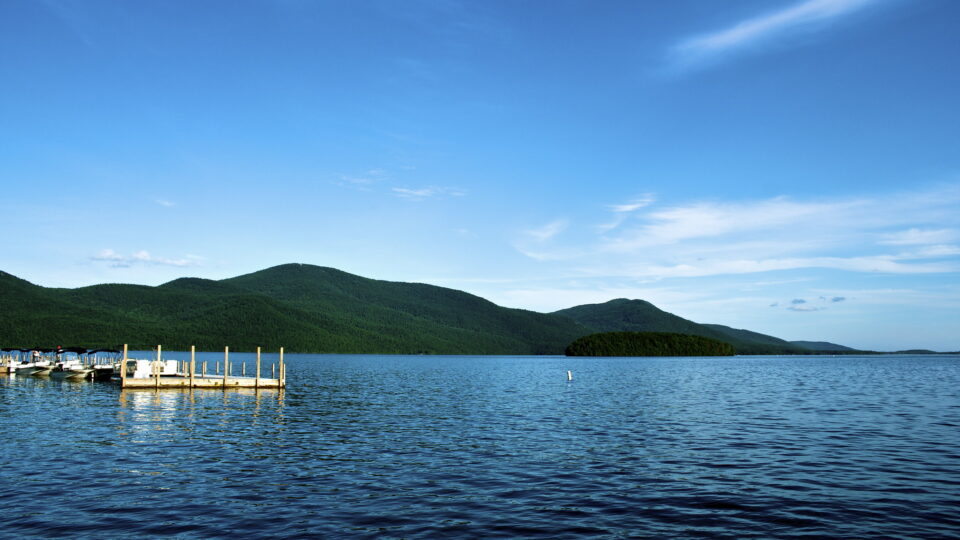
Oxygen Loss In Lakes | Earth Wise

January 13, 2023 By EarthWise Leave a Comment

The warming climate is prompting harmful oxygen loss in lakes.

Researchers from Cornell University and Rensselaer Polytechnic Institute have found that the continual warming in the world over the past 25 years has been reducing the amount of oxygen in many lakes.

Data from more than 400 lakes – mostly in the United States – shows that lakes with dissolved oxygen losses strongly outnumber those with gains.  Overall, the researchers found that the amount of low oxygen water is increasing by 0.9% to 1.7% per decade on average  and the volume of lake water lacking oxygen has increased by more than 50% from 25 years ago.

In the summer, lake surfaces may be about 70 degrees while the lake bottom may be about 40 degrees.  The colder water is denser than the warmer water which causes resistance to the layers mixing.  It is akin to having oil and vinegar in a cruet.  This is known as stratification.   The result is that oxygen from the atmosphere is prevented from replenishing dissolved oxygen in deep waters.  This is a normal seasonal phenomenon.

However, with winter ending sooner than it used to, seasonal stratification is starting earlier and ending later. As warming continues, it is likely that there will be an increasing number of oxygen-depleted lakes in the future.

Oxygen deprivation in water can lead to hypoxia (low oxygen) and even anoxia (no oxygen), which have negative consequences for fish and other species.  Reducing oxygen in lake water can lead to buildup of methane.   Nutrients from agricultural runoff, released from unsettled lake sediment, increase the likelihood of harmful algal blooms.

**********

Web Links

Warming climate prompts harmful oxygen loss in lakes

Photo, posted June 23, 2010, courtesy of Alexander Acker via Flickr.

Earth Wise is a production of WAMC Northeast Public Radio.

Spring Is Coming Earlier In Britain | Earth Wise

March 1, 2022 By EarthWise Leave a Comment

Climate change is causing spring to arrive earlier

The United Kingdom has some of the most detailed records of seasonal changes anywhere in the world.  Since the 18th century, observations of seasonal changes have been recorded by scientists, naturalists, amateur and professional gardeners, and organizations such as the Royal Meteorological Society.  Researchers at two British institutions have collected and collated these records into a database they call Nature’s Calendar, which currently has about 3.5 million records going back to 1736.

By analyzing more than 400,000 observations of 406 plant species in Nature’s Calendar, they found that the average first flowering date from 1987 to 2019 is a full month earlier than the average from 1753 to 1986.  The change correlates very well with rising global temperatures.

The ecological risks associated with earlier flowering times are high.  When plants flower too early, a late frost can kill them – a phenomenon most gardeners have experienced at some point or another.  Beyond that, plants, insects, birds, and other wildlife have co-evolved to be synchronized with plants in their development stages.  A certain plant flowers and attracts a certain kind of insect, which then attracts a particular kind of bird, and so on.  If plants get out of sync with the animals in the ecosystem and the animals can’t change their behavior quickly enough, it can lead to species collapse.

If global temperatures continue to increase at their current rate, spring in the UK could eventually start in February, creating serious problems for many of the species that inhabit forests, gardens, and farms.  The dangers of climate change are not just about extreme weather.

**********

Web Links

UK plants flowering a month earlier due to climate change

Photo, posted February 1, 2012, courtesy of Mandy via Flickr.

Earth Wise is a production of WAMC Northeast Public Radio.

Maple Syrup And Climate Change

October 11, 2019 By EarthWise Leave a Comment

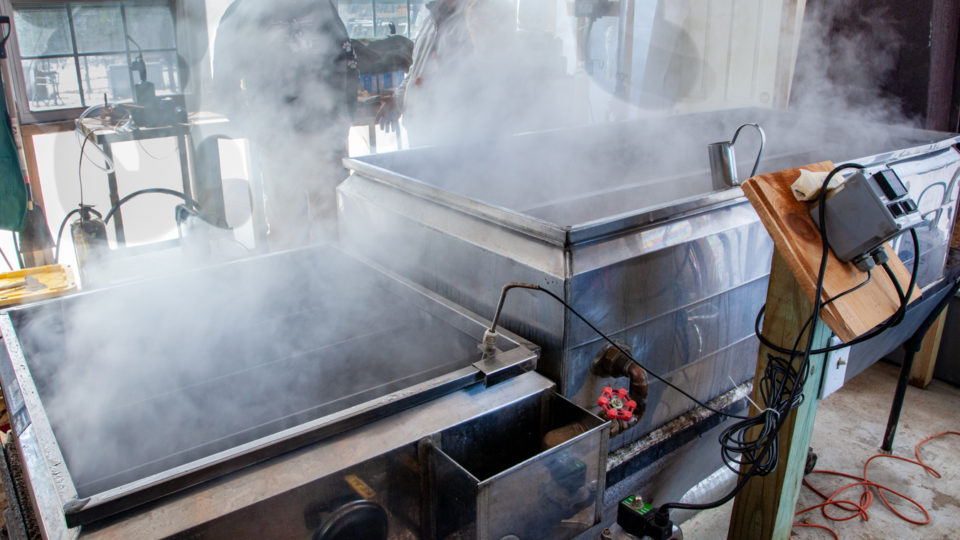
According to a study recently published in the journal Forest Ecology and Management, scientists are predicting another casualty of climate change: the U.S. maple industry.  By the year 2100, the maple syrup season in the United States may be less productive and arrive one month earlier than it has between 1950 and 2017.

Maple syrup production is impacted by two climate-sensitive factors: sugar content and sap flow.  Sugar content is determined by the previous year’s carbohydrate stores.  Sap flow depends on the freeze/thaw cycle.  Sap begins to flow in sugar maples when winter nights dip below freezing and the days warm above freezing.

The researchers studied six sugar maple stands from Virginia to Quebec, Canada over a six year period.  They created a model that predicted the timing of optimal sap flow based on historical temperature data on freeze/thaw days, actual sap collection from their field work, and monthly climate. 

According to modeling projections, the maple syrup season is expected to be, on average, one month earlier by the end of the century.  States like Indiana and Virginia will barely produce any sap.  New Hampshire and Vermont are likely to be least affected, but are still expected to experience a decrease in production.  In fact, most areas of maple production in the United States are projected to see decreases in production by the year 2100, while areas in northern Ontario and Quebec should see moderate to large increases in production. 

Currently, Canada is responsible for approximately 80% of global maple syrup production while the U.S. produces 20%.  The shifting climate for optimal maple production will leave many scrambling to find the sweet spot. 

**********

Web Links

Climate change study finds that maple syrup season may come earlier

Photo, posted March 24, 2019, courtesy of Paul VanDerWerf via Flickr.

Earth Wise is a production of WAMC Northeast Public Radio.

Spring Is Springing Earlier

April 9, 2018 By EarthWise Leave a Comment

https://earthwiseradio.org/wp-content/uploads/2018/04/EW-04-09-18-Spring-is-Springing-Earlier.mp3

A comprehensive study has confirmed what has been widely believed in the scientific community and in popular reports for years:  spring is arriving earlier and the further north you go, the more pronounced is the effect.

[Read more…] about Spring Is Springing Earlier

Primary Sidebar

Recent Episodes

  • An uninsurable future
  • Clean energy and jobs
  • Insect declines in remote regions
  • Fossil fuel producing nations ignoring climate goals
  • Trouble for clownfishes

WAMC Northeast Public Radio

WAMC/Northeast Public Radio is a regional public radio network serving parts of seven northeastern states (more...)

Copyright © 2026 ·