• Skip to primary navigation
  • Skip to main content
  • Skip to primary sidebar

Earth Wise

A look at our changing environment.

  • Home
  • About Earth Wise
  • Where to Listen
  • All Articles
  • Show Search
Hide Search
You are here: Home / Archives for driver

driver

Hydroclimate whiplash

January 30, 2025 By EarthWise Leave a Comment

Hydroclimate whiplash has increased as much as 66% since the mid-20th century

Hydroclimate whiplash is a term that describes rapid swings between intensely wet and dangerously dry weather.  Global weather records show that the occurrence of hydroclimate whiplash has increased by 31% or as much as 66% since the mid-20th century. 

California’s experience is a prime example of this phenomenon.  After years of severe drought, dozens of atmospheric rivers subjected the state to record-breaking amounts of precipitation in the winter of 2022-23.  A second extremely wet winter in the southern parts of the state the following year resulted in the growth of abundant amounts of grass and brush. 2024 saw a record-hot summer which was then followed by a record-dry start to the 2025 rainy season.  The result was the catastrophic wildfires in the Los Angeles area in January.

Research by UCLA climate scientists explains that the primary driver for the increasing occurrence of hydroclimate whiplash is the expansion of the atmospheric sponge – that is, the growing ability of the atmosphere to evaporate, absorb and release water.  Every degree Celsius that the planet warms increases this ability by 7%. 

The global consequences of hydroclimate whiplash include not only floods and droughts but also the increased danger of whipsawing between the two, leading to the bloom and burn cycle that California recently faced. The risk of wildfire is twofold:  first by increasing the growth of flammable grass and brush in the months before the fire season, and then by drying it out to dangerous levels with extremely warm and dry weather.

**********

Web Links

Floods, droughts, then fires: Hydroclimate whiplash is speeding up globally

Photo, posted January 13, 2025, courtesy of Victor Guillen / USDA Forest Service via Flickr.

Earth Wise is a production of WAMC Northeast Public Radio

Rising methane emissions

October 22, 2024 By EarthWise Leave a Comment

Methane is a colorless and odorless gas that occurs abundantly in nature and is also a product of certain human activities.  It’s a short-lived but highly potent greenhouse gas and, as a result, is a major driver of climate change.  In fact, methane heats the atmosphere nearly 90 times faster than carbon dioxide over a 20-year period. 

Despite a global pledge from more than 150 nations to reduce methane emissions by 30% this decade, methane emissions continue to rise.  In fact, according to a new paper led by researchers from Stanford University, total annual methane emissions have increased 20% over the past two decades. 

The paper, which was recently published in the journal Environmental Research Letters, found that atmospheric concentrations of methane today are more than 2.6 times higher than in pre-industrial times.  In fact, atmospheric methane concentrations are currently the highest they’ve been in at least 800,000 years.

Methane emissions from coal mining, oil and gas production and use, cattle and sheep ranching, and decomposing organic waste in landfills are responsible for driving the growth.  In 2020, the most recent year for which data was available, nearly 400 million tons – or about two-thirds – of global methane emissions came directly from human activities. 

Methane concentrations in Earth’s atmosphere have increased at record speed over the past five years.  According to the research team, only the European Union and possibly Australia seem to have decreased methane emissions from human activities over the past two decades.  This trend “cannot continue if we are to maintain a habitable climate.”

**********

Web Links

Methane emissions are rising faster than ever

Photo, posted December 4, 2010, courtesy of Dani Mettler via Flickr.

Earth Wise is a production of WAMC Northeast Public Radio
An Accelerating Rate Of Mountain Forest Loss | Earth Wise

April 27, 2023 By EarthWise Leave a Comment

Recent study demonstrates how mountain forest loss is accelerating

Mountains contribute disproportionately to the Earth’s diversity of life.  While mountains account for about 25% of the land area on Earth, they are home to more than 85% of the mammal, bird, and amphibian species.  But alarmingly, forested mountain habitats in which these species live are disappearing, and they appear to be disappearing at an accelerating rate.

According to a new study recently published in the journal One Earth, more than 300,000 square miles of mountain forest has been lost globally since 2000, which is an area larger than the state of Texas. 

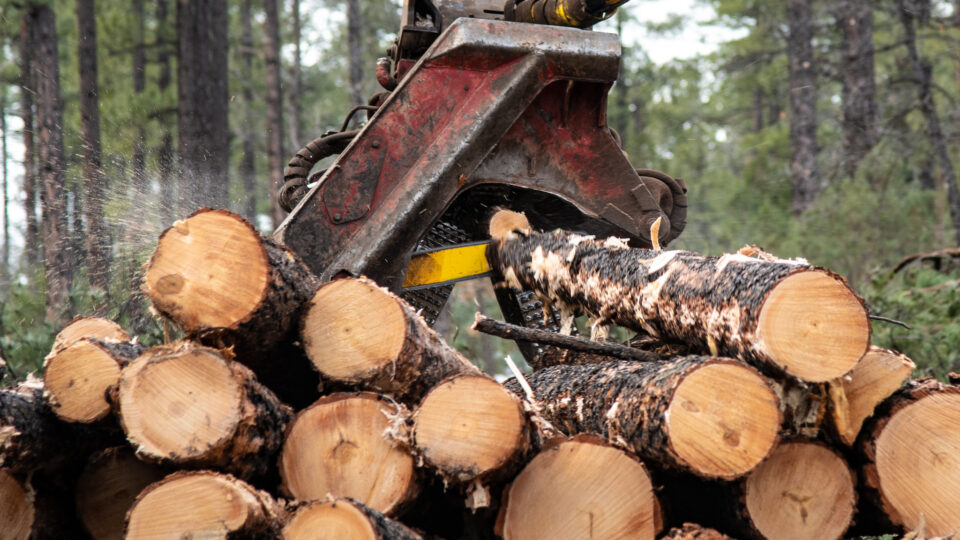
A research team led by scientists from Leeds University in the United Kingdom and the Southern University of Science and Technology in China tracked changes in mountain forests on an annual basis from 2001 to 2018.  The researchers found logging to be the biggest driver of mountain forest loss, responsible for 42% of the overall decline.  This is followed by wildfires at 29%, so-called “slash-and-burn” cultivation at 15%, and permanent or semi-permanent agriculture at 10%.  Significant losses occurred in Asia, Africa, Europe, Australia, and South America, but not in Oceania or North America.

The research team also found that the rate of mountain forest loss seems to be accelerating: in fact, the annual rate of loss increased 50% from 2010-2018 when compared with 2001-2009.

While developing additional forest protection strategies and interventions is critical, the researchers emphasize the importance of also considering food production, livelihoods, and human wellbeing in any new measures.

**********

Web Links

Mountain forests are being lost at an accelerating rate, putting biodiversity at risk

Photo, posted December 6, 2018, courtesy of Lance Cheung / USDA via Flickr.

Earth Wise is a production of WAMC Northeast Public Radio
Electric Cars And The Remote Road Test | Earth Wise

August 18, 2022 By EarthWise Leave a Comment

Debunking myths of electric vehicles

One reason many people are hesitant about switching to an electric car is range anxiety, the fear that their car’s battery will die on them in the middle of a trip.  It is pretty much the same thing as running out of gas, but somehow it seems like more of a danger.

Perhaps this was true when charging stations were few and far between and electric cars couldn’t go very far on a charge, but these days, the average electric car can drive about 200 miles on a charge and there are charging stations all over the place.

A big difference between gas cars and electric cars is that many people can charge their cars at home and start every day with the equivalent of a full tank.  With an electric car, there is little reason to use up all nearly all the charge before filling up the tank again.

The truth is that most people don’t drive all that much on the average day anyway.  In the US, the average driver goes about 39 miles a day.  In Europe, is it considerably less.  Yes, there are some people who drive 200 miles a day, but they are few and far between.

Remote and regional Australia is a place where distances between essential services can be very large.  But a new study from the Australian National University found that even under those trying conditions, the vast majority of residents, about 93%, can go about their business even with the lower-range electric vehicles available on the market without having to recharge en route.

Electric cars may not be practical for some drivers, but for most, they are already a great choice.

**********

Web Links

Electric vehicles pass the remote road test

Electric car range and 5 reasons why your range anxiety is unwarranted

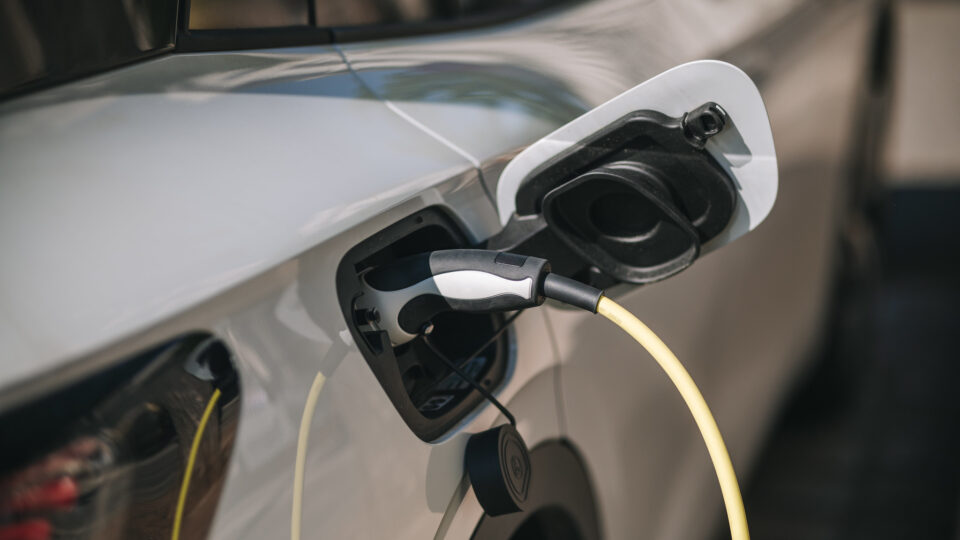
Photo, posted May 21, 2022, courtesy of Ivan Radic via Flickr.

Earth Wise is a production of WAMC Northeast Public Radio.

How Quickly Can The Planet Recover? | Earth Wise

December 6, 2021 By EarthWise Leave a Comment

Climate change refers to long-term shifts in temperatures and weather patterns.  Historically, these shifts were natural.  But since the Industrial Revolution, scientists have found that the main driver of climate change has been human activities, primarily by adding significant amounts of greenhouse gases into the atmosphere through the burning of fossil fuels. 

Today, climate change is destabilizing Earth’s temperature equilibrium and is having a widespread impact on humans, animals, and the environment.  Some of the consequences of anthropogenic climate change include warmer air and ocean temperatures, shrinking glaciers, increasing spread of pests and pathogens, declining biodiversity, and more intense and frequent extreme weather events. 

But how quickly can the climate recover from the warming caused by an increase in carbon dioxide in the atmosphere? 

Researchers from Johannes Gutenberg-University Mainz in Germany looked into this question by investigating the significant rise in global temperatures that took place 56 million years ago.  Likely triggered by a volcanic eruption,  the increase of between 5 and 8 degrees Celsius was the fastest natural period of global warming that has impacted the climate. 

Because higher temperatures cause rocks to weather faster, the research team decided to analyze the weathering processes that occurred during the warming event 56 million years ago.  Their findings, which were recently published in the Journal Science Advances, indicate that the climate took between 20,000 and 50,000 years to stabilize following the rise in global temperatures.

Climate change is not some distant problem.  It is happening now and it poses a serious threat to all forms of life.  We need to address the problem with more urgency. 

**********

Web Links

How quickly does the climate recover?

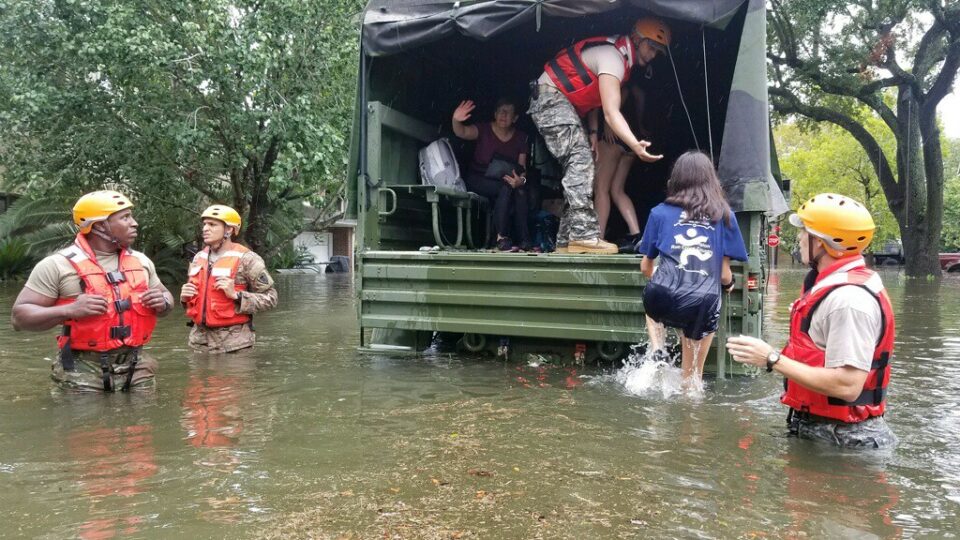
Photo, posted August 27, 2017, courtesy of Lt. Zachary West (100th MPAD) / Texas Military Department via Flickr.

Earth Wise is a production of WAMC Northeast Public Radio.

Post-COVID Emissions Rebound | Earth Wise

May 28, 2021 By EarthWise Leave a Comment

Emissions are on the rise as COVID crisis lessons

The extensive shutdowns associated with the COVID-19 pandemic resulted in reduced activity across many sectors of the global economy.  As a result, global pollution and greenhouse gas emissions also saw lower levels.  As the COVID crisis lessens, an economic recovery is growing and as that occurs, emissions are on the rise.

The International Energy Agency forecasts that energy-related carbon dioxide emissions are projected to increase by 1.5 billion tons this year, the second-largest increase in history.

The emissions increase in 2021 is expected to be nearly 5%, reversing most of last year’s emissions decline caused by the pandemic. This would be the largest annual rise since the 2010 recovery from the global financial crisis.  In many places across the globe, people are making up for lost time and doing more of all the things that cause carbon emissions.

A key driver of the emissions increase is a rise in coal use.  The forecast is that coal-burning in 2021 would come close to the all-time peak of 2014.  Both natural gas and oil use are also expected to increase this year.  These increases are in spite of a predicted 17% increase in electricity generation from wind power and an 18% increase in solar-power generation. 

Atmospheric concentrations of CO2 are now at 417 parts per million and have increased by 3 PPM in the past year.  If human CO2 emissions are not reined in, atmospheric concentrations of planet-warming greenhouse gases could double those of pre-Industrial levels by mid-century, which would have disastrous impacts on the climate.

**********

Web Links

Global CO2 Emissions Set to Surge in 2021 in Post-Covid Economic Rebound

Photo, posted October 22, 2020, courtesy of Hospital Clínic Barcelona via Flickr.

Earth Wise is a production of WAMC Northeast Public Radio.

Alien Species On The Rise | Earth Wise

November 3, 2020 By EarthWise Leave a Comment

the number of alien species is rising

Alien species are species that are introduced, accidentally or intentionally, outside of their natural geographic range as a result of human activities.  More than 35,000 alien species have been recorded through 2005, which is the most recent year for which researchers have comprehensive global data. 

Some of the alien species go on to become invasive alien species, which can have damaging impacts on both ecosystems and economies.  In fact, alien species are one of the main drivers of plant and animal extinctions around the globe.  

According to a new study by an international research team involving University College London, the number of alien species, particularly insects, arthropods and birds, is expected to increase globally by 36% by 2050 when compared to 2005 levels.  The research was recently published in the journal Global Change Biology.

Using a mathematical model developed for the study, the researchers identified high levels of variations between regions.  For example, the largest increase in alien species by the middle of the century is expected in Europe, where numbers are predicted to jump by 64%.  The temperate regions of Asia, North America, and South America are also predicted to be hotspots of alien species.  The lowest relative increase in alien species is expected in Australia.

The researchers do not expect a reversal or slowdown in the spread of alien species.  In fact, with global transportation and trade forecasted to increase in the coming decades, they anticipate many new species will infiltrate non-native habitats by hitching rides as stowaways.   

According to the research team, it would take a concerted global effort with stricter regulations and more rigorous enforcement to slow the flow of new species. 

**********

Web Links

Alien species to increase by 36% worldwide by 2050

Photo, posted October 3, 2016, courtesy of the Asian Carp Regional Coordinating Committee via Flickr. Photo credit: Ryan Hagerty/USFWS.

Earth Wise is a production of WAMC Northeast Public Radio.

Why Choose Chicken Over Beef?

July 22, 2019 By EarthWise Leave a Comment

Food production is a major driver of climate change.  It’s responsible for more than a quarter of all greenhouse gas emissions.  But the environmental impact of different foods varies greatly, and making seemingly insignificant changes can actually have significant impacts. 

According to a first-ever national study of U.S. eating habits and their carbon footprints, choosing chicken over beef will cut your dietary carbon footprint in half.

The National Health and Nutrition Examination Survey asked more than 16,000 participating Americans to name all the foods they consumed in the past 24 hours. The research team then calculated the carbon footprint of what people said they ate.  If a respondent consumed broiled beef steak, for example, researchers calculated what the carbon footprint would have been had broiled chicken been consumed instead.   

The study’s findings illustrate how making one simple substitution can significantly reduce a person’s dietary carbon footprint.  A diet’s carbon footprint is the amount of greenhouse gas emissions that result from the energy, fertilizer, land use, and other inputs necessary to produce food.

In general, animal-based foods have a bigger carbon footprint than plant-based foods.  For example, producing beef uses 20 times the land and emits 20 times the emissions as growing beans (per gram of protein), and requires 10 times more resources than producing chicken. 

According to the World Resources Institute, keeping the increase in global warming below 2°C will be impossible without limiting the global rise in meat consumption. 

Last year, the EAT-Lancet Commission report found that a radical transformation of the global food system was needed because it’s threatening the stability of the climate. 

Make a change – big or small – today. 

**********

Web Links

Choosing chicken over beef cuts our carbon footprints a surprising amount

Photo, posted August 30, 2011, courtesy of Ken Hawkins via Flickr.

Earth Wise is a production of WAMC Northeast Public Radio.

The Future Of Animals

June 12, 2019 By EarthWise Leave a Comment

Researchers at the University of Southampton have forecast a global shift towards smaller birds and mammals over the next century.   

According to the research team, small, fast-lived, highly fertile, and insect-eating animals, which can thrive in all sorts of habitats, will predominate in the future.  Rodents and songbirds are examples of the so-called ‘winners.’  Less adaptable, slow-lived species, requiring specialist habitats, will be more likely to face extinction.  Among the so-called ‘losers’ are the black rhino and the tawny eagle. 

The researchers focused on more than 15,000 living mammals and birds and considered the following five characteristics: body mass, breadth of habitat, diet, litter or clutch size, and length of time between generations.  Using this data and data from the IUCN’s Red List of Threatened Species, the researchers used modern statistical tools to project and evaluate the loss of biodiversity.  

The study, which was recently published in the journal Nature Communications, predicts that the average body mass of mammals will collectively decline by 25% over just the next 100 years.  Over the past 130,000 years, the average body size of mammals only declined 14%.

This substantial downsizing of animals is forecasted to occur due to the effects of ecological change. But, according to the study’s lead author, the loss of these species, which perform unique functions within the global ecosystem, may ironically wind up being a driver of change as well.       

The researchers hope future studies will further explore the long-term effects of species extinction on habitats and ecosystems. 

**********

Web Links

Study predicts shift to smaller animals over next century

Photo, posted April 6, 2013, courtesy of Nic Trott via Flickr.

Earth Wise is a production of WAMC Northeast Public Radio.

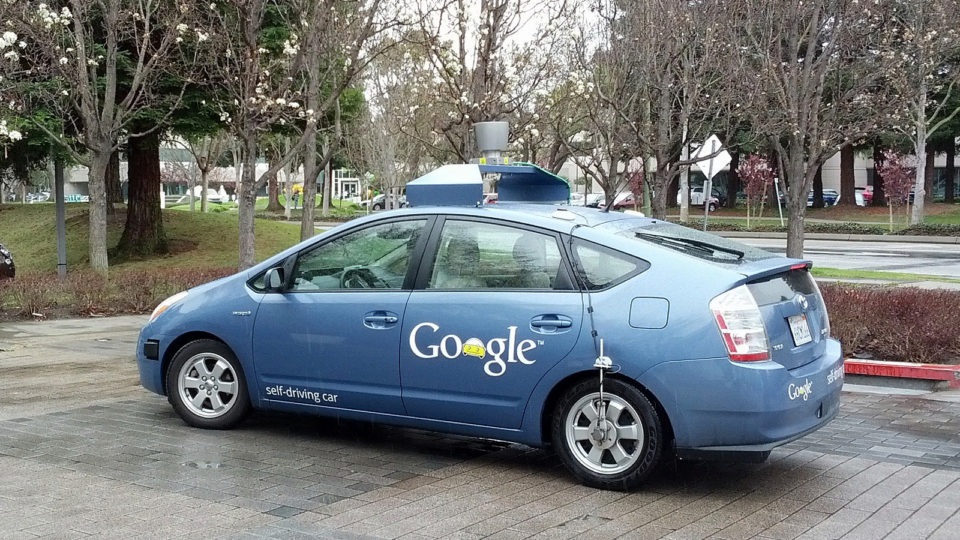
V2V And Safer Cars

June 27, 2018 By EarthWise Leave a Comment

https://earthwiseradio.org/wp-content/uploads/2018/06/EW-06-27-18-V2V-and-Safer-Cars.mp3

Automated cars are coming, but they face many challenges in sharing the roads with human drivers.  The on-board sensors in these cars are very effective in many ways, but they cannot see around corners or see through buses or trucks.  They won’t know if six cars ahead, someone has slammed on their breaks leading to a chain-reaction collision.  Of course, human drivers have the same problems.

[Read more…] about V2V And Safer Cars

Primary Sidebar

Recent Episodes

  • An uninsurable future
  • Clean energy and jobs
  • Insect declines in remote regions
  • Fossil fuel producing nations ignoring climate goals
  • Trouble for clownfishes

WAMC Northeast Public Radio

WAMC/Northeast Public Radio is a regional public radio network serving parts of seven northeastern states (more...)

Copyright © 2026 ·