• Skip to primary navigation
  • Skip to main content
  • Skip to primary sidebar

Earth Wise

A look at our changing environment.

  • Home
  • About Earth Wise
  • Where to Listen
  • All Articles
  • Show Search
Hide Search
You are here: Home / Archives for dried

dried

Emissions and the Great Salt Lake

September 4, 2024 By EarthWise Leave a Comment

Emissions and the Great Salt Lake

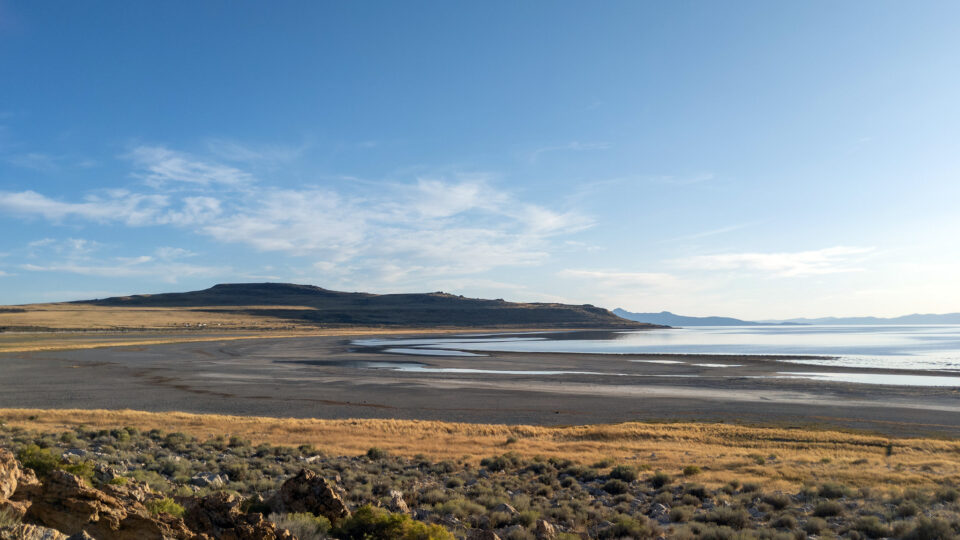
The Great Salt Lake in Utah has been described as a puddle of its former self.  The lake’s size fluctuates naturally with seasonal and long-term weather patterns, but the lake has been experiencing decline for decades as Utahans take water out of the rivers and streams that once fed the lake.  Over recent decades, the lake has lost 73% of its water and 60% of its surface area.

For years, scientists and environmental leaders have warned that the Great Salt Lake is headed toward a catastrophic decline.  Recent research has found that the lake’s desiccating shores are becoming a significant source of greenhouse gas emissions.  Scientists have calculated that the dried-out portions of the lakebed released about 4.1 million tons of carbon dioxide and other greenhouse gases in 2020.

The recent study, published in the journal One Earth, suggests that the Great Salt Lake – which is largest saltwater lake in the Western Hemisphere – as well as other shrinking saline lakes around the world could become major contributors of climate-warming emissions.

The shrinking back of the water has exposed a dusty lakebed that is laced with arsenic, mercury, lead, and other toxic substances.  Some are naturally occurring, and others are the residue of mining activity in the region.  These substances threaten to increase rates of respiratory conditions, heart and lung disease, and cancers.

As the lake shrinks, it is becoming saltier and uninhabitable to native flies and brine shrimp and may increasingly become unable to support the 10 million migratory birds and wildlife that frequent it.

The new research about greenhouse gas emissions just adds to a dire list of environmental consequences brought on by the lake’s steep decline.

**********

Web Links

Shrinking Great Salt Lake Becoming Source of Heat-Trapping Gas

Photo, posted January 20, 2020, courtesy of Matthew Dillon via Flickr.

Earth Wise is a production of WAMC Northeast Public Radio
Monster Tumbleweeds

October 18, 2019 By EarthWise Leave a Comment

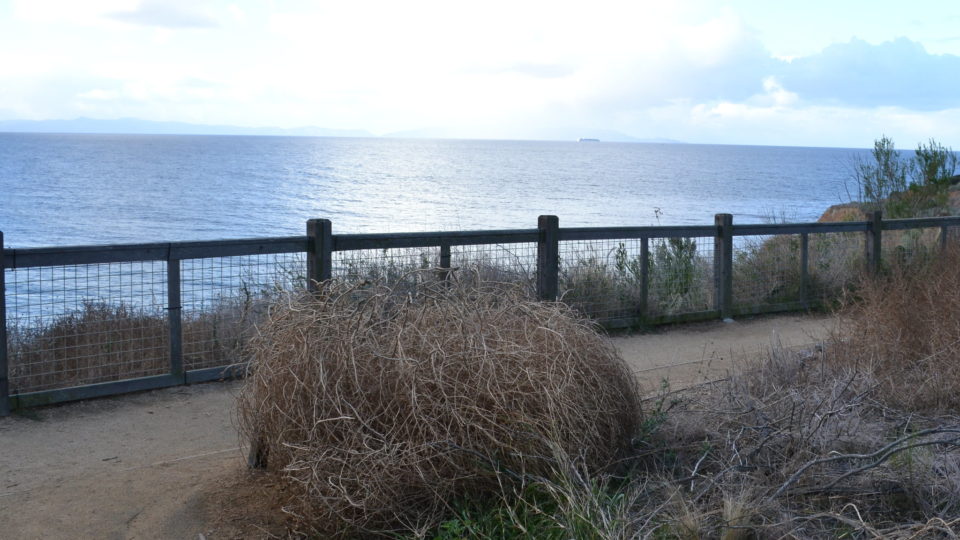
Tumbleweeds have long been seen as symbols of America’s old west.  Tumbleweeds are a structural part of the above-ground anatomy of a number of species of plants known as diaspores.  Diaspores are essentially seed dispersal units.  In a few seed plants, they comprise most or all of the plant.  Once they are mature and dry, they detach from the roots and roll around due to the force of the wind.

There is a new species of gigantic tumbleweed – the Salsola ryanii – that is expanding its territory in the American west.  It is the result of a relatively unusual genetic process known as polyploidy, which produces offspring with multiple sets of chromosomes.  Researchers believe that that the new hybrid species of tumbleweed is healthier than earlier versions.  As a result, one geneticist described Salsola ryanii as a nasty species replacing other nasty species of tumbleweed in the US.

These tumbleweeds can grow up to 6 feet tall.  Tumbleweeds in general are invasive plants that cause traffic accidents, damage agricultural operations, and cause millions of dollars in property damage.  Last year, the town of Victorville in the California desert was buried in them, piling up to the second story of some houses.

Salsola ryanii has a relatively small range, but it is expanding rapidly.  The new study determined that it is more vigorous than its predecessors, which are invasive in 48 states.  The plant is an annual but tends to grow on the later side of winter.  It is one of the only things that is still green in late summer.  With summer rains increasing as the climate changes, these monster tumbleweeds are poised to wreak havoc.   The experts are warning that there should be efforts to suppress them before they take over.

**********

Web Links

Monster tumbleweed: Invasive new species is here to stay

Photo, posted February 27, 2018, courtesy of Tracie Hall via Flickr.

Earth Wise is a production of WAMC Northeast Public Radio.

‘Noah’s Ark’ Takes On Water

June 23, 2017 By EarthWise

https://earthwiseradio.org/wp-content/uploads/2017/06/EW-06-23-17-The-Svalbard-Global-Seed-Vault.mp3

The Svalbard Global Seed Vault, built into a hillside in the Norwegian archipelago of Svalbard far above the Arctic Circle, is often described as humanity’s last hope against extinction after some global crisis.  While there are more than 1,700 gene banks around the world that keep collections of seeds, all of them are vulnerable to war, natural disasters, equipment malfunctions, and other problems.  Except the Svalbard vault – or so we thought.  It has been dubbed the “Noah’s Ark” of seeds and a last chance for the world to regenerate if the worst should come to pass.  It’s mission is to keep the world’s seeds safe. 

[Read more…] about ‘Noah’s Ark’ Takes On Water

Primary Sidebar

Recent Episodes

  • An uninsurable future
  • Clean energy and jobs
  • Insect declines in remote regions
  • Fossil fuel producing nations ignoring climate goals
  • Trouble for clownfishes

WAMC Northeast Public Radio

WAMC/Northeast Public Radio is a regional public radio network serving parts of seven northeastern states (more...)

Copyright © 2026 ·