• Skip to primary navigation
  • Skip to main content
  • Skip to primary sidebar

Earth Wise

A look at our changing environment.

  • Home
  • About Earth Wise
  • Where to Listen
  • All Articles
  • Show Search
Hide Search
You are here: Home / Archives for digestion

digestion

Feeding Cows Seaweed | Earth Wise

July 15, 2022 By EarthWise Leave a Comment

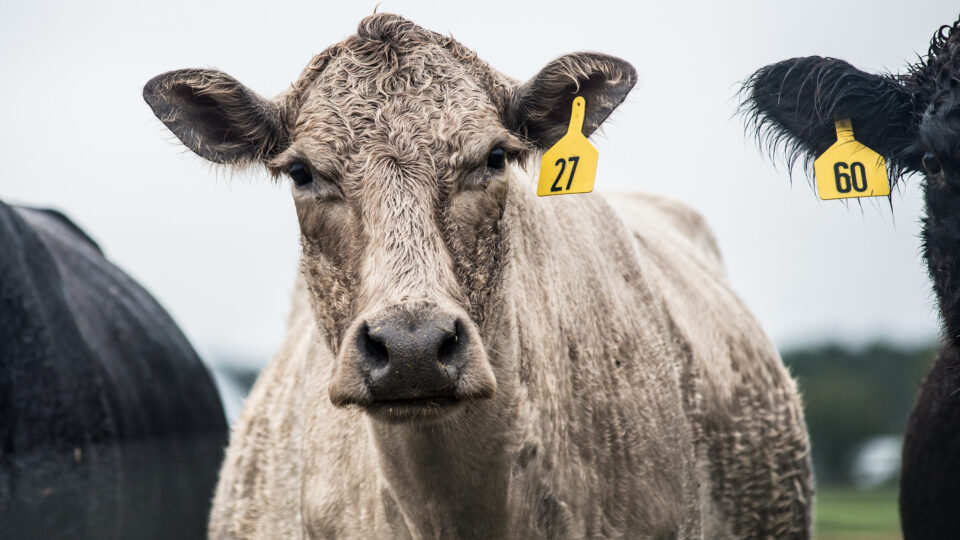
When cows digest their food, they burp, and when they burp, they release methane.  This is called enteric methane and it’s a real problem.  A single cow belches out 220 pounds of methane each year, which is the greenhouse gas equivalent of burning over 900 gallons of gasoline.  That’s more than the average car uses in a year.

Several studies have shown that feeding cows seaweed has the potential to substantially reduce the amount of methane in cow burps.  The latest comes from a trial that took place at the Straus Family Creamery, an organic dairy producer in Marin County, California.

The trial used a new seaweed-derived feed additive called Brominata.  Brominata is made of a red seaweed called Asparagopsis taxiformis.  The addition of the seaweed to the cows’ diets on the Straus farm resulted in an 52% average reduction in enteric methane emissions.  One cow in the study showed a reduction of 92%.

Cutting enteric methane emissions in half would be a huge improvement that would be quite difficult to achieve by convincing enough people to reduce meat and dairy consumption.

The California Air Resources Board has identified feed additives as an emissions-reduction strategy for the dairy industry.  There are now some synthetic feed additives that have been developed that reduce enteric methane, but they haven’tyet  received FDA approval for use in the U.S.  Brominata has been approved as Generally Regarded as Safe by the California Food and Drug Administration.  Whether it and similar seaweed-based feeds can be produced in sufficient quantity and without adverse environmental effects remains to be seen.  But it is an intriguing approach to solving a complicated problem.

**********

Web Links

Feeding Cows Seaweed Reduces Their Methane Emissions, but California Farms Are a Long Way From Scaling Up the Practice

Photo, posted November 10, 2015, courtesy of Lance Cheung/USDA via Flickr.

Earth Wise is a production of WAMC Northeast Public Radio.
Protecting Bees From Pesticides | Earth Wise

July 15, 2021 By EarthWise Leave a Comment

A new technology that can protect bees from pesticides

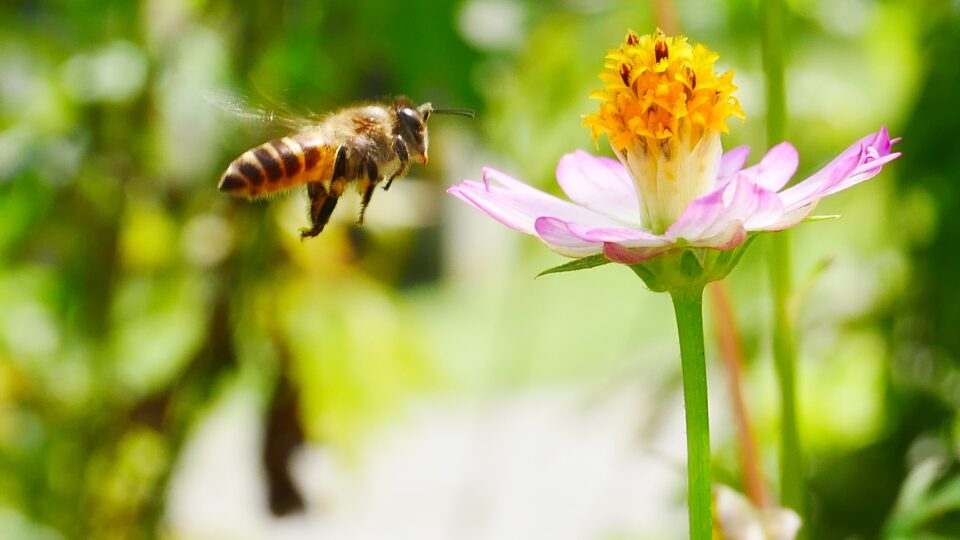
Studies have shown that the wax and pollen in 98% of beehives in the U.S. are contaminated with an average of six pesticides.  These substances lower bees’ immunity to devastating varroa mites and other pathogens.  By some estimates, pesticides cause beekeepers to lose about a third of their hives every year on average.

Researchers at Cornell University have developed a new technology that effectively protects bees from insecticides.  The insecticide antidote delivery method is now the basis of a new company called Beemunity.

The Cornell researchers developed a uniform pollen-sized microparticle filled with enzymes that detoxify organophosphate insecticides before they are absorbed and can harm bees.  Organophosphate insecticides account for about a third of the insecticides on the market.  The microparticles have a protective casing that allows the enzymes to move past the bees’ crop (basically the stomach), which is acidic and would otherwise break them down.  The safeguarded enzymes then enter the midgut, where digestion occurs and where toxins and nutrients are absorbed.  There the enzymes act to break down and detoxify the organophosphate insecticides.

In experimental tests, bees that were fed the enzyme-filled microparticles had a 100% survival rate after exposure to the insecticide malathion.  Unprotected control bees died within days.

The Cornell work appears to represent a low-cost, scalable solution to the insecticide toxicity issue and may help to protect essential pollinators.

**********

Web Links

Pollen-sized technology protects bees from deadly insecticides

Photo, posted January 30, 2020, courtesy of George Tan via Flick.

Earth Wise is a production of WAMC Northeast Public Radio.
Feeding Seaweed To Cows

August 16, 2018 By EarthWise Leave a Comment

https://earthwiseradio.org/wp-content/uploads/2018/08/EW-08-16-18-Feeding-Seaweed-to-Cows.mp3

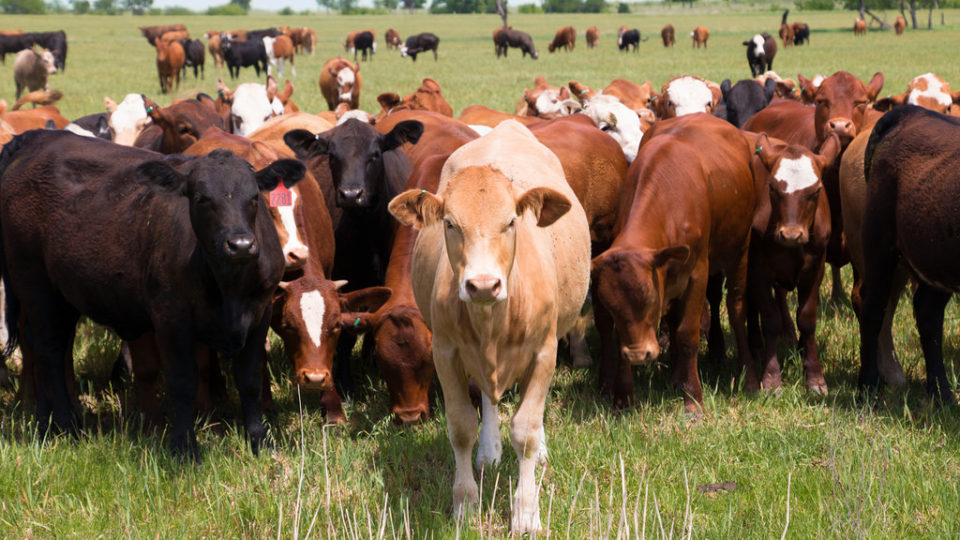
Methane emissions are a real problem.  As a greenhouse gas, methane has at least 25 times the heat-trapping power of carbon dioxide.  More than a third of all the methane that humans are responsible for putting into the atmosphere comes from domestic livestock:  cattle, sheep, goats and buffalo.  In California alone, dairy cows along with a smaller number of beef cattle emit the heat trapping equivalent of the emissions from 2.5 million cars.

[Read more…] about Feeding Seaweed To Cows

Primary Sidebar

Recent Episodes

  • An uninsurable future
  • Clean energy and jobs
  • Insect declines in remote regions
  • Fossil fuel producing nations ignoring climate goals
  • Trouble for clownfishes

WAMC Northeast Public Radio

WAMC/Northeast Public Radio is a regional public radio network serving parts of seven northeastern states (more...)

Copyright © 2026 ·