• Skip to primary navigation
  • Skip to main content
  • Skip to primary sidebar

Earth Wise

A look at our changing environment.

  • Home
  • About Earth Wise
  • Where to Listen
  • All Articles
  • Show Search
Hide Search
You are here: Home / Archives for data centers

data centers

AI and the appetite for natural gas

October 20, 2025 By EarthWise Leave a Comment

Natural gas capacity growing as AI and data centers expand

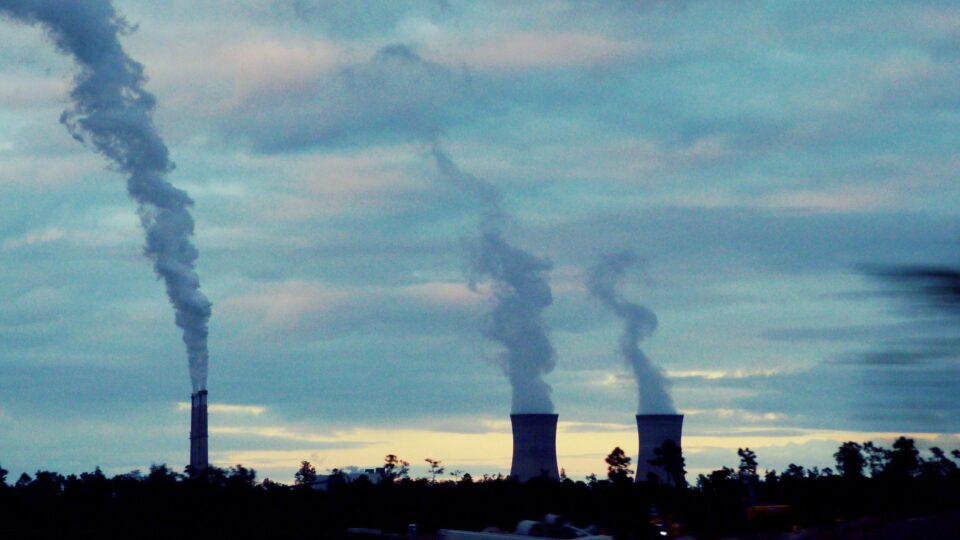
A recent survey of the plans of U.S. electricity utilities for meeting projected future demand indicates that they are looking to build twice as much natural gas capacity as they had anticipated just 18 months earlier.  The reason?  Data centers.  These warehouses full of computers that form the backbone of the internet are multiplying rapidly as companies are adding power-hungry servers for artificial intelligence. 

Data centers used less than 2% of U.S. electricity prior to 2018.  They consumed 4.4% in 2023.  By 2028, they are projected to use anywhere between 6.7 and 12%.  While overall electricity demand had been relatively flat for the past 20 years, now the power grid is scrambling to keep up.

The long-term plans of utilities have been favoring renewables for a while.  Previous industry-wide projections had 258 gigawatts of new wind and solar versus 102 gigawatts of new natural gas plants through 2035.  These plans showed that wind and solar could overtake natural gas as the country’s largest source of electricity by that year.  But newer plans adding additional generating capacity have mostly added new gas and very little renewables.

Utilities are leaning heavily on natural gas in part due to the inertia of regulatory actions that define the rate-setting process.  The grid is simply not set up to adapt to new technology and to deal with the unprecedented changes that data centers bring about.

Ultimately, the continuing reliance on natural gas will be an unfortunate burden on the consumer and on the environment.

**********

Web Links

Riding the High From Data Centers, the Grid Cannot Kick Its Gas Habit

Photo, posted January 23, 2023, courtesy of Aileen Devlin / Jefferson Lab via Flickr.

XXXXXXXXXXXXX

AI and energy

August 20, 2025 By EarthWise Leave a Comment

AI is consuming vast amounts of energy

MIT recently hosted a symposium on the subject of artificial intelligence being both a problem and a solution for the clean energy transition.

AI-powered computing centers are expanding rapidly, creating an unprecedented surge in electricity demand.  Electricity demand in the US had been relatively flat for decades but now these computing centers consume about 4% of the nation’s electricity.  Some projections say that this demand could rise to 12-15% in the next five years. 

The power required for sustaining some of the AI large-language models is doubling every three months.  The amount of electricity used by a single ChatGPT conversation is as much as it takes to charge a phone and consumes the equivalent of a bottle of water for cooling. 

The MIT symposium focused on the challenges of meeting these growing energy needs but also on the potential for AI to dramatically improve power systems and reduce carbon emissions. 

Research shows regional variations in the cost of powering computing centers with clean electricity.  The central United States offers lower costs due to complementary solar and wind resources but would require massive battery deployments to provide uninterrupted power.

Because of data center demand, there is renewed interest in nuclear power, often in the form of small modular reactors, as well as efforts in long-duration storage technologies, geothermal power, or hybrid approaches.

Artificial intelligence offers both great promise and great peril.  It will take real intelligence to steer it in the right direction.

**********

Web Links

Confronting the AI/energy conundrum

Photo, posted August 31, 2024, courtesy of Jefferson Lab via Flickr.

Earth Wise is a production of WAMC Northeast Public Radio

More efficient cooling for data centers

July 22, 2025 By EarthWise Leave a Comment

Engineers are working on a more efficient method to cool data centers

Increasing reliance on digital technologies in general and artificial intelligence in particular are dramatically increasing the energy consumption of data centers.  Data centers consume far more energy per square foot than other commercial buildings.  By the year 2030, data center energy consumption in the US is projected to reach 9% of the country’s electricity generation. 

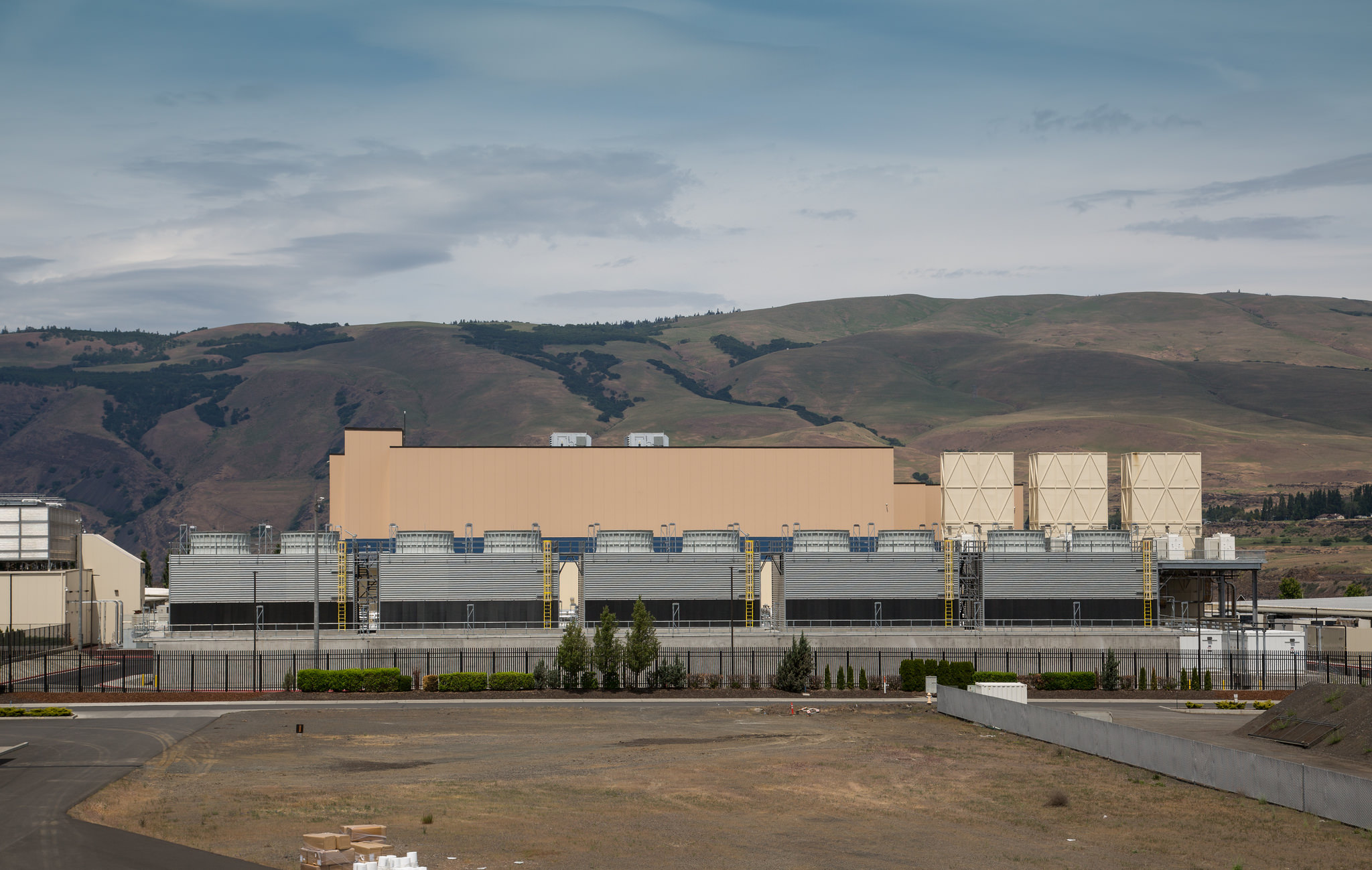
Computing hardware consumes large amounts of energy and generates large amounts of heat in the process.  Currently, cooling the equipment so it doesn’t burn out accounts for as much as 40% of a data center’s total energy use. 

Engineers at the University of California San Diego have developed a new cooling technology that could significantly improve the energy efficiency of data centers.  The technology makes use of a specially engineered fiber membrane that passively removes heat through evaporation.

The membrane has a network of tiny, interconnected pores that draw cooling liquid across the membrane surface using capillary action.  As the liquid evaporates, it removes heat from the electronics underneath.  No extra energy is required.

Tests of the membrane demonstrated record-breaking performance in removing heat from electronics and being able to withstand very high levels of heat flux.

The researchers say that the technology is still operating well below its theoretical limit, and with additional work, can lead to optimized performance.  The membranes will be integrated into cold plates, which are components that attach to power-hungry computing components to dissipate heat.  The team is also launching a startup company to commercialize the new cooling technology.

**********

Web Links

New Cooling Tech Could Curb Data Centers’ Rising Energy Demands

Photo, posted January 23, 2023, courtesy of Jefferson Lab via Flickr.

Earth Wise is a production of WAMC Northeast Public Radio

Electricity demand from data centers

February 17, 2025 By EarthWise Leave a Comment

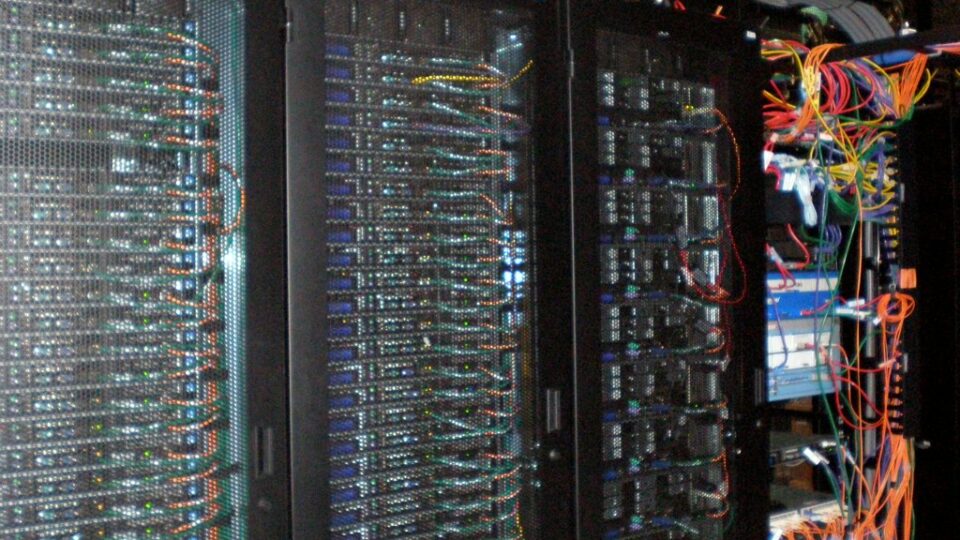
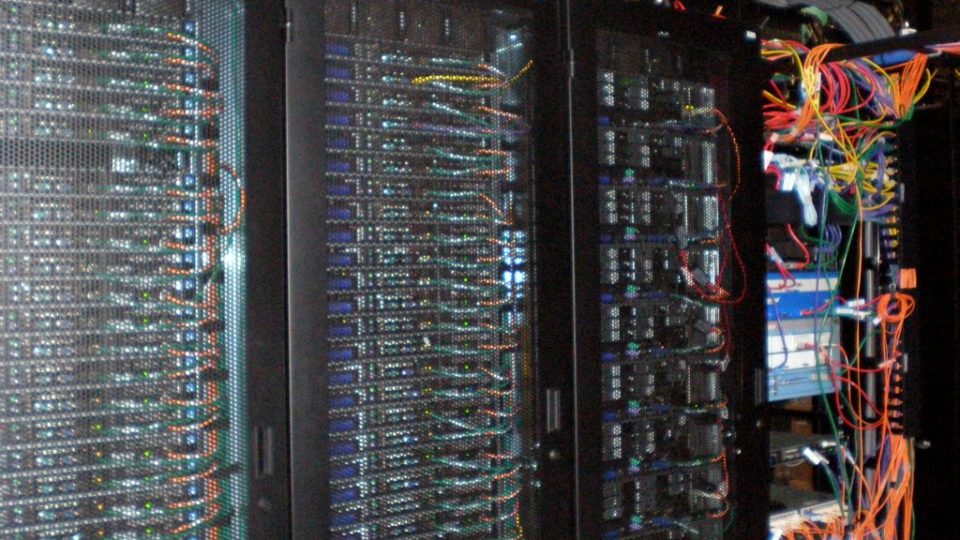
Data centers are dedicated facilities containing computers and their related hardware equipment such as servers, data storage drives, and network equipment; they are the physical facilities that store digital data.  Data centers are one of the most energy-intensive building types, consuming 10 to 50 times more energy per floor space than a typical commercial office building.  With the explosive growth of artificial intelligence technology, data center energy use is expanding rapidly.

A new report by the Department of Energy’s Lawrence Berkeley National Laboratory outlines the energy use of data centers from 2014 to 2028.  The report estimates that data center load growth has tripled over the past decade and is likely to double or triple again by 2028.

Data centers consumed about 4.4% of total U.S. electricity in 2023 and are projected to consume between 6.7% and 12% of total U.S. electricity by 2028. Most of the increased power demand of data centers is due to the growth in AI servers.  Artificial intelligence requires increasingly powerful chips and intense, power-hungry cooling systems.

There have been revolutionary changes in artificial intelligence technology in just the past couple of years and its role in society has dramatically expanded.  With that expansion has come a dramatic change in the energy usage by the data industry and innovative solutions are needed to allow data centers to meet their growing demand for energy.

**********

Web Links

Berkeley Lab Report Evaluates Increase in Electricity Demand from Data Centers

Photo, posted August 31, 2024, courtesy of Aileen Devlin / Jefferson Lab via Flickr.

Earth Wise is a production of WAMC Northeast Public Radio

The year in energy

February 5, 2025 By EarthWise Leave a Comment

Last year saw some major trends in the global energy sector. Perhaps the most dramatic was the shift to renewable power, which continued to outpace the projections of both financial analysts and industry experts.  2024 saw new highs in renewable installation, largely due to China, which accounted for more than half of all the solar power installed globally.  Huge solar installations also came online in California and Nevada during the year.  On the other hand, the amount of coal burning for the year also exceeded expert predictions, also largely due to China.

A second trend was increasing sales of electric vehicles, which reached a new high, although short of expectations.  A major driving force in EV sales is the dropping price of lithium-ion batteries, which fell by 20% in 2024.  Again, China was a major factor with roughly half of all its domestic vehicle sales being electric.

Coal’s decline is being slowed by the rising demand for electricity.  The increased use of electric heating and cooling along with the increasing use of EVs are major factors.  But the proliferation of energy-hungry data centers incorporating artificial intelligence capabilities is driving up the demand for power even more. 

Perhaps the clearest indication of the future for global energy comes from investors, who put about $2 trillion into clean energy last year.  That is twice as much as invested in oil, coal, and natural gas.

The history of energy has seen the Age of Coal and the Age of Oil.  By all indications, we are now heading into the Age of Electricity.

**********

Web Links

The Year in Energy in Four Charts

Photo, posted November 23, 2024, courtesy of Mussi Katz via Flickr.

Earth Wise is a production of WAMC Northeast Public Radio

A giant solar project for Google

November 21, 2024 By EarthWise Leave a Comment

Google is investing heavily in solar power

One of the largest solar projects in the US has recently come online in Texas.  Three solar farms built side-by-side in Buckholts, Texas by SB Energy can provide 875 megawatts of electricity, nearly the size of a typical nuclear power plant.  The project will supply the largest solar energy purchase ever made by Google and the electricity generated will be used to power its new operations in the area.  Google will use about 85% of the project’s solar power for data centers in Ellis County and for cloud computing in the Dallas Region.

In total, Google has contracted with clean energy developers to bring more than 2,800 megawatts of new wind and solar projects to Texas.  Google expects to spend $16 billion through 2040 to purchase clean energy for its global operations.

According to the International Energy Agency, data centers’ total electricity consumption could reach more than 1,000 terawatt-hours in 2026, which is more than double the amount used in 2022.  One terawatt-hour is enough energy to power 70,000 homes for a year.  So, it is not surprising that large technology companies are investing heavily in energy technologies.

Google, Amazon, and Microsoft have all recently announced investments in nuclear energy to power data centers.  These companies all have made commitments to seek sources of carbon-free electricity to power their data centers and their increasing efforts in artificial intelligence.  Because of the rise of artificial intelligence, the large companies are not meeting their commitments to reduce their carbon emissions and are needing to greatly increase their efforts to obtain clean power.

**********

Web Links

One of the largest solar projects in the US opens in Texas, backed by Google

Photo, posted March 27, 2016, courtesy of Ben Nuttall via Flickr.

Earth Wise is a production of WAMC Northeast Public Radio

New York Bans Some Crypto Mining | Earth Wise

December 13, 2022 By EarthWise Leave a Comment

New York bans some cryptocurrency mining

Crypto mining, the arcane process by which cryptocurrencies are generated, is incredibly energy-intensive.  As of this past summer, global electricity usage for the activity is as much as 240 billion kilowatt-hours per year, which is more than many entire countries use (for example Australia and Argentina.)  Crypto mining consumes as much electricity as all the conventional computer data centers in the world.

All that energy usage is problematic for the environment, but a growing practice has made it far worse.  Crypto miners have been re-powering decommissioned fossil fuel power plants to produce electricity strictly for mining operations.  Doing so eliminates the climate benefits achieved by shutting down those plants.

The New York State Legislature passed a bill in June that would place a two-year moratorium on permits to re-power fossil fuel plants.  It does not prevent crypto mining from existing generation sources.  The bill had sat on the governor’s desk until after the recent election.   But in late November, Governor Hochul signed the bill despite considerable lobbying against it.

The temporary ban was heavily opposed by cryptocurrency industry groups, to no surprise.  While some states actually offer tax incentives to lure crypto mining operations, supporters of the legislation hope that New York’s action may cause others to follow its lead and stop the reactivation of old fossil fuel plants.

The two-year moratorium will allow time to properly evaluate the impact of the crypto mining industry on the state’s climate goals.  It is pretty obvious that reactivating old, retired fossil fuel power plants as an energy source is a move in the wrong direction.

**********

Web Links

New York Enacts 2-Year Ban on Some Crypto-Mining Operations

Photo, posted February 27, 2021, courtesy of Ivan Radic via Flickr.

Earth Wise is a production of WAMC Northeast Public Radio

Recycling Coal Plants | Earth Wise

April 27, 2020 By EarthWise Leave a Comment

Recycling coal plants

Over 300 coal-fired power plants in the US have stopping burning coal over the past decade.  Only about 224 plants still produce power by burning coal.  As a result, a new sort of recycling industry is taking shape:  repurposing of coal plants.

Across the country, utilities are finding ways to redevelop these facilities.  Some are industrial in nature and others a far cry from their original purpose.

In January, Beloit College in Wisconsin opened a student union and recreation center in what used to be an Alliant Energy coal-fired power plant.  On the southern coast of Massachusetts, a shuttered 1,600 MW coal plant is being demolished to make way for a logistical port and support center for a planned wind farm 35 miles off shore.

In Independence, Missouri, the city is considering competing plans to recycle the Blue Valley Power plant.  It may become a 50 MW battery storage facility, or possibly a biofuel plant.

Another popular reuse strategy is data centers.  Data centers use tremendous amounts of power and therefore can make use of the former coal plants’ capacity to handle large amounts of electricity.

Retired coal-fired plants have built-in infrastructure and components that can be repurposed for new industry.  The plants typically have access to rail, ports and waterways, as well as proximity to good highway transportation.  The electrical grids to which they are connected can be reused for solar or wind farms at the site.

Given that coal plants are continuing to close, the potential to redevelop them in various ways continues to grow as well.   There is a surge in interest in coal plant redevelopment because these facilities are assets of value.

**********

Web Links

Coal-fired power plants finding new uses as data centers, clean energy hubs

Photo, posted January 10, 2017, courtesy of Rusty Clark via Flickr.

Earth Wise is a production of WAMC Northeast Public Radio.

Saving Energy At Data Centers | Earth Wise

February 17, 2020 By EarthWise Leave a Comment

Energy efficient data centers

A data center is a building, dedicated space within a building, or a group of buildings used to house computer systems and associated components, such as telecommunications and data storage systems.  Data centers are the backbone of internet services and cloud computing, which together are increasingly dominant elements of modern life.

Energy use is a central issue for data centers. Power used by them ranges from a few kilowatts for a rack of servers in a closet at a local business to several tens of megawatts for large facilities. Some data centers have power densities more than 100 times that of a typical office building and use as much electricity as several thousand homes. For such facilities, electricity costs are a dominant operating expense and account for over 10% of the total cost of ownership of a data center.  These centers, with their numerous racks of computer servers, consume 90 billion kilowatt-hours of electricity each year in the United States, as much as all of our residences use for lighting. 

A research group at Princeton University is developing a family of devices that can dramatically reduce power consumption at data centers.  The team’s technology focuses on the process by which the AC power from the grid is converted to the low-voltage direct current used by computer equipment.  With existing technology, this power conversion takes place in each individual computer, which ends up wasting about 40% of the original energy.   The new device aggregates power conversion into a single unit, which then distributes the power to the individual computers and storage units.

As data centers get bigger and more numerous, the opportunity to save a lot of energy becomes increasingly important.

**********

Web Links

New technology boosts energy efficiency in data centers

Photo, posted June 8, 2007, courtesy of Sean Ellis via Flickr.

Earth Wise is a production of WAMC Northeast Public Radio.

Climate Change And The Bottom Line

July 31, 2019 By EarthWise Leave a Comment

Large companies around the world are facing up to the fact that climate change could substantially affect their bottom lines within the next five years.  Shareholders and regulators have been applying pressure to companies to disclose the specific financial impacts they could face as the planet warms and companies are increasingly making those disclosures.

A non-profit charity called CDP (formerly known as the Carbon Disclosure Project) runs the global disclosure system for investors, companies, cities, states, and regions to manage their environmental impacts.  In 2018, more than 7,000 companies submitted reports to CDP and, for the first time, CDP explicitly asked firms to try to calculate how a warming planet might affect them financially.

Analysis of the reports from 215 of the world’s 500 largest corporations revealed that these companies alone potentially faced roughly $1 trillion in costs related to climate change in the decades ahead unless they took proactive steps to prepare. 

Climate-related risks range from extreme weather that could disrupt supply chains to stricter climate regulations that could hurt the value of coal, oil, and gas investments.  Technology companies like Google’s parent company, Alphabet, Inc., face increased costs to cool energy-hungry data centers as temperatures rise.

In all, the world’s largest companies estimated that at least $250 billion of assets may need to be written off or retired early as the planet heats up.  Previous studies, based on computer climate modeling, have estimated that the risks of global warming, if left unmanaged, could cost the world’s financial sector between $1.7 trillion to $24.2 trillion in net present value terms.

**********

Web Links

Companies See Climate Change Hitting Their Bottom Lines in the Next 5 Years

Photo, posted February 29, 2016, courtesy of Ben Nuttall via Flickr.

Earth Wise is a production of WAMC Northeast Public Radio.

The High Cost Of The Cloud

May 2, 2018 By EarthWise Leave a Comment

https://earthwiseradio.org/wp-content/uploads/2018/05/EW-05-02-18-The-High-Cost-of-the-Cloud.mp3

More and more often we make use of “the cloud” – that mysterious place where we store, move, process and analyze data.  We keep our photos there.  We stream music and videos from there.  We do our work there.  Perhaps we have a mental image of all of this digital information floating above our heads in some ethereal way:  like in a cloud.

[Read more…] about The High Cost Of The Cloud

Clean Energy And The Internet

February 4, 2016 By WAMC WEB

https://earthwiseradio.org/wp-content/uploads/2016/02/EW-02-04-16-Clean-Energy-and-the-Internet.mp3

A number of large Internet companies are being very proactive in the area of clean energy.  Companies like Google, Facebook, and Apple have invested billions on green energy solutions.   This isn’t just good citizenship and good publicity for progressive companies, it is an essential part of the global effort to reduce greenhouse emissions.

[Read more…] about Clean Energy And The Internet

Primary Sidebar

Recent Episodes

  • An uninsurable future
  • Clean energy and jobs
  • Insect declines in remote regions
  • Fossil fuel producing nations ignoring climate goals
  • Trouble for clownfishes

WAMC Northeast Public Radio

WAMC/Northeast Public Radio is a regional public radio network serving parts of seven northeastern states (more...)

Copyright © 2025 ·