• Skip to primary navigation
  • Skip to main content
  • Skip to primary sidebar

Earth Wise

A look at our changing environment.

  • Home
  • About Earth Wise
  • Where to Listen
  • All Articles
  • Show Search
Hide Search
You are here: Home / Archives for crop rotation

crop rotation

Managing Pests With Cover Crops | Earth Wise

May 18, 2022 By EarthWise Leave a Comment

The use of pesticides in global agriculture brings with it many problems including the killing of non-target, beneficial species as well as reversing pest-management gains from the use of conservation agriculture methods.

In a newly published study by researchers at Penn State University, the use of plant cover, such as cover crops, was shown to potentially be more effective at reducing pest density and crop damage than the application of insecticides without the downsides.  Cover crops reduce insect pest outbreaks by increasing pest predator abundance.

Cover crops are plantings that are primarily used to slow erosion, improve soil health, enhance water availability, smother weeds, and help control pests and diseases.  Typical cover crops include mustard, alfalfa, rye, clovers, buckwheat, and winter peas.  Most cover crops are fairly inexpensive to plant.

Plant cover can provide habitat for populations of natural enemies of pests.  Winter cover crops can harbor pest predator populations outside of the growing season of the cash crop.  When the cover crop is killed off to allow the growth of the cash crop, residues of the cover crop remain on the soil during the growing season, so they still enhance the habitat for pest predators.

Conservation agriculture includes methods like cover crops, no-till planting, and crop rotation.  The use of cover crops constitutes a form of preventive pest management that is an alternative to planting seeds treated with systemic insecticides to control early-season pests.  There is also the possibility for integrated pest managements, which is an approach in which insecticides are applied but only when pest numbers exceed economic thresholds despite the use of nonchemical tactics.

**********

Web Links

Cover crops more effective than insecticides for managing pests, study suggests

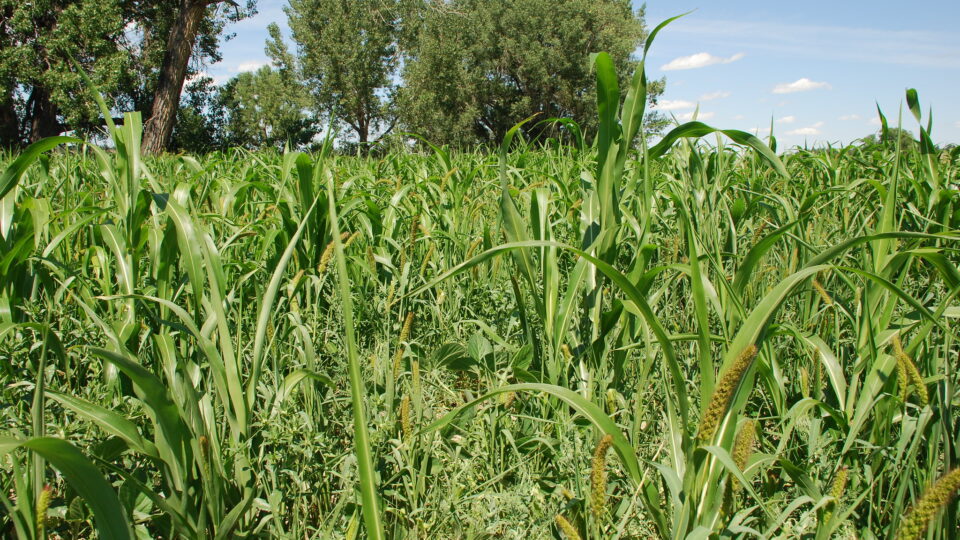
Photo, posted August 8, 2011, courtesy of USDA NRCS Montana via Flickr.

Earth Wise is a production of WAMC Northeast Public Radio.
The Benefits Of No-Till Farming | Earth Wise

October 5, 2021 By EarthWise Leave a Comment

No-till farming is not new.  In fact, it was used as far back as 10,000 years ago.  But during the 18th and 19th centuries, tilling became popular because it allowed farmers to plant seeds more efficiently.

Tilling (or ploughing) is the process of preparing the soil for the cultivation of seeds by overturning the soil.  The practice works animal manure, weeds, and other surface residues deep into the soil.  While this all sounds like a good thing, it’s not. 

Tilling removes plant matter and loosens the soil, leaving the soil bare and vulnerable to erosion.  Tilling also displaces the millions of microbes and insects that form healthy soil biology.  The long-term use of tilling can turn healthy soils into lifeless growing mediums dependent on chemical inputs.  

But no-till farming also tends to rely on chemical inputs like glyphosate for weed control.  According to a new study recently published in Agronomy Journal, researchers at Penn State have found that farmers using no-till farming can reduce herbicide use and still maintain crop yields by implementing integrated weed-management methods.   

The research team conducted a nine-year experiment using herbicide-reduction practices in a crop rotation, which included soybean, corn, alfalfa, and canola.  Some of the practices used to reduce herbicide inputs included seeding small-grain companion crops with perennials, and plowing once in six years to terminate the perennial forage rather than killing it with an herbicide. 

While there was more weed biomass in the reduced herbicide treatment, the researchers found that the added weed pressure did not substantially affect crop yields. 

It is possible to make agriculture more environmentally-friendly and sustainable without sacrificing productivity.

**********

Web Links

No-till production farmers can cut herbicide use, control weeds, protect profits

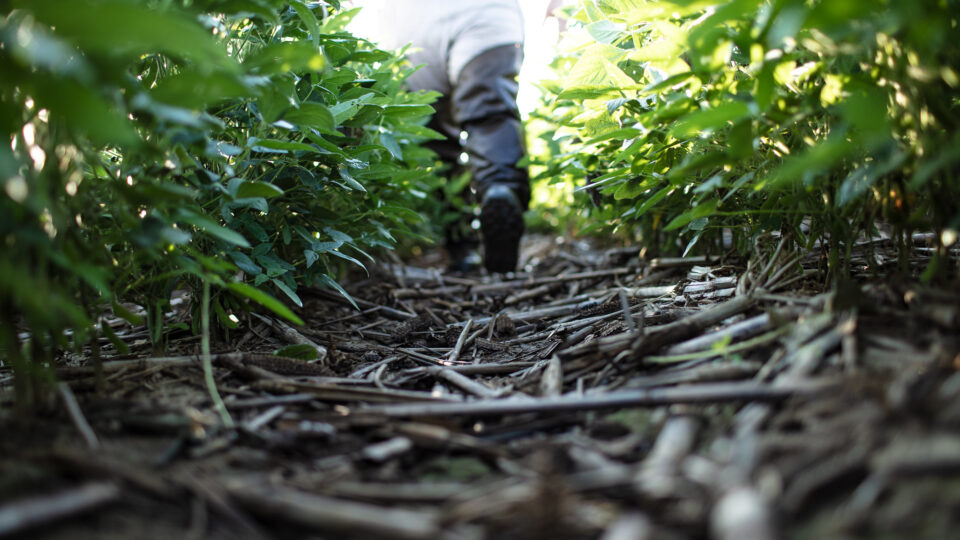
Photo, posted February 11, 2019, courtesy of the United Soybean Board via Flickr.

Earth Wise is a production of WAMC Northeast Public Radio.

Primary Sidebar

Recent Episodes

  • An uninsurable future
  • Clean energy and jobs
  • Insect declines in remote regions
  • Fossil fuel producing nations ignoring climate goals
  • Trouble for clownfishes

WAMC Northeast Public Radio

WAMC/Northeast Public Radio is a regional public radio network serving parts of seven northeastern states (more...)

Copyright © 2026 ·