• Skip to primary navigation
  • Skip to main content
  • Skip to primary sidebar

Earth Wise

A look at our changing environment.

  • Home
  • About Earth Wise
  • Where to Listen
  • All Articles
  • Show Search
Hide Search
You are here: Home / Archives for covid-19

covid-19

Animals And Social Distancing | Earth Wise

June 16, 2020 By EarthWise Leave a Comment

social distancing to prevent disease

As the spread of COVID-19 continues throughout the U.S. and around the world, health officials continue to ask people to keep physical space between themselves and others outside their homes.  It’s an important and effective way to slow down and prevent the spread of disease. 

But it’s not just humans who can benefit from social distancing.  It turns out that animals can, too.

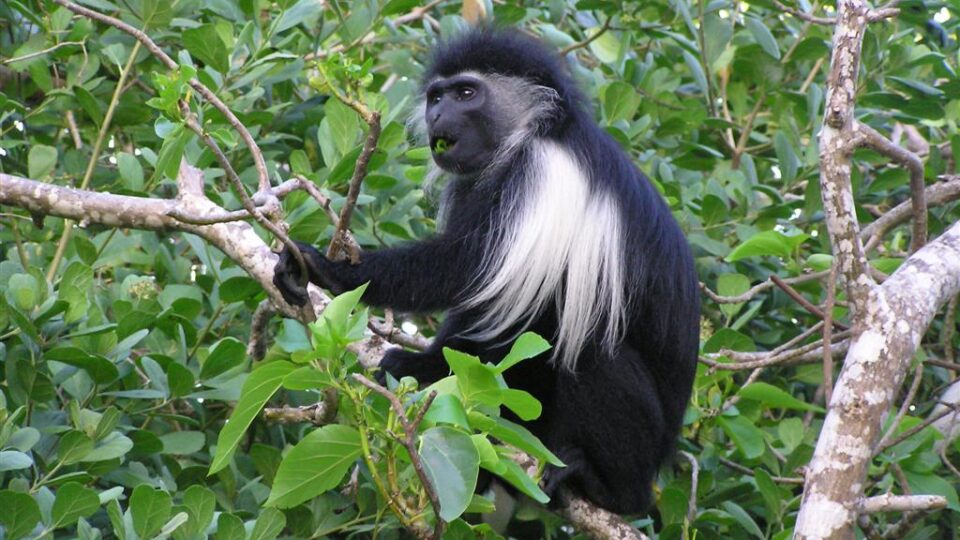
Microorganisms living on or inside our bodies are important for both our health and for the development of disease.  Researchers from the University of Texas at San Antonio have found evidence for the importance of social distancing to minimize the spread of microbes among individuals.   The researchers studied wild monkeys to find out what role diet, genetics, social groupings, and distance in a social network play when it comes to the microbes found inside the gut.  The gut microbiome refers to all the microorganisms living in the digestive tract. 

The research team studied the fecal matter of 45 female colobus monkeys that congregated in eight different social groups in a small forest in Ghana.  The researchers observed major differences in gut microbiomes between the eight social groups.  But individual monkeys from different groups that were more closely connected to the population’s social network had more similar gut microbiomes.  The findings, recently published in the journal Animal Behaviour, indicate that microbes may be transmitted between monkeys during occasional encounters with other monkeys from different social groups.

Learning how microorganisms pass among monkeys can help researchers understand how diseases spread.  Understanding how diseases spread can help guide decision making during this pandemic and any future disease outbreaks. 

**********

Web Links

Even animals benefit from social distance to prevent disease, research shows

Photo, posted January 10, 2007, courtesy of Silke Baron via Flickr.

Earth Wise is a production of WAMC Northeast Public Radio.
Global Emissions And The Coronavirus Shutdown | Earth Wise

June 10, 2020 By EarthWise Leave a Comment

With so much of industry and personal activity curtailed by coronavirus shutdowns across the globe, it is no surprise that greenhouse gas emissions have declined.  According to new research published in the journal Nature Climate Change, average daily global greenhouse gas emissions declined 17% by early April compared to 2019 levels.

If the reopenings around the world continue and the world actually reaches pre-crisis levels by the middle of June, total CO2 emissions for the year would likely end up lower by about 4%.   If various restrictions continue until the end of the year, total global emissions could decline by 7%.

The study analyzed emissions estimates for three levels of coronavirus shutdowns and across six sectors of the economy.  It looked at trends in 69 countries, all 50 U.S. states, and 30 Chinese provinces, representing in total 86% of the world’s population and 97% of global CO2 emissions.

For the first 4 months of the year, emissions from industry declined 19%, the power sector 7%, and public buildings and commerce 21%, compared to last year.  Unsurprisingly, home energy use actually went up by about 3%.

The findings of this study only represent the effects of a short-lived decline in emissions.  As economies open back up, there is no doubt that greenhouse gas emissions will rise back to pre-Covid-19 levels.

The study also reveals that making real changes in emissions will require more than just behavior changes.  Despite billions of people staying home, companies shut down, planes grounded, and cars off the road, we still managed to pump more than 80% of the usual amount of greenhouse gases into the air for the first quarter of the year.

**********

Web Links

Global Emissions Fell 17 Percent Due to Coronavirus Shutdowns

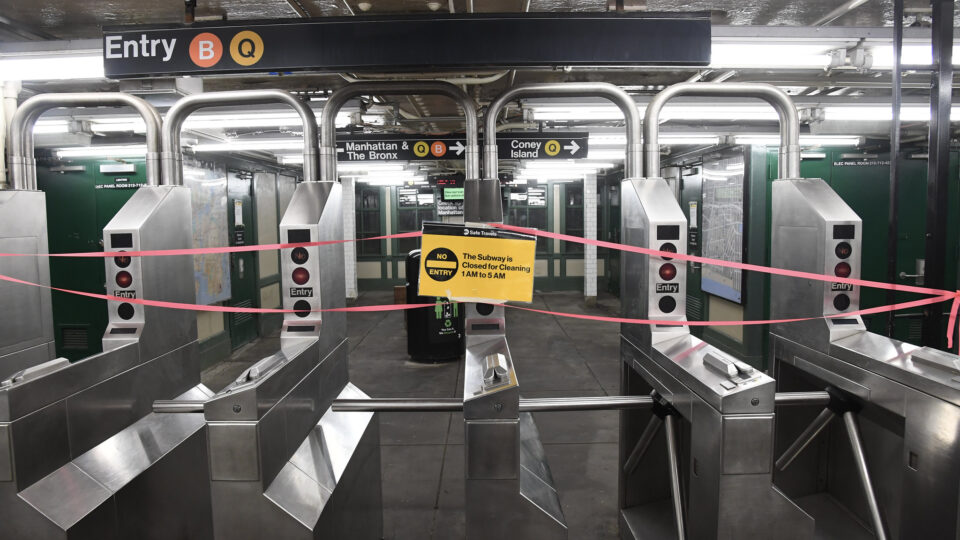
Photo, posted May 7, 2020, courtesy of the MTA via Flickr.

Earth Wise is a production of WAMC Northeast Public Radio.

Environmental Injustice And the Coronavirus | Earth Wise

May 29, 2020 By EarthWise Leave a Comment

Environmental Injustice and coronavirus

Cities and towns across the United States continue to wrestle with the devastating impacts of the COVID-19 pandemic and none have been hit harder than low-income and minority communities.  Places like Detroit, Chicago, and St. James Parish in Louisiana have suffered from decades of economic inequality and pollution in their poorest neighborhoods and many of these same places have experienced some of the highest mortality rates from the virus.

Recent studies have shown a link between high levels of pollution and the risk of death from COVID-19.  Pollution of various kinds are higher in low-income communities and communities of color.  Such communities don’t have a strong political voice so that laws and environmental regulations are not enforced like there are in white, higher-income communities.  Thus, these communities have highways, landfills, factories, chemical facilities, paper mills, and other pollution sources that communities with economic power – and therefore political power – manage to avoid.

People living in low-income communities and communities of color tend to have higher rates of underlying health conditions like diabetes, heart disease, and asthma.  They have less healthy diets – more fast food and fewer grocery stores.  Part of the reason these communities have a higher risk of mortality from COVID-19 infection is that many people have reduced lung capacity as a result of exposure to pollutants.

The Trump administration has been suspending enforcement of environmental regulations during the pandemic.  Communities already affected by environmental injustice will bear the brunt of this decision.  Groups like nursing home populations, meat packers, prisoners and the poor are suddenly highly visible.  COVID-19 is exposing the real differences between the Haves and the Have-Nots in this country.

**********

Web Links

Connecting the Dots Between Environmental Injustice and the Coronavirus

Photo, posted May 2, 2006, courtesy of Sean Benham via Flickr.

Earth Wise is a production of WAMC Northeast Public Radio.
The Largest U.S. Solar Project | Earth Wise

May 28, 2020 By EarthWise Leave a Comment

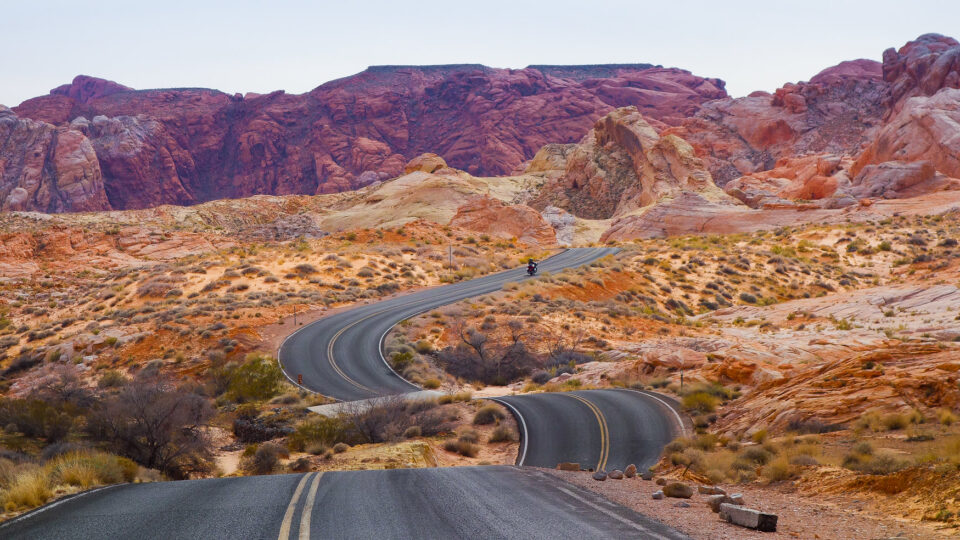
The largest solar project to date in the U.S. has received final approval from the Department of the Interior.   A $1 billion, 690-megawatt solar array will be built on federal land in the Mojave Desert in Nevada.   The project includes battery energy storage and is expected to produce enough electricity to power more than a quarter million homes.  It will also offset the greenhouse gas emissions equivalent to about 83,000 cars a year.

The current largest U.S. installation, the Solar Star Farm in Southern California, completed in 2015, generates 579 megawatts of power.

Construction of the Gemini Solar Array is expected to start sometime this year and be completed by 2022 or 2023.  The first phase of the project will cover 11 square miles of desert land about 30 miles northeast of Las Vegas.

Some conservation groups have fought against the project, saying that it will destroy thousands of acres of habitat for endangered desert tortoises as well as other rare plant and animal species.  The groups agree that solar energy is a good thing but are convinced that the location selected is the wrong one. 

Interior Department representatives note that the Gemini Project will provide jobs and economic growth at a time when many Americans in general and Nevada citizens in particular are struggling with the impact of the COVID-19 pandemic.

The project is projected to generate $713 million in economic activity and employ about 2,000 people during construction.  However, once it is up and running, it will employ just 19 full-time workers.

**********

Web Links

The Largest Solar Project in the U.S. Gets Green Light

Photo, posted January 26, 2014, courtesy of Jannes Glas via Flickr.

Earth Wise is a production of WAMC Northeast Public Radio.
Sea Turtles Prospering During The Shutdown | Earth Wise

May 14, 2020 By EarthWise Leave a Comment

Sea turtles thriving during Coronavirus shutdown

Our stories often discuss how human activities change the natural environment.  With most of us confined to our homes, the lack of human activities is having profound effects on the environment.  We are talking about some of these this week.

Seven different species of sea turtles are found in the world’s oceans and play important roles in marine ecosystems.  Over time, human activities have tipped the scales against the survival of these animals.  They have been hunted for their eggs, meat, skin, and shells and face habitat destruction and accidental capture in fishing gear.  Their nesting grounds in beaches are constantly disturbed and endangered by human activity.

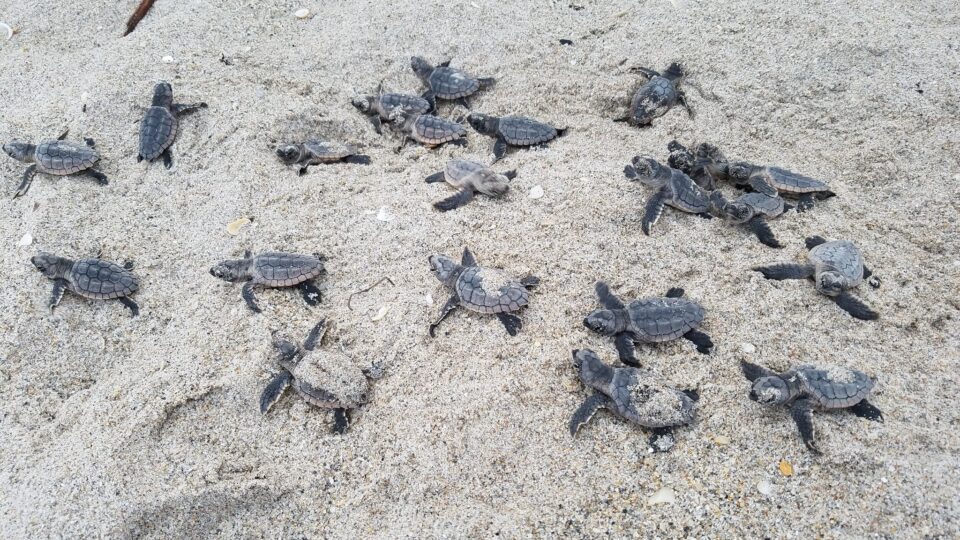
With the beaches in Florida closed in the effort to stop the spread of coronavirus, there is less plastic waste, fewer people and vehicles, and fewer artificial lights on the beach that disorient emerging turtle hatchlings.  Because of all of these factors, sea turtles have been building their nests without disruptions.

In April, it was nesting season for leatherback turtles, the largest of all sea turtles. In May, loggerhead turtles arrive in Florida.  Later in the summer, green turtles will arrive.

It takes about 60 days for sea turtle eggs to incubate and to hatch.  During that period, lots of things can happen to a nest on an active beach – it can get trampled, people can dig it up, and artificial light can confuse the hatchlings as they try to find their way to the water.  With the current shutdown, it should be a productive nesting season for sea turtles.

On the other hand, when beaches reopen, there may well be a major influx of people flocking to the beach because they have been stuck indoors for an extended period of time.

**********

Web Links

Sea turtles are thriving as coronavirus lockdown empties Florida beaches

Photo, posted August 9, 2016, courtesy of Florida Fish and Wildlife via Flickr.

Earth Wise is a production of WAMC Northeast Public Radio.
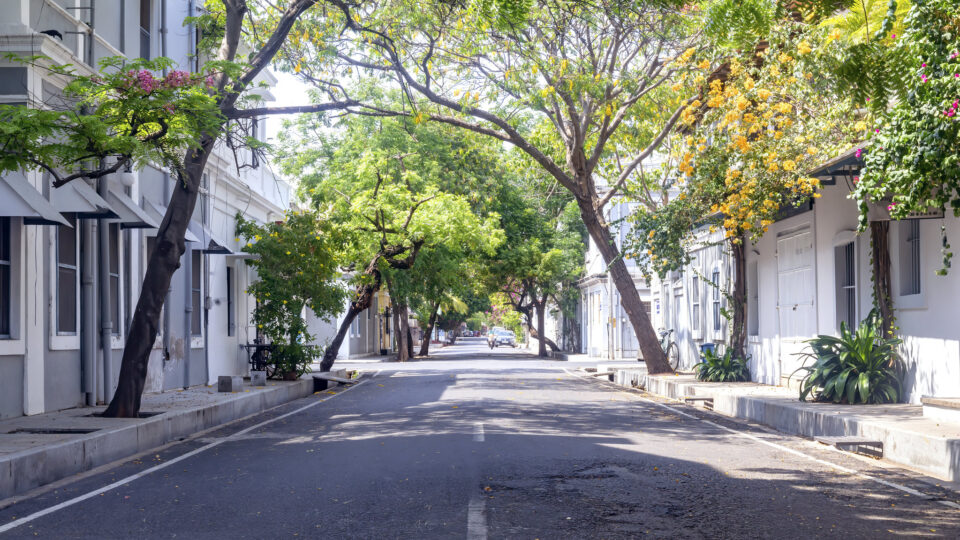
The Lockdown Cleans Up Indian Air | Earth Wise

May 13, 2020 By EarthWise Leave a Comment

Coronavirus lockdown cleans the air

Our stories often discuss how human activities change the natural environment.  With most of us confined to our homes, the lack of human activities is having profound effects on the environment.  We are talking about some of these this week.

India suffers from some of the worst air pollution in the world.  Of the most polluted cities in the world, 21 out of 30 were in India in 2019.  According to World Health Organization standards, at least 140 million people in India breathe air containing 10 times or more greater levels than the safe limit for pollutants.  Air pollution contributes to the premature death of 2 million Indians every year.

Half of India’s air pollution comes from industry, 27% from vehicles, and 17% from crop burning.  Crop burning is prevalent because it is much cheaper than mechanical tilling after the harvest.

On March 25, the Indian government placed its 1.3 billion citizens under a strict lockdown to reduce the spread of COVID-19.   The country-wide mandate decreased activity at factories and drastically reduced car, bus, truck, and airplane traffic.

Within one week, NASA satellite sensor observed aerosol levels at a 20-year low for this time of year in northern India.  Aerosols are tiny solid and liquid particles suspended in the air that reduce visibility and can damage the human lungs and heart.  Some aerosols have natural sources, such as dust storms, volcanic eruptions, and forest fires.  But many come from human activities such as the burning of fossil fuels and croplands.  Scientists expected to see changes in atmospheric conditions during the Indian lockdown, but the current changes are dramatic.  They also present a unique opportunity to separate how natural and human sources of aerosols affect the atmosphere.

**********

Web Links

Airborne Particle Levels Plummet in Northern India

Photo, posted April 29, 2020, courtesy of Flickr.

Earth Wise is a production of WAMC Northeast Public Radio.

  • « Go to Previous Page
  • Page 1
  • Page 2

Primary Sidebar

Recent Episodes

  • An uninsurable future
  • Clean energy and jobs
  • Insect declines in remote regions
  • Fossil fuel producing nations ignoring climate goals
  • Trouble for clownfishes

WAMC Northeast Public Radio

WAMC/Northeast Public Radio is a regional public radio network serving parts of seven northeastern states (more...)

Copyright © 2026 ·