• Skip to primary navigation
  • Skip to main content
  • Skip to primary sidebar

Earth Wise

A look at our changing environment.

  • Home
  • About Earth Wise
  • Where to Listen
  • All Articles
  • Show Search
Hide Search
You are here: Home / Archives for cougars

cougars

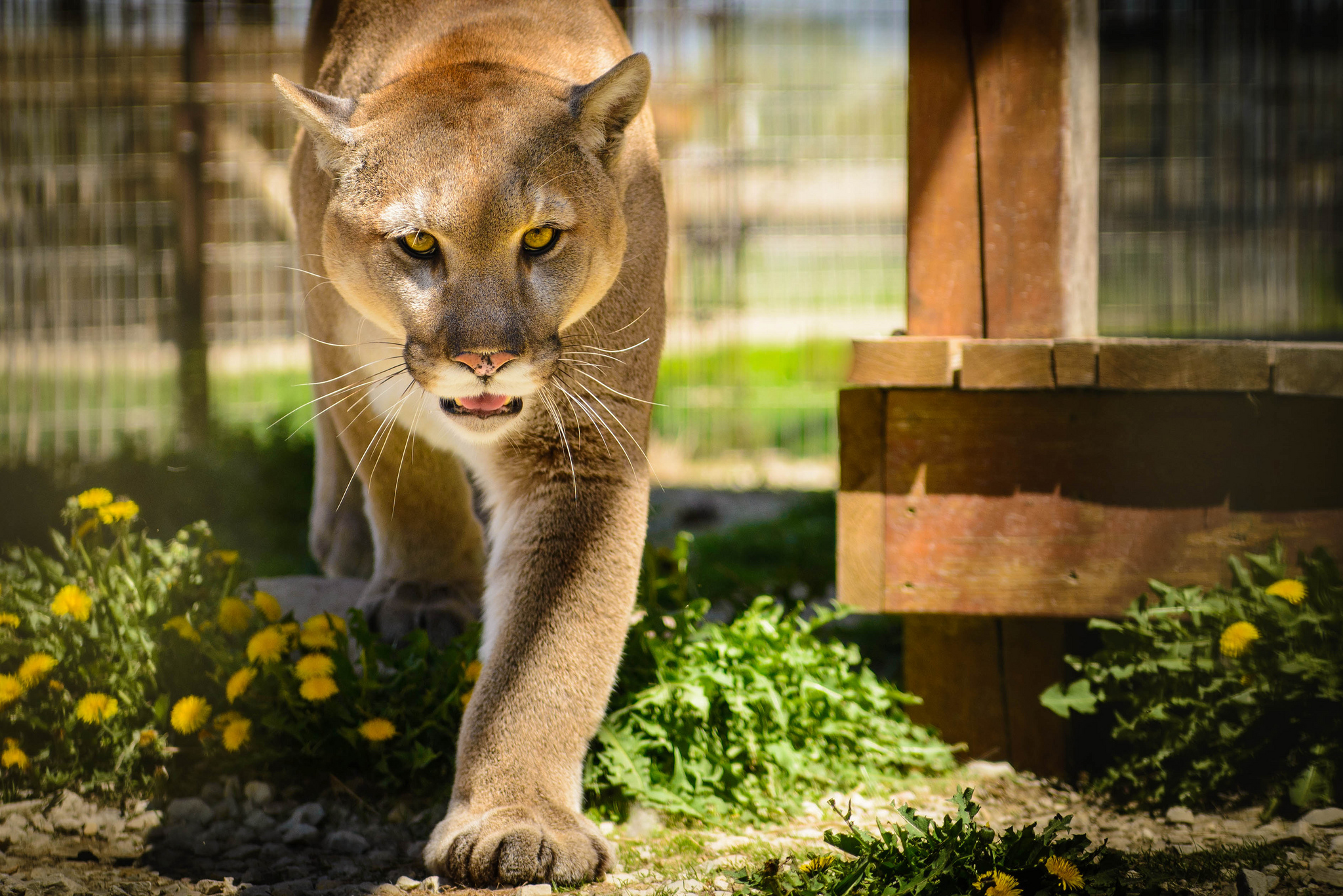
The problem of mountain lions

May 5, 2025 By EarthWise Leave a Comment

The presence of mountain lions poses a challenge for people

Mountain lions – also known as pumas, cougars, and even sometimes panthers – are the most widely distributed wild land mammal in the world.  They are found from Canada to South America.  There are an estimated 30,000 mountain lions in the United States, mostly in the West, but there are also mountain lions from the Midwest to the East Coast. 

Unlike wolves or grizzly bears, mountain lions are not managed by the federal government; they are managed by states and state regulations vary greatly.  In some places, hunting mountain lions is banned completely; in other places, it is always open season.

As more people encroach on wild land – building homes and small farms, as well as hiking and biking – the numbers of encounters between people and mountain lions are increasing.  And when mountain lions lose their fear of people, there is trouble.

Since 1890, there have been at least 32 fatal mountain lion attacks on humans and more than 170 non-fatal attacks.  California has seen the most attacks in the last 40 years with 22 people injured and four killed.  Despite this, Californians passed a ballot initiative in 1990 that bans all hunting of mountain lions.

There are strategies to reduce habituation and instill fear of humans in mountain lions.  One is called “tree-and-free” that uses dogs to chase mountain lions up trees.  But there are opponents of this and other measures employed. 

The fact is that there are simply too many mountain lions living in close proximity to humans and peaceful coexistence is very difficult to achieve.  Places where hunting lions is permitted have few problems with them, but that is not a solution that is acceptable in many places.  It’s a difficult problem.

**********

Web Links

Deadly Encounter: Mountain Lion Attacks Spark Controversy

Photo, posted March 26, 2013, courtesy of the USFWS via Flickr.

Earth Wise is a production of WAMC Northeast Public Radio
Too Many Bison | Earth Wise

September 21, 2023 By EarthWise Leave a Comment

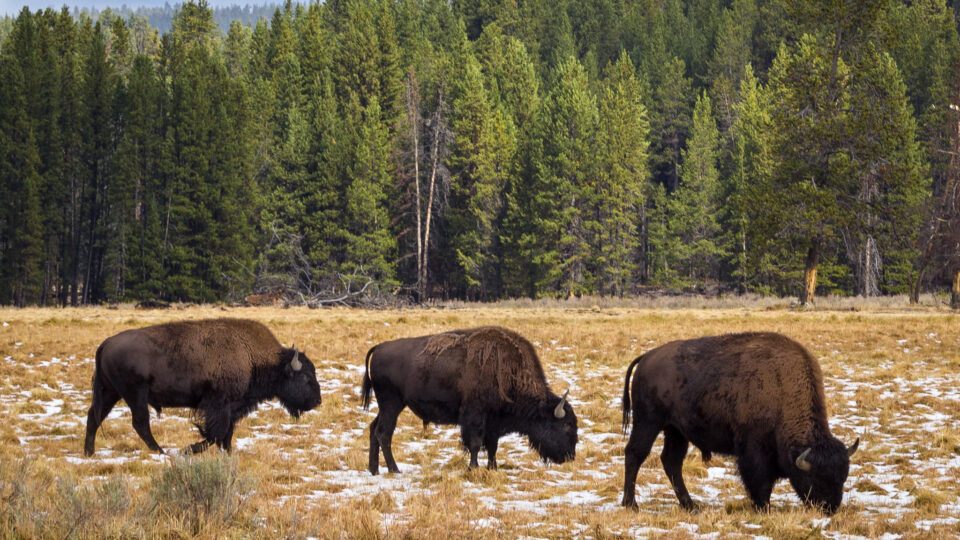
In the northern part of Yellowstone National Park, an historically large bison herd is hampering the comeback of quaking aspen trees, whose numbers were greatly diminished by decades of over-browsing by elk.  Restoring the balance of ecosystems at Yellowstone is proving to be a complicated matter.

Long ago, the bison population in the Great Plains was as much as 30 million.  The population sharply decreased in the 1800s.  By the 1830s, there were no bison east of the Mississippi River.  Fifty years later, the Plains bison was nearly extinct.  Several small herds lived near Yellowstone Park when it was established in 1872, but poachers killed off nearly of them by the turn of the century.  Protective measures were taken and by 1925, Yellowstone’s Lamar Valley herd had grown to more than 750.  After that, occasional culling took place for over 40 years. 

When gray wolves and cougars were removed from the park, elk populations boomed, and the elk gradually decimated the growth of quaking aspen, cottonwood, willow, and berry-producing shrubs.  Both elk and bison were regularly culled until 1968 when public and congressional outcry intervened.

The return of wolves and cougars to the park made some progress in restoring ecosystem balance, particularly with respect to the elk population which has dropped from 20,000 to 5,000.  But bison numbers have grown to over 4,000 over past 20 years and the damage once caused by elk is now continuing from bison.

Park administrators are faced with complex management decisions about how to best preserve the ecosystems at Yellowstone National Park.

**********

Web Links

Bison in northern Yellowstone proving to be too much of a good thing

Photo, posted October 6, 2016, courtesy of Christian Collins via Flickr.

Earth Wise is a production of WAMC Northeast Public Radio
Too Many Bison | Earth Wise

May 8, 2020 By EarthWise Leave a Comment

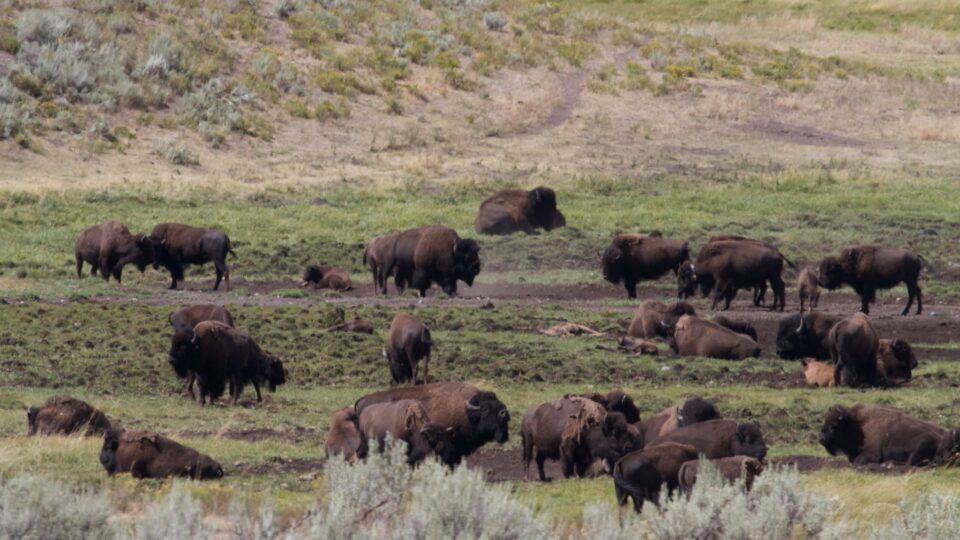
Bison in Yellowstone

The population of large herbivores in Yellowstone National Park has undergone many dramatic changes over the course of time.  The numbers of both the iconic Rocky Mountain elk and bison have gone up and down as a result of human interactions.

Bison, of course, once were a dominant species from east of the Appalachians to west of the Rocky Mountains, with most of an estimated 30 million living on the Great Plains.  As the west was settled, bison populations plummeted and by the late 1800s, they were nearly extinct.

When Yellowstone was established, there were exactly 22 bison in the park.  By 1925, there were more than 750 in the park and culling of the herd in the park’s Lamar Valley was practiced for the next four decades.

The elimination of predators like grey wolves and cougars in the early 1900s caused both elk and bison populations to mushroom and both underwent culling.  When culling was ended in 1968, there were 4,000 elk and 100 bison.  Within 20 years, those numbers were 20,000 and 1,000.   Reintroducing wolves and cougars reduced the elk population to about 5,000, but bison numbers have continued to grow, now reaching about 4,000.

While the long-term recovery of the Yellowstone bison herd is a major conservation success story, the fact is that bison are powerful ecosystem engineers.  Large numbers of them disrupt species distribution across scrub steppe and grasslands because of what they eat, trample, and rub their horns and bodies on.  They have a tremendous capacity to limit the structure and composition of ecosystems.

Park administrators have complicated management decisions to make to take into account the often wide range of ecological effects that abundant large herbivores can have on ecosystems.

**********

Web Links

Bison in northern Yellowstone proving to be too much of a good thing

Photo, posted August 10, 2016, courtesy of Brian Gratwicke via Flickr.

Earth Wise is a production of WAMC Northeast Public Radio.

Prowling Cougars

August 31, 2016 By WAMC WEB

https://earthwiseradio.org/wp-content/uploads/2016/08/EW-08-31-16-Cougars-and-Deer.mp3

What large mammal routinely kills 200 humans in the Eastern United States every year?  Here’s a hint:  It’s not cougars.  It’s actually overabundant white-tailed deer. 

[Read more…] about Prowling Cougars

Coexisting With Dangerous Carnivores

February 16, 2016 By WAMC WEB

https://earthwiseradio.org/wp-content/uploads/2016/02/EW-02-16-16-Coexisting-with-Carnivores.mp3

We come across many things that we don’t like but that are nonetheless good for us or good for the world in general.   On some level, we all make cost-benefits analyses to decide what to do about various things that we might just as soon do without.

[Read more…] about Coexisting With Dangerous Carnivores

Primary Sidebar

Recent Episodes

  • An uninsurable future
  • Clean energy and jobs
  • Insect declines in remote regions
  • Fossil fuel producing nations ignoring climate goals
  • Trouble for clownfishes

WAMC Northeast Public Radio

WAMC/Northeast Public Radio is a regional public radio network serving parts of seven northeastern states (more...)

Copyright © 2026 ·