• Skip to primary navigation
  • Skip to main content
  • Skip to primary sidebar

Earth Wise

A look at our changing environment.

  • Home
  • About Earth Wise
  • Where to Listen
  • All Articles
  • Show Search
Hide Search
You are here: Home / Archives for consume

consume

Feeding the future

June 9, 2025 By EarthWise Leave a Comment

Climate change is already affecting the yields of major staple crops around the world, and researchers warn that the impacts will become more severe over time. Rising temperatures, shifting rainfall patterns, and more frequent extreme weather events are disrupting growing seasons and reducing agricultural productivity.

Addressing these growing threats requires rethinking how we grow, distribute, and consume food.  To kick off Climate Solutions Week, we wanted to examine some solutions that could make food systems more resilient, sustainable, and adaptable to our rapidly changing environment.

One solution is Climate-Smart Agriculture, which blends traditional practices with modern techniques to boost productivity while reducing greenhouse gas emissions. Methods like zero tillage, intercropping, and crop diversification could improve soil health, conserve water, and help farms withstand climate extremes.

Expanding the production of highly nutritious and climate resilient food crops – like millet, sorghum, teff, quinoa, chickpeas, and tepary beans – will also have an important role to play.  At the same time, reducing food waste through better storage, labeling, and surplus food re-use could help meet demand without increasing production pressure.

Agriculture is the largest user of freshwater globally, and climate change is intensifying water shortages.  Farmers will need to transition to water-efficient farming practices, including drip irrigation, rainwater harvesting, and the reuse of treated wastewater. 

Together, these solutions could help revolutionize the global food system to both feed a growing population and help protect the planet. 

*********

Web Links

Climate-smart agriculture

Water for Prosperity and Peace

A Food For The Future

Photo, posted October 16, 2011, courtesy of Alliance of Bioversity International and CIAT via Flickr.

Earth Wise is a production of WAMC Northeast Public Radio

Engineering plants to consume more carbon dioxide

January 23, 2025 By EarthWise Leave a Comment

The most abundant protein on the planet is an enzyme called ribulose-1,5-bisphosphate carboxylase/oxygenase, better known as RuBisCO.  Its critical role in photosynthesis makes life as we know it on earth possible.  What it does is convert carbon dioxide from the atmosphere into the organic matter contained in plants.

Getting plants to take up more carbon dioxide from the atmosphere is a key strategy for mitigating climate change.  Planting lots of trees is one way to do it.  Another is to get individual plants to capture more carbon dioxide.

Scientists at the University of Illinois have focused on getting plants to produce more RuBisCO which allows them to grow faster, consuming more carbon dioxide in the process.

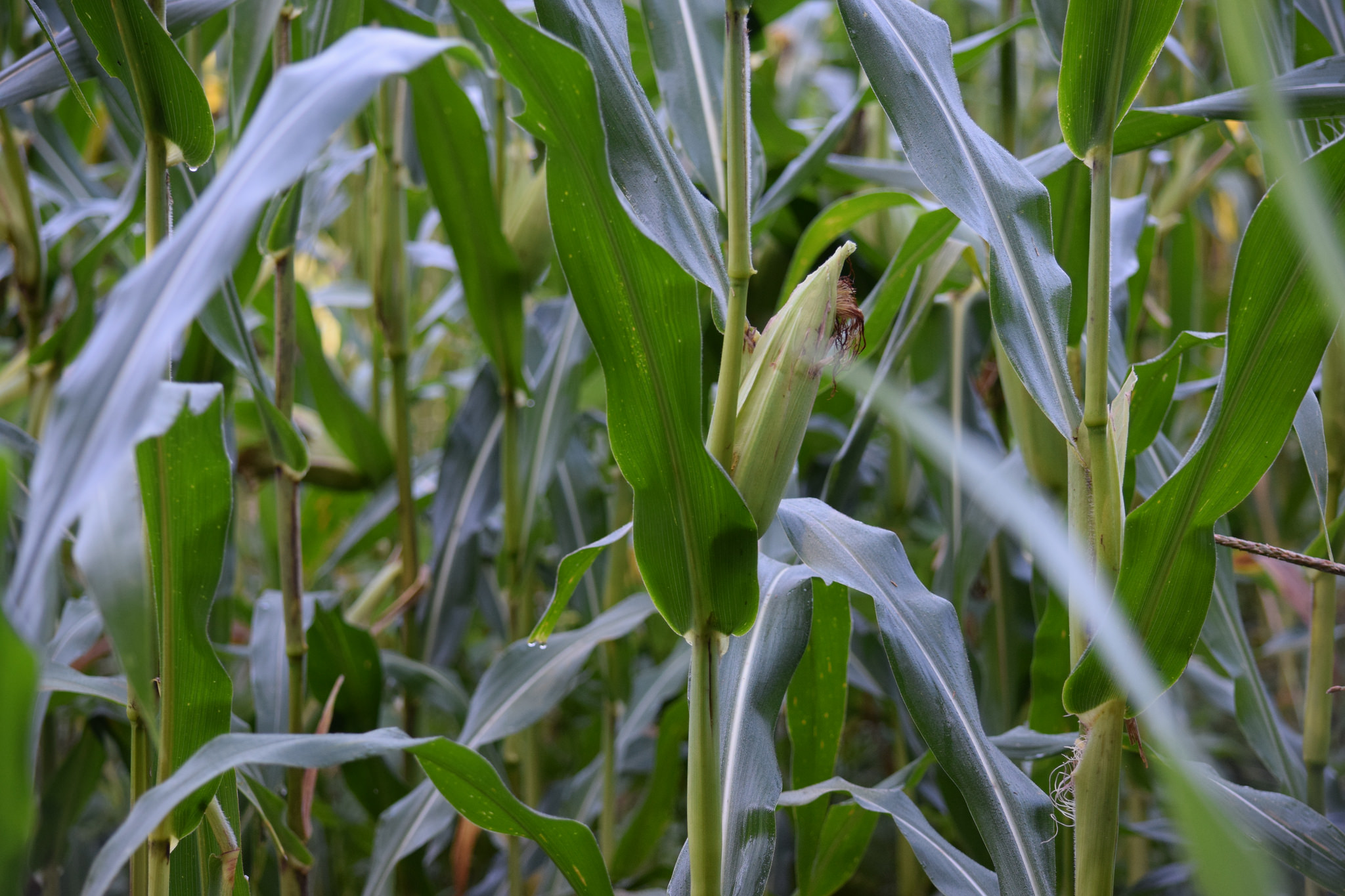
Some plants are better than others at taking advantage of the earth’s rising carbon dioxide levels.  Among these are food crops like corn, sugarcane, and sorghum.  Such plants’ growth is not primarily limited by how much carbon dioxide is in the atmosphere but rather by how much RuBisCO is in their leaves.  The Illinois scientists tweaked genes in corn and sorghum to produce plants containing more RuBisCO.  Laboratory experiments on corn demonstrated faster corn growth.  Recent outdoor field experiments on sorghum demonstrated a 16% boost in its growth rate. 

Improving photosynthesis in this way is not only a potential strategy for increasing plants’ ability to combat climate change.  It is also a way to cope with the world’s increasing demand for food by producing crops that can grow larger and more quickly.

**********

Web Links

Scientists Engineer Crops to Consume More Carbon Dioxide

Photo, posted April 12, 2016, courtesy of K-State Research and Extension via Flickr.

Earth Wise is a production of WAMC Northeast Public Radio

Artificial plants to clean indoor air

December 12, 2024 By EarthWise Leave a Comment

The average American spends about 90% of their time indoors breathing the air in our workplaces, homes, or schools.  The quality of this air affects our overall health and well- being.  Indoor air quality is an issue because many sources can generate toxic materials, including building materials, carpets, and more.  But high levels of carbon dioxide are a health hazard themselves. Indoor CO2 levels can often be 5 to 10 times higher than the already heightened levels in the atmosphere. 

Many of us make use of air purification systems, which can be expensive, cumbersome, and require frequent cleaning and filter replacements.

Researchers at Binghamton University in New York are working to develop artificial plants that consume carbon dioxide, give off oxygen, and, as a bonus, generate a little electricity. These artificial plants make use of the artificial light in the indoor environment to drive photosynthesis.  They achieve a 90% reduction in carbon dioxide levels, which is far more than natural plants can achieve.

The Binghamton researchers had been working on bacteria-powered biobatteries for various applications, but they repurposed the work into a new idea for artificial plants.  The artificial plants have “leaves” containing a biological solar cell and photosynthetic bacteria.  Their first plant had five leaves and demonstrated promising carbon dioxide capture rates and oxygen generation.  It also produced a little electricity.  If its generating capacity can be improved, it might also be useful for charging cell phones or other practical applications.

**********

Web Links

Binghamton researchers develop artificial plants that purify indoor air, generate electricity

Photo, posted October 13, 2012, courtesy of F. D. Richards via Flickr.

Earth Wise is a production of WAMC Northeast Public Radio
Mealworms And Plastic | Earth Wise

January 21, 2020 By EarthWise Leave a Comment

Mealworms and Plastic

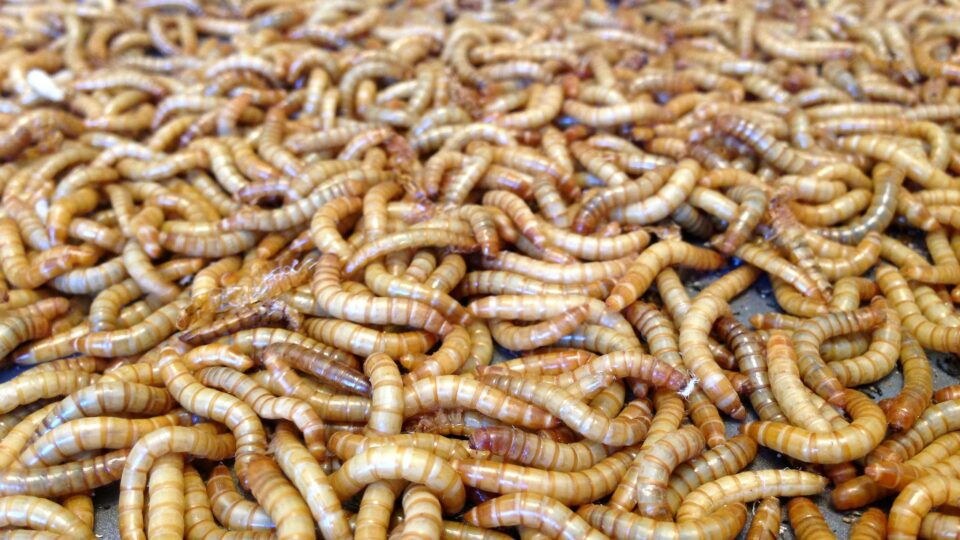
Mealworms are widely cultivated beetle larvae that people feed to pets and to wild birds.  But it turns out, they may have an even more valuable purpose:  they can eat plastic and even plastic containing dangerous chemical additives.

Four years ago, researchers at Stanford discovered that mealworms can actually subsist on a diet of various types of plastic.  They found that microorganisms in the worms’ guts actually biodegrade the plastic.  It might be possible to cultivate the worms using unrecyclable plastic, rather than feeding them grains and fruits.   However, there is the issue of whether it would be safe to feed the plastic-eating worms to other animals, given the possibility that harmful chemicals in plastic additives might accumulate in the worms over time.

Recently, the Stanford researchers studied what happens when the worms ingested Styrofoam or polystyrene.  The plastic commonly used for packaging and insulation typically contains a flame retardant called hexabromocyclododecane, or HBCD.  Studies have shown that HBCD can have significant health and environmental impacts, ranging from endocrine disruption to neurotoxicity.

According to the study, mealworms in the experiment excreted about half of the polystyrene they consumed as tiny, partially degraded fragments and the other half as carbon dioxide.  With it, they excreted the HBCD.  Mealworms fed a steady diet of HBCD-laden polystyrene were as healthy as those eating a normal diet.  And shrimp fed a steady diet of the HBCD-ingesting mealworms also had no ill effects.

It is true that the HBCD excreted by the worms still poses a hazard and must be dealt with in some manner, but mealworms may have a role to play in dealing with unrecyclable plastics like Styrofoam.

**********

Web Links

Stanford researchers show that mealworms can safely consume toxic additive-containing plastic

Photo, posted May 11, 2015, courtesy of Flickr.

Earth Wise is a production of WAMC Northeast Public Radio.

Fighting Methane With Bacteria

June 14, 2018 By EarthWise Leave a Comment

https://earthwiseradio.org/wp-content/uploads/2018/06/EW-06-14-18-Fighting-Methane-with-Bacteria.mp3

Bacteria may have an important role to play in the effort to reduce greenhouse gas emissions.  A group of researchers at the University of Alberta are genetically engineering non-hazardous bacteria that consume methane and turn it into fuel.

[Read more…] about Fighting Methane With Bacteria

New Doubts About GMO Crops

November 30, 2016 By EarthWise

https://earthwiseradio.org/wp-content/uploads/2016/11/EW-11-30-16-New-Doubts-about-GMOs.mp3

Genetically modified crops have been at the center of a great deal of controversy for a number of years.  There have been widespread fears that they are unsafe to eat.  Continuing studies have indicated that those fears appear to be unsubstantiated.

[Read more…] about New Doubts About GMO Crops

Primary Sidebar

Recent Episodes

  • An uninsurable future
  • Clean energy and jobs
  • Insect declines in remote regions
  • Fossil fuel producing nations ignoring climate goals
  • Trouble for clownfishes

WAMC Northeast Public Radio

WAMC/Northeast Public Radio is a regional public radio network serving parts of seven northeastern states (more...)

Copyright © 2026 ·