• Skip to primary navigation
  • Skip to main content
  • Skip to primary sidebar

Earth Wise

A look at our changing environment.

  • Home
  • About Earth Wise
  • Where to Listen
  • All Articles
  • Show Search
Hide Search
You are here: Home / Archives for concentrations

concentrations

New highs for carbon dioxide

April 11, 2025 By EarthWise Leave a Comment

New highs reached for global carbon dioxide emissions

Last year was the hottest year on record and the ten hottest years on record have in fact been the last ten years.  Ocean heat reached a record high last year and, along with it, global sea levels.  Those are rising twice as fast as they did in the 1990s.

The World Meteorological Organization reports that the global atmospheric concentration of carbon dioxide reached a new observed high in 2023, which is the latest year for which global annual figures are available.  The level was 420 ppm, which is the highest level it has been in 800,000 years. 

The increase in carbon dioxide levels was the fourth largest one-year change since modern measurement began in the 1950s.  The rate of growth is typically higher in El Niño years because of increases from fire emissions and reduced terrestrial carbon sinks.

Concentrations of methane and nitrous oxide – which are two other key greenhouse gases – also reached record high observed levels in 2023.  Levels of both of these gases have also continued to increase in 2024.

The annually averaged global mean near-surface temperature in 2024 was 1.55 degrees Celsius above the 1850-1900 average.  Apart from being the warmest year in the 175 years records have been kept, it is also above the 1.5-degree limit set as the goal of the Paris Climate Agreement.  While a single year above 1.5 degrees of warming does not mean that the efforts to limit global warming have failed, it is a strong warning that the risks to human lives, economies, and the planet are increasing.

**********

Web Links

Carbon Dioxide Levels Highest in 800,000 Years

Photo, posted January 30, 2018, courtesy of Johannes Grim via Flickr.

Earth Wise is a production of WAMC Northeast Public Radio

Microplastics in Antarctica

March 3, 2025 By EarthWise Leave a Comment

Microplastics are small plastic pieces less than five millimeters long and typically far smaller than that.  They come from a variety of sources, often from larger plastic debris that degrades into smaller and smaller pieces.  There are also microbeads, which are tiny pieces of manufactured polyethylene plastic that are added to various health and beauty products.  Tiny bits of plastic easily pass through filtration systems and end up in the ocean and other bodies of water.

Microplastics are a pervasive problem for which nowhere on Earth is truly untouched.  Despite stringent regulations on materials entering Antarctica, scientists have discovered microplastics in the snow near some of the deep field camps there.

A study by the British Antarctic Survey made use of a new and advanced technique that can detect microplastics as small as 11 microns – about the size of a red blood cell.

The research team found microplastics at concentrations ranging from 73 to 3,099 particles per liter of snow. 

Snow samples from three different sites identified polyamide (used in textiles), polyethylene terephthalate (found in bottles and packaging), polyethylene, and synthetic rubber.  The results suggest that at least the polyamide, which accounted for half the microplastics found, came from local sources.

Additional research is needed to fully understand the sources of microplastic pollution in Antarctica and to understand the broader implications of microplastics in that frozen wilderness. Microplastics have already been detected in several penguin, seal, and fish species.

**********

Web Links

Microplastics discovered in Antarctica

Photo, posted February 3, 2015, courtesy of Christian Stangl via Flickr.

Earth Wise is a production of WAMC Northeast Public Radio
A common plant could be a valuable food source

April 4, 2024 By EarthWise Leave a Comment

A common plant could boost food security in a hungry world

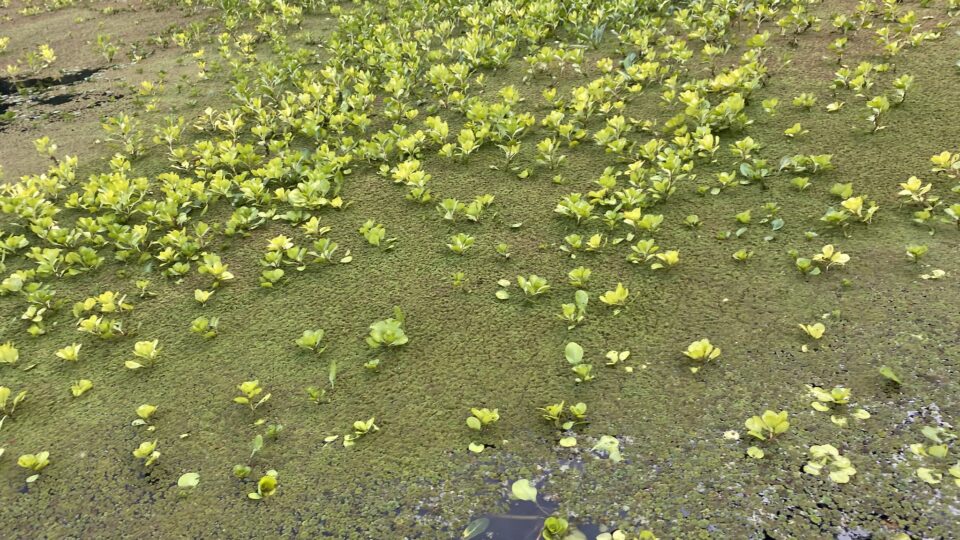
A new study by researchers at Penn State University has found that a common water plant in the eastern U.S. could be a valuable green fertilizer, a feed for poultry and livestock, and even a life-saving food for people in the event of a catastrophe or disaster.

The plant is the Carolina azolla.  It is sometimes called mosquito fern, fairy moss, or water fern. It is a water plant that grows very rapidly; it can double its biomass in two days.   There are many varieties of azolla, but the Carolina strain is more digestible and nutritious for people than any of the others.

Azolla species have been used across the world for centuries as a livestock feed and as a fertilizer.  They have not been good for human consumption because of high polyphenolic content, which can be 10 times more than that of common food plants.  Polyphenols are abundant compounds in many plants and, in low concentrations, are beneficial antioxidants.  But in high concentrations they act as antinutritional agents.

It turns out that the Carolina azolla – described as having a crisp texture and neutral taste – has a polyphenolic content comparable to many fruits, nuts, and vegetables.  Furthermore, cooking significantly decreases the polyphenolic content in foods.

Carolina azolla has significant nutritional value including high mineral yields and calories,  and moderate protein content.  Whether it is used as a quick-fix in a disaster situation or as part of a long-term resilience plan, the study concludes that Carolina azolla holds excellent potential for use as a fast-growing, short-season crop that requires minimal effort to grow and process and could be used to increase food security in a hungry world.

**********

Web Links

Common plant could help reduce food insecurity, researchers find

Photo, posted October 8, 2020, courtesy of Dana L. Brown via Flickr.

Earth Wise is a production of WAMC Northeast Public Radio

Action on the toxic chemical from tires

December 13, 2023 By EarthWise Leave a Comment

Toxic chemicals from tire debris

Since the 1990s, populations of coho salmon in streams and urban creeks up and down the West Coast have been dying in large numbers.  Scientists at the University of Washington began studying the mysterious deaths and it took years to figure out what was going on.  They analyzed water samples from urban creeks and found that chemicals from vehicle tires were present.  By soaking tires in water, they found that more than 2,000 chemicals were present.  It took three years to narrow down the suspect list to one chemical:  a toxin called 6PPD-quinone, which is produced when the common tire preservative 6PPD mixes with oxygen.  It is that chemical that was responsible for the salmon die-off.

6PPD-quinone is toxic enough to quickly kill some fish.  Studies showed that concentrations of the chemical in stormwater were found to be lethal for coho salmon following exposures lasting only a few hours.

Despite the discovery, the tire industry has continued to use the chemical in its products.  The industry says 6PPD is an antioxidant and antiozonant that helps prevent degradation and cracking of tires in the environment and is essential for the performance and safety of vehicles.

Last year, California regulators directed the tire industry to seek out substitutes for 6PPD.  The U.S. Tire Manufacturers Association pledged to investigate possible safer alternatives to the chemical.

In November, spurred by a petition by West Coast tribes whose lifeways depend on coho salmon, the EPA said it will study the impact of 6PPD with an eye to potentially banning its use. 

**********

Web Links

After Salmon Deaths, EPA Takes Aim at Toxic Chemical Issuing from Car Tires

Photo, posted May 31, 2021, courtesy of Chris Yarzab via Flickr.

Earth Wise is a production of WAMC Northeast Public Radio

Plastics In The Air | Earth Wise

October 25, 2023 By EarthWise Leave a Comment

Plastic pollution is a growing problem

Plastic pollution is a big deal.  There are plastics clogging up landfills and waterways and accumulating in the oceans, choking turtles and seabirds.  Annual production of plastics has grown from 2 million tons a year in 1950 to more than 450 million tons today.

As if plastic problems weren’t already big enough, it is becoming increasingly clear that there are growing amounts of microplastic particles in the air. Bits of plastic are lofted into the sky from seafoam bubbles and from spinning tires on highways.  The particles are so light that they can travel for thousands of miles, far from where they originate.

Studies in recent years documented the presence of plastic particles even in places like the Pyrenees in Europe and in federally protected areas of the US.  Other studies have measured the quantity of plastic in the air of various locations and have looked at the origins of the particles.

In the western US, over 80% of microplastics came from roads where vehicles kick up particles from tires and brakes.   In remote areas of the Pacific, there is less than a single particle of plastic per cubic meter of air.  In cities like London and Beijing, on the other hand, there can be several thousand particles per cubic meter.

Microplastics can act as airborne aerosols, like dust, salt, soot, volcanic ash, and other particles.  Aerosols play an important role in the formation of clouds and in temperature regulation on the earth.  At low concentrations, such as exist in most places, microplastic aerosols don’t have much of an effect.  But there are more in the atmosphere all the time and, at this point, scientists don’t really know what effect they will have.

**********

Web Links

Microplastics Are Filling the Skies. Will They Affect the Climate?

Photo, posted August 28, 2014, courtesy of Alan Levine via Flickr.

Earth Wise is a production of WAMC Northeast Public Radio

Living in a Carbon Bubble | Earth Wise

July 18, 2022 By EarthWise Leave a Comment

The earth’s atmosphere is a little over 0.04% carbon dioxide, currently about 420 parts per million.  That’s more than it’s been in millions of years and is changing our climate.  But these levels of CO2 are not enough to directly affect people.

However, people are sensitive to the amount of carbon dioxide they are breathing.  It is actually an indoor pollutant.  High concentrations have been shown to reduce our cognitive performance, our health, and our comfort.  For example, a study in 2012 showed that performance in a variety of cognitive function tests was reduced by 12% when CO2 levels reached 1,000 parts per million and by 51% at 2,500 ppm.

How common are high levels of carbon dioxide?  Pretty common.  Offices often have CO2 levels of 600 ppm or higher, but 5% of US offices have average concentration about 1000 ppm and some conference rooms can reach 1900 ppm.  Classrooms often reach average levels above 1000 ppm.  Passenger aircraft have average levels around 1400 ppm during flight, and can peak over 4,000 ppm.  Cars with one occupant with the windows closed and the air recirculating have levels above 4,000 ppm. 

Where does it all come from?  From us.  We exhale CO2 and if we are in enclosed spaces with insufficient air circulation and ventilation, we end up living in a carbon dioxide bubble.  Most of us live with high CO2 levels – all day and every day.  It is a form of indoor pollution that has not gotten enough attention.

**********

Web Links

I’m living in a carbon bubble. Literally.

Photo, posted October 24, 2013, courtesy of Cory W. Watts via Flickr.

Earth Wise is a production of WAMC Northeast Public Radio.

A Hot Year With Record GHG Levels | Earth Wise

February 25, 2022 By EarthWise Leave a Comment

Record Greenhouse Gas levels

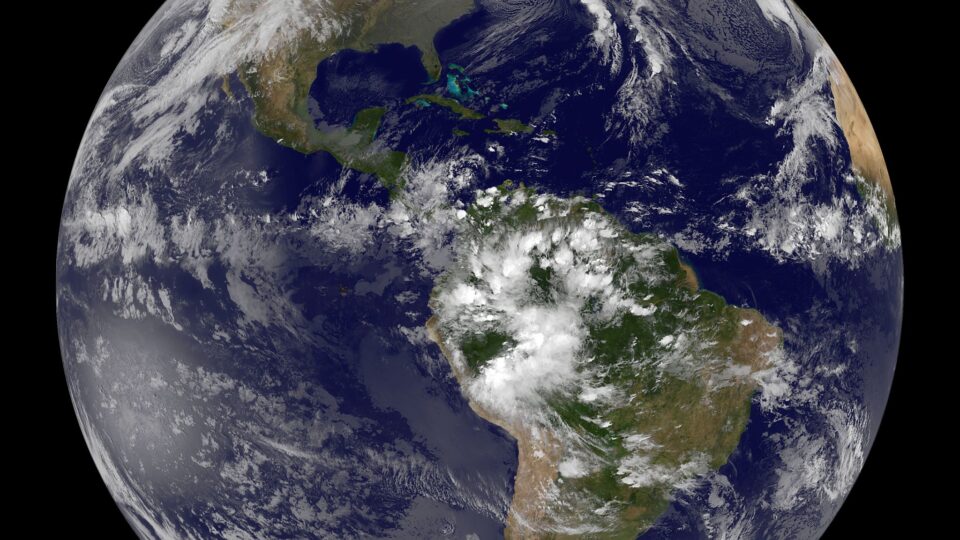
Last year was a year that saw rising temperatures and rising levels of greenhouse gases.  2021 was the fifth-hottest year on record.  The average global temperature was nearly 1.2 degrees Celsius or 2.1 Fahrenheit degrees higher than the preindustrial average.  The past seven years were the hottest ever by a significant margin.

The concentration of carbon dioxide in the atmosphere reached 414 parts per million, compared with preindustrial levels of 280 parts per million.  Concentrations of methane reached 1876 parts per billion, the highest levels ever recorded. 

Apart from these global measurements, local and regional weather saw the effects of the heating planet.  Extreme temperatures were common with the hottest summer in Europe, heatwaves in the Mediterranean, and unprecedented high temperatures in North America.

The West Coast of the US, northeast Canada, Greenland, and parts of north Africa and the Middle East all experienced the highest above-average temperatures.  However, some places, including Australia, Antarctica, Siberia, and much of the Pacific Ocean often saw below-average temperatures, even though the same places occasionally experienced record high temperatures.

The Covid-19 pandemic and its economic disruptions continued to lead to some reductions in greenhouse gas emissions, but in the US, emissions from energy use and industry nonetheless grew 6.2% in 2021 after falling more than 10% in 2020.

Carbon dioxide and methane concentrations are continuing to increase each year and don’t appear to be slowing down.  As long as this situation persists, global temperatures will continue to rise, and extreme and erratic weather will be more and more commonplace.

**********

Web Links

2021 Rated One of the Hottest Years Ever as CO2 Levels Hit Record High

Photo, posted November 11, 2011, courtesy of NASA Goddard Space Flight Center via Flickr.

Earth Wise is a production of WAMC Northeast Public Radio.

Tracking Ocean Plastics | Earth Wise

July 30, 2021 By EarthWise Leave a Comment

Using a new technology to track ocean plastics across the globe

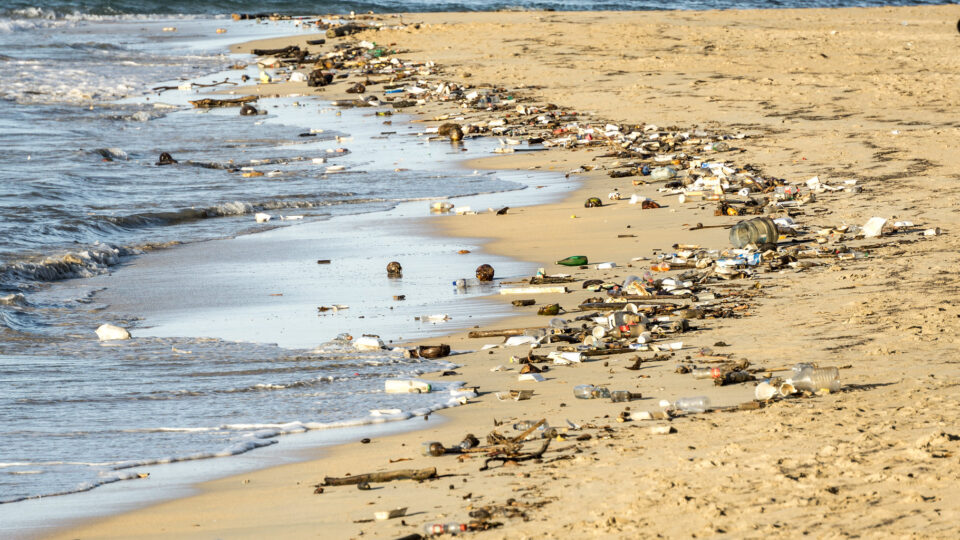
Plastic pollution in the oceans is a major problem.  An estimated 8 million tons of plastic trash enters the ocean every year.  Most of it is broken up by sun and waves into microplastics, which are tiny bits that ride currents for hundreds or thousands of miles.  All of this debris is harmful to marine ecosystems, and it is both challenging to track and very difficult to clean up.

University of Michigan researchers have developed a new technique for spotting and tracking ocean microplastics across the globe.  The approach relies on the Cyclone Global Navigation Satellite System, or CYGNSS, which is a constellation of eight microsatellites launched in 2016 to monitor weather near large storm systems.  It turns out that the radar systems on CYGNSS that measure surface roughness to calculate the wind speed near the eyes of hurricanes can also be used to detect the presence of microplastics.

With the satellite measurements, the researchers have found that global microplastic concentrations tend to vary by season, peaking during the summer months.  For example, June and July are the peak months for the Great Pacific Garbage Patch.  The data also showed spikes in microplastic concentration at the mouth of China’s Yangtze River, long suspected to be a chief source of plastic pollution.  The researchers produced visualizations that show microplastic concentrations around the world.

The information provided by the new technique could help organizations that clean up microplastics to deploy ships and other resources more efficiently.  Data of single-point release of plastics, such as from rivers, may also be useful to UNESCO, which has sponsored a task force to find new ways to track the release of microplastics into the world’s waters.

**********

Web Links

Ocean microplastics: First global view shows seasonal changes and sources

Photo, posted April 3, 2018, courtesy of Rey Perezoso via Flickr.

Earth Wise is a production of WAMC Northeast Public Radio.

Much More Microplastics In The Ocean | Earth Wise

January 28, 2020 By EarthWise Leave a Comment

microplastics in ocean image

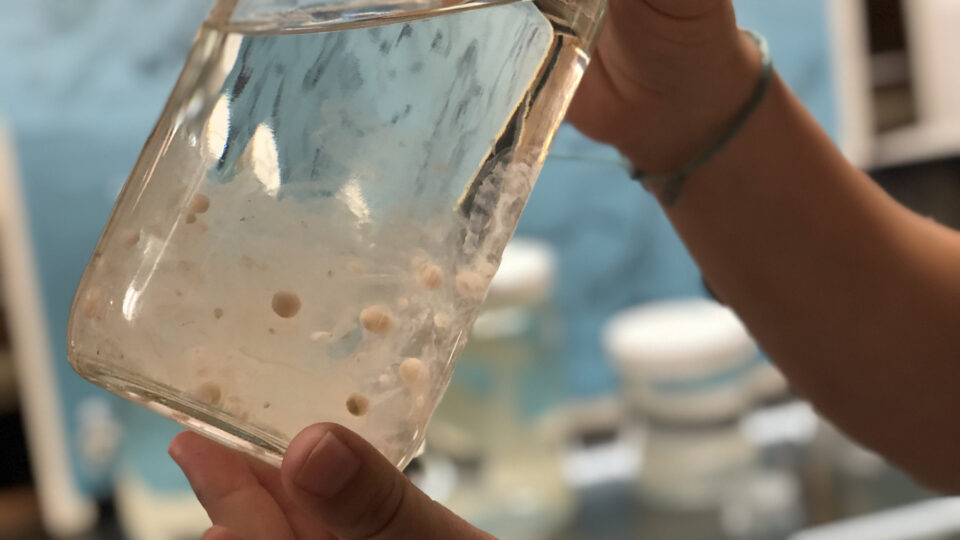
We’ve been hearing more and more about plastic contamination (microplastics) in the ocean.  It is pulled from the nostrils of sea turtles, found in Antarctic waters, and tracked in increasing quantities in sedimentary layers dating back to the 1940s.  A new study by researchers from the Scripps Institution of Oceanography suggests that there could be a million times more pieces of plastic in the ocean than previously estimated.

Oceanographers found that some of the tiniest countable microplastic particles in seawater occur at much higher concentrations than previously measured.  Apparently, the traditional way of counting marine microplastics most likely misses the smallest particles, and therefore underestimates the number of particles by a factor of anywhere from 10,000 to a million.

The new measurements estimate that the oceans may be contaminated by 8 million pieces of so-called mini-microplastics per cubic meter of water.  Earlier studies that only looked at larger pieces of plastic found only 10 pieces per cubic meter. 

Microplastic studies typically trawl or pull a fine net behind a ship to collect samples.  But the meshes previously used could only capture plastics as small as 333 microns.  The new study found plastic particles as small as 10 microns, which is less than the width of a human hair.

Plastics keep breaking down into smaller and smaller particles, but they are so chemically strong that their chemical bonds don’t break down. They remain bits of plastic.  Scientists are concerned that these particles can get small enough to enter the human bloodstream.  The potential effects on human health are not well known and not extensively studied.

The problem of plastics just keeps getting bigger.

**********

Web Links

Microplastics a million times more abundant in the ocean than previously thought

Photo courtesy of UC San Diego.

Earth Wise is a production of WAMC Northeast Public Radio.

Safe And Simple Hydrogen Peroxide

November 29, 2019 By EarthWise Leave a Comment

We don’t think about hydrogen peroxide very often.  Perhaps we have a bottle of it under our bathroom sink that we haven’t touched in a few years.   But it is an important product manufactured in the millions of tons each year and the basis of a $6 billion global business.

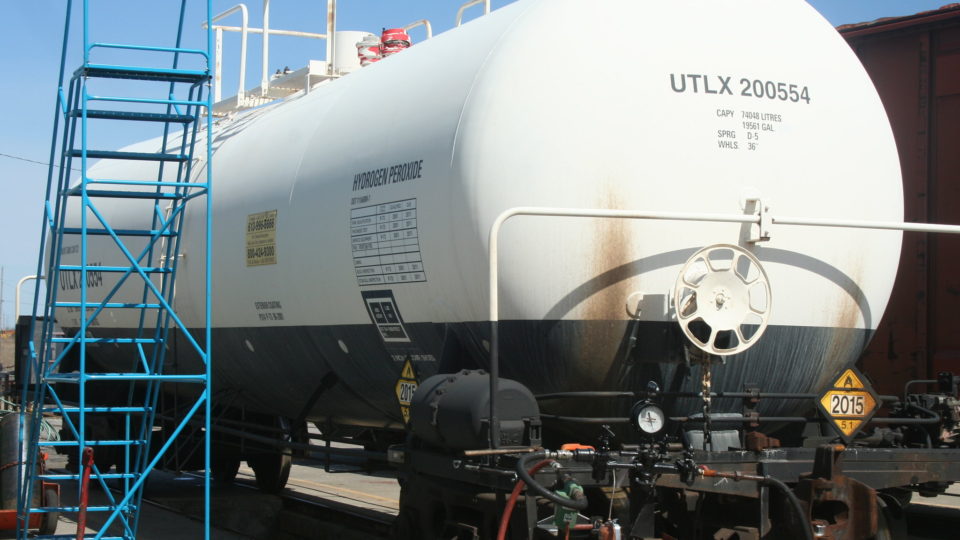
Hydrogen peroxide is widely used as an antiseptic, a detergent, in cosmetics, as a bleaching agent, in water purification, and in many other applications.  It is produced in industrial concentrations of up to 60% in solution with water in order to maximize the economics of transportation.  This makes transportation hazardous and costly because the concentrated form is unstable.  Most applications use a far more diluted form.

Researchers at Rice University have developed a new method for producing hydrogen peroxide that is much simpler and safer than the current technology, which actually dates back to the 1930s.  The Rice technique requires only air, water and electricity to produce the chemical.  The electrosynthesis process, which is detailed in the journal Science, uses an oxidized carbon nanoparticle-based catalyst.

The process could enable point-of-use production of pure hydrogen peroxide solutions, which would eliminate the need to transport the hazardous concentrated chemical.  The use of a solid electrolyte instead of the traditional liquid electrolyte eliminates the need for product separation or purification that is part of the current technology.

In the future, instead of storing containers of hydrogen peroxide, hospitals that use it as a disinfectant could turn on a spigot and get, for example a 3% solution on demand.  Instead of storing chemicals to disinfect swimming pool water, future homeowners could flick a switch and turn on their peroxide reactor to clean their pools.

**********

Web Links

Water + air + electricity = hydrogen peroxide

Photo, posted April 19, 2009, courtesy of Robert Taylor via Flickr.

Earth Wise is a production of WAMC Northeast Public Radio.

Drugs In The Water

April 15, 2019 By EarthWise Leave a Comment

According to a new study published in the journal Environmental Research Letters, concentrations of pharmaceuticals in rivers and lakes have dramatically increased across the globe over the past 20 years.

Traces of medicines get passed into waterways through the excretion of active drugs in human waste, the disposal of unused medicines down drains, and runoff from livestock farms.

The study looked in detail at two specific drugs:   carbamazepine, an anti-epileptic drug, and ciprofloxacin, an antibiotic.   The study found that the risk of ecological damage from the residue from these two drugs was 10 to 20 times higher in 2015 than in 1995.

Chronic exposure to carbamazepine, for example, has been shown to alter feeding behavior and reduce egg viability in zebrafish, as well as reduce reproductive success in crustaceans.  Antibiotics can alter major nutrient cycles and decrease the effectiveness of bacteria-based wastewater treatment systems.

The study, led by researchers from the Netherlands, created a new model estimating concentrations of the two drugs over a 20-year period in 449 aquatic systems around the globe.  The model predicts a relatively high environmental risk in densely populated and dry areas such as the Middle East. 

When the researchers compared the model’s results to samples from four river systems in various locations, they found that the actual drug concentrations were even higher than model results, in some cases by a factor of 10 to 100. 

The new model should act as a guide for a more thorough investigation into pharmaceutical residues in waterways, which pose significant environmental risks all over the world.

**********

Web Links

Concentrations of Pharmaceuticals in Freshwater Increasingly Globally

Photo, posted March 22, 2012, courtesy of Rajeev Rajagopalan via Flickr.

Earth Wise is a production of WAMC Northeast Public Radio.

PCBs And Killer Whales

November 7, 2018 By EarthWise Leave a Comment

https://earthwiseradio.org/wp-content/uploads/2018/11/EW-11-07-18-PCBs-and-Killer-Whales.mp3

PCBs belong to a broad family of man-made organic chemicals known as chlorinated hydrocarbons.  PCBs were once widely used in electrical equipment like capacitors and transformers, as well as in paints, dyes, and heat transfer fluids.

[Read more…] about PCBs And Killer Whales

Air Pollution Shortens Lives

October 31, 2017 By EarthWise Leave a Comment

https://earthwiseradio.org/wp-content/uploads/2017/10/EW-10-30-17-Air-Pollution-Shortens-Lives.mp3

Globally, an estimated 4.5 billion people are exposed to particulate air pollution levels that are at least twice that of what the World Health Organization considers safe.  But the impact that sustained exposure to air pollution has on a person’s life expectancy has remained a frustratingly unanswered question.  That is until now.

[Read more…] about Air Pollution Shortens Lives

Primary Sidebar

Recent Episodes

  • An uninsurable future
  • Clean energy and jobs
  • Insect declines in remote regions
  • Fossil fuel producing nations ignoring climate goals
  • Trouble for clownfishes

WAMC Northeast Public Radio
WAMC/Northeast Public Radio is a regional public radio network serving parts of seven northeastern states (more...)

Copyright © 2025 ·