• Skip to primary navigation
  • Skip to main content
  • Skip to primary sidebar

Earth Wise

A look at our changing environment.

  • Home
  • About Earth Wise
  • Where to Listen
  • All Articles
  • Show Search
Hide Search
You are here: Home / Archives for comeback

comeback

Tigers in India

March 17, 2025 By EarthWise Leave a Comment

The Anthropocene is the term that describes the current era in Earth’s history when human activities are having a significant impact on the planet.  It is an epoch filled with species extinction and species attrition in both numbers and range.  The population of large carnivores are among the most affected species and recovering these animals that play important roles in ecosystems is a formidable challenge.

Tigers in Asia are a prime example of extirpation – removal of a species from a specific area.  They have been eliminated in more than 90% of their historic Asian range over the past century.  A new study, published in Science has found that tigers in India are making a comeback.

India’s National Tiger Conservation Authority estimates that between 2010 and 2022, India’s tiger population grew from 1,706 to 3,682.  Tigers are thriving not only on protected lands but also near some human communities.

Tigers are gone from poorer areas where poaching was prevalent and from areas affected by the violent conflict associated with India’s Maoist rebellion.  On the other hand, the big cats can be found near some prosperous communities where poaching is rare.  Farmers keep cattle in enclosures to protect them from tigers.  

The success in protecting tigers in India could provide some insights for Europe where wolves are making a comeback, and perhaps even in the American West where the resurgence of wolf populations is triggering a violent backlash.

Large predators can survive in the modern world with creative thinking and willingness to find a balance between protection and coexistence.

**********

Web Links

India Doubled its Tiger Population in a Little More Than a Decade

Photo, posted January 8, 2014, courtesy of Roderick Eime via Flickr.

Earth Wise is a production of WAMC Northeast Public Radio
Return Of The Fin Whale | Earth Wise

August 15, 2022 By EarthWise Leave a Comment

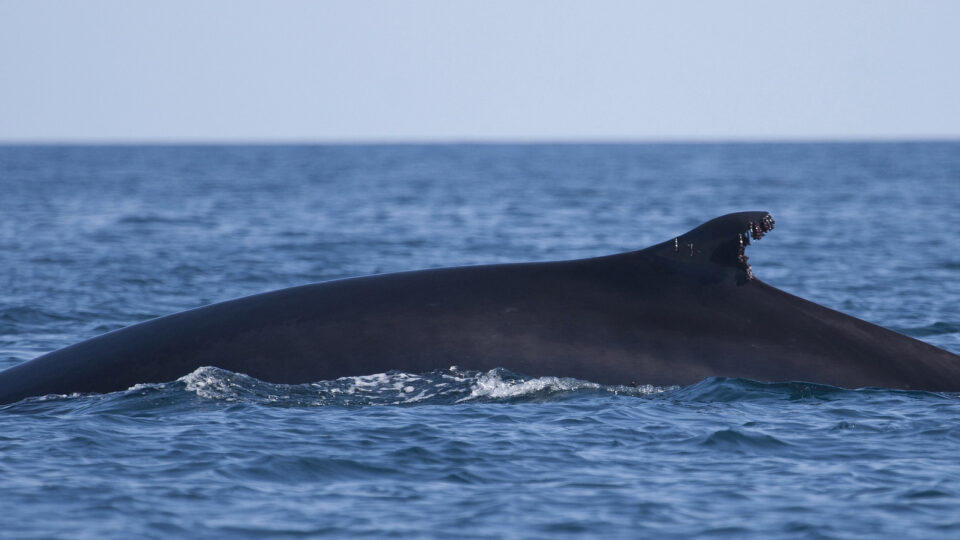
Fin whales making a comeback

The fin whale is the second largest whale species and therefore the second largest creature on Earth.  They can grow to more than 80 feet in length.  From 1904 to 1976, there was massive industrial whaling in the Southern Ocean surrounding Antarctica.  During that period, whalers killed about 700,000 fin whales, reducing their population by 99%.  The species was nearly extinct.

In 1982, the International Whaling Commission voted to ban commercial whaling.  Since that time, fin whales started to make a comeback in their historical feeding grounds.

During a nine-week expedition in the waters around the Antarctic Peninsula, researchers encountered the largest gathering of fin whales ever documented.  About 150 fin whales were seen diving and lunging against the water’s surface.  It was a feeding frenzy triggered by large amounts of krill in the water.  The actions of the whales are known as a “whale pump” that drives the krill to the surface.  Not only does it provide huge amounts of food for the whales but also for other animals, including seabirds and seals.

Forty years after the commercial whaling ban, the number of fin whales has been increasing.  Large groups were observed in a 2013 survey.  Aerial surveys in 2018 and 2019 recorded 100 groups of fin whales, usually composed of a just a handful of individuals.  They did document eight large groups of up to 150 individuals.

Not all species of whales have rebounded so successfully since the whaling ban.  The rebound in fin whale population is not only good for the whales, but for the entire ecosystem in the Southern Ocean.  It is a glimmer of good news in a time of great challenges for global biodiversity and for marine life in particular.

**********

Web Links

Once Facing Extinction, Massive Fin Whales Have Returned to Antarctic Waters

Photo, posted November 15, 2007, courtesy of Gregory Smith via Flickr.

Earth Wise is a production of WAMC Northeast Public Radio.

Return Of The Blue Whales | Earth Wise

December 21, 2020 By EarthWise Leave a Comment

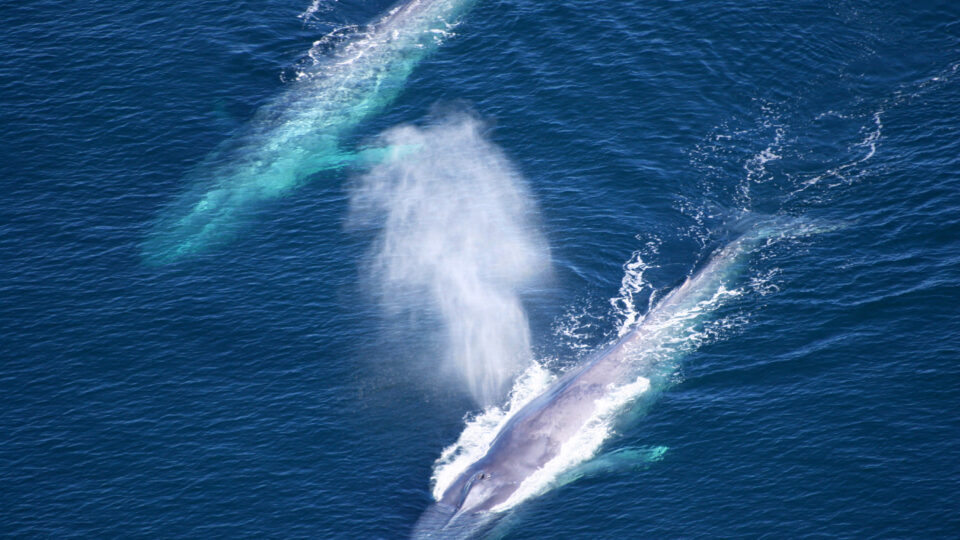
Blue whales making a comeback

An international research team has revealed that critically endangered Antarctic blue whales have returned to the sub-Antarctic island of South Georgia, 50 years after whaling just about wiped them out.  Other recent research has found that humpback whales are also returning to the region.

Blue whales were commonplace off South Georgia before 20th century industrial whaling taking place between 1904 and 1971 killed over 42,000 of them there.  Most of that number were killed before the mid-1930s.  As a result, blue whales essentially vanished from the region.  Whale survey ships sighted only a single blue whale between 1998 and 2018.

But things have changed in recent years.  A survey this past February resulted in 58 blue whale sightings and numerous acoustic detections.  Although commercial whaling was banned in the area in the 1960s, it has taken a long time for the whales to make a comeback.

Researchers are not sure why blue whales have taken so long to return to the area.  It may be that so many were killed over the years that the remaining population had little or no cultural memory of South Georgia Island as a foraging ground, and that it is only now being rediscovered.

In total, 41 individual blue whales have been photo-identified from South Georgia over the past 10 years, although none of those matched the 517 whales in the current Antarctic blue whale photographic catalogue.  Dedicated whale surveys are difficult in a region known for its harsh weather and inaccessibility but are crucial to the future management of South Georgia’s seas.  In any case, researchers see the recent sightings as a very positive step forward for conservation of the Antarctic blue whale. 

*********

Web Links

Blue whales return to South Georgia after near extinction

Photo, posted September 7, 2007, courtesy of the NOAA Office of National Marine Sanctuaries via Flickr. Photo credit: NOAA.

Earth Wise is a production of WAMC Northeast Public Radio.

Deepwater Impacts Lingering

May 10, 2019 By EarthWise Leave a Comment

On April 20, 2010, an explosion on the BP-owned Deepwater Horizon drilling rig released an estimated 210 million of gallons of oil into the Gulf of Mexico.  Some of the oil was recovered, burned, or dispersed at sea, while some washed up onto coastal shorelines. 

Now, more than nine years later, a long-term study suggests the oil is still affecting the salt marshes of the Gulf Coast.  A multi-institutional research team began sampling in the region once the spill was contained and continue their work to this day.

The researchers found that heavily-oiled marsh areas remained less healthy than less polluted sites more than six years after the spill.  They fear that complete recovery of these oil-soaked regions will likely take more than a decade. 

But the researchers also discovered that salt marsh grasses play a key role in coastal wetland recovery.  Two plants dominate healthy salt marshes in the Gulf: smooth cordgrass and black needlerush.  Single-celled, plant-like organisms known as benthic microalgae also abound in healthy salt marshes, as do many small invertebrates. 

In heavily-oiled areas, the researchers found that nearly all the plants died, and benthic microalgae and small invertebrate populations declined significantly.  Importantly, however, they also found that it was only after smooth cordgrass started its comeback in these areas that invertebrate populations began to recover.  They noted that these salt marsh grasses provide habitat, bind soil, slow water, facilitate colonization, and fuel the food web. 

Plants are the foundation of and play a crucial role in salt marshes.  The researchers hope these findings will help shape the mitigation strategies of any future oil spills. 

**********

Web Links

Continuing impacts of Deepwater Horizon oil spill

Photo, posted April 21, 2010, courtesy of Deepwater Horizon Response via Flickr.

Earth Wise is a production of WAMC Northeast Public Radio.

Is Coal Coming Back?

January 23, 2017 By EarthWise

https://earthwiseradio.org/wp-content/uploads/2017/01/EW-01-23-17-Is-Coal-Coming-Back.mp3

The new administration has promised to revitalize the coal industry in the U.S.   A major part of this plan is to eliminate various regulations that hamper that industry.  But the truth is that coal has lost ground for far more important reasons than regulation.

[Read more…] about Is Coal Coming Back?

Giant Pandas And The Endangered Species List

July 4, 2016 By WAMC WEB

https://earthwiseradio.org/wp-content/uploads/2016/06/EW-07-04-16-Giant-Pandas-And-The-Endangered-Species-List.mp3

Giant pandas are among the most beloved animals in the world and are the iconic symbol of China as well as of the World Wildlife Fund, the global NGO dedicated to wildlife conservation.  In the mid 1990s, the population of wild pandas dropped to as low as 1,000 as a result of habitat loss, habitat fragmentation, and an intrinsically low birth rate.  There is also illegal poaching despite severe penalties.   Pandas have been considered to be an endangered species for quite some time.

[Read more…] about Giant Pandas And The Endangered Species List

Primary Sidebar

Recent Episodes

  • An uninsurable future
  • Clean energy and jobs
  • Insect declines in remote regions
  • Fossil fuel producing nations ignoring climate goals
  • Trouble for clownfishes

WAMC Northeast Public Radio

WAMC/Northeast Public Radio is a regional public radio network serving parts of seven northeastern states (more...)

Copyright © 2026 ·