• Skip to primary navigation
  • Skip to main content
  • Skip to primary sidebar

Earth Wise

A look at our changing environment.

  • Home
  • About Earth Wise
  • Where to Listen
  • All Articles
  • Show Search
Hide Search
You are here: Home / Archives for color

color

Building better blackberries

June 6, 2025 By EarthWise Leave a Comment

The Human Genome Project is one of the greatest scientific feats in history.  It was launched in 1990 and completed in 2003.  The international group of researchers wanted to comprehensively study all of the DNA – the genome – from a select set of organisms, foremost of which being that of human beings.  The results accelerated the study of human biology and has led to improvements in the practice of medicine.

Every living thing – animal, plant, fungus, and various single-celled organisms – has a genome – a genetic blueprint.  A recent study by researchers at the University of Florida has done genome sequencing of blackberries with the hope of being able to achieve more efficient and targeted breeding.

Over the past 20 years, consumer demand for blackberries has increased leading to farmers growing more of the fruit in the United States.  The U.S. produces 37 million pounds of processed blackberries and almost 3 million pounds of fresh berries each year.

The Florida researchers made use of a large collection of DNA sequences to computationally piece together the entire genome of the blackberry variety in the study.  The genome study uncovered the secrets behind key traits that could lead to growing blackberry plants with no thorns and increasing the production of anthocyanin, which affects the color and health benefits of the fruit. 

For Florida, the southeastern United States and regions with similar climates, the genetic research holds the promise of accelerating the process to create blackberry varieties that are better suited to local growing conditions, enhancing both the yield and the quality of the increasingly popular fruit.

**********

Web Links

Decoding blackberry DNA: UF study paves way for enhanced breeding strategies

Photo, posted September 18, 2016, courtesy of Theo Crazzolara via Flickr.

Earth Wise is a production of WAMC Northeast Public Radio
Deeper corals bleaching

December 7, 2023 By EarthWise Leave a Comment

Even deep corals are at risk from warming seas

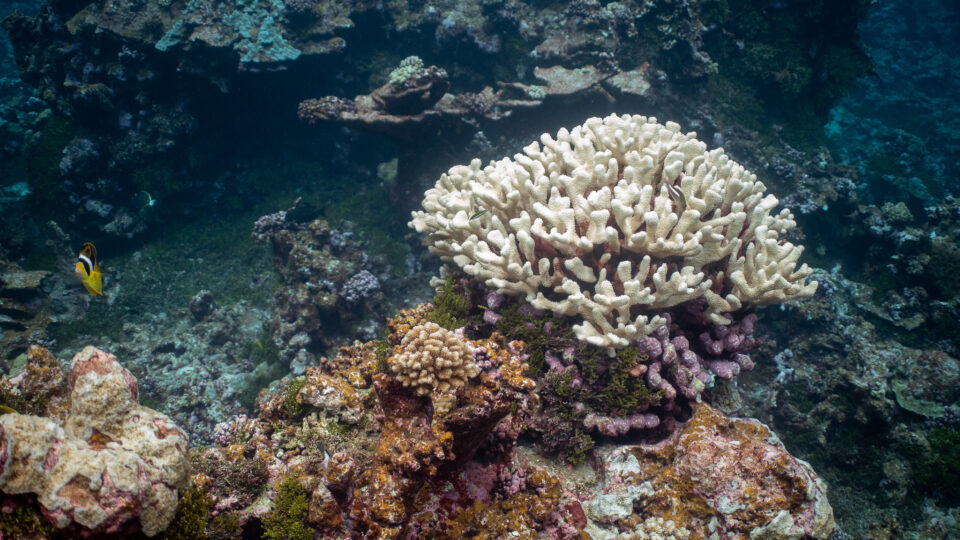
When ocean waters get too warm, corals – which are actually tiny animals – eject the colorful algae that inhabit their tissues.  The symbiotic relationship between coral polyps and algae is essential to coral survival   When the algae is ejected, previously colorful coral turns white, and the coral can ultimately die.  If waters cool off, the algae can reestablish themselves and the coral can regain its color and health.

The world’s oceans have been warming at an unprecedented rate, making coral bleaching and die-off a global phenomenon.  It is estimated that half of the planet’s reefs have already disappeared.  Some places are worse off than others.  For example, almost 95% of coral reefs in Southeast Asia are threatened.  Florida’s reefs are especially threatened, particularly since there have been unprecedented marine heatwaves off its coast.

It has long been assumed that deeper reefs, where water is cooler, would remain safe from the effects of warming, but a few years ago researchers recorded coral bleaching some 300 feet underwater along the Egmont Atoll in the western Indian Ocean.  At one point, bleaching affected 80% of corals in some areas.  This discovery came as a huge surprise to oceanographers.  It was probably associated with an El Niño-like phenomenon in the waters and those reefs have mostly recovered in the intervening years.

Fairly recently, researchers have found pristine coral reefs deep down in the waters off the Galapagos Islands, where shallow reefs have largely disappeared.  There are likely to be similar reefs in the ocean depths around the world, but scientists are expressing concern that even coral reefs lying deep beneath the ocean surface may not ultimately be protected from the warming seas.

**********

Web Links

As Oceans Warm, Coral Bleaching Seen at Greater Depths

Photo, posted June 5, 2023, courtesy of Ryan Hagerty / USFWS via Flickr.

Earth Wise is a production of WAMC Northeast Public Radio

Climate Change And The Color Of Lakes | Earth Wise

October 19, 2022 By EarthWise Leave a Comment

According to a new study recently published in the journal Geophysical Research Letters, blue lakes around the world are at risk of turning green-brown if climate change continues unabated. 

For the study, the research team used over five million satellite images of more than 85,000 lakes and reservoirs around the globe between 2013 and 2020 in order to determine each lake’s most common water color.  Since lake color can change seasonally, the researchers assessed the most frequent lake color during those seven years. 

Algae and sediments affect the color of lakes.  But the study found that precipitation, air temperature, lake depth, and elevation also play major roles in determining a lake’s most common water color. 

The research team found that blue lakes account for less than one-third of lakes worldwide.  Blue lakes tend to be deeper and are often found in cool, high latitude regions with high precipitation and winter ice cover.  Meanwhile, green-brown lakes, which account for 69% of all lakes, are found in drier regions, continental interiors, and along coastlines. 

As global temperatures rise, lakes will warm, and warmer water produces more algal blooms.  As a result, the researchers expect the changing climate to decrease the percentage of blue lakes, many of which are found in the Rocky Mountains, northeastern Canada, northern Europe and New Zealand. 

Water color is a simple but viable way to measure water quality that can be done on a global scale using satellites.  This approach provides researchers with a way to study how lakes – even the remote ones – are changing.  

**********

Web Links

Climate change is making lakes turn green-brown

Photo, posted August 27, 2011, courtesy of Paul Schultz via Flickr.

Earth Wise is a production of WAMC Northeast Public Radio
Colorful Solar Panels | Earth Wise

September 22, 2022 By EarthWise Leave a Comment

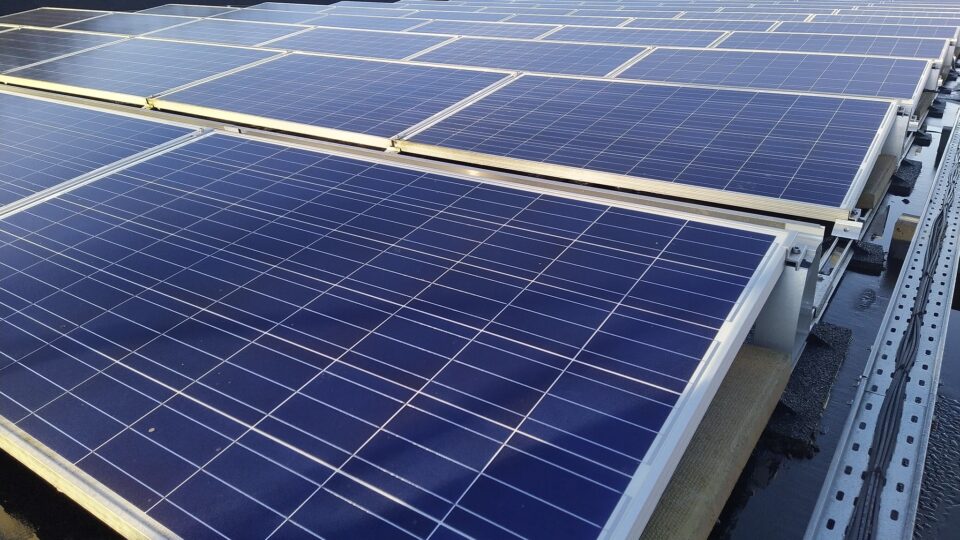
Creating color solar panels

More and more buildings and public spaces are incorporating solar panels and not only just on rooftops.  Some buildings are incorporating power-generating structures all over their facades.

Using solar panels in this way puts some design constraints on buildings because solar panels are typically a deep black color.  This is because solar panels need to absorb light and making them any other color decreases their ability to do so and generate power.  But the problem is that people don’t necessarily want a black building.

One alternative to traditional solar panel design is to use structural sources of color that include microscopic shapes that only reflect specific light frequencies, like the scales on butterfly wings.  But this approach generally leads to iridescence – which might not be what is wanted – and is often quite expensive to implement.

A team of researchers at a university in Shanghai has now demonstrated a way to give solar panels color that is easy and inexpensive to apply and that does not reduce their ability to produce energy efficiently.

The technique involves spraying a thin layer of a material called a photonic glass onto the surface of solar cells.  The photonic glass is made of a thin, disorderly layer of dielectric microscopic zinc sulfide spheres.  Even though most light can pass through the photonic glass, certain colors are reflected back, depending on the sizes of the spheres.  By varying that size, the researchers created solar panels that were blue, green, or purple with only a very small drop in solar panel efficiency.

The solar panels made this way maintained their color and performance under durability testing.  With this new technology, there may soon be colorful solar panels on our buildings.

***********

Web Links

Colorful solar panels could make the technology more attractive

Photo, posted December 15, 2021, courtesy of Pete via Flickr.

Earth Wise is a production of WAMC Northeast Public Radio

Rivers Changing Color | Earth Wise

February 10, 2021 By EarthWise Leave a Comment

Why do rivers change colors?

A recent study, published in Geophysical Research Letters, found that one-third of large American rivers have had significant changes of color over the past 30 years.  Rivers can appear to be shades of blue, green, and yellow and we tend to expect healthy rivers to have colors in shades of blue.  According to the new study, only 6% of American rivers are dominantly blue.

The study looked at 235,000 Landsat images taken from 1984 to 2018.  The results are that 56% of rivers studied were dominantly yellow, 38% dominantly green, and 6% blue.  Over the 34 years studied, 33% of the rivers had significant changes in color. About 21% became greener and 12% more yellow. 

The chief causes of color changes in rivers are farm fertilizer runoff, dams, efforts to fight soil erosion, and climate change.  Climate change increases water temperature and rain-related runoff.

Color changes are not necessarily a sign of poor river health, but dramatic changes could point to issues that need attention.  A river can change color based on the amount of sediment, algae, or dissolved organic carbon in the water.   If a river becomes greener, it can often mean large algae blooms are present that cause oxygen loss and can produce toxins.  On the other hand, rivers that are getting less yellow demonstrate the success of regulations to prevent soil erosion.

The study of river colors can pinpoint which rivers are undergoing rapid environmental change.  What the study does not provide is information on water quality.  Water quality measurements will be important to determine the health of many of the rapidly changing rivers.

**********

Web Links

One Third of U.S. Rivers Changed Their Color, Three Decades of Satellite Images Show

Photo, posted July 6, 2016, courtesy of Jeffrey Beall via Flickr.

Earth Wise is a production of WAMC Northeast Public Radio.

Why Do Trees Change Color? | Earth Wise

December 24, 2020 By EarthWise Leave a Comment

Explaining the magnificent spectacle of fall foliage

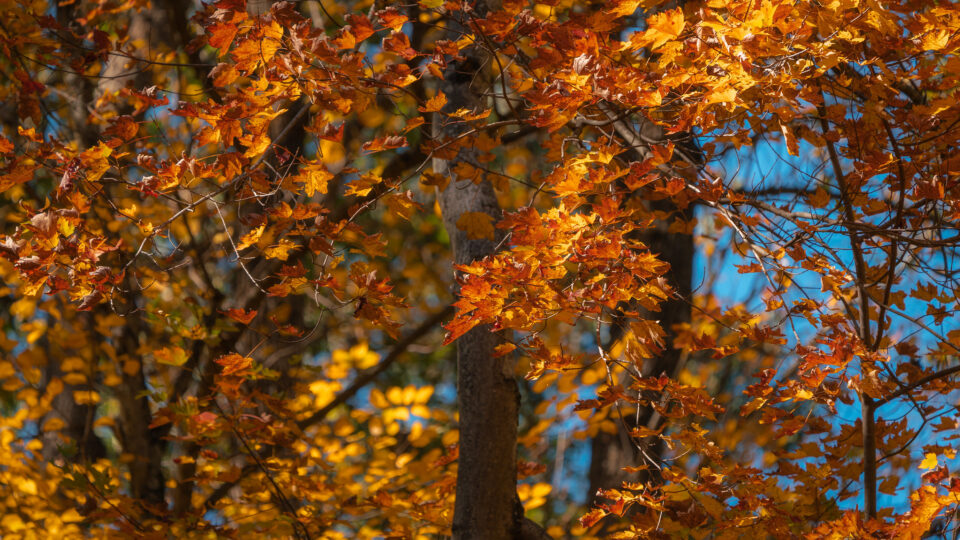
We had a particularly colorful fall in the Northeast this year.  Almost everywhere you looked, there were brilliant displays of yellow, orange, and red.  The colors of fall are a result of chemistry and environmental events that may have taken place many months in the past.

The color of leaves comes from 4 pigments whose effects are governed by photosynthesis.  The one that is actually used in photosynthesis is chlorophyll and it causes leaves to be green.  But when a tree begins to prepare for dormancy, it stops producing chlorophyll, the green pigmentation fades, and the other pigments that were already in the leaves become visible.

There are xanthoplylls, which are the yellow pigments that are seen the most in fall trees.  They are the same pigments that color egg yolks and sometimes parts of the human eye.  They are only produced by plants and appear in humans and animals only through consumption.

There are carotenes, which are the orange pigments found in fruits and vegetables, such as carrots, oranges, some bell peppers and squashes.

And there is anthocyanin, which is the pigment found in blueberries, blackberries, and red or violet roses.  Its color depends on the pH level of the plant; higher pH leads to darker color.  This is the pigment seen in red maples, black cherry trees, Shumard oaks, and more.  Only 10% of trees in temperate climates produce anthocyanin and its red pigmentation and most of those trees are in New England.

All these pigments serve purposes.  They help trees absorb light energy, prevent sun damage, and even regulate how much energy chlorophyll produces.

There are complicated chemical and environmental factors at play in fall foliage but when they come together like they did this year, it’s a magnificent spectacle.

**********

Web Links

Why Do Trees Change Color?

Photo, posted October 17, 2020, courtesy of John Brighenti via Flickr.

Earth Wise is a production of WAMC Northeast Public Radio.

Environmental Injustice And the Coronavirus | Earth Wise

May 29, 2020 By EarthWise Leave a Comment

Environmental Injustice and coronavirus

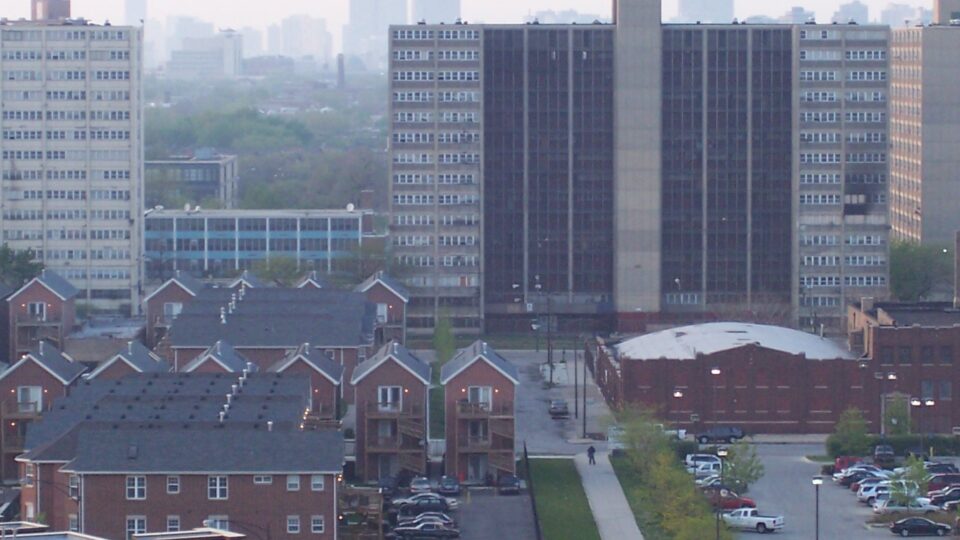
Cities and towns across the United States continue to wrestle with the devastating impacts of the COVID-19 pandemic and none have been hit harder than low-income and minority communities.  Places like Detroit, Chicago, and St. James Parish in Louisiana have suffered from decades of economic inequality and pollution in their poorest neighborhoods and many of these same places have experienced some of the highest mortality rates from the virus.

Recent studies have shown a link between high levels of pollution and the risk of death from COVID-19.  Pollution of various kinds are higher in low-income communities and communities of color.  Such communities don’t have a strong political voice so that laws and environmental regulations are not enforced like there are in white, higher-income communities.  Thus, these communities have highways, landfills, factories, chemical facilities, paper mills, and other pollution sources that communities with economic power – and therefore political power – manage to avoid.

People living in low-income communities and communities of color tend to have higher rates of underlying health conditions like diabetes, heart disease, and asthma.  They have less healthy diets – more fast food and fewer grocery stores.  Part of the reason these communities have a higher risk of mortality from COVID-19 infection is that many people have reduced lung capacity as a result of exposure to pollutants.

The Trump administration has been suspending enforcement of environmental regulations during the pandemic.  Communities already affected by environmental injustice will bear the brunt of this decision.  Groups like nursing home populations, meat packers, prisoners and the poor are suddenly highly visible.  COVID-19 is exposing the real differences between the Haves and the Have-Nots in this country.

**********

Web Links

Connecting the Dots Between Environmental Injustice and the Coronavirus

Photo, posted May 2, 2006, courtesy of Sean Benham via Flickr.

Earth Wise is a production of WAMC Northeast Public Radio.

A Sensor For Spoiled Milk

June 20, 2019 By EarthWise Leave a Comment

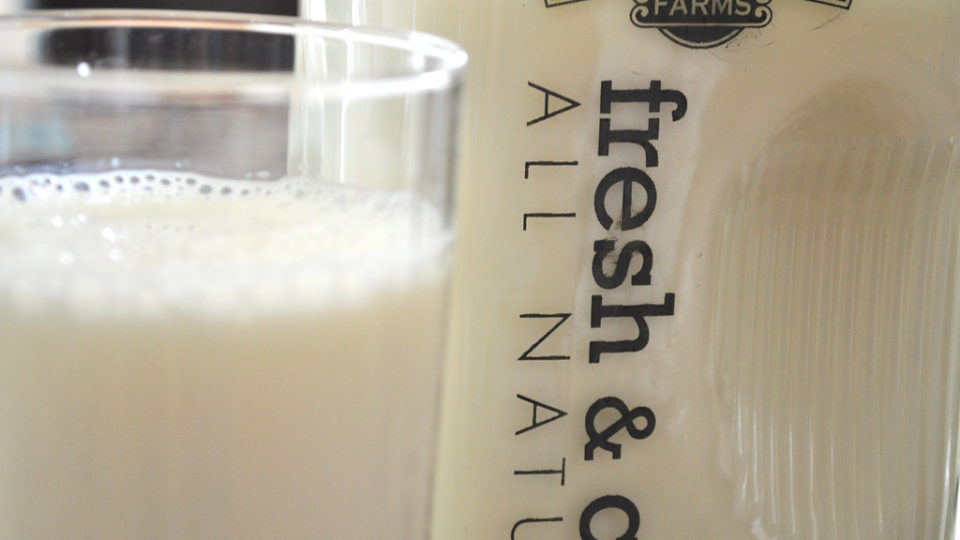
A new sensor technology developed at Washington State University may eventually make expiration dates on milk a thing of the past.  The sensor essentially can ‘smell’ whether milk is still good or has gone bad.

The sensor consists of chemically coated nanoparticles that react to the gas produced when bacterial growth on milk has taken place.  When such bacteria grow, they produce a volatile compound that doesn’t smell good.  So, when we open a carton of milk that has begun to spoil, our noses tell us so immediately.

The new sensor does not have to be in contact with the milk.  It detects the volatile gases produced by the bacteria and it changes color. So far, it has only been demonstrated in a controlled lab environment.

To really be useful, the sensor would ideally be able to show how long the milk has before it spoils.  Currently, it only shows whether it is ok or already spoiled. The researchers are working on the enhanced version of the sensor.

The researchers envision working with the dairy industry to integrate the sensor technology into a milk bottle’s plastic cap so that consumers can easily see how much longer the milk will stay fresh.  Current expiration dates on milk are based on best-case scenarios. They are only accurate if the milk has been stored at the correct temperature the entire time.  Unfortunately, milk can inadvertently spend time above refrigerator temperature during shipment or transportation home from the store.  If the new sensor technology can be successfully developed, it will be possible to know for sure whether that bottle of milk is good.

**********

Web Links

Sensor can detect spoiled milk before opening

Photo, posted March 8, 2011, courtesy of Roxanne Ready via Flickr.

Earth Wise is a production of WAMC Northeast Public Radio.

Food Waste Into Tires

April 21, 2017 By EarthWise

https://earthwiseradio.org/wp-content/uploads/2017/04/EW-04-21-17-Food-Waste-into-Tires.mp3

Researchers at Ohio State University have developed a way to use food waste to partially replace the petroleum-based filler that has been used in manufacturing tires for more than a century.

[Read more…] about Food Waste Into Tires

Primary Sidebar

Recent Episodes

  • An uninsurable future
  • Clean energy and jobs
  • Insect declines in remote regions
  • Fossil fuel producing nations ignoring climate goals
  • Trouble for clownfishes

WAMC Northeast Public Radio

WAMC/Northeast Public Radio is a regional public radio network serving parts of seven northeastern states (more...)

Copyright © 2026 ·