
• Skip to primary navigation
  • Skip to main content
  • Skip to primary sidebar

Earth Wise

A look at our changing environment.

  • Home
  • About Earth Wise
  • Where to Listen
  • All Articles
  • Show Search
Hide Search
You are here: Home / Archives for CO2

CO2

Marine carbon dioxide removal

May 23, 2024 By EarthWise Leave a Comment

Marine CO2 removal

About 30% of the carbon dioxide emitted by human activity is absorbed by the oceans.  As a result, they are getting warmer and more acidic, and the currents that help shape global weather are shifting.  To try to reduce global warming, people want to be able to store even more carbon dioxide in the oceans without the negative effects of doing so.

There are multiple efforts across the globe to achieve effective marine carbon dioxide removal.  Some are based on sinking carbon-rich materials to the bottom of the sea.  This is the marine equivalent of capturing CO2 from the air and storing it underground.  Other efforts involve increasing the alkalinity of the ocean, which increases its ability to chemically react with carbon dioxide as well as lowers its acidity, which is desirable in many ways.

Running Tide, a U.S.-based company, has been dumping thousands of tons of wood-industry waste 190 miles off the coast of Iceland.  The company has also been experimenting with dumping algae and kelp and sinking it deep below the ocean.  Such materials on land either get burned or decay, in both cases releasing CO2 into the atmosphere.  On the deep-sea bottom, the carbon is trapped.

Other efforts involve pumping seawater through electrodialysis filter systems to remove excess acidity or adding alkaline rocks to increase water alkalinity.

All of these efforts are a form of geoengineering, and like proposed ideas to cool the atmosphere, pose potential risks.  There is no silver bullet to solve the climate crisis.  It will take a combination of many solutions to address the issue of excess carbon dioxide in the atmosphere.  Marine carbon dioxide removal is one of the solutions that may play a role.

**********

Web Links

Scientists Are Trying to Coax the Ocean to Absorb More CO2

Photo, posted February 22, 2018, courtesy of Bobbie Halchishak/USFWS via Flickr.

Earth Wise is a production of WAMC Northeast Public Radio

Carbon dioxide and wildfires

May 14, 2024 By EarthWise Leave a Comment

Rising carbon dioxide levels are fueling wildfires

Climate change is a key factor in the increasing risk and extent of wildfires.  Wildfires require the alignment of several factors, including humidity, temperature, and the lack of moisture in fuels, such as trees, shrubs, and grasses.  All of these factors have strong ties to climate variability and climate change.

While the global surge in wildfires is often attributed to hotter and drier conditions, a new study by researchers from the University of California – Riverside has found that increasing levels of a greenhouse gas may be an even bigger factor. 

According to the study, which was recently published in the journal Communications Earth & Environment, carbon dioxide is driving an increase in the severity and frequency of wildfires by fueling the growth of plants that become kindling.

Centuries of burning fossil fuels to produce heat, electricity and to power engines has added alarming amounts of carbon dioxide to the atmosphere.  In fact, atmospheric CO2 levels are measuring more than 420 parts per million, which is a level not seen on earth for 14-16 million years. 

Plants require carbon dioxide, along with sunlight and water, for photosynthesis.  But rising levels of CO2 in the atmosphere are driving an increase in plant photosynthesis – an effect known as the carbon fertilization effect.  This effect can make plants grow bigger and faster. 

Warming and drying are important fire factors.  These are the conditions that make the extra plant mass more flammable.  But the study found that the increase in fires during hotter seasons is driven by the CO2-fueled growth of plants.   

The researchers hope their findings will urge policymakers to focus on reducing carbon dioxide levels in the atmosphere.

********** 

Web Links

CO2 worsens wildfires by helping plants grow

Current carbon dioxide levels last seen 14 million years ago

Photo, posted January 17, 2024, courtesy of Jennifer Myslivy, BLM Fire/NIFC via Flickr.

Earth Wise is a production of WAMC Northeast Public Radio
Where not to plant trees

May 10, 2024 By EarthWise Leave a Comment

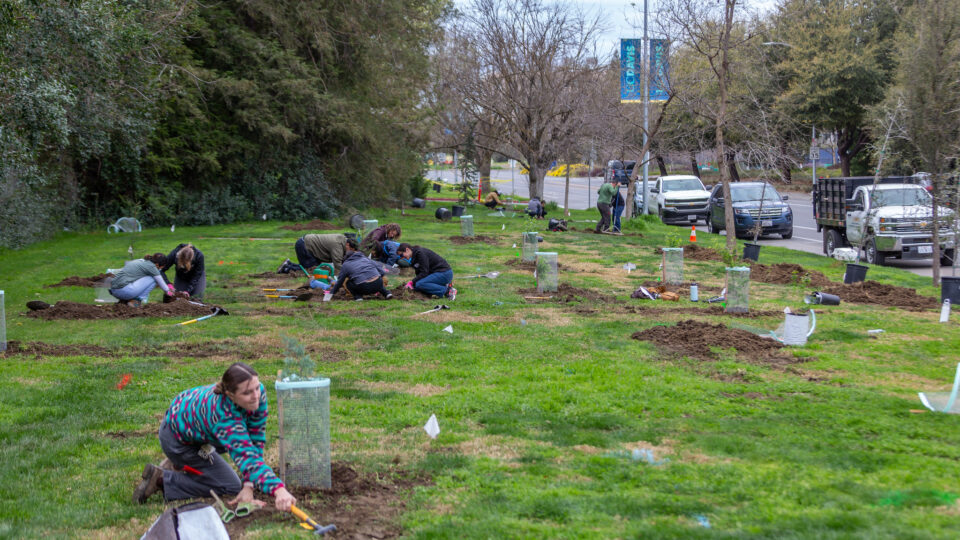
Tree plantings are not always a good thing

Planting huge numbers of trees is often proposed as a way to reduce the severity of climate change.  Studies have looked at the potential for Earth‘s ecosystems to support large additional areas of forest and have found that it would be possible to have at least 25% more forested area than we do now.  This in turn could capture large amounts of carbon and substantially reduce the amount in the atmosphere.

A recent study by researchers at Clark University in Massachusetts and The Nature Conservancy mapped the climate impact of tree planting across the globe, identifying where it would be most and also least beneficial.  The study, published in Nature Communications, found that trees planted in arid, desert regions or in snowy places like the Arctic would, on balance, worsen warming rather than reduce it.

Trees take up carbon dioxide from the atmosphere, which helps to keep warming in check.  But trees with dark, green leaves also absorb heat from sunlight.   Snow and desert sand, on the other hand, are light-colored and reflect more sunlight back into space.  For this reason, trees planted in snowy areas or in the desert will absorb more sunlight than their surroundings.  This can negate the climate benefits of soaking up carbon dioxide.

Previous studies only looked at how much carbon dioxide would be removed by planting trees in order to determine how much warming would be prevented.  The new study finds that it matters where the trees are planted.

Fortunately, the new study also shows that tree planting projects that are currently underway or that are in the pipeline are largely concentrated in regions where they will indeed help slow global warming.

**********

Web Links

This Map Shows Where Planting Trees Would Make Climate Change Worse

Photo, posted April 5, 2022, courtesy of UC Davis Arboretum and Public Garden via Flickr.

Earth Wise is a production of WAMC Northeast Public Radio
Rising fossil fuel emissions

April 22, 2024 By EarthWise Leave a Comment

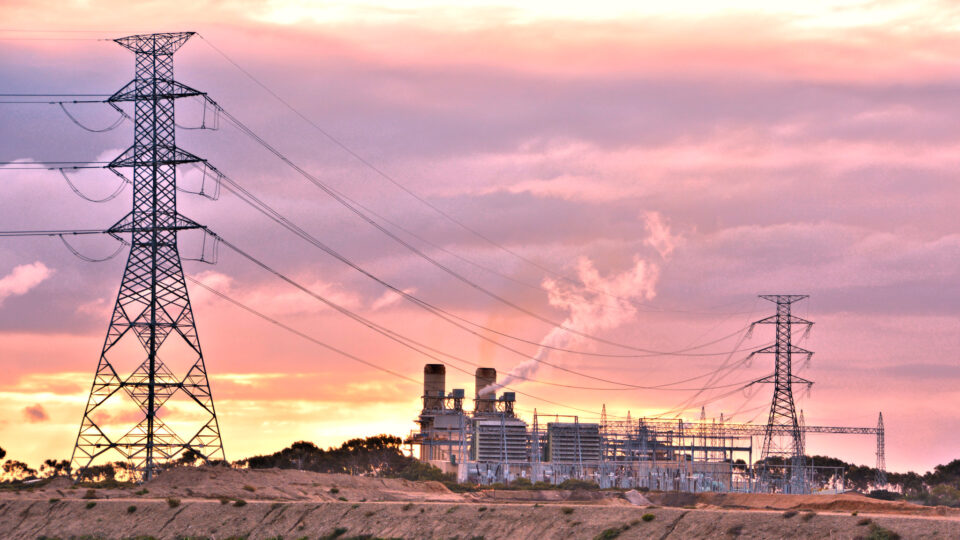
Fossil fuel emissions are rising globally

Almost every nation in the world has pledged to reduce carbon dioxide emissions.  There is expanding use of renewable energy sources and growing numbers of electric cars.  But despite all this, carbon dioxide emissions from fossil fuels rose again in 2023, reaching record levels.

The world’s population continues to grow and nations with large, rapidly growing populations are becoming increasingly industrialized and are embracing more and more of the trappings of modern life.  As a result, the global burning of oil, coal, and natural gas is increasing.

Analysis of 2023 date shows that emissions from fossil fuels rose 1.1 percent compared to 2022 levels.  The total fossil fuel emissions in 2023 was 40 billion tons of carbon dioxide. 

Clearly, the world continues to head in the wrong direction in order to limit global warming.  The concentration of carbon dioxide in the atmosphere has increased from about 278 parts per million in 1750 – considered to be the start of the industrial era – to 420 parts per million in 2023.

The rise in heat-trapping carbon dioxide along with other greenhouse gases such as methane is the primary reason that the planet’s temperature is continuing to rise.  The average global surface temperature in 2023 was 1.2 degrees Celsius – or 2.1 degrees Fahrenheit – higher than it was in the NASA baseline period of 1951-1980.  Last year was the hottest year on record.  Unfortunately, the rise in global ocean temperature was even larger, compounding the effects of global warming.

**********

Web Links

Emissions from Fossil Fuels Continue to Rise

Photo, posted June 22, 2020, courtesy of John Morton via Flickr.

Earth Wise is a production of WAMC Northeast Public Radio

Storing carbon underground and abandoned wells

April 18, 2024 By EarthWise Leave a Comment

Energy companies pushing for expansion of underground carbon storage

Using government support in the form of subsidies and tax credits, energy companies and others are planning to capture millions of tons of industrial carbon dioxide emissions and pipe the greenhouse gas into underground storage.  It is a strategy enthusiastically supported by the fossil fuel industry because it allows them to keep burning the stuff.

There are currently 69 projects being reviewed by federal and state regulators seeking to store CO2 underground.  The sorts of places where carbon dioxide can be injected are geologic zones containing porous rock formations which, in no way coincidentally, are the same places where oil and gas deposits are found.  As a result, these places are studded with abandoned wells that have accumulated over the past century.

In Louisiana, there are about 120,000 abandoned wells that overlie geological zones that could store carbon dioxide.  Environmental watchdog groups have identified numerous abandoned wells within a few miles of proposed storage sites.

The problem is that abandoned wells leak – even ones that have been plugged – and many haven’t been.  The question is how much leakage will occur and what will be the consequences of the leakage.  In Texas, pumping oilfield wastewater into abandoned wells has led to geysers of toxic water, artificial saline lakes, and earthquakes.

Underground carbon dioxide sequestering on a scale large enough to really matter will have to extend to very large areas.  For example, injecting 100 million tons per year could create a pressurized zone as large as 100 miles.  How large a problem this might create from abandoned wells in the zone is not at all clear but cannot be ignored.

**********

Web Links

Companies Are Poised to Inject Millions of Tons of Carbon Underground. Will It Stay Put?

Photo, posted December 3, 2023, courtesy of Jason Woodhead via Flickr.

Earth Wise is a production of WAMC Northeast Public Radio

How to make cities cooler

March 26, 2024 By EarthWise Leave a Comment

Green spaces and waterways help keep cities cool

In cities, the air, surface, and soil temperatures are almost always warmer than in rural areas. This is known as the urban heat island effect.  Urban heat islands occur when cities replace natural land cover with dense concentrations of pavement, buildings, and other surfaces that absorb and retain heat.

Urban planners around the world have been researching ways to reduce the effects of heat in cities.  For example, trees, green roofs, and vegetation can help reduce urban heat island effects by shading building surfaces, deflecting radiation from the sun, and releasing moisture into the atmosphere.

A new study led by researchers from the University of Surrey in the U.K. has analyzed how well various green spaces and waterways are able to cool down cities.  The study, which was recently published in the journal The Innovation, found that wetlands, parks, and even botanical gardens are among the best ways to keep cities cool.   

In fact, the researchers found that botanical gardens can cool city air by a whopping 9°F during heatwaves on average.  Wetlands can cool city air by 8.5°F on average, followed by rain gardens at 8.1°F, green walls at 7.4°F, street trees at 6.8°F, city farms at 6.3°F, city parks at 5.8°F, and reservoirs and playgrounds at 5.2°F. 

The researchers also found that cities can unlock even greater benefits by connecting green spaces into green corridors.  Greening projects can also help remove carbon emissions and prevent flooding.

The research team hopes its findings will help urban planners design more resilient cities. 

**********

Web Links

Wetlands, parks and even botanical gardens among the best ways to cool cities during heatwaves

Photo, posted April 25, 2022, courtesy of Catherine Poh Huay Tan via Flickr.

Earth Wise is a production of WAMC Northeast Public Radio
Natural hydrogen

February 26, 2024 By EarthWise Leave a Comment

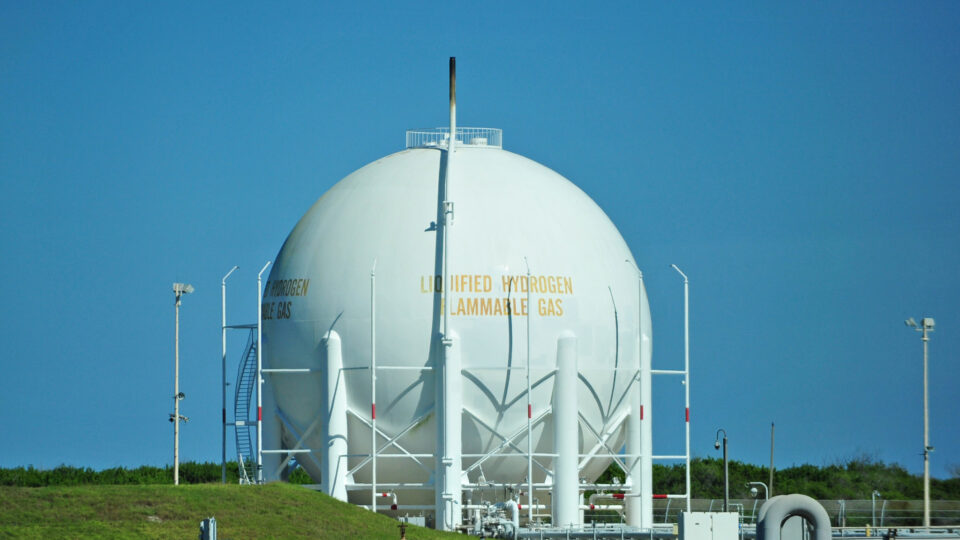
Natural hydrogen could be a big deal

Hydrogen is considered to be a potential substitute for conventional fossil fuels in applications where electricity cannot easily be used such as in blast furnaces, cement works, industrial heating, long-distance aviation, and shipping.  But most hydrogen is manufactured by separating it from methane, which is energy-intensive and produces carbon dioxide.  So-called green hydrogen is made by splitting water using electricity.  It is a carbon-free process if the electricity is from renewable sources, but it is pretty expensive.

A small community in Mali gets its electricity by burning natural hydrogen, which bubbles up from underground into a village well.  It has long been known that processes in the Earth’s crust can make hydrogen gas from water under certain circumstances.  But conventional wisdom has been that this occurrence is rare and that the hydrogen produced is either inaccessible or seeps away.

An increasing number of geoscientists now are convinced that there is actually an enormous quantity of hydrogen beneath the planet’s surface and that we just haven’t been looking for it in the right places, or at all, for that matter.  Some say that there could be trillions of tons of hydrogen, and more is being generated all the time.

Prospectors have recently been drilling for hydrogen in France, Australia, Morocco, Brazil, and in the United States, in Nebraska, Arizona, and Kansas.  Will extracting natural hydrogen be practical at the scale required and will it be economical?  The jury is still out on all of this, but if it turns out as proponents claim, natural hydrogen could be a very big deal.

**********

Web Links

Natural Hydrogen: A Potential Clean Energy Source Beneath Our Feet

Photo, posted November 4, 2012, courtesy of Heather Paul via Flickr.

Earth Wise is a production of WAMC Northeast Public Radio
Solar forests

January 22, 2024 By EarthWise Leave a Comment

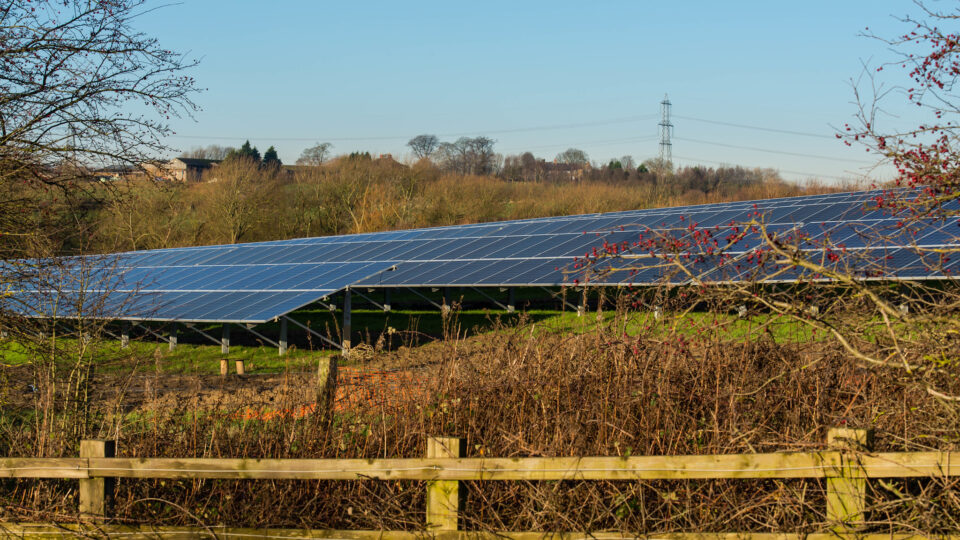
To plant trees or install solar panels is the question

Forests are one of the most iconic symbols of the power and diversity of nature but beyond that, their thick vegetation is crucial to the stability and balance of the Earth’s climate.  This is because the photosynthesis that powers the growth of plants removes carbon dioxide from the air.  Cutting down forests – especially the evergreen forests of the tropics – has played a significant role in the increasing climate crisis.  For this reason, many environmental initiatives focus on restoring destroyed forests and planting new trees.

But the truth is, even if we were to cover the entire surface of the planet with trees, there would still not be enough photosynthesis going on to absorb the huge surplus of carbon dioxide that people have been pumping into the atmosphere for the past 150 years.

A study by the Weizmann Institute of Science in Israel looked at the impact of erecting fields of dark covered solar panels – so-called solar forests – that would generate electricity, thereby replacing power stations that use fossil fuels.  But dark fields absorb heat which eventually returns to the atmosphere.

The question is:  what is the best use of a plot of land in terms of the effect on the climate?  Planting a forest or erecting fields of solar panels?

The answer depends on where the land is.  In arid environments, building solar farms is far more effective and practical than planting forests.  But in humid places, forests currently absorb close to a third of humanity’s annual carbon emissions. 

The study concludes that combining planting and rehabilitating forests in humid regions and erecting fields of solar panels in arid regions is the most effective strategy.

**********

Web Links

The Solar Forest

Photo, posted December 27, 2015, courtesy of Gerry Machen via Flickr.

Earth Wise is a production of WAMC Northeast Public Radio
Record high emissions

January 3, 2024 By EarthWise Leave a Comment

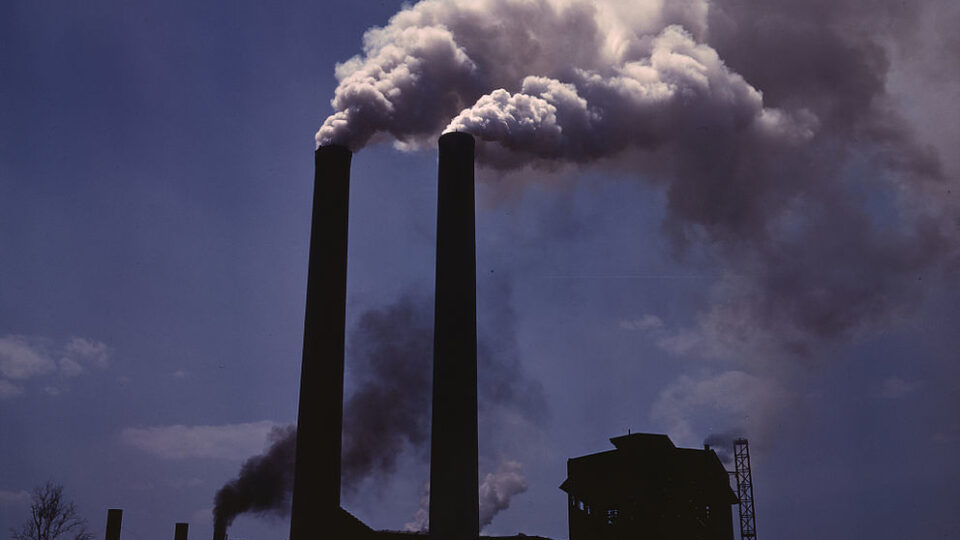
Record high emissions in 2023

The world is adding solar and wind power to the grid.   We are driving more and more electric cars.  Countries are pledging to cut back fossil fuel use.  There are highly visible international conferences on the climate crisis.   But despite all of these things, global carbon emissions from fossil fuels have risen once again in 2023, reaching all-time record high levels of more than 40 billion tons, about 1.1% more than the previous year.

In some places, including Europe and the U.S., fossil fuel CO2 emissions are falling, but globally, they are still rising.  Emissions continued to increase in India and China.  Global action to cut fossil fuel use is not happening fast enough to prevent the increasingly dangerous effects of climate change.

Global CO2 emissions include both the contributions of fossil fuel use and the effects of land use change.  Adding the two together, in 2023 the total was about 45 billion tons, basically unchanged from last year. 

Adding insult to injury are the emissions from fires.  The extreme wildfire seasons in Canada, Australia, and other places have contributed CO2 emissions much larger than historical averages.

About half of all the carbon dioxide emitted on Earth is absorbed by carbon sinks on land and the oceans.  The other half remains in the atmosphere, where levels are now averaging 419 parts per million, 51% above pre-industrial levels.

Current efforts are simply not profound enough or widespread enough to put global emissions on a downward trajectory.  Some climate policies in some places are proving effective, but much more needs to be done.

**********

Web Links

Fossil CO2 emissions at record high in 2023

Photo, posted December 18, 2013, courtesy of Steve Nelson via Flickr.

Earth Wise is a production of WAMC Northeast Public Radio

Electricity from chicken feathers

December 4, 2023 By EarthWise Leave a Comment

The food industry generates enormous amounts of waste and by-products.  Each year, 40 million tons of chicken feathers are incinerated, causing adverse environmental effects.  Not only does it release large amounts of carbon dioxide but also produces toxic gases such as sulfur dioxide.

Researchers at ETH Zurich in Switzerland and Nanyang Technological University in Singapore have developed a way to put chicken feathers to good use by using them to make fuel cells more cost-effective and sustainable.

Using a simple and environmentally friendly process, they extract the keratin from the feathers.  Keratin is the protein that helps form hair, nails, the outer layer of skin, and feathers.  The extracted keratin is then converted into ultra-fine fibers known as amyloid fibrils.  The keratin fibrils are used in the membrane of a fuel cell.

Fuel cells generate clean energy from hydrogen and oxygen with only heat and water as byproducts.  At the heart of every fuel cell is a semipermeable membrane that allows protons to pass through but blocks electrons, thereby producing an electric current.  Fuel cells are the primary way hydrogen is used to directly generate electricity.  Hydrogen cars run on fuel cells.

Conventional fuel cells typically use membranes made from highly toxic chemicals.  The new ETH membranes essentially replace these toxic substances with biological keratin. 

The researchers are investigating how stable and durable their keratin membrane is and to improve it if necessary.  The team has already applied for a joint patent and is looking for partners and investors to further develop the technology and bring it to market.

**********

Web Links

Generating clean electricity with chicken feathers

Photo, posted July 10, 2016, courtesy of Matthew Bellemare via Flickr.

Earth Wise is a production of WAMC Northeast Public Radio
Moisture swing carbon capture

November 10, 2023 By EarthWise Leave a Comment

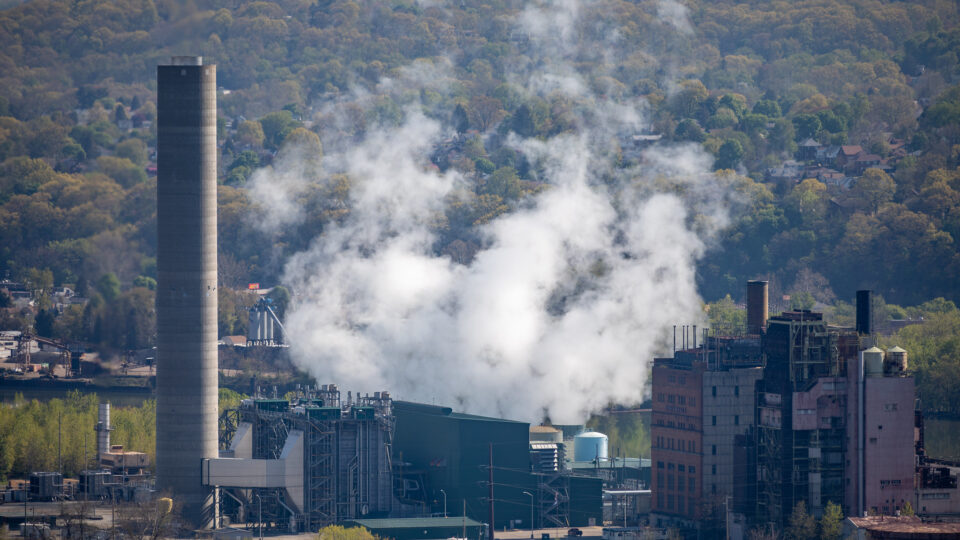
As the world grapples with limiting the amount of carbon dioxide in the atmosphere, there is a growing need to capture the carbon dioxide that is emitted as well as preventing it from being emitted in the first place.  Carbon capture can be accomplished at the source of emissions (such as power plants) or it can be done by taking it out of the atmosphere.  The latter is called “direct air capture”.

It is not at all clear whether direct air capture can be accomplished on a scale that would really make a difference and at an acceptable cost either in dollars or energy expended.  But if it can be done that way, it would be a major tool in combatting climate change.

Direct air capture technology generally makes use of sorbent materials whose capacity to capture carbon dioxide and later release it is a function of temperature.  The process requires significant amounts of energy to release the carbon dioxide that has been captured. 

New research from Northwestern University makes use of the “moisture-swing” technique which uses materials whose ability to capture and release carbon dioxide depends on humidity rather than temperature.  While it takes some amount of energy to humidify the volume of air containing the sorbent material, it is very small compared to temperature-driven systems. 

There are many groups working with moisture-swing technology, but the Northwestern Group has identified a number of new sorbent materials with superior properties.

The fundamental questions of scalability and cost remain, but moisture-swing is a promising approach to direct air capture.  If carbon dioxide can be pulled out of the atmosphere in large volumes, it can be concentrated and stored or converted into useful products.

*********

Web Links

Pulling carbon dioxide right out of the air

Photo, posted May 15, 2020, courtesy of James Watt via Flickr.

Earth Wise is a production of WAMC Northeast Public Radio
Planting Rocks To Capture Carbon | Earth Wise

September 8, 2023 By EarthWise Leave a Comment

Getting humanity to stop dumping carbon dioxide into the atmosphere continues to be very challenging regardless of how increasingly apparent the need to do so becomes.  For this reason, climate change mitigation strategies increasingly include interventions in the form of removing carbon dioxide that is already there.  There are a variety of ways to draw carbon dioxide out of the atmosphere, but they face a host of technological, economic, and even environmental difficulties.

A new study at Yale University evaluated a type of climate intervention called enhanced rock weathering.  Rock weathering is a natural chemical process by which certain minerals absorb carbon dioxide over time.  Enhanced rock weathering is simply speeding up weathering such so it can have beneficial results soon enough to make a difference.

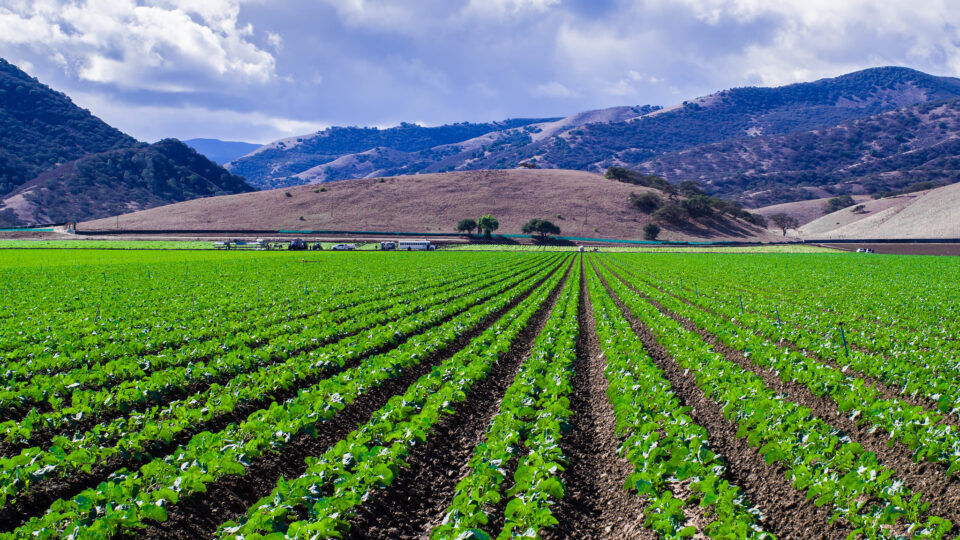
The study explored the potential of applying crushed basalt, which is a fast-weathering rock that forms when lava cools, to agricultural fields around the world.  Basically, the idea is for farmers to mix the crushed rocks into their fields. There is no real downside to doing this.  In fact, adding crushed basalt to fields rejuvenates depleted soils and helps counter ocean acidification.

The study simulated the results of enhanced rock weathering on 1,000 agricultural sites around the world.  Over a 75-year period, these sites would remove 64 billion tons of carbon dioxide from the atmosphere.  This is roughly the amount climate scientists believe is needed to take out of the atmosphere. 

Enhanced rock weathering has been used on a small scale on farms around the world.  Perhaps it is time to ramp up its use.

**********

Web Links

‘Planting’ rocks in farms, along with emissions reductions, could help meet key IPCC carbon removal goal

Photo, posted January 14, 2023, courtesy of Ron Reiring via Flickr.

Earth Wise is a production of WAMC Northeast Public Radio

Protecting The Amazon Rainforest | Earth Wise

September 5, 2023 By EarthWise Leave a Comment

The Amazon rainforest absorbs one-fourth of all the carbon dioxide absorbed by the land of the Earth.  It is by far the world’s largest rainforest, bigger than the next two largest – in the Congo Basin and Indonesia – combined.  Nearly two-thirds of it is found in Brazil but the more than 2 million square miles of rainforest includes portions in 8 countries.

The amount of carbon dioxide absorbed by the Amazon rainforest is 30% less today than it was in the 1990s as a result of deforestation, to a great extent driven by cattle ranching as well as other agricultural activities.

In early August, the leaders of the eight countries that are home to the Amazon River basin agreed to work together to conserve the rainforest.  The agreement, called the Belém Declaration, provides a roadmap to stave off the rampant deforestation. 

The agreement provides coordination between the countries of Bolivia, Brazil, Colombia, Ecuador, Guyana, Peru, Suriname, and Venezuela to establish law enforcement to combat illegal mining and logging as well as to pool development funds for conservation and sustainable employment.  Despite the unity portrayed at the meeting, many of the governments in South America are in a precarious position because of various economic and political struggles

Apart from its critical climate impact, the Amazon rainforest is a haven for biodiversity and further deforestation would be disastrous for tens of thousands of species and could transform it into a net emitter rather than absorber of greenhouse gases.  Some parts of the region have already reached that point.

**********

Web Links

Amazon Countries, Led by Brazil, Sign a Rainforest Pact

Photo, posted October 17, 2016, courtesy of Yeoboya via Flickr.

Earth Wise is a production of WAMC Northeast Public Radio

Endangered Plants And The Changing Climate | Earth Wise

August 31, 2023 By EarthWise Leave a Comment

Plants are a critical resource because of the countless ways they support life on Earth. Plants release oxygen into the atmosphere, absorb carbon dioxide, and provide food and habitat for humans and wildlife.  Plants are also used to produce fibers, building materials, and medicines. 

Plants form the backbone of natural ecosystems, and absorb about 30% of all the carbon dioxide emitted by humans each year.  But plants are struggling to adapt in a human-dominated world.  Even though they are easier and cheaper to protect than animals, plants are often overlooked in conservation efforts.

Ironically, conservation efforts appear to be overlooking a key threat to endangered plants.  According to a new study led by researchers from Penn State University, all plants and lichens listed as endangered under the Endangered Species Act are sensitive to climate change, but there are few plans in place to address that threat directly. 

The threat that climate change poses to endangered plants and lichens had not been thoroughly evaluated in more than a decade.  In the study, which was recently published in the journal PLOS Climate, the research team adapted existing assessment tools used to examine the threat of climate change for wild animals and applied them to 771 endangered plant species.  The researchers found that all endangered plant and lichen species are at least slightly threatened by climate change, and little is being done to protect the listed species from that threat.

The researchers hope their findings will be used to aid future conservation planning.  After all, plants can live without humans, but humans cannot live without plants.

**********

Web Links

Climate change threatens 771 endangered plant and lichen species

Photo, posted June 12, 2014, courtesy of Mark Freeth via Flickr.

Earth Wise is a production of WAMC Northeast Public Radio

Methane Emissions And The Paris Agreement | Earth Wise

August 21, 2023 By EarthWise Leave a Comment

The Paris Agreement is a legally binding international treaty on climate change adopted at the UN Climate Change Conference in 2015.  Its goal is to strengthen the global response to climate change by committing to limit the rise in global average temperature to well below 2°C above pre-industrial levels, and pursue efforts to limit that increase to just 1.5°C. 

Achieving the goals of the Paris Agreement requires reaching net-zero carbon dioxide emissions by or around 2050, as well as deep reductions in methane and other emissions. 

According to a new study by researchers from Simon Fraser University in Canada, reductions in methane emissions are needed urgently  if we are to meet the goals of the Paris Agreement.  The study, which was recently published in the journal Nature’s Communications Earth & Environment, suggests that global warming levels could be kept below 2°C if methane mitigation efforts are initiated globally before 2030.  However, delaying methane mitigation to the year 2040 or beyond would increase the risk of exceeding 2°C, even if net-zero carbon dioxide emissions were achieved.

Methane is a potent greenhouse gas, second only to carbon dioxide in contributing to global temperature increases over the last two centuries.  However, methane is known to warm the planet 86 times more effectively than carbon dioxide over a 20-year period.

During the past 40 years, more than 60% of global methane emissions have been produced as a result of human activities, such as fossil fuel exploitation, livestock production, and waste from landfills.

**********

Web Links

Delaying methane mitigation increases risk of breaching Paris Agreement climate goal, study finds

Photo, posted July 22, 2011, courtesy of Steven W. via Flickr.

Earth Wise is a production of WAMC Northeast Public Radio
Cleaner And Greener Steel | Earth Wise

August 14, 2023 By EarthWise Leave a Comment

Researchers are developing a cleaner and greener steel

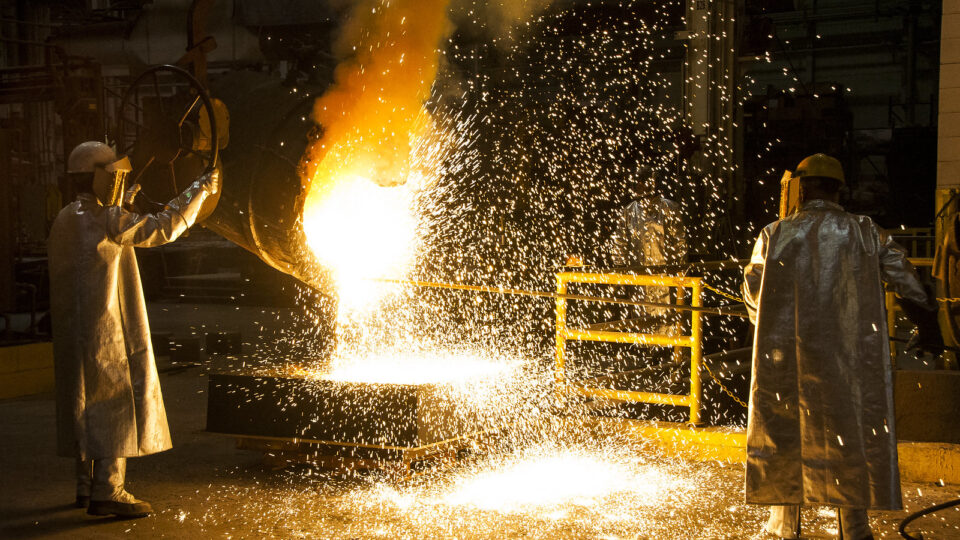
Producing construction materials like concrete and steel is a major contributor to greenhouse gas emissions.  Between 7 and 8% of emissions are due to steelmaking alone, which has been done pretty much the same way for more than a century.

Iron ore is smelted with high-carbon fuel and is turned into so-called pig iron in a blast furnace, which creates the key raw material for the steel industry.  The process uses huge amounts of energy (still often generated by burning fossil fuels) and releases carbon dioxide as a byproduct. 

The Department of Energy is sponsoring 40 projects at universities, national laboratories and companies in 21 states aimed at reducing industrial carbon pollution.  Ten of those projects are focused on decarbonizing iron and steel. These initiatives are part of the overall effort to move the nation towards a net-zero emissions economy by 2050.

A team headed by Case Western Reserve University that includes Lawrence Livermore National Laboratory, the University of Arizona, and steel company Cleveland-Cliffs Inc. has developed a promising new zero-carbon, electrochemical process for producing steel.

The process is a novel molten salt electrolysis method that is low-cost, capable of achieving high rates, and uses environmentally benign chemicals.  The process does not use carbon at all.  Using molten salts, electrochemistry can be performed at moderately high temperatures rather than the temperatures of nearly 3000 degrees Fahrenheit used for conventional steelmaking.  The goal is to enable steel production that is both economically viable at an industrial scale and that is environmentally sustainable.

**********

Web Links

Case Western Reserve leading research to develop zero-carbon, electrochemical process to produce iron metal as part of U.S. Department of Energy effort

Photo, posted January 11, 2017, courtesy of Kevin Casey Fleming via Flickr.

Earth Wise is a production of WAMC Northeast Public Radio

Shrinking Glaciers And Methane | Earth Wise

August 1, 2023 By EarthWise Leave a Comment

Shrinking glaciers pose an underestimated climate risk

The Arctic region is warming much faster than the rest of the planet.  In fact, according to a study published last year in the journal Nature, the Arctic has been warming nearly four times faster than the rest of the globe during the last 43 years.  This rapid warming is leading to substantial reductions in sea ice, thawing of permafrost, shifts in wildlife populations, and changes in ocean circulation patterns, among other changes. 

According to new research recently published in the journal Nature Geoscience, shrinking glaciers in the warming Arctic are exposing bubbling groundwater springs, which could provide an underestimated source of methane, a potent greenhouse gas.  Methane is more than 25 times as potent as carbon dioxide at trapping heat in the atmosphere.

The study, which was led by researchers from the University of Cambridge and the University Centre in Svalbard, Norway, found large sources of methane gas leaking from groundwater springs unveiled by melting glaciers. 

As glaciers retreat in the Norwegian archipelago of Svalbard and leave behind newly exposed land, groundwater beneath the Earth seeps upward and forms springs. In 122 out of the 123 springs studied, the research team found that the water was highly concentrated with dissolved methane.  When the spring water reaches the surface, the excess methane can escape to the atmosphere. 

Researchers are concerned that additional methane emissions released by the Arctic thaw could dramatically increase human-induced global warming.  If this phenomenon in the Svalbard archipelago is found to be more widespread across the Arctic — where temperatures are quickly rising and glaciers melting — the methane emissions could have global implications. 

**********

Web Links

The Arctic has warmed nearly four times faster than the globe since 1979

Shrinking Arctic glaciers are unearthing a new source of methane

Photo, posted October 22, 2022, courtesy of David Stanley via Flickr.

Earth Wise is a production of WAMC Northeast Public Radio

Renewables In China | Earth Wise

July 28, 2023 By EarthWise Leave a Comment

A couple of years ago, China set an ambitious goal for renewable energy capacity – which includes wind, solar, hydroelectric, and nuclear power – for it to exceed fossil fuel capacity by 2025.  According to a recent report by Reuters, China has hit this goal two years ahead of schedule.  Renewables now make up 50.9% of the country’s power capacity.

The rapid growth in renewable capacity has largely been driven by investments in wind and solar megaprojects in the sparsely populated west of the country that export power to the manufacturing centers in the east.  China’s most recent 5-year plan calls for 570 gigawatts of wind and solar power to be installed over that period, which more than doubles its installed capacity.  The plan makes use of what it called “clean energy bases”, which utilize sandy and rocky deserts, other types of barren lands, and wastelands left behind by coal mining.  The largest clean energy bases make use of vast deserts in Inner Mongolia and Gansu.

One cautionary note is that power capacity refers to the maximum amount of electricity that a power plant can produce under ideal conditions.  Thus, for example, it refers to how much electricity a solar farm can generate at noon on a cloudless day.  So, the new figures from China don’t necessarily reveal how much electricity China is actually drawing from renewables.  In reality, China still gets a great deal of its power from coal.

China is the world’s largest emitter of carbon dioxide – more than twice as much as the United States, albeit from nearly 4 times the population.  The rapid growth of renewables is at least moving that country in the right direction.

**********

Web Links

Fossil Fuels Now Account for Less Than Half of China’s Power Capacity

Photo, posted December 2, 2015, courtesy of IBM via Flickr.

Earth Wise is a production of WAMC Northeast Public Radio

Fungus And Carbon Storage | Earth Wise

July 26, 2023 By EarthWise Leave a Comment

It is well-known that plants and trees store enormous amounts of carbon.  What has not been common knowledge is that the vast underground network of fungi across the world’s lands stores billions of tons carbon, roughly equivalent to 36% of yearly global fossil fuel emissions.

These mycorrhizal fungi form symbiotic relationships with almost all land plants.  The fungi transport carbon, converted by sugars and fats by plants, into soil.  They have been supporting life on land for at least 450 million years and form sprawling underground networks everywhere – even beneath roads, gardens, and houses – on every continent on earth.

An international team of scientists analyzed hundreds of studies looking at plant-soil processes to understand how much carbon is being stored by fungi on a global scale.  The findings, published in the journal Current Biology, revealed that over 13 billion tons of CO2 is transferred from plants to fungi each year, more than China emits annually.  This process transforms the soil beneath our feet to a massive carbon pool and constitutes the most effective carbon storage activity in the world.

Given that fungi have such a crucial role in mitigating carbon emissions, the researchers are recommending that fungi should be considered in biodiversity and conservation policies. More needs to be done in protecting the underground networks of mycorrhizal fungi. The UN has warned that human activities are degrading soils and that 90% of the world’s soils could be degraded by 2050.  Not only would this obviously be very bad for the productivity of crops and plants, but we now know this could be catastrophic for curbing climate change and rising temperatures.

**********

Web Links

Fungi stores a third of carbon from fossil fuel emissions and could be essential to reaching net zero

Photo, posted May 28, 2023, courtesy of Geoff McKay via Flickr.

Earth Wise is a production of WAMC Northeast Public Radio

Moss And Carbon Storage | Earth Wise

July 18, 2023 By EarthWise 1 Comment

All plants, including algae and cyanobacteria, carry out photosynthesis. During the process of photosynthesis, plants remove carbon dioxide from the air and release oxygen to the air.  As a result, plants play a crucial role in the fight against climate change. 

According to a new study recently published in the journal Nature Geoscience, mosses – those tiny plants often found on the ground or rocks – might be important antidotes to climate change.  The study, which was led by scientists from the University of New South Wales in Australia and the Institute of Natural Resources and Agrobiology in Spain, uncovered evidence that mosses have the potential to store a massive amount of carbon in the soil beneath them.

The researchers found that mosses sequester around seven billion tons more carbon in the soil than is stored in the bare patches of soil typically found near them.  To put that figure in perspective, that is six times the annual global carbon emissions caused by global land use change, which includes things like deforestation, urbanization, and mining.  The researchers also found that moss-covered soil possessed heightened levels of vital nutrients and fewer instances of soil-borne plant pathogens on average compared to moss-less soil.

Mosses cover an area of more than 3.6 million square miles, which is similar in size to Canada, and can thrive in challenging environments.  The widespread presence and hardiness of mosses is why they can have such a significant impact on soil biodiversity and carbon sequestration. 

The research team hopes future work will focus on understanding the role of all types of vegetation, not just mosses and trees, in capturing carbon.

**********

Web Links

Study: Modest moss supports billions of tons of carbon storage

Photo, posted August 23, 2017, courtesy of Peter Handke via Flickr.

Earth Wise is a production of WAMC Northeast Public Radio

  • « Go to Previous Page
  • Page 1
  • Page 2
  • Page 3
  • Page 4
  • Page 5
  • Interim pages omitted …
  • Page 14
  • Go to Next Page »

Primary Sidebar

Recent Episodes

  • An uninsurable future
  • Clean energy and jobs
  • Insect declines in remote regions
  • Fossil fuel producing nations ignoring climate goals
  • Trouble for clownfishes

WAMC Northeast Public Radio

WAMC/Northeast Public Radio is a regional public radio network serving parts of seven northeastern states (more...)

Copyright © 2026 ·