• Skip to primary navigation
  • Skip to main content
  • Skip to primary sidebar

Earth Wise

A look at our changing environment.

  • Home
  • About Earth Wise
  • Where to Listen
  • All Articles
  • Show Search
Hide Search
You are here: Home / Archives for chemical reaction

chemical reaction

Trapping carbon with rocks

March 25, 2025 By EarthWise Leave a Comment

Many experts say that combating global warming will require both drastically reducing the use of fossil fuels and permanently removing billions of tons of CO2 already in the atmosphere.  Developing practical, large-scale technologies for carbon removal is a significant challenge.

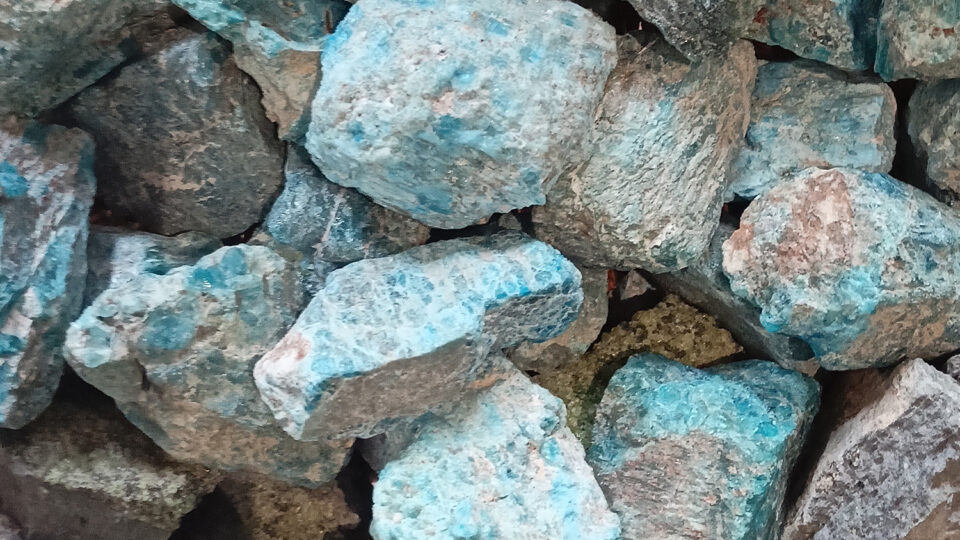
There is a nearly inexhaustible supply of minerals that are capable of removing carbon dioxide from the atmosphere, but they don’t do it quickly enough to make a significant dent in the ever-growing supply in the atmosphere.  In nature, silicate minerals react with water and atmospheric CO2 to form minerals in the process called weathering.  But this chemical reaction can take hundreds or even thousands of years.

Researchers at Stanford University have developed a new process for converting slow-weathering silicates into much more reactive minerals that capture and store carbon quickly.  The new approach resembles a centuries-old technique for making cement.  They combine calcium oxide and another common mineral containing magnesium and silicate ions in a furnace.   The result are new materials that, when exposed to water, quickly trap carbon from the atmosphere.

In their experiments, the carbonation process took weeks to months to occur, thousands of times faster than natural weathering.

The idea would be to spread these materials over large land areas to remove CO2 from the air.  Meaningful use for trapping carbon would require annual production of millions of tons.  But the same kiln designs used to make cement could produce the needed materials using abundant minerals found in many places.  In fact, the required minerals are often common leftover materials – or tailings – from mining.

**********

Web Links

Scientists discover low-cost way to trap carbon using common rocks

Photo courtesy of Renhour48 via Wikimedia.

Earth Wise is a production of WAMC Northeast Public Radio
Rock Dust And Carbon | Earth Wise

May 25, 2022 By EarthWise Leave a Comment

Adding basalt rock dust to crop fields helps fight climate change

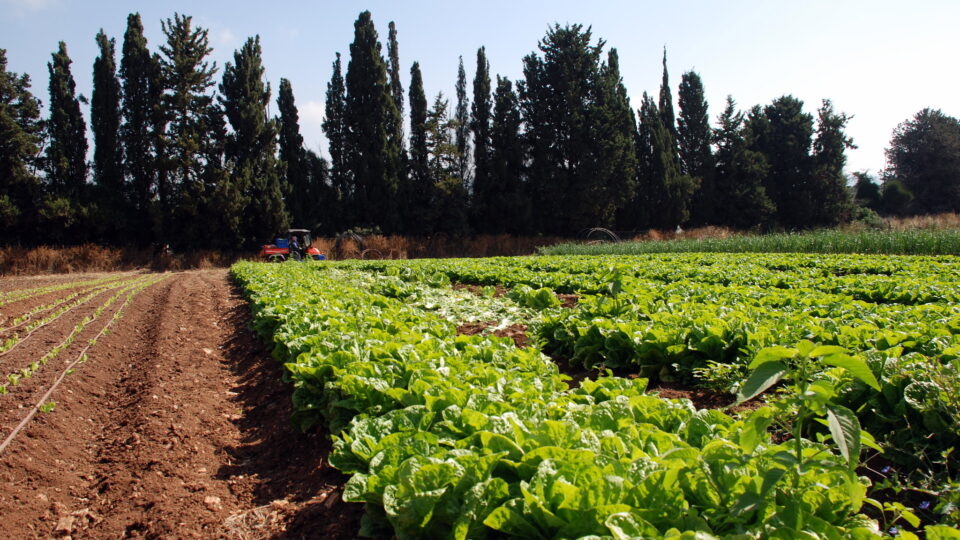
According to a new study by Cardiff University in the UK, Britain could achieve nearly half of the carbon removal needed to meet its climate goals by adding basalt rock dust to crop fields.  The process is known as enhanced weathering and has been the subject of ongoing research in the U.S. at Cornell University and the University of California, as well as in the UK, Canada, and Australia.

Adding rock dust to agricultural lands speeds up the chemical reactions that lock up carbon in soil.  Basalt contains magnesium, calcium, and silica, among other components.  When basalt is pulverized and applied to soils, magnesium and calcium are released and dissolve in water as it moves through the soil.  The minerals in the soil react with the water, and the carbon that would otherwise end up in the atmosphere instead forms bicarbonates, which can hang around in water for thousands of years.  It can also eventually make its way to the oceans where it precipitates out as limestone and can stay on the seafloor for millions of years.

Basalt is a waste stream byproduct of mining and manufacturing and is found all over the world.  Mining waste is the largest waste stream in the world, so there is no shortage.

According to the U.N. Intergovernmental Panel on Climate Change, applying rock dust to agricultural lands on a global basis could theoretically remove 2 to 4 billion tons of carbon dioxide from the air each year, which is between 34-68% of the global greenhouse gas emissions produced by agriculture annually.

The added rock dust would in fact be good for the soil and for crops.  Whether the economics of producing and transporting it make sense remains to be determined.

**********

Web Links

Adding Rock Dust to Farmland Could Get UK Almost Halfway to Its Carbon Removal Goal

Photo, posted April 24, 2011, courtesy of the State of Israel via Flickr.

Earth Wise is a production of WAMC Northeast Public Radio.

Reducing Emissions From Cement Manufacturing | Earth Wise

December 7, 2021 By EarthWise Leave a Comment

How to reduce the emissions from manufacturing cement

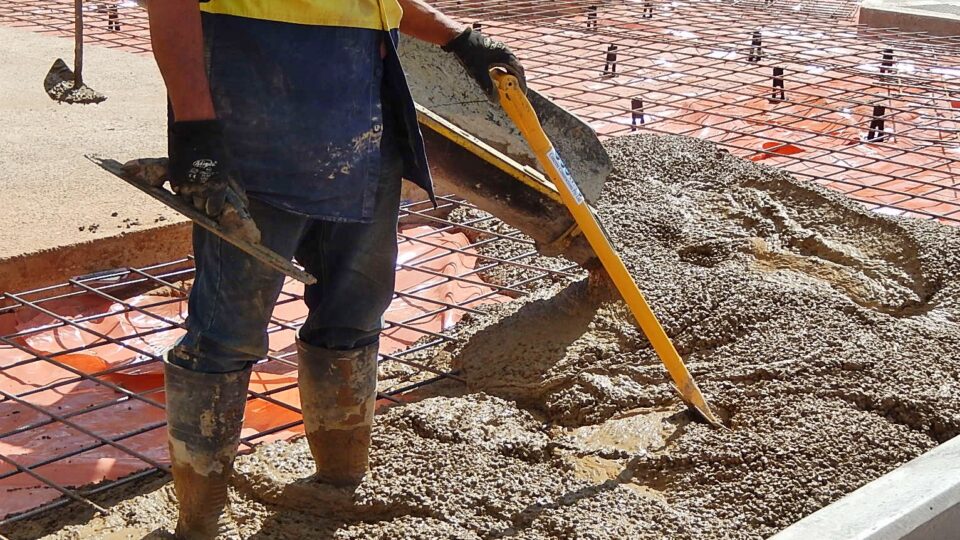
Cement is the basic ingredient of concrete, which is the most widely used construction material in the world.  About 8% of global carbon dioxide emissions are associated with cement production.

More than half of these emissions come from making clinker, which is a major component of cement produced by heating ground limestone and clay to a temperature of over 2500 degrees Fahrenheit.  Some of the emissions come from burning fossil fuels to heat the materials, but much of them come from the chemical reaction that creates the clinker.

The Portland Cement Association, which represents 92% of US cement manufacturing capacity, has recently released its “Roadmap to Carbon Neutrality”, which lays out a plan to reach carbon net zero across the cement and concrete value chain by 2050.

The plan includes the greater use of alternative fuels to reduce emissions from energy use.  It also involves the adoption of newer versions of cement such as Portland limestone cement, which reduces CO2 levels.  The industry has already reduced emissions by some shifting to Portland limestone cement, but it still only represents a small fraction of cement production.

The most significant strategy would be the adoption of carbon capture, utilization, and storage (or CCUS) technologies.  The idea is to capture the CO2 generated in the production of clinker and inject it into the fresh concrete.  It would actually be permanently sequestered in the concrete and would not be released even if a structure is demolished in the future.

It will take a combination of technologies and initiatives for the cement industry to reduce its emissions.  Fortunately, the industry appears to be committed to that goal.

**********

Web Links

US cement manufacturers release their road map to carbon neutrality by 2050

Photo, posted March 26, 2014, courtesy of Michael Coghlan via Flickr.

Earth Wise is a production of WAMC Northeast Public Radio.

A New Membrane For Converting Carbon Dioxide | Earth Wise

March 24, 2020 By EarthWise Leave a Comment

Efficiently transforming CO2 into fuel

Methanol is a valuable chemical used as fuel in the production of countless products. Carbon dioxide is a greenhouse gas that is produced by countless industrial processes.  Carbon dioxide can be converted into methanol, which is one way all that CO2 can be put to good use instead of causing harm. 

In research recently published in Science, chemical engineers from Rensselaer Polytechnic Institute have developed a process that converts CO2 to methanol in a more efficient way by using a highly effective separation membrane they produced.  

The chemical reaction responsible for the transformation of CO2 into methanol also produces water, which severely restricts the continued reaction. The Rensselaer team has found a way to filter out the water as the reaction is happening, without losing other essential gas molecules. 

They produced a membrane made up of sodium ions and zeolite crystals that was able to carefully and quickly permeate water through small pores — known as water-conduction nanochannels — without losing gas molecules. The sodium ions effectively only allow water to go through. When water was effectively removed from the process, the team found that the chemical reaction was able to happen very quickly. By removing the water, the equilibrium shifts, which means more CO2 will be converted and more methanol will be produced.  

The team is now working to develop a scalable process and a startup company that would allow this membrane to be used commercially to produce high purity methanol.  This membrane could also be used to improve a number of other reactions. 

In industry there are many reactions limited by water and this RPI membrane could be an important enhancement for many of them. 

**********

Web Links

Water-Conducting Membrane Allows Carbon Dioxide To Transform into Fuel More Efficiently

Photo courtesy of RPI.

Earth Wise is a production of WAMC Northeast Public Radio.

Growing Rocks To Store Carbon

April 24, 2019 By EarthWise Leave a Comment

The US Geological Survey recently published a comprehensive review of geological carbon storage in sedimentary rocks through carbon mineralization.   That is the process by which carbon dioxide becomes a solid mineral, such as a form of carbonate.  Certain rocks undergo a chemical reaction when exposed to carbon dioxide and turn into different minerals as a result.

The idea is to use carbon mineralization as a way to permanently store carbon dioxide that has been captured from power plant emissions, other industrial activities, or even directly from the atmosphere.

Two basic approaches are injecting the CO2 deep underground or exposing it to crushed rocks at the surface.  The two types of rock best suited for mineralization through injection are basalt and various ultramafic rocks.  Pilot studies have shown that injection into basalt can lead to mineralization in under two years.

Exposing carbon dioxide to crushed rock at the surface generally makes use of crushed mining waste.  Mineralization can be much faster in this case because there is more surface area on the crushed rock where mineralization occurs.  (However, the quantities of rock available at the surface are much less than what exists deep underground).

Like all carbon capture and storage approaches, the key consideration is cost.  The USGS study estimates that underground injection would cost around $30 per metric ton of CO2.  The crushed rock approach might only cost $8 per metric ton, but that assumes the crushed rock is already available.  If it must be newly mined, the costs would obviously go up significantly.  To put this into perspective, a typical car produces around 4 metric tons of CO22 per year.  So, it would cost somewhere between $30 and $120 a year to eliminate the emissions from one car.  Perhaps that is a price we need to pay until we ditch gasoline cars.

**********

Web Links

How Growing Rocks Can Help Reduce Carbon Emissions

Photo, posted October 17, 2011, courtesy of Glen Bledsoe via Flickr.

Earth Wise is a production of WAMC Northeast Public Radio.

Primary Sidebar

Recent Episodes

  • An uninsurable future
  • Clean energy and jobs
  • Insect declines in remote regions
  • Fossil fuel producing nations ignoring climate goals
  • Trouble for clownfishes

WAMC Northeast Public Radio

WAMC/Northeast Public Radio is a regional public radio network serving parts of seven northeastern states (more...)

Copyright © 2025 ·