• Skip to primary navigation
  • Skip to main content
  • Skip to primary sidebar

Earth Wise

A look at our changing environment.

  • Home
  • About Earth Wise
  • Where to Listen
  • All Articles
  • Show Search
Hide Search
You are here: Home / Archives for catastrophic

catastrophic

Hydroclimate whiplash

January 30, 2025 By EarthWise Leave a Comment

Hydroclimate whiplash has increased as much as 66% since the mid-20th century

Hydroclimate whiplash is a term that describes rapid swings between intensely wet and dangerously dry weather.  Global weather records show that the occurrence of hydroclimate whiplash has increased by 31% or as much as 66% since the mid-20th century. 

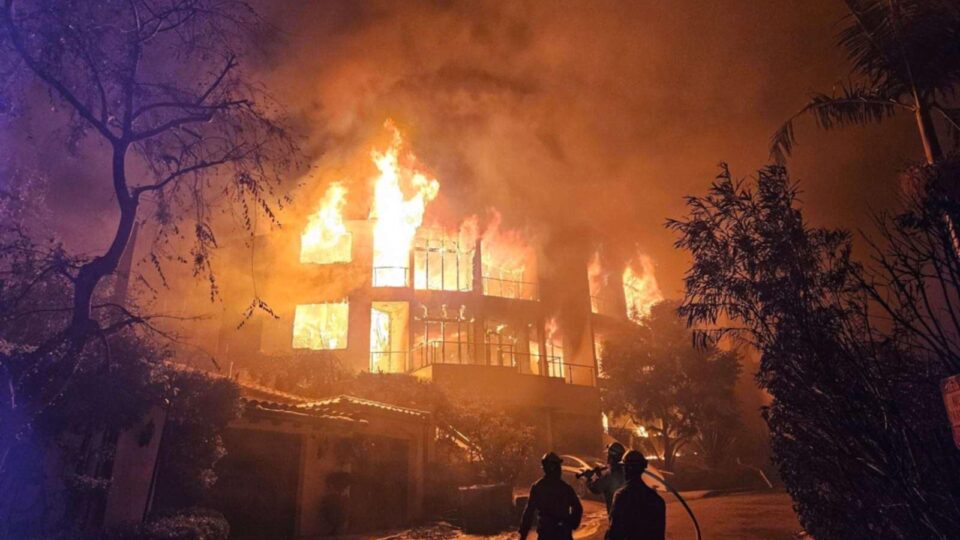
California’s experience is a prime example of this phenomenon.  After years of severe drought, dozens of atmospheric rivers subjected the state to record-breaking amounts of precipitation in the winter of 2022-23.  A second extremely wet winter in the southern parts of the state the following year resulted in the growth of abundant amounts of grass and brush. 2024 saw a record-hot summer which was then followed by a record-dry start to the 2025 rainy season.  The result was the catastrophic wildfires in the Los Angeles area in January.

Research by UCLA climate scientists explains that the primary driver for the increasing occurrence of hydroclimate whiplash is the expansion of the atmospheric sponge – that is, the growing ability of the atmosphere to evaporate, absorb and release water.  Every degree Celsius that the planet warms increases this ability by 7%. 

The global consequences of hydroclimate whiplash include not only floods and droughts but also the increased danger of whipsawing between the two, leading to the bloom and burn cycle that California recently faced. The risk of wildfire is twofold:  first by increasing the growth of flammable grass and brush in the months before the fire season, and then by drying it out to dangerous levels with extremely warm and dry weather.

**********

Web Links

Floods, droughts, then fires: Hydroclimate whiplash is speeding up globally

Photo, posted January 13, 2025, courtesy of Victor Guillen / USDA Forest Service via Flickr.

Earth Wise is a production of WAMC Northeast Public Radio
Limiting global warming

December 4, 2024 By EarthWise Leave a Comment

Limiting global warming is going to require some countries to do much more

A pressing question from the recently concluded 29th annual United Nations Climate Change Conference in Azerbaijan is how to transition away from fossil fuels and speed up climate mitigation in line with the 1.5 °C global warming target.

Keeping global average temperatures below 1.5 °C above pre-industrial levels is crucial to avoid the most severe impacts of climate change, including extreme weather, rising seas, biodiversity loss, and disruptions to food and water security. 

According to a new study by researchers from Stockholm University, Chalmers University of Technology, and Uppsala University in Sweden, it is still possible to limit global warming to 1.5 °C.  But the study found that the United States, the European Union, and 16 other countries will have to exceed their own current targets in order to achieve this global goal.  

The study, which was recently published in the journal Nature Communications, introduced an “additional carbon accountability” indicator, which quantifies countries’ responsibility for mitigation and carbon dioxide removal in addition to achieving their own targets.

The study identified 18 countries that should be accountable for increasing their ambitions to stay within their equal per capita share of the global carbon budget for 1.5 °C.  Additional carbon accountability is highest for the United States and China, and highest per capita for the United Arab Emirates, Russia, Saudi Arabia, and the U.S.

Failure to limit global warming risks catastrophic impacts of climate change.

**********

Web Links

COP29: Possible to limit climate change to 1.5°C – if EU and 17 other countries go beyond their own targets

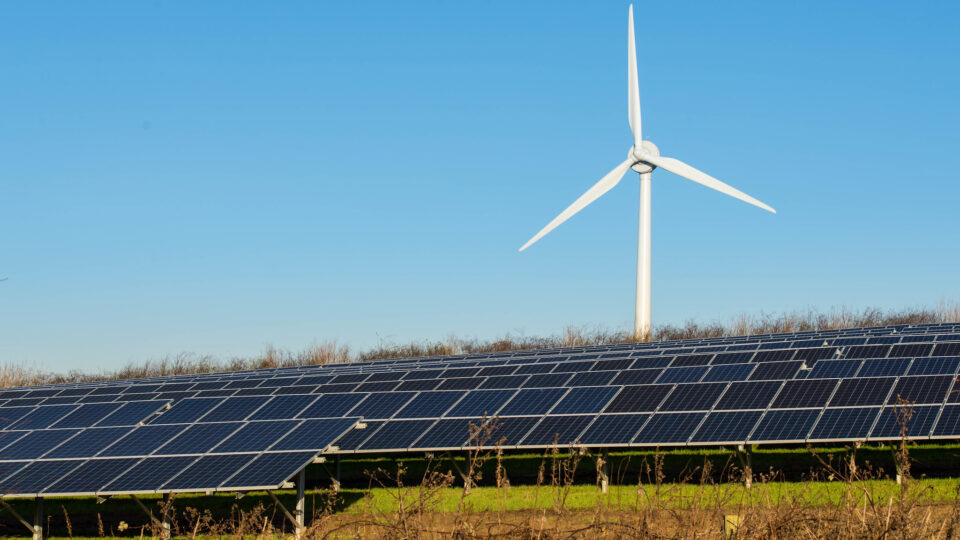
Photo, posted December 27, 2015, courtesy of Gerry Machen via Flickr.

Earth Wise is a production of WAMC Northeast Public Radio

Renegade geoengineering

October 30, 2024 By EarthWise Leave a Comment

Geoengineering inc

As the dangers of climate change continue to grow, so has interest in geoengineering – deliberate tinkering with the earth’s climate system.  In particular, stratospheric solar geoengineering – releasing aerosols into the stratosphere to reduce the amount of heat from the sun reaching the Earth – is attracting increasing interest.  Scientists at Harvard, Cornell, Colorado State, Princeton, and the University of Chicago are all researching the topic.

Actually doing it on a scale that matters is fraught with peril from unintended consequences of disrupting the delicate interactions between the Earth’s atmosphere, ocean, land, and sea ice. 

Meanwhile, a tiny start-up company in Silicon Valley has raised more than a million dollars in venture capital and is busy releasing balloons full of sulfur dioxide into the atmosphere in the name of combatting global warming.  Furthermore, they are selling so-called “cooling credits” to customers who want to offset their personal carbon emissions.

The aerosol being released is on such a small scale that it can’t possibly have a meaningful effect on temperatures.  There really isn’t scientific analysis guiding or accompanying the work. 

There are no laws prohibiting the dispersal of small amounts of sulfur dioxide in California.  Even if there were, these people could go offshore or elsewhere to do their work.  But this renegade geoengineering highlights a serious issue; namely, that there doesn’t have to be scientific, political, or any other kind of consensus for someone to undertake a potentially catastrophic attempt to alter the climate.  It’s a real worry.

**********

Web Links

Silicon Valley Renegades Pollute the Sky to Save the Planet

Photo, posted September 24, 2006, courtesy of Doc Searls via Flickr.

Earth Wise is a production of WAMC Northeast Public Radio
Thawing permafrost:  Is it a ticking timebomb?

July 8, 2024 By EarthWise Leave a Comment

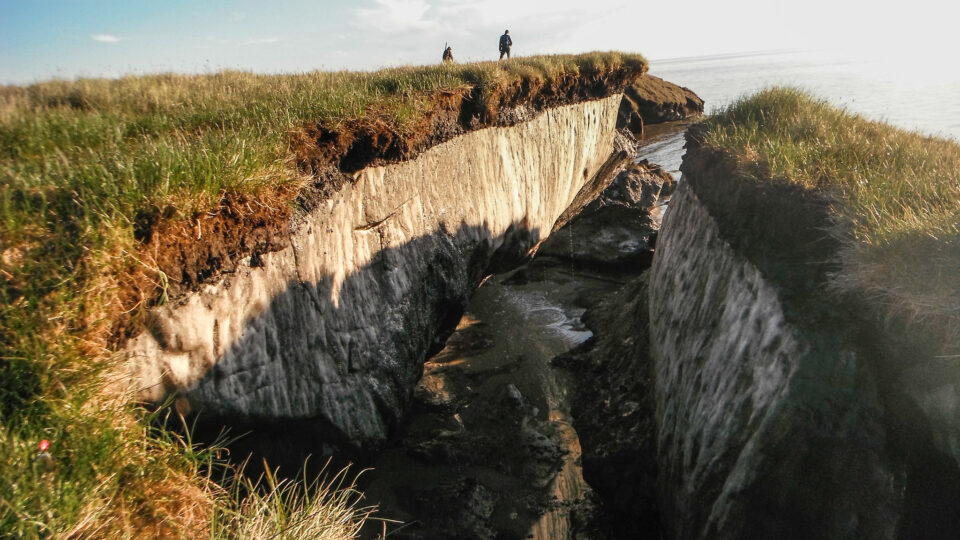
Permafrost covers about a quarter of the landmass in the Northern Hemisphere.  It stores vast quantities of organic carbon in the form of dead plant matter.  As long as it stays frozen, it is no threat to the climate.  But as it thaws, microorganisms start breaking down that plant matter and large amounts of carbon are released into the atmosphere in the form of carbon dioxide and methane.

This process has often been described as a ticking timebomb for the climate.  The theory is that once global warming reaches a certain level, the process will become self-amplifying setting off a catastrophic amount of warming.  If that level was reached, it would be a tipping point in the changing climate.

An international research team from the Alfred Wegener Institute in Germany has extensively researched this hypothesis.  Their conclusion is that within the permafrost, there are multiple geological, hydrological, and physical processes that are self-amplifying and, in some cases, irreversible.  However, these processes act only locally or regionally.  There is no evidence that some particular threshold in global warming could affect all permafrost and accelerate its thawing on a global level.

This research does not mean that Arctic permafrost is nothing to worry about.  In fact, there are ways in which it is more worrisome.  Because the permafrost is very heterogenous – meaning it is very different in different places – there will be numerous small, local tipping points that will be exceeded at different times and at different levels of warming.  All of this will proceed in step with global warming, contributing to the overall worsening situation.  There is no warming level below which permafrost thawing is not a problem.

**********

Web Links

Thawing permafrost: Not a climate tipping element, but nevertheless far-reaching impacts

Photo, posted January 24, 2014, courtesy of Brandt Meixell / USGS via Flickr.

Earth Wise is a production of WAMC Northeast Public Radio

Scientists Call For Geoengineering Research | Earth Wise

April 18, 2023 By EarthWise Leave a Comment

A group of more than 60 climate researchers has published an open letter calling for accelerated research into what is called solar radiation management.  This means changing the amount of solar energy reaching the surface of the earth by adding various substances into the stratosphere or into the clouds in order to help cool down the planet.

This form of geoengineering is controversial to say the least.  While such approaches would most likely be successful in cooling things down, such climate manipulation could have dangerous and unexpected consequences.

For their part, the scientists explicitly state that they do not support the use of solar radiation management or SRM.  Their position is that our current level of knowledge is not sufficient to accurately assess potential risks and consequences.  What they are advocating is for scientific research to be conducted to support the assessment of the potential effectiveness of various SRM techniques, to determine how these techniques would affect climate change under various greenhouse gas scenarios, and to determine the capabilities for detecting and attributing possible impacts of SRM interventions.

The letter was a response to a larger group of scientists and academics who called for a strict ban on geoengineering, saying that it could divert attention and resources from much-needed greenhouse gas reductions.  The new letter claims that gaining additional knowledge about SRM is a critical part of making effective and ethical decisions about its implementation.  They state that we have no right to ban the ability to search for a solution to the mess we created.

Opponents of such research are concerned that even pursuing it normalizes in the public eye what could potentially be a catastrophically dangerous activity.

**********

Web Links

60 Scientists Call for Accelerated Research Into ‘Solar Radiation Management’ That Could Temporarily Mask Global Warming

Photo, posted February 11, 2006, courtesy of Janice Waltzer via Flickr.

Earth Wise is a production of WAMC Northeast Public Radio
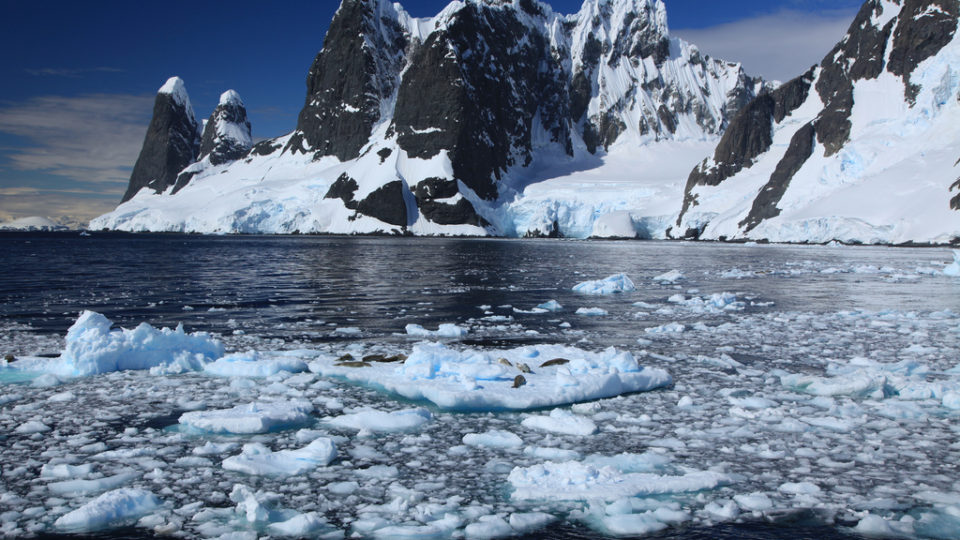
Increasing Antarctic Ice Loss

July 31, 2018 By EarthWise Leave a Comment

https://earthwiseradio.org/wp-content/uploads/2018/07/EW-07-31-18-Increasing-Antarctic-Ice-Loss.mp3

Antarctica’s ice sheets contain enough frozen water to raise sea levels globally about 190 feet.  Ice in the Antarctic is melting at a record-breaking rate and subsequent sea rises could have catastrophic consequences around the world.  So, it is no surprise that scientists have been closely tracking ice loss in recent decades to understand both the current and future impacts of climate change.

[Read more…] about Increasing Antarctic Ice Loss

Tipping Points

August 9, 2017 By EarthWise

https://earthwiseradio.org/wp-content/uploads/2017/08/EW-08-09-17-Tipping-Points.mp3

A tipping point is a point in time when a small thing can make a big change happen.  The term was popularized in sociology in recent decades, but really comes from physics where is refers to adding a small amount of weight to a balanced object causing it to topple over.

[Read more…] about Tipping Points

Primary Sidebar

Recent Episodes

  • An uninsurable future
  • Clean energy and jobs
  • Insect declines in remote regions
  • Fossil fuel producing nations ignoring climate goals
  • Trouble for clownfishes

WAMC Northeast Public Radio

WAMC/Northeast Public Radio is a regional public radio network serving parts of seven northeastern states (more...)

Copyright © 2026 ·