• Skip to primary navigation
  • Skip to main content
  • Skip to primary sidebar

Earth Wise

A look at our changing environment.

  • Home
  • About Earth Wise
  • Where to Listen
  • All Articles
  • Show Search
Hide Search
You are here: Home / Archives for carbon-free

carbon-free

Renewables dominate new global power

April 24, 2025 By EarthWise Leave a Comment

Renewable power continues to dominate domestically and globally

The current administration in the United States is adversarial towards renewable energy and highly supportive of the use of fossil fuels.  Unquestionably, this will create rough waters for the clean energy industry and, unfortunately, will throw a monkey wrench into the world’s efforts to mitigate climate change.  But it cannot stop what has become a powerful global trend.

In the words of U.N. Secretary-General António Guterres: “Renewable energy is powering down the fossil fuel age.”

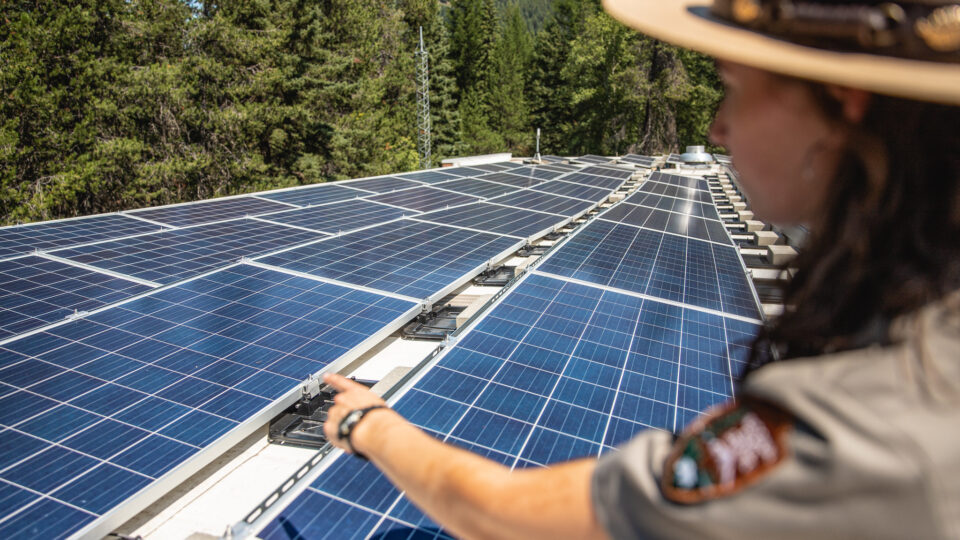
According to a new report from the International Renewable Energy Agency, renewables accounted for 92% of new power capacity worldwide last year.  Solar is by far the fastest-growing form of renewable power, accounting for 77% of new capacity.

In the U.S., renewables accounted for about 90% of new installed capacity in 2024.  The country added nearly 40 GW of solar power capacity as well as 5 GW of wind power.  Renewables now make up about 30% of the country’s large-scale power generating capacity.  Adding in all carbon-free electricity sources (which include nuclear power), nearly 44% of the country’s electricity was carbon-free.

Headwinds against the growth of renewable energy are getting stronger in the US, but the global trend driven by both economics and environmental concerns is powerful and will continue.  For one thing, in much of the world, solar power is simply the cheapest way to produce electricity and that is pretty difficult to ignore. Global trade wars and economic turmoil will impact renewable energy much as they will other industries, but the long-term trend is clear.

**********

Web Links

Renewables Made Up More Than 90 Percent of New Power Installed Globally Last Year

Photo, posted November 23, 2022, courtesy of John Morton via Flickr.

Earth Wise is a production of WAMC Northeast Public Radio

A giant solar project for Google

November 21, 2024 By EarthWise Leave a Comment

Google is investing heavily in solar power

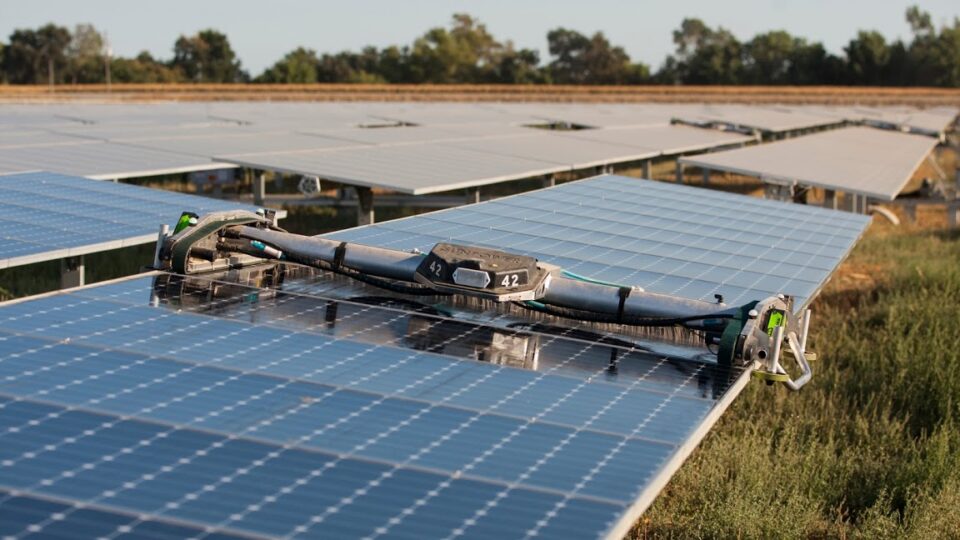
One of the largest solar projects in the US has recently come online in Texas.  Three solar farms built side-by-side in Buckholts, Texas by SB Energy can provide 875 megawatts of electricity, nearly the size of a typical nuclear power plant.  The project will supply the largest solar energy purchase ever made by Google and the electricity generated will be used to power its new operations in the area.  Google will use about 85% of the project’s solar power for data centers in Ellis County and for cloud computing in the Dallas Region.

In total, Google has contracted with clean energy developers to bring more than 2,800 megawatts of new wind and solar projects to Texas.  Google expects to spend $16 billion through 2040 to purchase clean energy for its global operations.

According to the International Energy Agency, data centers’ total electricity consumption could reach more than 1,000 terawatt-hours in 2026, which is more than double the amount used in 2022.  One terawatt-hour is enough energy to power 70,000 homes for a year.  So, it is not surprising that large technology companies are investing heavily in energy technologies.

Google, Amazon, and Microsoft have all recently announced investments in nuclear energy to power data centers.  These companies all have made commitments to seek sources of carbon-free electricity to power their data centers and their increasing efforts in artificial intelligence.  Because of the rise of artificial intelligence, the large companies are not meeting their commitments to reduce their carbon emissions and are needing to greatly increase their efforts to obtain clean power.

**********

Web Links

One of the largest solar projects in the US opens in Texas, backed by Google

Photo, posted March 27, 2016, courtesy of Ben Nuttall via Flickr.

Earth Wise is a production of WAMC Northeast Public Radio

Reducing emissions from cement

November 14, 2024 By EarthWise Leave a Comment

Reducing emissions from cement production is possible

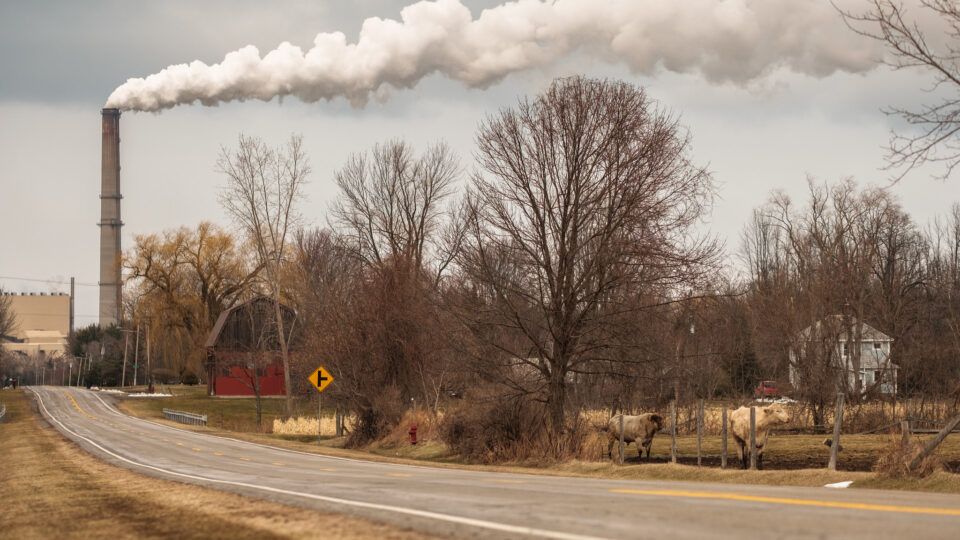
Cement production accounts for about 7% of global carbon emissions.  It is one of the most difficult challenges for emissions reduction.  The emissions associated with producing cement come from both the energy used to provide heat for the process and from the chemical reactions that take place in the formation of cement.  Cement is an essential building block of society, and its use is not expected to decline over time.

A German company called Heidelberg Materials is embarking on an ambitious project to reduce carbon emissions from a cement plant in Norway.  They are building a facility to use absorbent chemicals to capture large quantities of carbon dioxide emitted through cement production.  More than half a ton of carbon dioxide arises from every ton of cement produced at the plant.

Once the carbon dioxide is captured it will be chilled to a liquid, loaded onto ships, and carried to a terminal farther up the Norwegian coast.  From there, it will be pumped into undersea rocks located 70 miles offshore and a mile and a half below the bottom of the North Sea.

With all of this complicated process going on, cement from the plant is likely to be quite expensive.  It might even be two or three times the price of ordinary cement.  Heidelberg Materials is counting on customers’ willingness to pay much more for cement that comes with green credentials. 

Can this be economically viable?  Heidelberg estimates that cement accounts for only about 2% of the cost of a large building project but as much as 50% of the emissions.  As a result, using carbon-free cement could be a relatively inexpensive way for builders to reduce emissions.

**********

Web Links

Cement Is a Big Polluter. A Plant in Norway Hopes to Clean It Up.

Photo, posted May 7, 2016, courtesy of Phillip Pessar via Flickr.

Earth Wise is a production of WAMC Northeast Public Radio
Peak Natural Gas Generation | Earth Wise

May 17, 2022 By EarthWise Leave a Comment

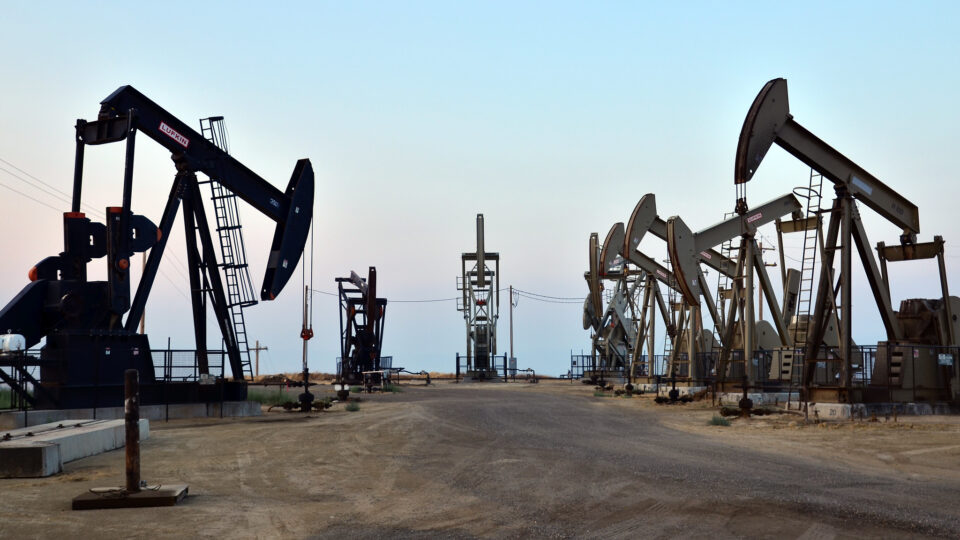
Peak natural gas generation is in the past

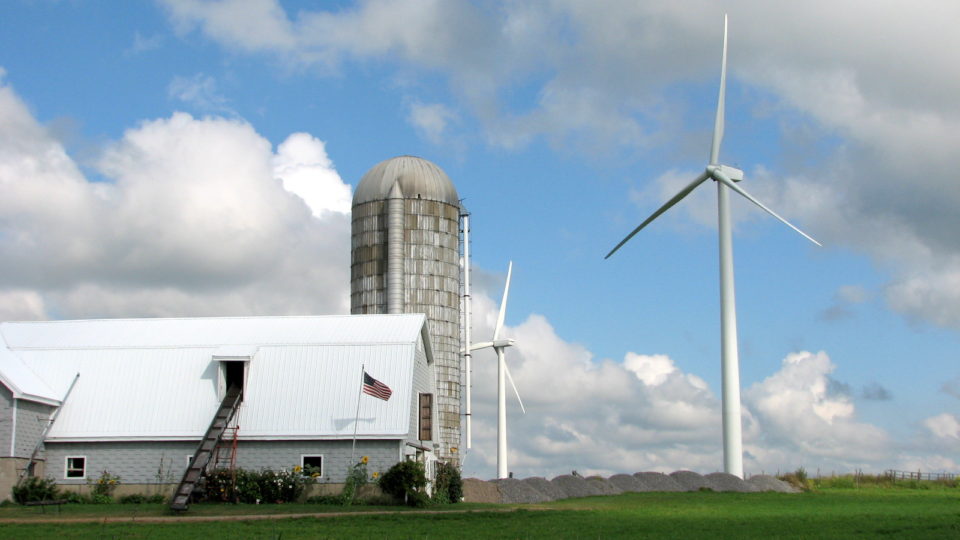
According to a new report from the Institute for Energy Economics and Finance (the IEEFA), the U.S. most likely hit its peak usage of natural gas to generate electricity in 2020.  Growth in wind and solar power are beginning to erode the use of natural gas.

At the moment, natural gas prices are unusually high as a result of supply chain issues and the war in Ukraine.  The U.S. is shipping record amounts of gas to Europe in order to help allies to wean off of Russian gas imports.  As a result, U.S. natural gas prices are at their highest level in more than 13 years.  Heating bills in the Northeast have been exceptionally high this past winter.

These high gas prices have also thrown a temporary lifeline to coal, which has seen a recent surge.  Despite this, coal in the U.S. is continuing its long-term decline.  Several of the largest power companies – including the Tennessee Valley Authority, Duke Energy, and Georgia Power – are planning to phase out coal entirely by 2035 and shift to renewable power.

The surging prices in fossil fuels – at the gas pump and in the home – along with multiple disruptions in energy security, are supercharging the already rapid pace of growth in solar, wind, and battery energy storage projects.

Wind, solar, and hydropower currently account for about 20% of U.S. power generation.  According to the IEEFA, these renewable sources could provide more than a third of our power by 2027.  Including both renewables and nuclear power plants, the U.S. could generate more than half of its electricity from carbon-free sources by that year, which represents a massive transition from just five years ago.

**********

Web Links

U.S. May Have Hit Peak Natural Gas Power Generation, Report Says

Photo, posted July 11, 2017, courtesy of John Ciccarelli / BLM via Flickr.

Earth Wise is a production of WAMC Northeast Public Radio.

Five States Stepping Up On Clean Energy | Earth Wise

February 7, 2022 By EarthWise Leave a Comment

Five states step up climate action

While Congress continues to face partisan gridlock on climate issues, many states have moved forward with climate action.

In 2021, five states – Illinois, Massachusetts, Oregon, North Carolina, and Rhode Island – passed laws requiring a shift to 100% carbon-free electricity or net-zero emissions.  Washington State passed a law that helps to implement its strong 2019 and 2020 climate and clean energy laws.  Washington’s new legislation establishes a carbon trading program that will help the state to meet its goals of economy-wide emission cuts and 100% carbon-free electricity.

Several other states made progress on climate and clean energy by taking targeted actions not quite as aggressive as 100% laws, but significant, nonetheless.

The five states that entered the so-called 100% club joined with the six states that had earlier passed such legislation.  Those are California, Hawaii, New Mexico, New York, Virginia, and Washington.  Both Puerto Rico and Washington D.C. are also members of the club.

The past year may well be the biggest year yet for significant clean energy legislation.  Some of the states that finally passed laws had been gearing up for it for years.  This is particularly true of Massachusetts and Illinois.

Actions by individual states are not an antidote to inaction by the federal government, but they help.  At this point, about one-third of the country’s population lives in states that have laws requiring a transition to 100% carbon-free electricity, 100% renewable electricity, or net-zero emissions. 

All of this activity began in 2015, when Hawaii passed its renewable energy law.

**********

Web Links

Inside Clean Energy: Here Are 5 States that Took Leaps on Clean Energy Policy in 2021

Photo, posted August 12, 2021, courtesy of Glacier NPS via Flickr.

Earth Wise is a production of WAMC Northeast Public Radio.

Cutting The Cost Of Energy Storage | Earth Wise

September 9, 2021 By EarthWise Leave a Comment

Energy storage is the solution to the problem of intermittency with renewables

The cost of both solar and wind power continues to drop making the two renewable energy sources the cheapest way to make electricity in more and more places.  Given the virtually inexhaustible supply of both wind and sun power, these clean electricity sources can in principle meet all our energy needs.  The hang up is that both of them are intermittent sources – the wind doesn’t blow all the time and the sun doesn’t shine all the time.

The solution to the intermittency problem is energy storage.  If energy produced by wind and sun can be stored so it can be made available for use at any time, then the goal of having 100% clean energy can be realized.

Energy storage technology has continued to improve over time and to get cheaper.  The Department of Energy recently announced a new initiative aimed at accelerating both of these trends.

The new program – called Long Duration Storage Shot –  has the goal of reducing the cost of grid-scale, long-duration energy storage by 90% within this decade.

Long-duration energy storage is defined as systems that can store energy for more than ten hours at a time.  Such systems can support a low-cost, reliable, carbon-free electric grid that can supply power even when energy generation is unavailable or lower than demand.  With long-duration storage, solar-generated power can be used at night.

The program will consider multiple types of storage technologies – electrochemical (that is: batteries), mechanical, thermal, chemical carriers, and various combinations thereof.  Any technology that has the potential to meet the necessary duration and cost targets for long-term grid storage are fair game for the program.

**********

Web Links

DOE announces goal to cut costs of long-duration energy storage by 90%

Photo, posted October 16, 2017, courtesy of UC Davis College of Engineering via Flickr.

Earth Wise is a production of WAMC Northeast Public Radio.

Last New York Coal Plant Closing | Earth Wise

April 13, 2020 By EarthWise Leave a Comment

closing coal power plants

The last coal-fired power plant in New York State is closing.  The plant, located in Barker, about an hour’s drive from Buffalo, employs 44 people.  The plant’s closure is an early test of New York’s new climate law, which is one of the most ambitious in the country.  The law is supposed to transform the state’s energy grid to carbon-free by 2040. 

Coal plants across the country are going offline, priced out by natural gas and targeted by regulations and incentives aimed at reducing greenhouse gas emissions.  Coal plant closures bring common challenges:  lost tax revenues and jobs as well as efforts to retrain workers and clean up sites.  Every plant has a specific place in a community, and each community has its own story.

The new climate law is supposed to create thousands of new jobs, including high-paying union jobs like the ones the employees in Barker are losing.  But jobs are scarce in the northwest corner of the state where Barker is located.

The state government has recently issued rules that would make it easier to get permission to build renewable energy sites, including wind turbines and solar farms, allowing applicants to bypass zoning rules and other local regulations.  But residents of rural towns have environmental and aesthetic concerns about these potential new energy plants.

In 2010, the United States had 580 coal-fired power plants providing 45% of the country’s electricity. By March 2018, there were fewer than 350 plants and coal’s market share had dropped to 30%.  At this point, there are about 224 plants producing 18% of the country’s power.  The writing is on the wall for coal power.

**********

Web Links

New York’s Last Coal-Fired Power Plant Is Closing

Photo, posted March 13, 2018, courtesy of Joed Viera via Flickr.

Earth Wise is a production of WAMC Northeast Public Radio.

The New York Climate Plan

July 24, 2019 By EarthWise Leave a Comment

New York lawmakers have passed a sweeping climate plan that requires the state to eliminate almost all of its greenhouse gas emissions by 2050.  The plan calls for the phase-out of gasoline cars and oil- and gas-burning furnaces and requires all of the state’s electricity to come from carbon-free sources.

The Climate Leadership and Community Protection Act requires the state to slash its carbon emissions to 85% below 1990 levels by 2050 and to offset the remaining 15% by other means such as removing carbon dioxide from the atmosphere.  The bill requires New York to get 70% of its electricity from renewable sources by 2030.

The challenges of reaching the program’s goals are daunting.   New York has so far only reduced its emissions by 8% since 1990.  The state currently does get 60% of its electricity from carbon-free sources – mostly hydroelectric dams and nuclear power plants – but it will require offshore windfarms, ramped-up solar installations, and battery storage systems to push the numbers dramatically higher.

Transportation, which is responsible for a third of New York’s emissions, will be particularly tough to tackle.  The Trump administration is rolling back federal vehicle efficiency rules and is trying to prevent states from setting stricter standards.  Currently, electric car ownership is primarily attractive for single-family homeowners who can plug in their cars at home.  Far more pervasive charging stations – for example, all over the streets of New York City – would be needed to make electric cars practical for everyone.

The plan aims for industries to bear most of the financial burden, but supporters say that the costs of not acting on climate will be vastly greater for businesses.  The plan’s deadlines for major emissions reductions are a decade away but there will be much to do quite soon.

**********

Web Links

New York to Approve One of the World’s Most Ambitious Climate Plans

Photo, posted September 17, 2009, courtesy of Flickr.

Earth Wise is a production of WAMC Northeast Public Radio.

A Quiet Clean Energy Revolution

March 5, 2019 By EarthWise Leave a Comment

While the Trump administration seeks to prop up and promote use of fossil fuels, the country continues to move in the opposite direction.  Last year was actually a pretty positive year for clean energy in the U.S.

In terms of public opinion, 70% of Americans surveyed believe the country should produce 100% of its electricity from renewable energy sources and more than half of survey respondents think renewables are a good idea even if they raise energy bills.

Companies in the U.S. purchased a record 6.43 gigawatts of renewable power, enough to power 1.5 million homes.  The number of corporations entering into renewable energy deals doubled last year.

More than 300 U.S. cities, towns or counties have made commitments to climate action and, as of November, 99 cities have committed to 100% renewable energy, doubling the total from a year ago.

A number of gubernatorial candidates running on ambitious renewable energy platforms were elected in November including those in Illinois, Colorado, New Mexico, Maine and Nevada.

Utilities are responding to the growing demand for clean energy.  Consumers Energy in Michigan plans to cut carbon emissions by 80% and stop using coal.  Iowa-based MidAmerican Energy will become the first U.S. utility to source 100% of its electricity from renewable sources next year.  Xcel Energy, one of the biggest utilities in the country, has committed to be 80% carbon-free by 2030 and go completely carbon-free by 2050.

The fossil fuel industry with its supporters in high places is still kicking and screaming, but there is no doubt that the U.S. energy system is changing, and the quiet clean energy revolution will only pick up more steam in 2019.

**********

Web Links

The US Underwent a Quiet Clean Energy Revolution Last Year

Photo, posted August 15, 2009, courtesy of Ken via Flickr.

Earth Wise is a production of WAMC Northeast Public Radio.

Hydrogen Progress

April 18, 2018 By EarthWise Leave a Comment

https://earthwiseradio.org/wp-content/uploads/2018/04/EW-04-18-18-Hydrogen-Progress.mp3

As low-cost solar and wind energy become increasingly pervasive, the prospects for hydrogen-based transportation systems are improving.  The reason is that cheap electricity makes it practical to produce hydrogen by breaking down water rather than getting it from reforming natural gas, which results in carbon dioxide emissions.  The real goal is for hydrogen to be a renewable and carbon-free fuel.

[Read more…] about Hydrogen Progress

Primary Sidebar

Recent Episodes

  • An uninsurable future
  • Clean energy and jobs
  • Insect declines in remote regions
  • Fossil fuel producing nations ignoring climate goals
  • Trouble for clownfishes

WAMC Northeast Public Radio

WAMC/Northeast Public Radio is a regional public radio network serving parts of seven northeastern states (more...)

Copyright © 2026 ·