• Skip to primary navigation
  • Skip to main content
  • Skip to primary sidebar

Earth Wise

A look at our changing environment.

  • Home
  • About Earth Wise
  • Where to Listen
  • All Articles
  • Show Search
Hide Search
You are here: Home / Archives for cables

cables

Wireless car charging

April 17, 2024 By EarthWise Leave a Comment

Wireless car charging is being developed

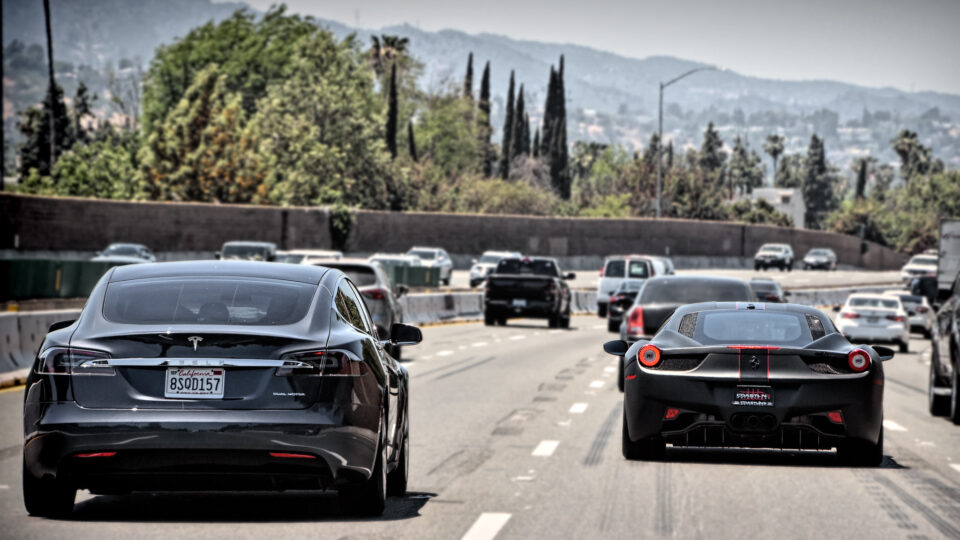
It’s increasingly common to see cars hooked up to charging cables in shopping centers, rest stops, and dedicated charging stations.  Charging electric cars is easy to do, just like charging phones and laptop computers.  These days, it is pretty common to charge phones without using any charging cable at all because of the availability of wireless charging technology.  The same thing may well happen with electric cars.

A team of researchers at Oak Ridge National Laboratory has successfully demonstrated wireless charging of electric cars with high efficiency and fairly fast charging speed.

The patented system was used to charge up a Hyundai Kona EV using electromagnetic fields, which is essentially how phone chargers work.  The technology makes use of a polyphase electromagnetic coupling coil, which is lightweight and small.  Rotating magnetic fields generated in the coil’s windings boost the power available.  The system provided 100-kW of power with 96% efficiency.  That isn’t as powerful as the fastest high-speed charging stations, but it is considerably more than any home charging solution can provide.  For many vehicles, such a charger could provide 50% battery capacity in less than 20 minutes.

Battery technology continues to improve leading to larger capacity, faster charging, longer battery life, and lower cost.  At some point, charging up an electric car will take no more time than pumping gas.

The Oak Ridge researchers consider this development to be a breakthrough achievement that could open the door to fast and efficient wireless charging for electric passenger vehicles.  One could imagine having the ability to drive up to a charging spot and charging up the battery without even getting out of the car. 

**********

Web Links

Charging up the commute

Photo, posted July 12, 2021, courtesy of Chris Yarzab via Flickr.

Earth Wise is a production of WAMC Northeast Public Radio
Clean Energy From North Africa | Earth Wise

April 7, 2023 By EarthWise Leave a Comment

Europe turning to North Africa for its clean energy needs

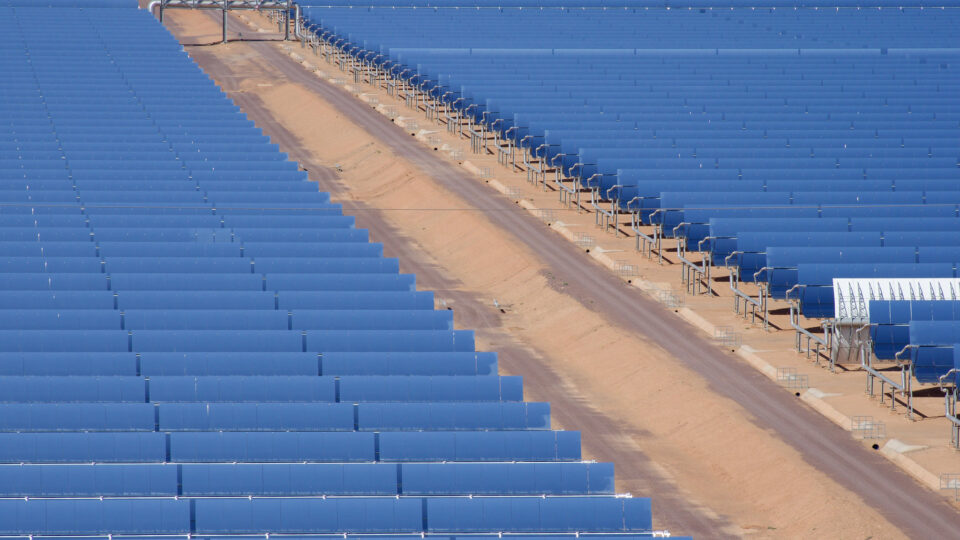
Europe is hungry for clean energy.  The war in Ukraine has amplified Europe’s desire to end its reliance on Russian natural gas.  Increasingly, Europe is pushing to install giant solar energy farms in sunny North Africa and transport the energy through underwater cables.

Solar panels in sunny North Africa generate up to three times more energy than those in Europe.  As a result, solar farms and wind farms as well are proliferating south of the Mediterranean Sea.  Morocco’s Noor and Egypt’s Benban solar farms are among the largest in the world.  Many of these farms were initially built to boost domestic power supplies and reduce dependence on coal.  But now these farms are increasingly supplying green energy to industrial neighbors in Europe.

Morocco has signed deals with the European Union to expand power exports.  Egypt is considering proposals for cables to link to Greece.  Another planned cable would link new solar farms in Tunisia to Italy’s grid.  These projects would certainly bring money and jobs to North African countries, but it isn’t all good news.

There are growing concerns about the environmental impacts of Europe outsourcing its energy needs.  Desert ecosystems could be greatly compromised.  And much of this development is likely to happen with only minimal community consultation or ecological assessment.  Half of Africa’s population does not have access to reliable power grids. Electricity becoming a major export is not likely to improve this situation.

Europe has long obtained many resources from the developing world.  Now it is tapping into the sunshine and wind in other lands.  It remains to be seen if North Africa’s countries will achieve the large potential gains those resources can offer them.

**********

Web Links

In Scramble for Clean Energy, Europe Is Turning to North Africa

Photo, posted October 17, 2019, courtesy of Richard Allaway via Flickr.

Earth Wise is a production of WAMC Northeast Public Radio

Floating Offshore Wind | Earth Wise

April 21, 2022 By EarthWise Leave a Comment

Floating offshore wind becoming a reality

According to a new report by the Global Wind Energy Council, floating offshore wind technology is on track to grow from a miniscule market to a substantial contribution to the world’s energy supply over the next decade.  Furthermore, the United States represents one of the countries with the greatest potential.

Wind power is stronger and steadier in the ocean than on land, so the use of offshore wind is rapidly expanding.  However, because most installations are based on fixed structures attached to the sea bottom, they cannot be installed in very deep or complex seabed locations.

Floating offshore wind is based on structures that are anchored to the seabed only by means of flexible anchors, chains, or steel cables.  Apart from making it feasible to place wind turbines in deeper and more distant locations, floating turbines and platforms can also be built and assembled on land and then towed to the offshore installation site.

The floating offshore wind industry is currently in a pre-commercial phase but has great potential.  Many offshore locations with great potential in terms of their wind resources are unsuitable for conventional installations either because of the depth of the seabed or its complex structure.  This is particularly true of the waters off the coasts of California, Oregon, and the Gulf Coast, which otherwise offer excellent wind resources.

There are many issues to deal with in expanding the use of floating offshore wind, including transporting the power to shore and the ability of the local power grids to handle the incoming power.  On the other hand, distantly placed floating offshore wind reduces environmental concerns and eliminates issues associated with the visual impact of wind farms for coastal residents.

**********

Web Links

What’s the potential of floating offshore wind?

Photo, posted May 10, 2015, courtesy of Olin Gilbert via Flickr.

Earth Wise is a production of WAMC Northeast Public Radio.

A New “Wonder Material” | Earth Wise

February 11, 2022 By EarthWise Leave a Comment

A new wonder material

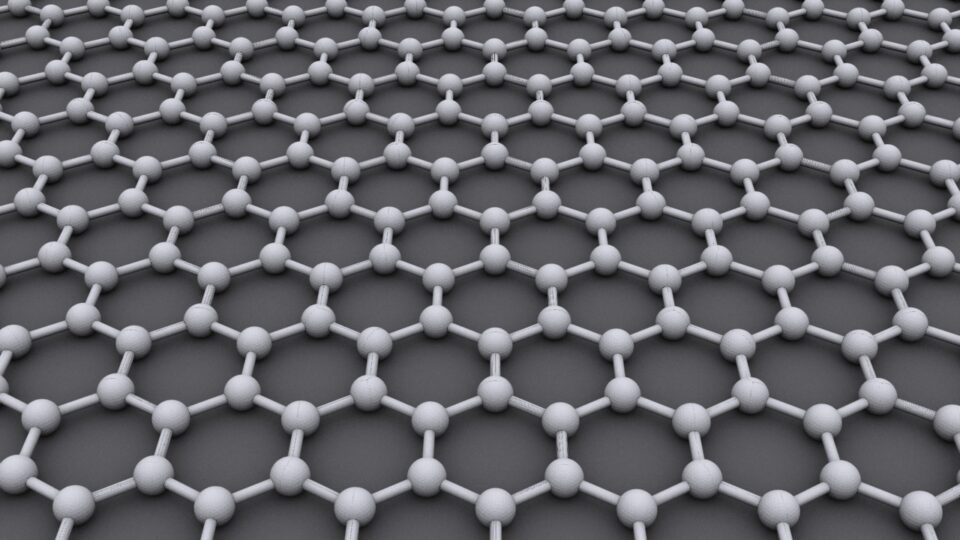
Graphene is a form of carbon made of single-atom-thick layers. It has many remarkable properties and researchers around the world continue to investigate its use in multiple applications.

In 2019, a new material composed of single-atom-thick layers was produced for the first time.  It is phosphorene nanoribbons or PNRs, which are ribbon-like strands of two-dimensional phosphorous.  These materials are tiny ribbons that can be a single atomic layer thick and less than 100 atoms wide but millions of atoms long.  They are comparable in aspect ratio to the cables that span the Golden Gate Bridge.   Theoretical studies have predicted how PNR properties could benefit all sorts of devices, including batteries, biomedical sensors, thermoelectric devices, nanoelectronics, and quantum computers. 

As an example, nanoribbons have great potential to create faster-charging batteries because they can hold more ions than can be stored in conventional battery materials.

Recently, for the first time, a team of researchers led by Imperial College London and University College London researchers has used PNRs to significantly improve the efficiency of a device.  The device is a new kind of solar cell, and it represents the first demonstration that this new wonder material might actually live up to its hype.

The researchers incorporated PNRs into solar cells made from perovskites.  The resultant devices had an efficiency above 21%, which is comparable to traditional silicon solar cells.  Apart from the measured results, the team was able to experimentally verify the mechanism by which the PNRs enhanced the improved efficiency.

Further studies using PNRs in devices will allow researchers to discover more mechanisms for how they can improve performance.

**********

Web Links

‘Wonder material’ phosphorene nanoribbons live up to hype in first demonstration

Photo, posted October 6, 2010, courtesy of Alexander AlUS / CORE-Materials via Flickr.

Earth Wise is a production of WAMC Northeast Public Radio.

Vineyard Wind Prepares For Construction | Earth Wise

November 5, 2021 By EarthWise Leave a Comment

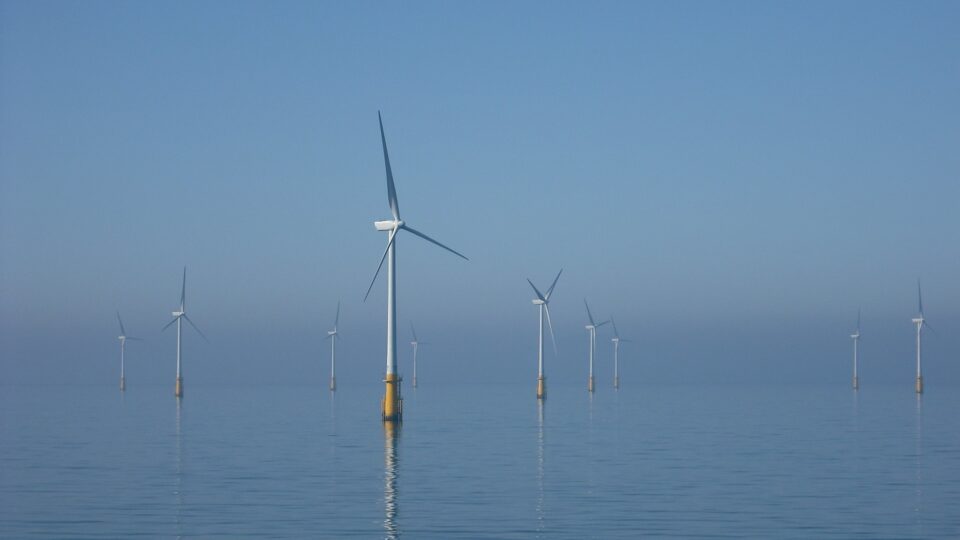
Vineyard Wind 1 will be the first utility-scale offshore wind energy project in the United States.  It will be located 15 miles off the coast of Massachusetts and will consist of an array of 62 wind turbines, spaced one nautical mile apart.  It will generate 800 megawatts of electricity, enough to power over 400,000 homes.

The project has recently closed on $2.3 billion of senior debt financing, which sets the stage for construction to begin.  The joint venture between Avangrid Renewables and Copenhagen Infrastructure partners is one of the single largest investments in a renewable energy project in the U.S.  The financial close is basically the final milestone for launching the project following years of clearing regulatory and other hurdles.

With the financial closing, Vineyard Wind will be instructing its contractors to begin work.  Onshore work will start this fall and offshore work will begin in 2022.

The project will use Haliade-X wind turbine generators made by GE.  These are some of the largest and most powerful wind turbines currently available, each one capable of generating 13 megawatts of electricity.  The electricity generated by the turbines will be collected by an offshore substation and then transmitted to shore.  Two submarine cables will bring the electricity from the substation to a landing point in Barnstable.  The cables will be buried six feet below the seafloor.  Underground cables will then route the power to an onshore substation in the village of Hyannis where it will be connected to the New England Grid.

Vineyard Wind is the first of many offshore wind farms in the works for the Northeastern United States.

**********

Web Links

U.S.’s first commercial-scale offshore wind project prepares for construction

Photo, posted March 24, 2016, courtesy of Andy Dingley via Flickr.

Earth Wise is a production of WAMC Northeast Public Radio.

Carbon And Heating Soil

November 22, 2017 By EarthWise 1 Comment

https://earthwiseradio.org/wp-content/uploads/2017/11/EW-11-22-17-Carbon-and-Heating-Soil.mp3

Plants are a critical part of the Earth’s carbon cycle.   They take in carbon dioxide during photosynthesis.   Eventually, dead leaves, branches and other materials fall to the ground where bacteria and fungi decompose the materials and release the CO2 back into the atmosphere.  This carbon-soil feedback loop is a complicated one that is critical to the overall carbon balance because soils actually contain two to three times more carbon than the atmosphere.

[Read more…] about Carbon And Heating Soil

Primary Sidebar

Recent Episodes

  • An uninsurable future
  • Clean energy and jobs
  • Insect declines in remote regions
  • Fossil fuel producing nations ignoring climate goals
  • Trouble for clownfishes

WAMC Northeast Public Radio

WAMC/Northeast Public Radio is a regional public radio network serving parts of seven northeastern states (more...)

Copyright © 2026 ·