• Skip to primary navigation
  • Skip to main content
  • Skip to primary sidebar

Earth Wise

A look at our changing environment.

  • Home
  • About Earth Wise
  • Where to Listen
  • All Articles
  • Show Search
Hide Search
You are here: Home / Archives for brown bears

brown bears

Polar Bears and Tires | Earth Wise

January 12, 2023 By EarthWise Leave a Comment

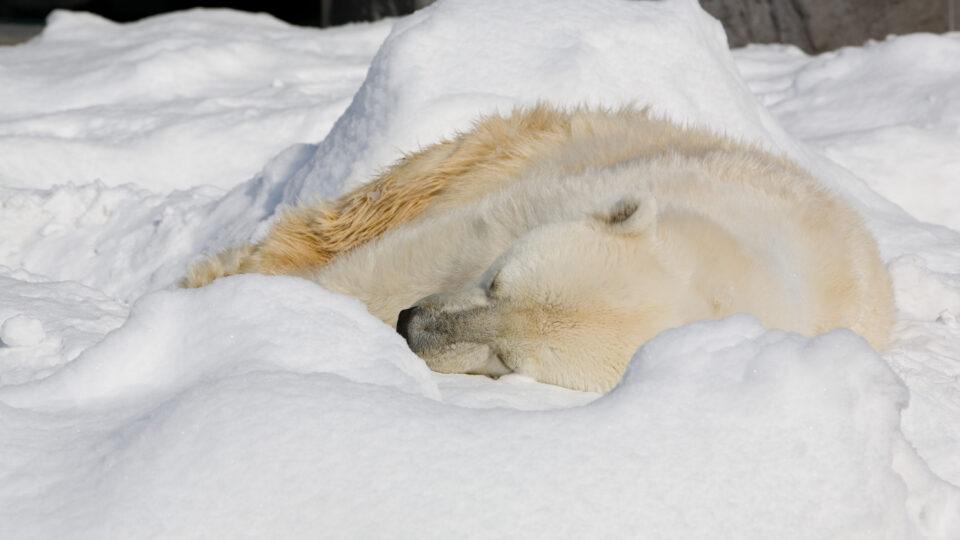
Researchers turn to polar bear paws to find better traction

There is lots of interest in traction.  People want to find better ways to move across wet and frozen surfaces safely.   This applies to both the shoes on our feet and the tires on our cars. 

Researchers at the University of Akron along with colleagues at Syracuse University and at Bridgestone, the tire company, have been studying how many arctic animals can walk and run across the ice without slipping and falling.  Their research focused on the paws of polar bears.

Previous studies discovered that polar bears have papillae – little bumps on the pads of their feet – that provide improved traction on snow.  The new research also looked at the paws of other species of bear – brown bears and black bears – and found that these others also have papillae on their paw pads, but that those of polar bears are as much as 50% taller.  These taller bumps give the pads a 30-50% increase in frictional shear stress.

The research may lead to various applications. For example, snow tires typically have deeper treads, but the polar bear study may lead to some new designs that would improve traction.  People who do high-altitude climbing are interested in the research as are companies that deliver goods in bad weather.  Anyone who has to be out and about in bad weather would like to get a better grip.

There are various other animals with traction-improving adaptations that are probably worth studying.  These include dogs, wolves, foxes, and mountain goats.  The same researchers at Akron have also studied other animals with unique abilities to deal with challenging surfaces including geckos, spiders, and mussels.  The natural world is filled with examples of creatures who can easily function in environments that we humans find very challenging.

**********

Web Links

UA researchers’ focus on tire traction leads to investigation of polar bear paws

Photo, posted March 2, 2008, courtesy of Sam Weng via Flickr.

Earth Wise is a production of WAMC Northeast Public Radio.
Bringing Back Bison | Earth Wise

August 23, 2022 By EarthWise Leave a Comment

Over the past few decades, research has identified the importance of large mammals like bison as ecosystem engineers.  These animals shape and maintain various natural processes and, in the process, are responsible for the sequestering of large amounts of carbon.  But large mammals – both herbivores and predators – have seen their numbers dwindle over time.  At this point, nearly two-thirds of large carnivores are threatened with extinction.   Overall, less than 6% of worldwide ecosystems have the extensive, intact large-mammal communities that were dominant 500 years ago.

Conservationists around the world have embarked on programs of “rewilding”- reintroducing large mammals into ecosystems.  Some of the animals involved in these programs include brown bears, wild horses, jaguars, reindeer, Eurasian beavers, elk, moose, wolverines, tigers, hippos, and bison.

A group of bison raised in South Dakota have recently been transplanted to the Chihuhuan Desert at the US-Mexico border across Arizona, New Mexico, and Texas.  There used to be huge bison herds in that region, but it has been largely bison-free for 150 years.

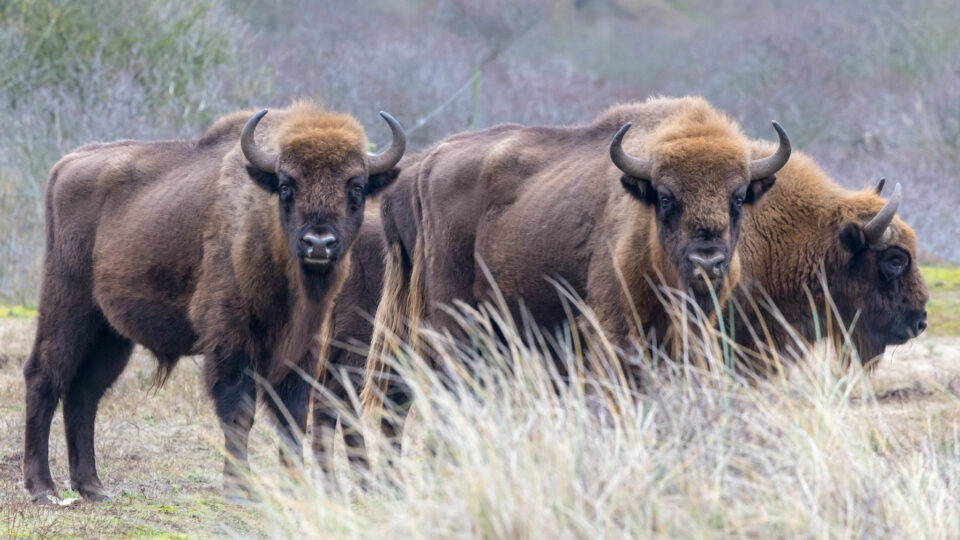
Perhaps more remarkably, wild bison are also being reintroduced into a forest near Canterbury, England.  There haven’t been bison in the United Kingdom for thousands of years.  But conservationists are introducing European bison into the British forest to knock down trees, trample shrubs, and create space for a greater diversity of flora and fauna. 

Apart from the ecosystem goals of the British project, people in the UK, for the first time in over a thousand years, will be able to experience bison in the wild.

**********

Web Links

Gone for Thousands of Years, Wild Bison Return to the UK

Photo, posted December 31, 2018, courtesy of Marco Verch via Flickr.

Earth Wise is a production of WAMC Northeast Public Radio.
Ending The Protection Of Grizzly Bears

March 28, 2016 By WAMC WEB

https://earthwiseradio.org/wp-content/uploads/2016/03/EW-03-28-16-Grizzly-Bears.mp3

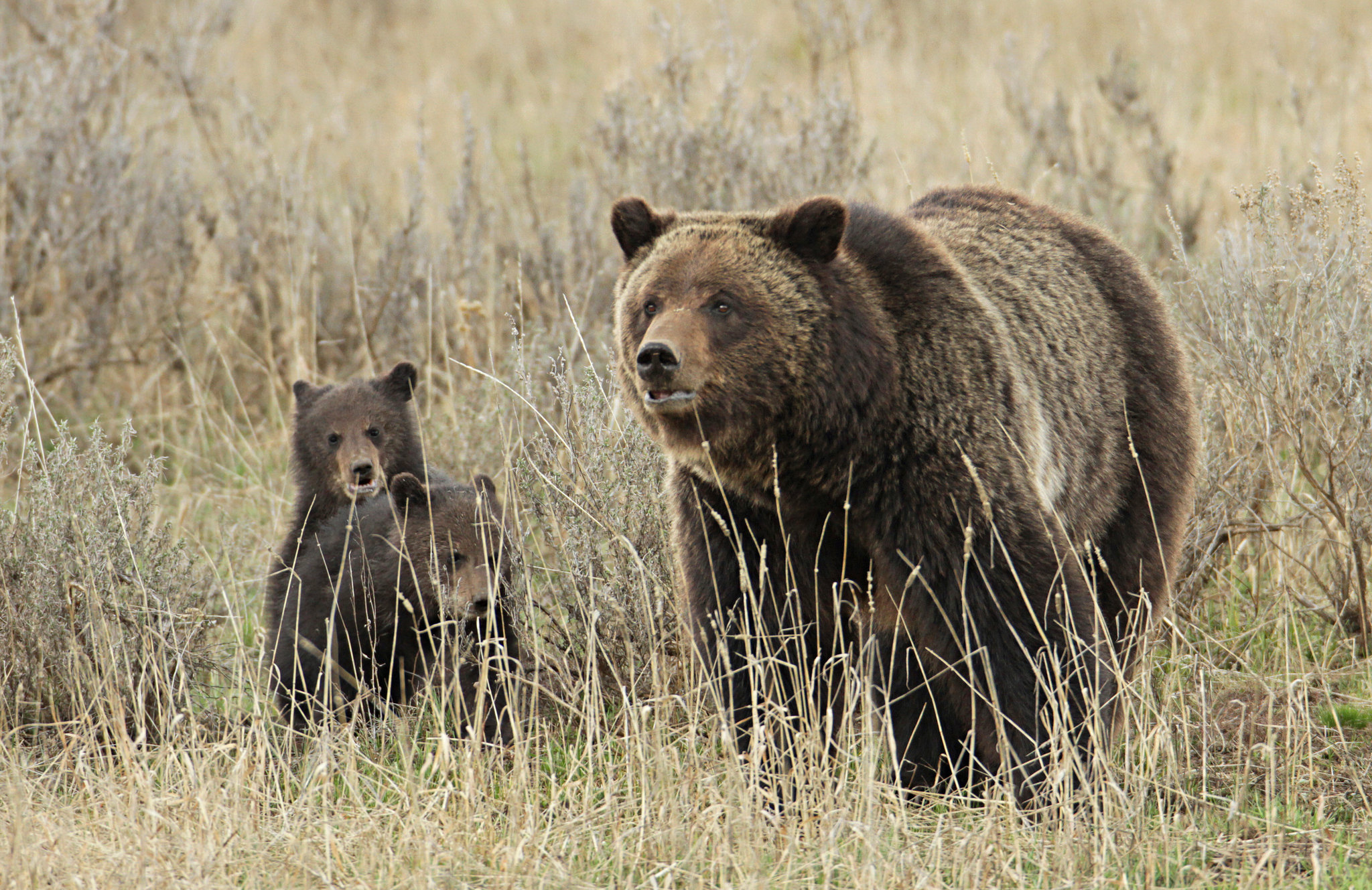
Grizzly bears, also known as North American brown bears, once roamed much of North America and symbolized the continent’s untamed wilderness.  But hunters and trappers nearly wiped them out across most of the Lower 48 states by the late 1800s. 

[Read more…] about Ending The Protection Of Grizzly Bears

Food Waste And Wildlife

February 3, 2016 By WAMC WEB

https://earthwiseradio.org/wp-content/uploads/2016/02/EW-02-03-16-Food-Waste-and-Wildlife.mp3

We have talked quite a bit about food waste and in particular its impact on world hunger and on the economy.  The world wastes more than $750 billion worth of food each year and 1.6 billion tons of food is left in fields, sent to landfills or scattered about the landscape.  Another 7 million tons of fishery discards are dumped in the sea.

[Read more…] about Food Waste And Wildlife

Primary Sidebar

Recent Episodes

  • An uninsurable future
  • Clean energy and jobs
  • Insect declines in remote regions
  • Fossil fuel producing nations ignoring climate goals
  • Trouble for clownfishes

WAMC Northeast Public Radio

WAMC/Northeast Public Radio is a regional public radio network serving parts of seven northeastern states (more...)

Copyright © 2026 ·