• Skip to primary navigation
  • Skip to main content
  • Skip to primary sidebar

Earth Wise

A look at our changing environment.

  • Home
  • About Earth Wise
  • Where to Listen
  • All Articles
  • Show Search
Hide Search
You are here: Home / Archives for booming

booming

Expanding solar and wind in the U.S.

August 20, 2024 By EarthWise Leave a Comment

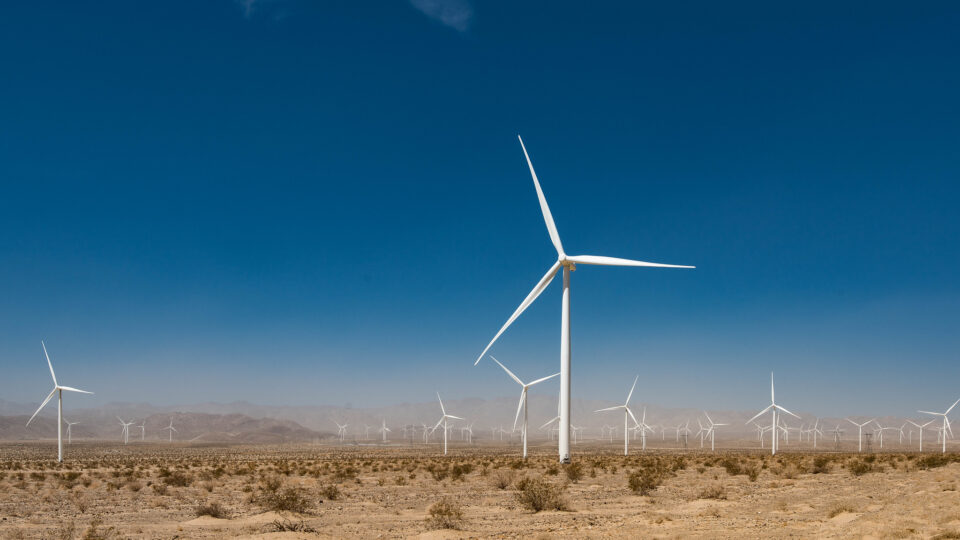
Solar and wind power are expanding in the United States

According to new data from the Federal Energy Regulatory Commission, solar and wind now make up more than 20% of the total US electrical generating capacity.  Adding up all renewable energy sources – which also include biomass, geothermal, and hydropower – renewable energy is now nearly 30% of the total electrical generating capacity in this country.

During the first five months of 2024, 10.669 gigawatts of solar and 2.095 gigawatts of wind power came online.  There were also 212 megawatts of hydropower and 3 megawatts of biomass added to generating capacity.  All told, renewables constituted 89.91% of new generating capacity added this year.  This does not include 1.1 gigawatts of nuclear power added at the Vogtle-4 reactor in Georgia. 

Solar power is booming.  The amount added this year was more than double the amount added over the same period last year.  Solar has been the largest source of new generating capacity for nine months straight.  Wind was the second largest.

About one-third of US solar capacity is in the form of small-scale – that is, rooftop – solar.  The statistics quoted in this report do not take that into account.  If it was included, solar plus wind would be closer to 25% of the US total.

Predictions are that over the next three years, nearly 90 gigawatts of additional solar power will be added to the grid as well as 23 gigawatts of wind power.  Over that period, coal, natural gas, and oil are projected to shrink by more than 20 gigawatts.

**********

Web Links

Solar and wind now make up more than 20% of US electrical generating capacity

Photo, posted October 28, 2016, courtesy of Daxis via Flickr.

Earth Wise is a production of WAMC Northeast Public Radio

Geological thermal energy storage

August 7, 2024 By EarthWise Leave a Comment

The electricity grid is increasingly using solar and wind power.  Depending on those two sources requires the ability to store energy to have on hand when the sun isn’t shining and the wind isn’t blowing.   Energy needs to be stored away to be used hours, days, or even weeks after it is produced.

Energy storage is booming.  California has increased its energy storage capacity tenfold in recent times.  One day in April, storage batteries were the largest source of electricity in the state for a period of two hours.  But batteries are not the only way to store energy.  There are chemical, electrochemical, mechanical, and thermal methods that each has potential advantages and unique features.

A project in Kern County, California, is making use of an abandoned oil field to create a long-term energy storage installation.  The plan is to retrofit depleted oil wells to store concentrated solar energy in superheated groundwater for long periods of time.  The stored heat can then be used to drive turbines when electricity is needed.

Some 1,200 feet below the surface of the oil field are pockets of permeable sandstone that have been emptied of the oil they previously contained.   An array of parabolic mirrors will gather solar energy that will heat silicon oil in an underground loop to 700 degrees Fahrenheit.  The oil pipeline will heat up groundwater down below.  When electricity is needed, the heated groundwater will be brought to the surface to operate turbines.

There is no new technology involved.  The individual aspects have never all been combined before, but the likelihood of success is high.  There are lots of depleted oil fields that could be used this way in the future.

**********

Web Links

Can a California Oilfield Be Retrofitted to Store Solar Energy?

Photo, posted July 18, 2017, courtesy of John Ciccarelli / BLM via Flickr.

Earth Wise is a production of WAMC Northeast Public Radio

Uncounted emissions

December 20, 2023 By EarthWise Leave a Comment

Most countries around the world have pledged to cut their carbon emissions to try to reduce the effects of climate change.  The extent to which countries are meeting their emission reduction goals has been the primary way of keeping score on their efforts.  But there is a major problem with this scorekeeping system: exporting fossil fuels does not count as part of a country’s contributions to emissions.

Exports of fossil fuel are the driving force of fossil fuel expansion around the world and a significant fraction of those exports come from powerful and wealthy nations that are essential to the effort to reduce carbon emissions.

Our own country is a prime example.  The U.S. is working to cut back its carbon emissions.  The Inflation Reduction Act is driving the reduction of domestic use of oil, gas, and coal and is providing subsidies for the use of heat pumps and the buildout of EV charging networks.  However, at the same time, U.S. production of fossil fuels is booming, driving substantial profits for that industry.  The result is that much of the expanding supply of fossil fuels is headed overseas.

American liquified natural gas exports are growing rapidly.  Estimates are that by 2030, United States LNG exports will be responsible for more greenhouse gas emissions than every house, car, and factory in the European Union.  And, according to the UN emissions accounting system, none of those emissions will be attributed to the United States. 

The situation is rather disastrous.  Countries use this loophole to claim they are doing their part to reduce emissions, but the world is continuing to suffer the consequences.

**********

Web Links

Uncounted Emissions: The Hidden Cost of Fossil Fuel Exports

Photo, posted January 9, 2015, courtesy of Bernard Spragg via Flickr.

Earth Wise is a production of WAMC Northeast Public Radio
Carbon Capture Booming | Earth Wise

November 24, 2022 By EarthWise Leave a Comment

Carbon capture is booming

For the world to reach a state of net-zero emissions, it is going to require more than the ongoing transition to renewable energy sources.  There will also need to be efforts to capture the emissions from sources that can’t easily eliminate their pollution.  These include steel mills, cement plants, and other industrial sites.  At least for the foreseeable future,  a number of essential industries have no other viable path to deep decarbonization, and carbon capture and storage projects are the only promising strategy on hand.

Companies use CCS to filter emissions from fossil fuel power plants and industrial facilities and then bury the captured carbon underground, often in deep caverns.

Over the past 12 months, the pipeline for carbon capture and storage projects has grown by 44%.  This year, firms have announced 61 new CCS projects, bringing the total number of commercial projects in the global pipeline to 196, which includes about 30 that are already in operation.  Another 11 are under construction, and 153 are in development.

When all of these projects are completed, they will have the capacity to capture a total of about 270 million tons of carbon dioxide per year.  Estimates are that there need to be 1,400 million tons locked away each year to reach zero-emissions.  So, the existing project pipeline constitutes about 20% of what is ultimately needed.

The recently passed Inflation Reduction Act boosts tax incentives for carbon capture.  Analysts believe this could multiply U.S. deployment of the technology more than 10-fold.  Globally, it is expected that CCS will continue its rapid growth as countries ramp up investments in the technology.

**********

Web Links

Carbon Capture Projects See Meteoric Growth in 2022

Photo, posted August 22, 2022, courtesy of Nenad Stojkovic via Flickr.

Earth Wise is a production of WAMC Northeast Public Radio

El Paso’s Water Future | Earth Wise

November 21, 2022 By EarthWise Leave a Comment

The water future of El Paso uncertain as the Rio Grande river dries up

El Paso, Texas is part of the Paso del Norte region, which includes Ciudad Juarez in Mexico and Las Cruces, New Mexico.  The population on both sides of the border is booming, approaching 3 million people.  The region’s primary water source is the Rio Grande River.  But that river is declining.

Rising temperatures and decreasing rainfall have led to diminishing flow in the river.  Eighty percent of the river’s flow has historically been diverted to agriculture, but the reduced flow of the Rio Grande has forced many farmers to reduce planting or change to less water-hungry crops.  The river is expected to continue to decrease its flow as time goes by.

The city of El Paso gets 40% of its water supply directly from the Rio Grande.  Urban water authorities in the region are scrambling to find ways to provide cities with alternative supplies of water.

El Paso now gets some of its water from a desalination plant, which is the world’s largest inland municipal desalination plant.  The water comes from brackish groundwater rather than from the sea.  The briny waste from the plant is piped to an injection well many miles way and is permanently stored 4,000 feet underground.

El Paso continues to seek new water sources and reduce its water use.  It gets much of its water from wells drilled in nearby aquifers.  It is working to make this use of groundwater more sustainable.  The city recycles used residential water through its so-called purple pipe system, which cleans up waste water and delivers it for non-potable use on golf courses and park lawns. 

Like many places in the increasingly dry west, El Paso’s water future is uncertain. 

**********

Web Links

As Rio Grande Shrinks, El Paso Plans for Uncertain Water Future

Photo, posted April 29, 2018, courtesy of R. Baire via Flickr.

Earth Wise is a production of WAMC Northeast Public Radio

Booming Electric Car Sales

September 12, 2019 By EarthWise Leave a Comment

Electric cars are becoming more and more commonplace over time.  There is no place in the world where this is more evident than in Norway.  This year, about half the new cars sold in Norway have been electric.  This compares to only 25% just last year.  In March alone, nearly 60% of vehicle purchases in Norway were plug-in cars, outselling gas and diesel cars for the first time ever.

Norway has encouraged the switch to electric transportation by making battery-powered cars tax exempt as well as offering various other incentives.  This is all part of the country’s plan to end the sale of fossil fuel cars entirely by 2025.

Although Norway leads the world in electric car sales on a per capita basis, there are many other places seeing rapid growth.  In Maryland, for example, so many electric cars were sold in the past year that the state’s tax credit program, which has a $3 million annual budget, ran out of money seven months before the end of the fiscal year.  Between 2017 and 2018, the number of EVs registered in Maryland doubled to over 18,000.

New York has also seen robust growth in electric vehicles.  There are now more than 40,000 plug-in cars registered in New York State.  About a third of those are Tesla models, with the increasingly popular Tesla Model 3 rapidly becoming the dominant plug-in car in the state.  In fact, this year the Tesla Model 3 has accounted for about 60% of all plug-in car sales in the United States.

Not only are electric car sales going up, so are the options for car buyers.  Within the next year or two, there will be numerous new electric car choices available from multiple manufacturers appealing to the tastes of a growing range of car buyers.

**********

Web Links

EVs Make Up Half of New Car Sales in Norway So Far This Year

Photo, posted May 16, 2019, courtesy of Flickr.

Earth Wise is a production of WAMC Northeast Public Radio.

A Million Electric Cars

September 25, 2018 By EarthWise Leave a Comment

https://earthwiseradio.org/wp-content/uploads/2018/09/EW-09-25-18-A-Million-Electric-Cars.mp3

Last year, China was the first country to reach the milestone of having one million electric cars.  This year, China will add another million plug-in vehicles.  Of course, with its huge population, China sells four times as many cars in total per year as any other country. 

[Read more…] about A Million Electric Cars

Primary Sidebar

Recent Episodes

  • An uninsurable future
  • Clean energy and jobs
  • Insect declines in remote regions
  • Fossil fuel producing nations ignoring climate goals
  • Trouble for clownfishes

WAMC Northeast Public Radio

WAMC/Northeast Public Radio is a regional public radio network serving parts of seven northeastern states (more...)

Copyright © 2026 ·