• Skip to primary navigation
  • Skip to main content
  • Skip to primary sidebar

Earth Wise

A look at our changing environment.

  • Home
  • About Earth Wise
  • Where to Listen
  • All Articles
  • Show Search
Hide Search
You are here: Home / Archives for bobcats

bobcats

Carnivores Eating Human Food | Earth Wise

December 1, 2020 By EarthWise Leave a Comment

Carnivores increasingly relying on humans for food

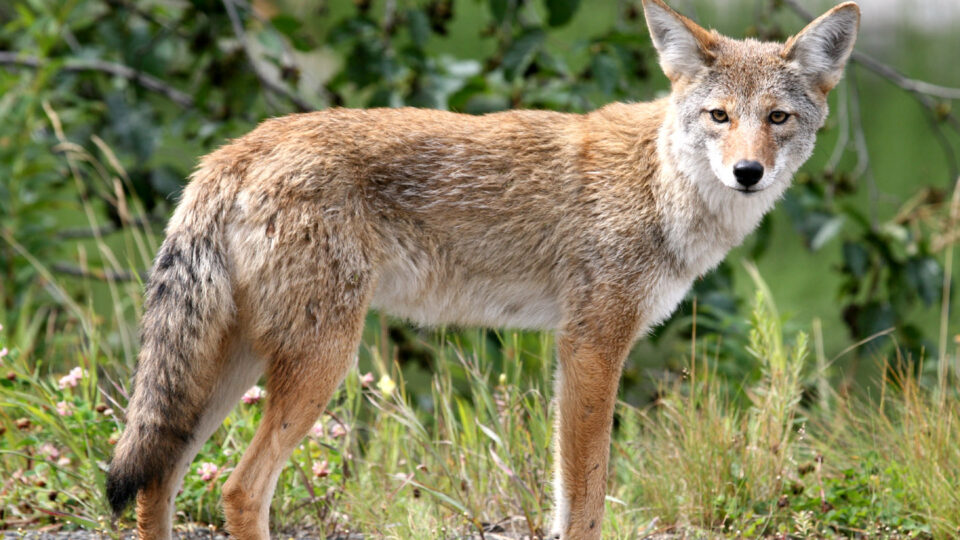
A recent study by ecologists at the University of Wisconsin-Madison has found that carnivores living near people often get more than half of their diets from human food sources rather than from their traditional prey.  This represents a major lifestyle disruption that puts North America’s carnivore-dominated ecosystems at risk.

The researchers studied the diets of seven predator species across the Great Lakes region using bone and fur samples taken from animals from areas as remote as national parks to metropolitan areas including Albany, New York.  What they found – unsurprisingly – is that the closer carnivores lived to cities and farms, the more human food they ate.  Dietary contributions of human food varied with species, but on average was more than 25% in most human-altered habitats.

The researchers studied the diets of carnivores like bobcats, coyotes, red and gray foxes, fishers, and American martens by chemical analysis of samples from Minnesota, Wisconsin, upstate New York, and the Upper Peninsula of Michigan.  The diets of the animals could be analyzed on the basis of the carbon content of bone and fur samples.  Human food, heavy in corn and sugar, lends these samples a distinctive carbon isotope signature.  In contrast, prey species confer their own carbon signatures.  The ratio of these isotope fingerprints provides information on the proportion of an animal’s diet that came from human sources.

Relying upon human food increases how much carnivores overlap one another in their competition for food.  Compared to when these predators vie for distinct prey, there can be more conflicts between animals.  Changing how a species gets their food can have far-ranging effects on ecosystems.

**********

Web Links

Carnivores living near people feast on human food, threatening ecosystems

Photo, posted August 18, 2007, courtesy of Jitze Couperus via Flickr.

Earth Wise is a production of WAMC Northeast Public Radio.
Wildlife Reclaims Yosemite National Park | Earth Wise

May 12, 2020 By EarthWise Leave a Comment

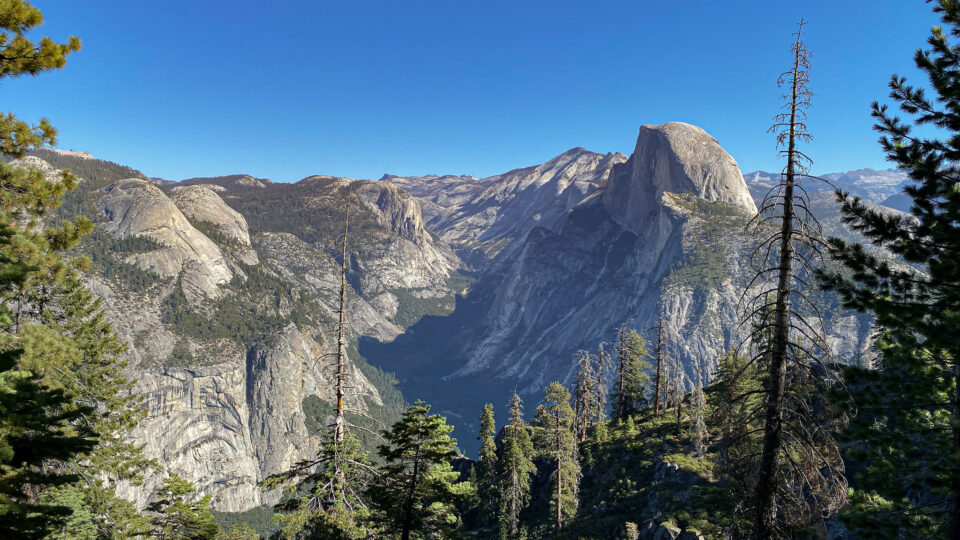
Wildlife reclaim Yosemite National Park

Our stories often discuss how human activities change the natural environment.  With most of us confined to our homes, the lack of human activities is having profound effects on the environment.  We are talking about some of these this week.

Yosemite National park is normally awash in humanity – there were over 300,000 visitors in April of 2019 and typically 4 million people visit each year.  But as of March 20, the park was closed to tourists to prevent the spread of the coronavirus.  Only a skeleton crew of employees remains in the park.

Without all the people, wildlife is coming out of hiding.  It did so in previous park closures during government shutdowns, but those closures were pretty short.  This one is expected to be the longest on record.

The bear population within the park has quadrupled and many larger animals – such as bobcats and coyotes – are congregating outside of cabins and other buildings and prowling empty roads and walkways instead of hanging back at the edges of human settlements. 

In addition, the air at Yosemite is cleaner due to the lack of exhaust and diesel, and Yosemite Valley is nearly silent, apart from natural sounds from the river and the wind.  According to some observers, the park’s current condition is probably similar to what visitors in the 19th century witnessed. 

The few park employees sheltering in place are taking advantage of the virtually unimpeded natural amenities of the park.  Many are hiking to its lakes and waterfalls, enjoying trails that are empty apart from animals.  As some of the people staying in the park have noted, one could not ask for a better place to be isolated.

**********

Web Links

Coyotes, bobcats and bears: Wildlife is reclaiming Yosemite National Park

Photo, posted October 30, 2019, courtesy of Ania Mendrek via Flickr.

Earth Wise is a production of WAMC Northeast Public Radio.

Urban Darwinism

May 31, 2018 By EarthWise Leave a Comment

https://earthwiseradio.org/wp-content/uploads/2018/05/EW-05-31-18-Urban-Darwinism.mp3

Scientists refer to the time in which we now live as the Anthropocene epoch – one in which humans are exerting a tremendous influence upon the natural world.  One of the ways in which we are doing that is in our cities and suburbs where creatures are evolving through fast-paced natural selection to deal with our presence.

[Read more…] about Urban Darwinism

Primary Sidebar

Recent Episodes

  • An uninsurable future
  • Clean energy and jobs
  • Insect declines in remote regions
  • Fossil fuel producing nations ignoring climate goals
  • Trouble for clownfishes

WAMC Northeast Public Radio

WAMC/Northeast Public Radio is a regional public radio network serving parts of seven northeastern states (more...)

Copyright © 2026 ·