• Skip to primary navigation
  • Skip to main content
  • Skip to primary sidebar

Earth Wise

A look at our changing environment.

  • Home
  • About Earth Wise
  • Where to Listen
  • All Articles
  • Show Search
Hide Search
You are here: Home / Archives for bird species

bird species

Can birds outfly climate change?

July 8, 2025 By EarthWise Leave a Comment

Birds cannot outfly climate change

As global temperatures continue to rise and ecosystems shift, animals are left with limited options. They must either adjust to the changing conditions in their habitats or relocate to cooler environments. For many species, neither choice is easy – or sometimes even possible.

Ecologists had long assumed birds were among the most adaptable species in a warming world simply because they can fly to higher altitudes or towards global poles. But a new study by researchers from Yale University found that even birds are struggling to stay ahead of rising global temperatures.

The study, which was recently published in the journal Nature Ecology and Evolution, analyzed 20 years of data from 406 bird species across North America. They found that while most birds did shift their ranges northward – by about 40 to 50 miles on average during the summer – the changes weren’t enough to keep up with the rapid pace of climate change.

Birds still experienced significant warming in their new areas when compared with temperatures in their original home range.  In fact, warming was about 1.35 degrees Celsius more in summer, and a striking 3.7 degrees more in winter. And some species, especially those with limited flight ranges or specific habitat needs, like the cactus wren, didn’t move at all.

Highly mobile birds like the blue-winged warbler did better, avoiding nearly two degrees of warming by traveling more than 100 miles north. But even they couldn’t completely dodge the heat.

The findings raise serious concerns about whether less mobile species can survive in a warming world, and underscores the urgent need to better understand and manage those most vulnerable to climate-driven extinction.

**********

Web Links

Even birds can’t outfly climate change

Photo, posted March 1, 2023, courtesy of Henry via Flickr.

Earth Wise is a production of WAMC Northeast Public Radio
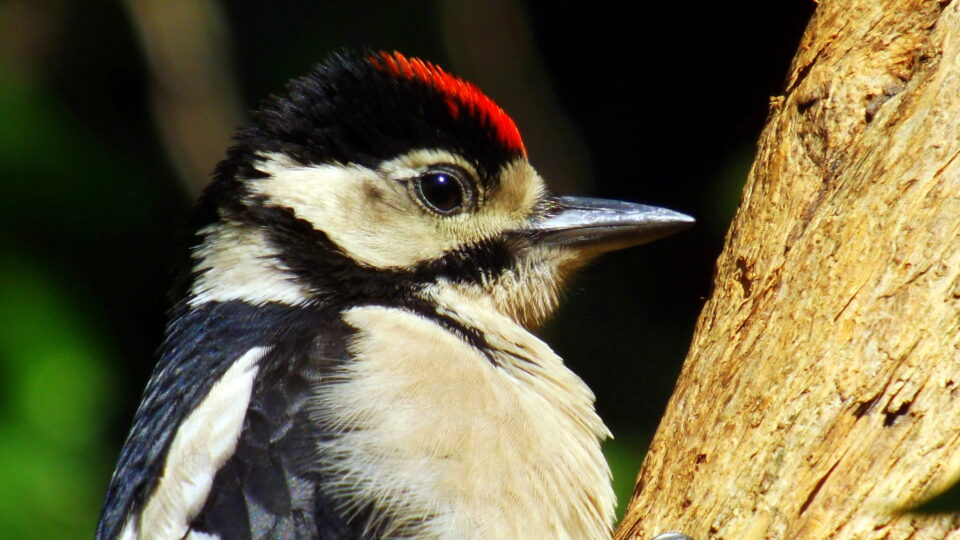
Why Do Woodpeckers Peck? | Earth Wise

October 21, 2022 By EarthWise Leave a Comment

Scientists understand why woodpeckers peck

Most of us have heard the sound of a woodpecker drumming on a nearby tree, or unfortunately, on the walls of our house where it can be very destructive.  We were often told that the birds were hunting for insects inside the wood, or perhaps trying to open up a nest. But a new study at Brown University has found evidence that woodpeckers are just additional musicians in the bird orchestra who happen to be percussionists.

The researchers studied the forebrains of birds and found characteristic gene expression specializations in songbirds.  Songbirds sing to communicate for various reasons – such as staking out territory or seeking mates.  The study looked at birds that are not known to sing, such as the emu, penguin, flamingo, and woodpeckers.  It turns out that among these, only woodpeckers had forebrains that anatomically resembled those of songbirds.  The study is the first time a neural basis has been identified for the communication activities of animals other than primates.

There are over 200 species of woodpeckers around the world and each species has its own characteristic drumming speed and rhythms.  Woodpecker drumming may well have evolved through a form of vocal learning, which is the way songbirds learn to make their own melodious sounds.  And like the calls of songbirds, these drumming patterns change depending on what the birds want to communicate and to whom.

So, the little downy woodpecker that is poking holes in your walls is probably not hunting for insects.  It is more likely to be telling another woodpecker to get out of its territory.

**********

Web Links

Why do woodpeckers peck? New discovery about bird brains sheds light on intriguing question

Photo, posted June 15, 2021, courtesy of Tony Oldroyd via Flickr.

Earth Wise is a production of WAMC Northeast Public Radio
visit site by the doctor who prescribed the drug. Prescription. If the drug is sold in Russia without a prescription, it is necessary to make sure that the drug will also be sold abroad without it. You can find out in advance and, for example, write a letter to a specific pharmacy abroad, or you can be reinsured and ask to make a prescription form for the drug from your doctor.

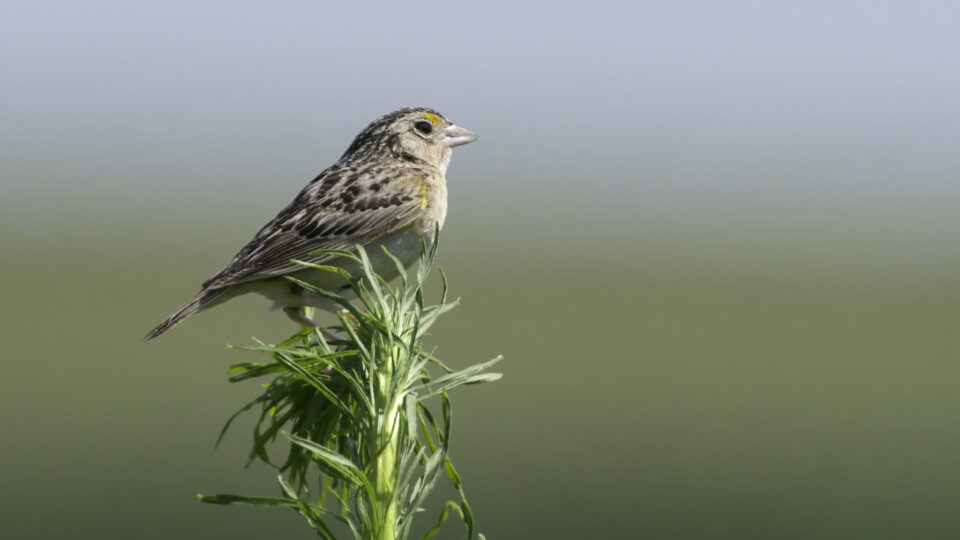
North American Birds And Climate Change | Earth Wise

August 10, 2022 By EarthWise Leave a Comment

Climate change negatively impacting north american birds

Most plants and animals live in areas with specific climate conditions, such as rainfall patterns and temperature, that enable them to thrive. Any change in the climate of an area can affect the plants and animals living there, which in turn can impact the composition of the entire ecosystem.   

As such, the changing climate poses many challenges to plants and animals.  For example, appropriate climatic conditions for many species are changing.  As a result, some may even disappear altogether.  These problems can be compounded when the climate is changing in tandem with other human-caused stressors, such as land use change.

When there is increasing divergence between suitable climatic conditions for a particular species and its abundance and distribution through time, this is known as climate decoupling.

According to a new study recently published in the journal Nature Ecology & Evolution, some species of North American birds have not fully adjusted their distributions in response to climate change.  The areas where these birds live have become more decoupled from their optimal climate conditions.  Climate decoupling as a result of ongoing climate change could lead to additional stressors on many bird species and exacerbate bird population declines.

In the study, the research team analyzed data on bird population changes through time from the North American Bird Survey.  They found that at least 30 out of 114 species (or 26%) of North American birds have become less well adjusted to their climate over the last 30 years. This means that their distributions and abundances were increasingly decoupled from climate over time.

The researchers also found that the overall trend of climate decoupling shows no signs of slowing down. 

**********

Web Links

North American birds not fully adjusting to changing climate

Photo, posted July 16, 2016, courtesy of Kelly Azar via Flickr.

Earth Wise is a production of WAMC Northeast Public Radio.

Primary Sidebar

Recent Episodes

  • An uninsurable future
  • Clean energy and jobs
  • Insect declines in remote regions
  • Fossil fuel producing nations ignoring climate goals
  • Trouble for clownfishes

WAMC Northeast Public Radio

WAMC/Northeast Public Radio is a regional public radio network serving parts of seven northeastern states (more...)

Copyright © 2026 ·