
• Skip to primary navigation
  • Skip to main content
  • Skip to primary sidebar

Earth Wise

A look at our changing environment.

  • Home
  • About Earth Wise
  • Where to Listen
  • All Articles
  • Show Search
Hide Search
You are here: Home / Archives for biorefineries

biorefineries

Better Ways To Make Bioplastics | Earth Wise

August 27, 2021 By EarthWise Leave a Comment

How to replace plastic

The world produces over 300 million tons of plastics each year, mostly produced from petroleum.  The environmental consequences are substantial and there is a critical need to replace as much of that plastic production with biodegradable plastics as possible.  Thus, there is global research aimed at making bioplastics more economical and as environmentally friendly as possible.

Researchers at Texas A&M University have developed an improved approach for making bioplastics from corn stubble, grasses, and mesquite agricultural production.  Apart from the obvious environmental benefits of having biodegradable plastics, producing bioplastics from common agricultural waste would create new revenue streams for farmers as well as the people who transport harvested feedstock and byproduct crops to refinery operations.

The key to bioplastic production is the efficient extraction and use of lignin, the organic polymer that is the primary structural support material in most plants.  The new research takes five conventional pretreatment technologies for plant materials and modifies them to produce both biofuel and plastics together at a lower cost.  The new method is called “plug-in preconditioning processes of lignin” and it can be directly and economically added into current biorefineries.  The process is designed to integrate dissolving, conditioning, and fermenting lignin, extracting energy from it and making it easily adaptable to biorefinery designs.

The so-called bioeconomy currently supports some 286,000 jobs.  Innovation is the key to achieving more widespread use of biodegradable plastic.  With improved economics of so-called lignocellulosic biorefineries, there can be new avenues to use agricultural waste to produce biodegradable plastics.

**********

Web Links

‘Plugging in’ to produce environmentally friendly bioplastics

Photo, posted November 5, 2015, courtesy of Kathryn Faith via Flickr.

Earth Wise is a production of WAMC Northeast Public Radio.
Plants Paying For Biofuels | Earth Wise

May 7, 2020 By EarthWise Leave a Comment

Plants can make biofuels cheaper

Biofuels are an important element in broader strategies to replace petroleum in transportation fuels like gasoline, diesel, and jet fuel.  The idea is that biofuels recycle carbon by getting it from growing plants rather than from fossil sources.  The biggest problem with biofuels is that they cost more than conventional petroleum fuels, so there is economic incentive to keep burning the fossil fuels.

One strategy to make biofuels cost competitive is to have the plants provide additional economic benefits beyond being a feedstock for fuel.  This in principle can be done by engineering plants to produce valuable chemical compounds, or bioproducts, as they grow.  Bioproducts include such things as flavoring agents and fragrances as well as biodegradable plastic.  These bioproducts can be extracted from the plants and then the remaining plant material can be converted to fuel. 

Researchers at Lawrence Berkeley National Laboratory recently published a study to determine what quantities of bioproducts plants need to produce to result in cost-effective biofuel production.

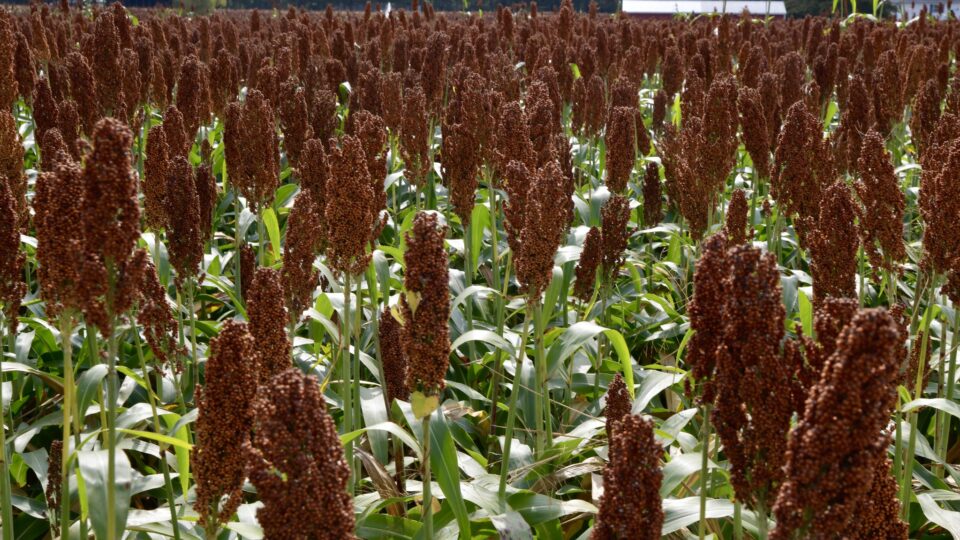
The study looked at a compound called limonene, which is used for flavoring and fragrance.  They calculated that if this compound was accumulated at 0.6% of the biomass dry weight, it would offer net economic benefits to biorefineries.  This corresponds to recovering 130 pounds of limonene from 10 tons of sorghum on an acre of land.

Such quantities are completely practical but, on the other hand, none of these substances are needed in huge quantities. Just six refineries could supply the world with limonene.  So, fuel crops would need to be engineered to produce a broad range of bioproducts to enable a viable cost-effective biofuel industry.

**********

Web Links

Making Biofuels Cheaper by Putting Plants to Work

Photo, posted September 28, 2019, courtesy of Michele Dorsey Walfred via Flickr.

Earth Wise is a production of WAMC Northeast Public Radio.
Renewable Energy From Wood

April 5, 2018 By EarthWise Leave a Comment

https://earthwiseradio.org/wp-content/uploads/2018/04/EW-04-05-18-Renewable-Energy-from-Wood.mp3

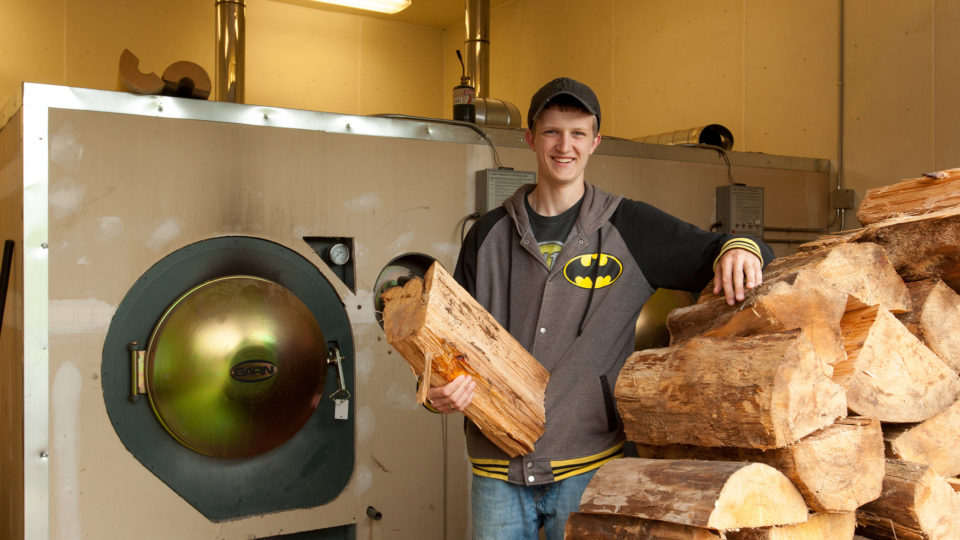
Biofuels are fuels produced through contemporary biological processes rather than geological processes such as those involved in the formation of fossil fuels.

[Read more…] about Renewable Energy From Wood

Primary Sidebar

Recent Episodes

  • An uninsurable future
  • Clean energy and jobs
  • Insect declines in remote regions
  • Fossil fuel producing nations ignoring climate goals
  • Trouble for clownfishes

WAMC Northeast Public Radio

WAMC/Northeast Public Radio is a regional public radio network serving parts of seven northeastern states (more...)

Copyright © 2026 ·