• Skip to primary navigation
  • Skip to main content
  • Skip to primary sidebar

Earth Wise

A look at our changing environment.

  • Home
  • About Earth Wise
  • Where to Listen
  • All Articles
  • Show Search
Hide Search
You are here: Home / Archives for biologists

biologists

Solar farms and pollinators

September 30, 2024 By EarthWise Leave a Comment

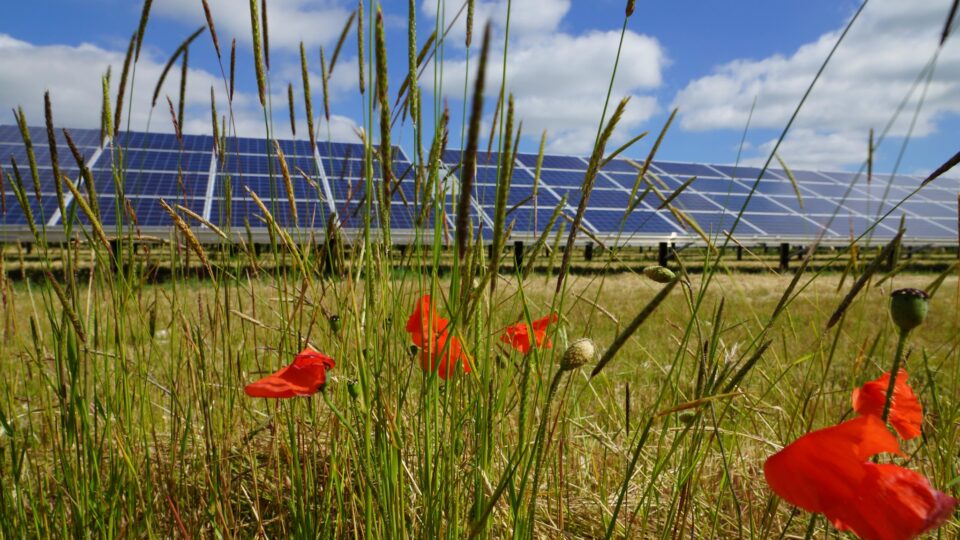
Two important environmental challenges are finding some literal common ground:  the need to reduce carbon emissions and the fight to stave off global biodiversity collapse.  Both issues can be addressed at solar farms.

Solar energy is an important weapon in the battle against climate change.  But utility-scale solar farms take up large amounts of land.  Large-scale solar farms already take up nearly a thousand square miles of land in the US and will take up much more in the coming decades.

In the meantime, the biodiversity collapse is being driven in large part by habitat loss.

Given all this, solar farm operators, biologists, and environmentalists are teaming up to grow pollinator-friendly plants in and around solar farms. The plantings attract insects, birds and even mammals. The more plant diversity in the solar farms, the more environmental benefits can be achieved. 

There are costs associated with creating pollinator-friendly solar farms. Ideally, solar panels need to be installed at greater height than otherwise in order to permit growing many of the plants that attract bees and butterflies.  But there are economic benefits associated with attracting and sustaining pollinators.  On a cautionary note, there have already been cases of greenwashing, where solar operators claim environmental benefits far in excess of the scope of the actual efforts they have made. 

There are both governmental and non-governmental agencies seeking to assess and certify pollinator-friendly solar farms.  There is considerable variability in the ecological value of existing farms.  Pollinator-friendly solar farms are in their early days, but they have a lot to offer as a win-win strategy for the environment.

**********

Web Links

Solar Farms Have a Superpower Beyond Clean Energy

Photo, posted December 4, 2014, courtesy of Juwi Renewable Energies Limited via Flickr.

Earth Wise is a production of WAMC Northeast Public Radio
The Snail Darter Is Safe | Earth Wise

November 14, 2022 By EarthWise Leave a Comment

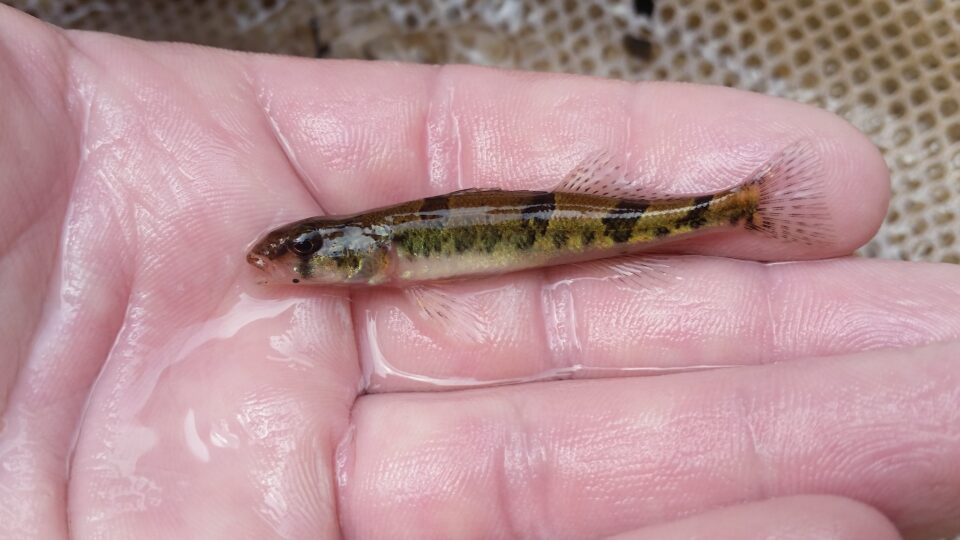
The snail darter population has recovered

The snail darter is a three-inch-long snail-eating fish that was once only found in the Little Tennessee River.  When that river was going to be dammed by the Tellico Dam under construction in the 1970s, the snail darter was listed on the endangered species list and the little fish subsequently became the subject of a legal battle that made it all the way up to the U.S. Supreme Court.   With the dam project 95% complete in 1978, the Supreme Court blocked further construction, citing the Endangered Species Act.  A year later, Congress exempted the project from the requirements of the Act, thereby clearing the way for the completion of the dam.

In order to save the snail darter, biologists transplanted the fish into several other nearby rivers and waterways.  In addition, the Tennessee Valley Authority modified the operation of the Tellico Dam to release more oxygen-rich water downstream.  Beyond those measures, the river cleanup under the Clean Water Act further aided the fish’s recovery.

In 1984, the snail darter was removed from the endangered species list and was listed as threatened or vulnerable.  Recently, the U.S. Department of the Interior officially removed the snail darter from the federal list of threatened and endangered wildlife. 

The snail darter is the fifth fish species to be delisted because its population has recovered.  It is the first in the eastern United States.  With better management of water releases at dams, many other imperiled aquatic species could be recovered.

Overall, more than 50 plants and animals have recovered under federal protection, including American alligators, humpback whales, peregrine falcons, and bald eagles.

**********

Web Links

Once at Center of Controversial Case, the Snail Darter Fish Is No Longer Threatened

Photo, posted July 22, 2015, courtesy of The U.S. Fish and Wildlife Service via Flickr.

Earth Wise is a production of WAMC Northeast Public Radio

Pacific Bluefin Tuna On The Rebound | Earth Wise

September 21, 2022 By EarthWise Leave a Comment

The Pacific Bluefin Tuna is a commercially valuable species that is especially prized in Japan.  The fish is particularly valued for sashimi and sushi and large specimens have been known to fetch enormous prices at seafood auctions.

Aggressive fishing reduced the bluefin biomass through the late 1990s and 2000s to only a few percent of its potential unfished levels.  Beginning in 2011, The Western and Central Pacific Fisheries Commission began management measures that reduced the catch of smaller bluefin as well as limited the catch of larger bluefin.  The goal was to allow more fish to grow to maturity.  The Inter-American Tropical Tuna Commission adopted similar resolutions a year later.  Despite these efforts, increasing concern about declining bluefin levels led to a petition to list the species as endangered.  The National Oceanic and Atmospheric Administration’s Fisheries organization determined that while the population was near historical lows, the remaining 1.6 million fish was a sufficient number to avoid the risk of extinction and that the measures in place were sufficient.

A new assessment of the bluefin population has shown that the species is now increasing and includes many younger fish that will help accelerate its rebound.  The assessment by NOAA showed that the bluefin stock was greater than the first rebuilding target set for 2019. 

According to the NOAA Fisheries biologists that performed the assessment, the species has responded exactly as predicted given the actions that were taken.  The bluefin tuna is an amazingly resilient fish and it is continuing to demonstrate that fact.

**********

Web Links

International Actions Pay Off For Pacific Bluefin Tuna as Species Rebounds at Accelerating Rate

Photo, posted June 1, 2022, courtesy of Philippe Yuan via Flickr.

Earth Wise is a production of WAMC Northeast Public Radio

The Microplastic Diet

July 29, 2019 By EarthWise Leave a Comment

According to a new study published in the journal Environmental Science & Technology, Americans consume more than 70,000 microplastic particles every year from the food they eat, the water they drink, and the air they breathe.

While the health impacts of ingesting these tiny particles are largely unknown, there is the potential for the plastic to enter human tissues and cause an immune response or perhaps release toxic chemicals into the body.

The analysis by biologists at the University of Victoria in Canada examined data from 26 previous studies on microplastic contamination.  It found that Americans eat and drink an estimated 39,000 to 52,000 microplastic particles each year, depending on their age and sex.  The numbers jump to 74,000 to 121,000 when inhalation of microplastics is included.

Americans who drink water solely from plastic bottles consume an additional 90,000 particles annually, compared to only 4,000 particles for people who only drink tap water.

The researchers warn that their findings are likely to be drastic underestimates of the problem.  Several major U.S. food groups – including poultry, beef, dairy, grains, and vegetables – have not been studied for their microplastic contamination.  Thus, the estimate of microparticle ingestion is associated with only 15% of an average person’s caloric intake.  Furthermore, there is no assessment currently available for how much plastic might be entering our bodies from food packaging.

The report’s findings suggest that microplastics will continue to be found in the majority if not all items intended for human consumption.  Realistically, the only way to reduce the human consumption of microplastics will be to reduce the production and use of plastics.

**********

Web Links

Americans Consume Tens of Thousands of Microplastic Particles Every Year

Photo, posted June 18, 2016, courtesy of Sirirat Kornsongkaew via Flickr.

Earth Wise is a production of WAMC Northeast Public Radio.

Frogs Are In Big Trouble

May 22, 2019 By EarthWise Leave a Comment

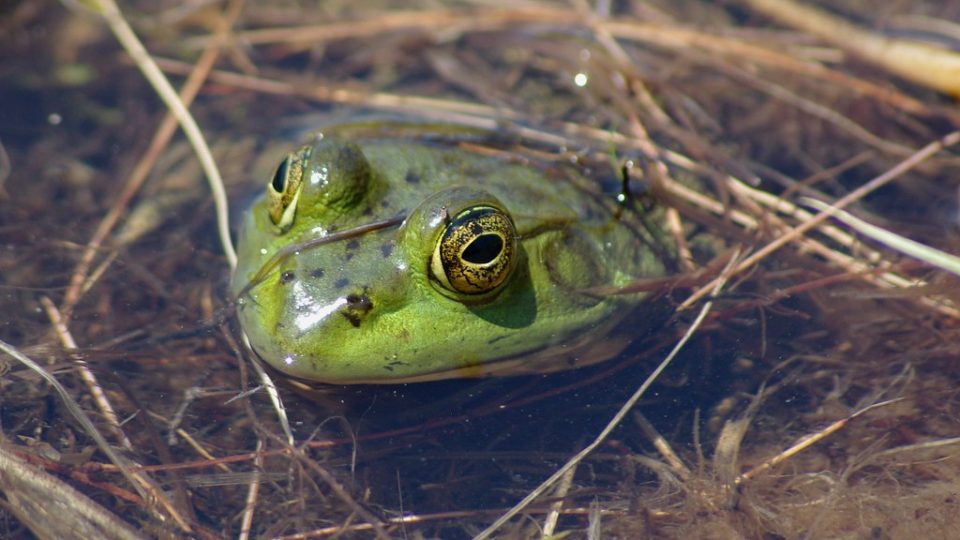
Scientists first noticed in the 1970s that some frog populations were declining rapidly.  By the 1980s, some species appeared to be extinct.  The loss of frog species was mysterious because many were actually living in pristine habitats that did not face pollution or deforestation.

By the late 1990s, researchers had identified that frogs in widely different places around the world were infected with a deadly fungus called Batrachochytrium dendrobatidis – or Bd for short.  The fungus originated on the Korean peninsula, but the pathogen spread throughout the world, probably via the international trade in pet amphibians.  By 2007, researchers speculated that Bd might be responsible for all known declines of frogs that had no other apparent cause – about 200 species.

Recently, a group of 41 scientists published the first worldwide analysis of the fungal outbreak and the devastation turns out to be far worse than anyone had previously realized.  Populations of more than 500 species of amphibians have declined significantly because of the outbreak, including at least 90 species presumed to have gone extinct.  These figures are more than twice as large as earlier estimates.

According to biologists, Bd is now considered to be the deadliest pathogen known to science.  But the decimation of frogs peaked in the 1980s.  Today, although 39% of the species that suffered population declines in the past are still declining, 12% are showing signs of recovery, possibly because natural selection is favoring resistant animals.

There is cautious optimism for the surviving amphibian species, but scientists worry that another strain of Bd or some different species of fungus altogether may prove even deadlier.  The best we can do is not participate in moving pathogens around the world.

**********

Web Links

The Plague Killing Frogs Everywhere Is Far Worse Than Scientists Thought

Photo, posted June 19, 2010, courtesy of Chris Luczkow via Flickr.

Earth Wise is a production of WAMC Northeast Public Radio.

Climate Change And Infertility

March 8, 2019 By EarthWise Leave a Comment

Many of us are all too familiar with the effects of climate change.  Our changing climate, as a result of our actions, is leading to rising global temperatures, biodiversity loss, ocean acidification, wildfires, more weather extremes like floods and droughts. But a lesser known effect of climate change could lead to frightening consequences: infertility.

According to researchers at the University of Liverpool, rising temperatures could make some species sterile and lead them to succumb to the effects of climate change far earlier than currently thought. Their work was recently published in the journal Trends in Ecology and Evolution, and it was produced in collaboration with scientists from the University of Leeds, University of Melbourne, and Stockholm University.

Biologists and conservationists are trying to predict where species will be lost due to climate change so that suitable reserves can be established in other locations.  But the problem is that most data on when temperature will make an area unlivable for a species is based on its ‘critical thermal limit’ or CTL.  This is the temperature at which a species would collapse, stop moving, or die. 

The authors of the article fear that the impact of climate change on species survival is being underestimated.  Because rather than zeroing in on lethal temperatures, the scientists argue the focus should be on the temperatures at which organisms can no longer breed.  Extensive plant and animal data suggest organisms lose fertility at a lower temperature than their CTL.

The scientists have proposed a new fertility-based metric to gauge how organisms function as temperatures climb: Thermal Fertility Limit or TFL.  Understanding when a species will cease to reproduce will certainly help conservation measures. 

**********

Web Links

Climate change and infertility — a ticking time bomb?

Photo, posted August 11, 2013, courtesy of Mike Lewinski via Flickr.

Earth Wise is a production of WAMC Northeast Public Radio.

Extreme Botany

December 17, 2018 By EarthWise Leave a Comment

https://earthwiseradio.org/wp-content/uploads/2018/12/EW-12-17-18-Extreme-Botany.mp3

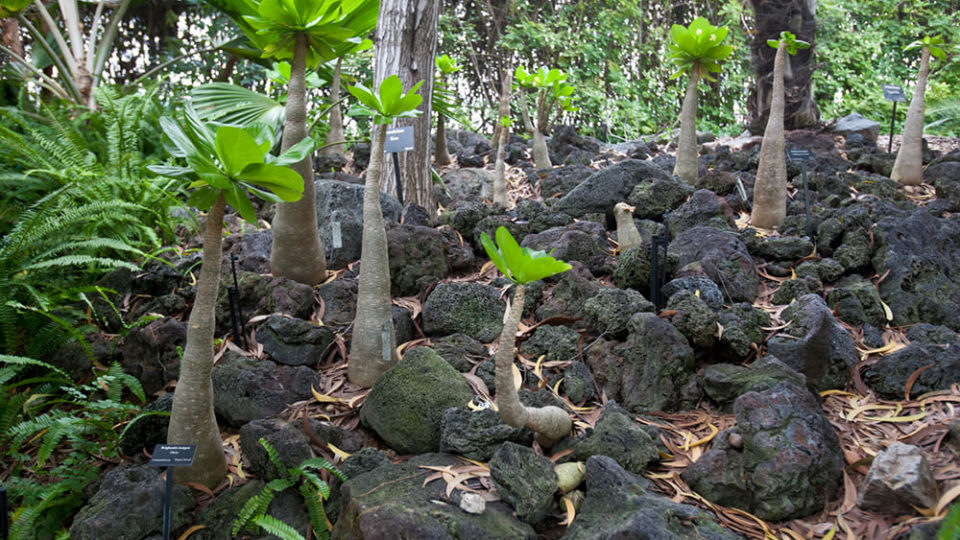
The threat of extinction of many animal species is something that makes headlines.  But there are also thousands of critically endangered plants in the world and that situation has not generated nearly the same sense of urgency.  Some biologists have used the term “plant blindness” to describe humanity’s inability to appreciate the ecological and economic importance of plants.

[Read more…] about Extreme Botany

Primary Sidebar

Recent Episodes

  • An uninsurable future
  • Clean energy and jobs
  • Insect declines in remote regions
  • Fossil fuel producing nations ignoring climate goals
  • Trouble for clownfishes

WAMC Northeast Public Radio

WAMC/Northeast Public Radio is a regional public radio network serving parts of seven northeastern states (more...)

Copyright © 2026 ·