• Skip to primary navigation
  • Skip to main content
  • Skip to primary sidebar

Earth Wise

A look at our changing environment.

  • Home
  • About Earth Wise
  • Where to Listen
  • All Articles
  • Show Search
Hide Search
You are here: Home / Archives for battery packs

battery packs

Cheaper Electric Cars | Earth Wise

January 18, 2022 By EarthWise 1 Comment

Electric vehicles will soon be less expensive than gasoline cars

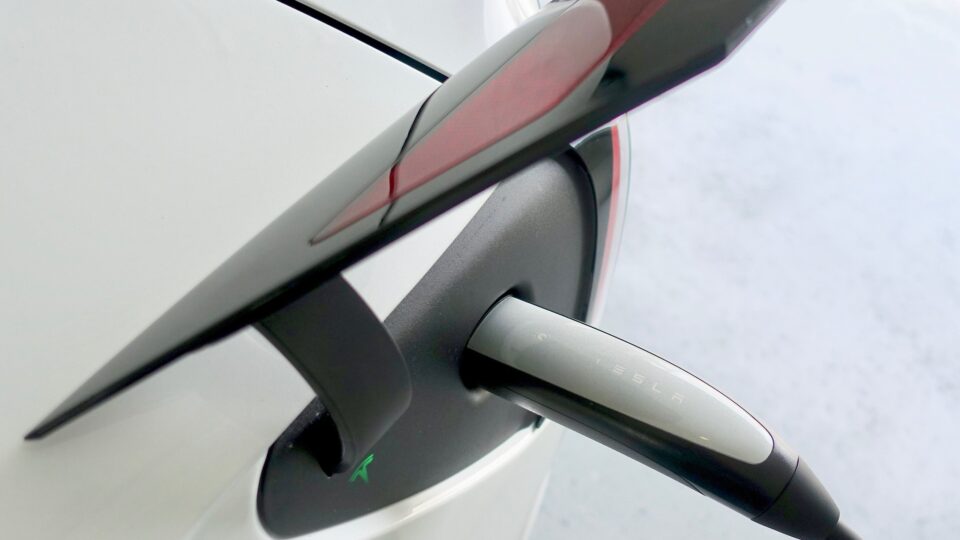
The price of the batteries that power electric cars has fallen by about 90% since 2010.  This continuing trend will eventually make EVs less expensive than gas cars.

For many years, researchers have estimated that when battery packs reach the price of $100 per kilowatt-hour of energy storage, electric cars will cost about the same as gasoline-powered vehicles.  In 2021, the average price of lithium-ion battery packs fell to $132 per kilowatt-hour, down 6% from the previous year.  According to analysts, batteries should hit the average of $100 as soon as 2024.

It is not the case that as soon as the $100 level is reached, EVs will abruptly reach cost parity.  Across different manufacturers and vehicle types, the price shift will occur at different rates.  However, by the time batteries reach $60 a kilowatt-hour, EVs will be cheaper than equivalent gasoline models across every vehicle segment.

It is not known exactly when EVs will cost less than gasoline models, but there is little doubt that this point is coming.  We have only been talking about the purchase price of a new vehicle.  When one looks at the total cost of ownership of a vehicle, including fuel, insurance, maintenance, and depreciation, it is a different story.

Because of savings on fuel and maintenance, EVs are already in many if not most cases cheaper to own than gas-powered cars.  The Department of Energy provides an online calculator to help consumers estimate the cost differences between gasoline and electricity.

In any case, the number of electric cars on the market is increasing and the number of gas-powered cars will be shrinking.  Sooner or later, we will all drive electric.

**********

Web Links

Inside Clean Energy: Batteries Got Cheaper in 2021. So How Close Are We to EVs That Cost Less than Gasoline Vehicles?

Photo, posted July 29, 2017, courtesy of Steve Jurvetson via Flickr.

Earth Wise is a production of WAMC Northeast Public Radio.
Solid State Batteries For Cars | Earth Wise

January 7, 2022 By EarthWise Leave a Comment

Nissan at the forefront of developing solid state batteries for cars

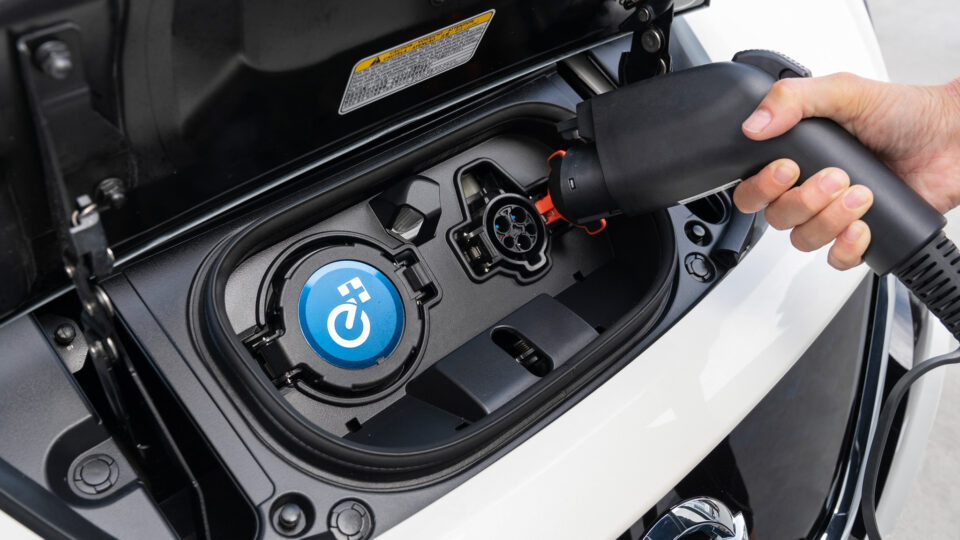
Today’s electric cars run on lithium-ion batteries, the same sort that power our phones, computers, and many other consumer electronic devices.  These batteries are far superior to the batteries of the past, offering long-life, high-energy density, and recyclable components.

Lithium-ion batteries do have their drawbacks.  They may be lighter than older battery technologies, but because the electrolytes in the batteries are liquid, they are still fairly heavy.  The huge number of them in an electric car adds up to a considerable amount of weight.  In addition, the flammability of the electrolytes can lead to explosions or fires if the batteries are damaged or exposed to extreme temperatures.

Solid-state batteries are an alternative technology that contain a solid electrolyte.  Such batteries are lighter, have higher energy density, offer more range, and recharge much more quickly than lithium-ion batteries. They have been used for years in some small devices like cardiac pacemakers, RFIDs, and some wearable devices.

For all these benefits, scaling up production to the level needed to be used in cars is an expensive and challenging endeavor.  The hope is that with sufficient effort, the result will be smaller, lighter battery packs for cars that can be charged in minutes and provide extended range.

Nissan Motor Company has recently announced that it is investing $17.6 billion over the next five years towards developing solid-state batteries for cars.  No doubt other companies will also be working on the technology.

Lithium-ion batteries have proven to be quite practical for powering vehicles.  But if solid-state batteries can meet the challenges of scaled up production, the lithium-ion era might end up being a relatively brief one.

**********

Web Links

Nissan to Spend $18 Billion Developing a Cheaper, More Powerful EV Battery

Photo, posted November 13, 2018, courtesy of FirstEnergy Corp via Flickr.

Earth Wise is a production of WAMC Northeast Public Radio.
Batteries On Wheels | Earth Wise

December 24, 2021 By EarthWise Leave a Comment

electric vehicles as a battery resource

Transportation accounts for nearly a quarter of the direct carbon dioxide emissions coming from burning fuel.  As a result, electrification of transport is one of the major ways we can reduce emissions.  Increasing the number of electric vehicles over time is essential for meeting emissions targets.

But electric vehicles have the potential to do more than deliver emissions reduction; they can also provide other energy services.

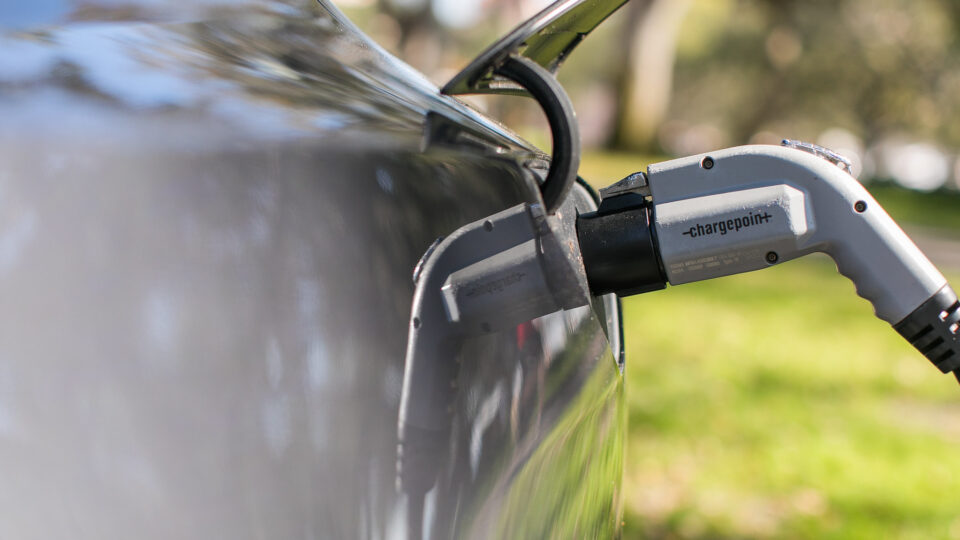
More and more electric cars provide over 200 miles of driving range, but most cars are actually driven no more than 30 miles a day.  As a result, the fleet of electric cars represents a huge bank of energy stored in battery packs and mostly sitting around unused.  This presents an opportunity to leverage this resource.

Car battery packs could be used to absorb excess renewable energy generated in the middle of the day (for example from solar installations) or at night (from wind farms) and potentially then to export stored energy to power homes and support the grid.  This energy system is known as V2G, or vehicle-to-grid technology.

The University of Queensland in Australia has launched a unique international trial to see if the spare battery capacity in vehicles could be used for these purposes.  The university has partnered with Teslascope, which is an online analytics platform used by Tesla owners to track the performance of their cars.  Tesla owners wishing to be part of the study authorize the collection of their data and, in turn, receive a free 12-month subscription to the Teslascope service.  The study will collect data from Tesla owners in Australia, the US, Canada, Norway, Sweden, Germany, and the UK.

**********

Web Links

Can EV spare battery capacity support the grid?

Photo, posted February 8, 2009, courtesy of City of St Pete via Flickr.

Earth Wise is a production of WAMC Northeast Public Radio.
A Second Life For Electric Car Batteries | Earth Wise

June 17, 2020 By EarthWise Leave a Comment

electric car batteries

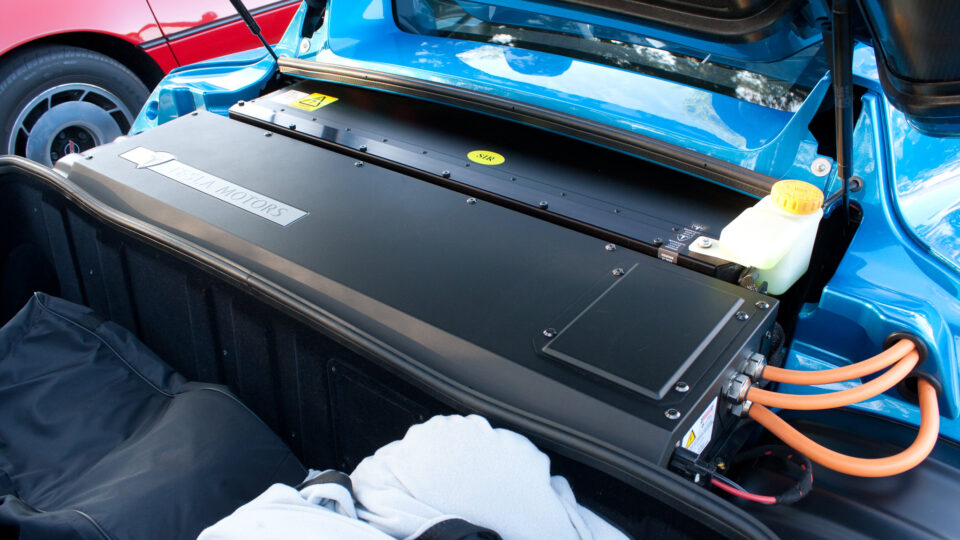
The number of electric cars around the world is growing steadily.  Battery technology continues to improve and the battery packs in the cars can have a long life.  Generally, the batteries are considered to require replacement only when their range has dropped below 80% of its original value.  Many are warranted to last for 8 to 10 years or more than 100,000 miles.  Some seem to do much better than that.

But however long it takes, there will eventually be a wave of used batteries whose performance is no longer deemed sufficient for vehicle use.  A new study, published in the journal Applied Energy, looked at the application of used vehicle batteries as backup storage for grid-scale solar photovoltaic installations where they could perform for more than a decade in this less demanding role.

The study looked at the economics of several scenarios including running a solar farm with no battery back up, running the same farm with brand-new batteries, and running the farm with a battery array made of repurposed vehicle batteries.

They found that the used EV battery array, if managed properly, could be a good, profitable investment provided that the batteries cost less than 60% of their original price.  They looked at the technical issues of screening batteries and combining batteries from different cars to work together.  They also looked at the economics of removing batteries from cars, collecting them, checking them over, and repackaging them.

Overall, they found that reusing vehicle batteries could ultimately meet half the forecasted demand for renewable energy backup storage over the next 10 years and would be both a technical and an economic success story.

**********

Web Links

Solar energy farms could offer second life for electric vehicle batteries

Photo, posted June 10, 2011, courtesy of Nick Ares via Flickr.

Earth Wise is a production of WAMC Northeast Public Radio.
Lighting Up Batteries

December 24, 2019 By EarthWise 2 Comments

One of the things that hampers the adoption of electric vehicles is range anxiety.  Drivers worry that they will run out of charge before they get to the closest charging station.   Range anxiety has lessened considerably in recent years as electric cars have incorporated larger and larger battery packs yielding driving ranges well over two hundred and even over three hundred miles.

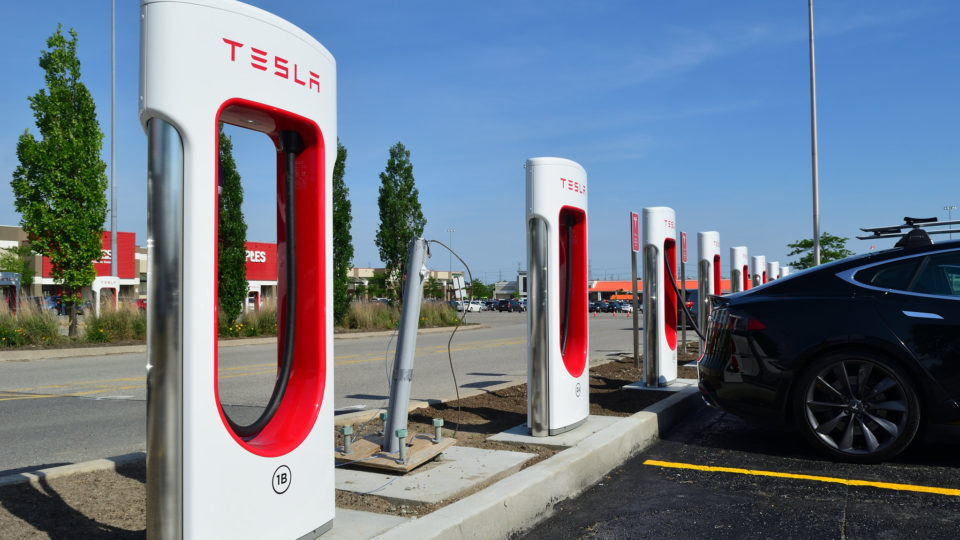
With these extended driving ranges, drivers then turn their attention to how long it takes to charge.  Tesla’s Superchargers have gotten to the point where a car can add 75 miles of charge in 5 minutes and 200 miles in less than half an hour.  Fast charging systems are improving the charge times for other electric models as well.

Nevertheless, drivers would ideally like to reduce charging times to as little as possible in order to provide the convenience experienced in gasoline cars.

Researchers at Argonne National Laboratory have reported a mechanism for speeding up the charging of lithium-ion batteries for electric vehicles.  By exposing the battery cathode to a beam of concentrated light, the charging time can be reduced by a factor of two or more. If this could be commercialized, it could be a real game changer for electric vehicles.

The research used specially crafted lithium-ion cells with transparent quartz windows.  Shining white light into the windows caused a semiconductor material known as LMO to change its charge state and drive the charging reaction more quickly in the lithium ions of the battery.

Using this photo-assisted technology in vehicle batteries would require substantial redesign that would allow concentrated light to illuminate battery electrodes during charging.  How practical that is remains to be seen, but the payoff would be substantial.

**********

Web Links

Shedding new light on the charging of lithium-ion batteries

Photo, posted June 30, 2018, courtesy of Open Grid Scheduler via Flickr.

Earth Wise is a production of WAMC Northeast Public Radio.

Primary Sidebar

Recent Episodes

  • An uninsurable future
  • Clean energy and jobs
  • Insect declines in remote regions
  • Fossil fuel producing nations ignoring climate goals
  • Trouble for clownfishes

WAMC Northeast Public Radio

WAMC/Northeast Public Radio is a regional public radio network serving parts of seven northeastern states (more...)

Copyright © 2026 ·