• Skip to primary navigation
  • Skip to main content
  • Skip to primary sidebar

Earth Wise

A look at our changing environment.

  • Home
  • About Earth Wise
  • Where to Listen
  • All Articles
  • Show Search
Hide Search
You are here: Home / Archives for austria

austria

Solar power in Europe

July 31, 2025 By EarthWise Leave a Comment

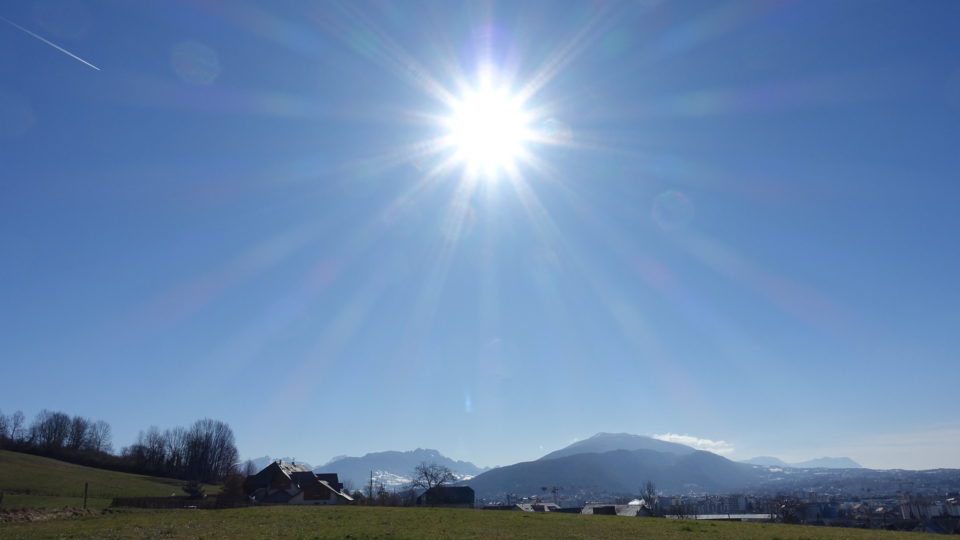
Solar power in Europe is booming

In June, solar power was the largest source of electricity in the European Union for the first time.  Solar supplied a record 22% of the power for the 27-country bloc.  At least 13 of the countries produced new monthly highs for solar power in June.  The Netherlands got more than 40% of its electricity from solar power and Greece 35%.  Other countries with record solar generation included France, Germany, and Sweden.

These solar records are for the most part a result of continuing installations of solar power in recent years as well as long stretches of hot and sunny weather.

Across the EU, nuclear power was the second largest source of electricity, followed by wind, natural gas, and hydropower.  Coal generated only 6% of the EU’s electricity, a new monthly low.  In fact, 15 countries in the EU don’t use any coal to generate electricity at all, including Austria, Belgium, and Ireland, which shut down its last coal plant in June.  All fossil fuels combined generated less than 24% of EU electricity in June, just a little more than the record low of 22.9% set in May, 2024.  Natural gas generation was somewhat higher than last year because of lower levels of hydro and wind generation.

Europe has been grappling with brutal heatwaves with triple-digit temperatures in multiple countries.  The heatwaves were, of course, accompanied by plentiful sunshine, which at least provided abundant solar power at midday, when there was the greatest demand for air conditioning.  This helped to take some of the pressure off the grid and helped to prevent blackouts.

**********

Web Links

In a First, Solar Was Europe’s Biggest Source of Power Last Month

Photo, posted May 28, 2025, courtesy of Mike Popp via Flickr.

Earth Wise is a production of WAMC Northeast Public Radio

Raccoons in Europe

July 25, 2025 By EarthWise Leave a Comment

Raccoons are popular and prevalent in Europe

Tens of thousands of raccoons live in Kassel, a city of 200,000 people in central Germany known for its art scene.  Overall, there are an estimated 1.5 million raccoons in Germany.  The omnivorous mammals are native to North America, but they were brought to Germany in the 1930s for fur farming.  Fur farming ultimately ceased but escaping animals and intentional releases ultimately led to a large wild population of raccoons in the years afterward.

Raccoons have gradually made their way across Europe with animals spotted in France, Denmark, Poland, Italy, Austria, and elsewhere.

The people of Kassel have embraced raccoons.  In fact, the place is often called the raccoon city.  Several sports teams are named after the animals.  Many people feed them, and they are pretty much everywhere.  On the other hand, residents have to lock up their trash receptacles and they have to check under their cars before driving places.

Since 2016, the EU has classified racoons as an invasive species because of the threat they pose to native wildlife.  There are no equivalent species like them in Europe.  So, they are a threat to ground-nesting birds, bats in caves, amphibians, and more.  They are able to eat almost anything. 

What to do about raccoons in Europe is unclear.  Despite their popularity in Germany, 200,000 raccoons were culled last year.  But raccoon supporters argue that minks, which are native to Europe, and especially cats, are responsible for much of the pressure on species racoons are accused of consuming.  Meanwhile, Kassel citizens continue to enjoy their raccoons.

**********

Web Links

Rampaging raccoons: how the American mammals took over a German city – and are heading across Europe

Photo, posted December 20, 2016, courtesy of Big Cypress National Preserve via Flickr.

Earth Wise is a production of WAMC Northeast Public Radio
Storing Energy In Abandoned Mines | Earth Wise

October 10, 2023 By EarthWise Leave a Comment

Using abandoned mines to store energy

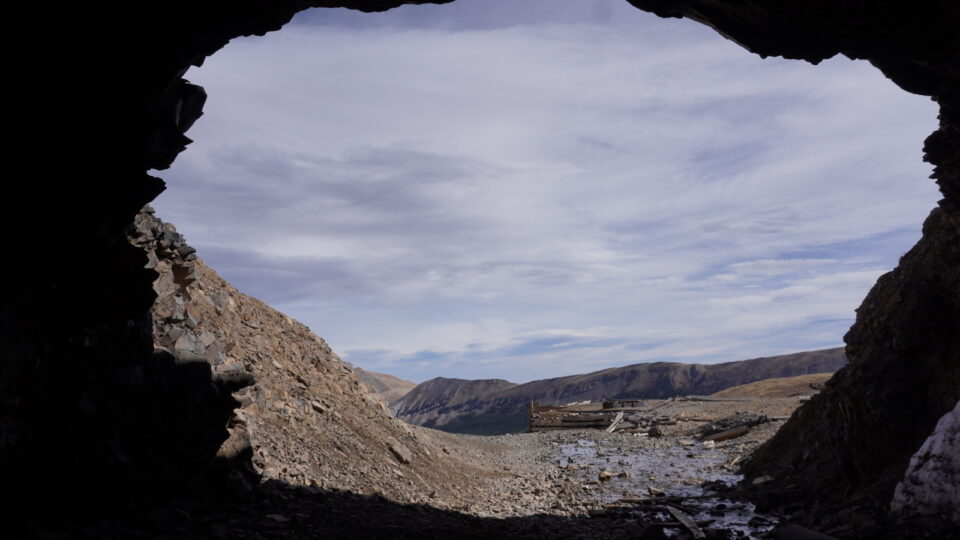
An international study led by researchers from Austria has developed a novel way to store energy by transporting sand into abandoned underground mines.  The technique is called Underground Gravity Energy Storage or UGES.

As the world deploys growing amounts of wind and solar energy, it is increasingly important to find ways to accessibly and efficiently store that energy to eliminate the inherent variability of the generation.  There are many ways to store energy on a short-term basis – most commonly in batteries – but cost-effective long-term storage is still in its early stages.

The UGES technique generates electricity by lowering sand into an underground mine thereby converting the potential energy of the sand into electricity by the same regenerative braking effect used in hybrid and electric cars.  The lowering sand operates a generator.   Storing energy is accomplished by lifting the sand from the mine with electric motors to an upper reservoir where it is ready for the next cycle.  By its nature, this storage technique has an indefinite duration, unlike batteries, for example, which lose energy to self-discharge.

The main components of UGES are the mineshaft, motor/generator, sand storage sites, and mining equipment.  The deeper and broader the mineshaft, the more power can be extracted from the plant, and the larger the mine, the more energy can be stored. Mines generally already have the basic infrastructure needed and are connected to the power grid.  The researchers estimate that there is global potential of 7 to 70 TWh of storage. Total global generating capacity is currently at the lower end of that range.

**********

Web Links

Turning abandoned mines into batteries

Photo, posted October 21, 2020, courtesy of Christine Warner-Morin via Flickr.

Earth Wise is a production of WAMC Northeast Public Radio
Glacier Loss Day | Earth Wise

October 9, 2023 By EarthWise Leave a Comment

Glaciers are sensitive indicators of climate change

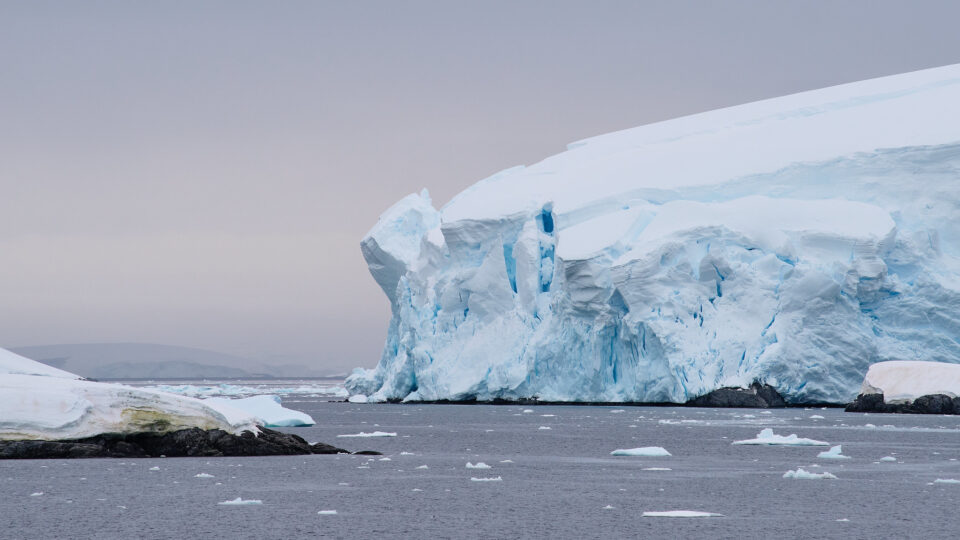
Glaciers are sensitive indicators of climate change that respond to changes in both temperature and precipitation.  But they are not only affected by climate change, they also affect climate change.  As glaciers melt, they contribute to sea level rise, alter regional hydrology, and influence the global energy balance.

A group of glacier experts from the University of Innsbruck in Austria introduced a concept called “Glacier Loss Day” or GLD as a way to measure the annual mass balance of glaciers.  Mass balance is the difference between the amount of snow and ice that accumulates on a glacier and the amount that melts or sublimates.  If the mass balance is positive, the glacier is growing.  If the mass balance is negative, the glacier is shrinking.

GLD is the day during the year when the glacier has lost all the mass it gained during previous winter.  This is a similar concept to Earth Overshoot Day, which marks the date when humankind’s demand for ecological resources exceeds the amount the planet can regenerate during the year.

The Hintereisferner, a glacier in the Tyrolean Alps, has been monitored for more than 100 years and there are continuous records of its mass balance since 1952.  In 2022, the GLD on the Hintereisferner was measured on the 23rd of June.  In the two previous years, it was reached in the middle of August.  Even in years with large negative balances, such as 2003 and 2018, GLD did not occur until the end of July.

Every summer in the future may not be like 2022, but the trend is clear.  Climate change is taking its toll on glaciers.  Experts project that the Hintereisferner will lose half of its volume in the next 10 to 20 years.

**********

Web Links

Glacier Loss Day indi­cates record break­ing glacier melt

Photo, posted July 20, 2023, courtesy of Pedro Szekely via Flickr.

Earth Wise is a production of WAMC Northeast Public Radio

Bitcoin Mining And The Environment | Earth Wise

November 7, 2022 By EarthWise Leave a Comment

Bitcoin mining, the process by which the prominent cryptocurrency is created, is well-known to be energy intensive, but the environmental impact of it has not been extensively studied.  People have described Bitcoin as ‘digital gold.’  A new analysis by researchers at the University of New Mexico has found that Bitcoin mining shouldn’t be compared to gold mining.  It is more appropriately compared to the creation of much more energy-intensive products such as beef, natural gas, and crude oil.

Furthermore, the study found that rather than becoming more sustainable over time, Bitcoin mining is becoming dirtier and more damaging to the climate as long as it relies upon fossil-fuel generated electricity.  Estimates are that in 2020, Bitcoin mining used 75.4 terawatt hours of electricity, which is more electricity than the entire country of Austria, as well as 150 other nations around the world.

The study looked at the economic cost of the air pollution and carbon emissions associated with Bitcoin mining and found that in many instances, the negative economic impact of creating a single Bitcoin is more than what the resultant coin is worth.

Based on the market value of Bitcoins, the cost of climate damage for that value is a little less that that of electricity produced by natural gas and gasoline produced from crude oil, but actually more than that of beef production.

There are multiple cryptocurrencies.  Ether is one that voluntarily switched away from so-called proof-of-work mining.  Whether Bitcoin or others will act similarly absent potential regulation remains to be seen.  Until such time, Bitcoin mining remains an increasingly dirty and damaging business.

**********

Web Links

Technology: UNM researchers find Bitcoin mining is environmentally unsustainable

Photo, posted May 11, 2017, courtesy of Komers Real via Flickr.

Earth Wise is a production of WAMC Northeast Public Radio

Nanoplastics In The Air | Earth Wise

December 17, 2021 By EarthWise Leave a Comment

Austria, Silvretta mountains

The world is awash in plastic.  Discarded plastic litters our roadways, woodlands, and beaches.  It piles up in landfills.  Plastic enters the oceans by the millions of tons.  And plastic is finding its way even to remote and supposedly pristine parts of the world.

A team of researchers has found nanoplastics at the isolated high-altitude Sonnblick Observatory in the Austrian Alps.  This is the first time the particles were found in the area.  The researchers were looking for certain organic particles and only found the nanoplastics by chance.

The detected plastic particles were less than 200 nanometers in size, about one hundredth the width of a human hair.  It is highly unlikely that such particles originated in remote Alpine areas.

The researchers were looking for organic particles by taking samples of snow or ice, evaporating them, and then burning the residue to detect and analyze the vapors.  They described the detection method as essentially like a mechanical nose.  In this case, the nose smelled burning plastics in the form of polypropylene and polyethylene terephthalate.

Looking into the issue, the researchers found a strong correlation between high concentrations of nanoplastics and winds coming from the direction of major European cities – especially Frankfurt and the industrial Ruhr area of Germany, but also the Netherlands, Paris, and even London.

Modeling supports the idea that nanoplastics are transported by air from distant urban places.  This is particularly worrisome because it means that there are likely hotspots of nanoplastics in our cities and in the air that we are breathing.  Plastics appear to be everywhere.

**********

Web Links

Nanoplastics found in the Alps, transported by air from Frankfurt, Paris and London

Photo, posted July 1, 2013, courtesy of Robert J. Heath via Flickr.

Earth Wise is a production of WAMC Northeast Public Radio.

Banning Short Plane Flights | Earth Wise

May 20, 2021 By EarthWise Leave a Comment

Banning short plane flights to reduce emissions

Almost everything we do ultimately results in greenhouse gases entering the atmosphere and therefore has an impact on the climate.  But some activities have much more impact than others.  The aviation industry is responsible for about 5% of global warming.

This doesn’t seem like that large a contribution, but only a very small percentage of the world’s population flies frequently and even in richer countries, only around half the population flew in any given year (at least before the pandemic.)

Flying is generally the only practical option for most long-haul trips and unless people give up on seeing the world or conducting global business in person, they are not going to give up taking air trips.

But shorter flights are a different story.  If you are planning to take a reasonably short trip in France, a plane will soon no longer be an option.  The French government says that flights will be banned on any route where the trip could be made on a train in 2.5 hours or less.  The driving force is the reduction of CO2 emissions.  A plane trip emits an average of 77 times more CO2 per passenger than taking a train on the same route.

The Netherlands and Belgium are also considering bans on short-haul flights and Austrian Airlines recently replaced its Vienna-to-Salzburg flights with train service.

Advocates of the flight bans say that not only does taking the train significantly reduce a traveler’s carbon footprint, but it can be cheaper and actually faster than a plane when factoring in the time spent getting to airports, standing in security lines, getting on and off planes, and so on.  Europe’s extensive train system makes this approach broadly practical. Unfortunately, here in the U.S., it is not quite that easy.

**********

Web Links

France Will Ban Short Flights That Could Be Replaced By a Train Trip

Photo, posted December 17, 2016, courtesy of Dylan Agbagni via Flickr.

Earth Wise is a production of WAMC Northeast Public Radio.

A Record European Heatwave

August 1, 2019 By EarthWise Leave a Comment

Sahara Desert winds blasted Europe in June, especially during a five-day heatwave that set many records.  Between that and weather elsewhere, June was not only one of the hottest ever for that continent, but also for the world as a whole.

In Europe, the average temperature was about 5 degrees Fahrenheit above the June average of a century ago.  The global temperature was nearly 2 degrees Fahrenheit higher.

The European heatwave broke temperature records in France, Switzerland, Austria, Germany, and Spain.  A temperature above 114 degrees was recorded near the French city of Nîmes.

The intense heat lead to wildfires in Spain and Germany, and widespread disruption across Europe.  Undoubtedly, the heatwave has caused many premature deaths, but it will take some time to compile those statistics.  The European heatwave of 2003 caused more than 70,000 premature deaths.


According to calculations by climate scientists, the record-breaking heatwave in June was made at least 5 and as much as 100 times more likely by climate change.  Global heating caused by the carbon emissions from burning fossil fuels and other human activities means that heatwaves are becoming more probable and severe.  So-called attribution studies estimate how much more likely and severe such events are.

The researchers used temperature records stretching back to 1901 to assess the probability of a heatwave last month and in the past.  They also examined climate change models to assess the impact of global heating.  More than 230 attribution studies to date around the world have found that 95% of heatwaves were made more likely or worse by climate change.

It was the hottest June on record in Europe by a country mile and there are likely to be more months like it in the future.

**********

Web Links

Climate Change Made Last Month’s European Heatwave At Least Five Times More Likely

Photo, posted February 13, 2018, courtesy of Guilhem Vellut via Flickr.

Earth Wise is a production of WAMC Northeast Public Radio.

Climate Change And Insurance

May 17, 2019 By EarthWise Leave a Comment

While there are still some people who remain dubious about the reality of climate change, insurance companies are not among them.  And, in fact, insurers are warning that climate change could make coverage for ordinary people unaffordable.

Munich Reinsurance, the world’s largest reinsurance firm, blamed global warming for $24 billion in losses from California’s recent wildfires.  Such costs could soon be widely felt as premium rises are already under discussion with insurance companies having clients in vulnerable parts of the state.

With the risk from wildfires, flooding, storms and hail increasing, the only sustainable option for the insurance industry is to adjust risk prices accordingly.  Ultimately, this may become a social issue.  Affordability of insurance is critical because if rates go up too much, many people on low and average incomes in some regions may no longer be able to buy insurance.

The great majority of California’s 20 worst forest fires since the 1930’s has occurred since the year 2000 driven by abnormally high summer temperatures and persistent drought. The reinsurance giant analyzed decades of data with climate models and concluded that the fires are likely driven by climate change.

It isn’t just wildfires.  Insurance premiums are also being adjusted in regions facing an increased threat from severe convective storms whose energy and severity are driven by global warming.  These include parts of Germany, Austria, France, southwest Italy, and the U.S. Midwest.

Linking extreme weather events to climate change is a bit like attributing the performance of a steroid-using athlete to drug use.  The connections are clearer in patterns than in individual disasters.  But the pattern these days is pretty clear.

**********

Web Links

Climate Change Could Make Insurance Unaffordable for Most People

Photo, posted June 12, 2013, courtesy of Jeff Head via Flickr.

Earth Wise is a production of WAMC Northeast Public Radio.

Primary Sidebar

Recent Episodes

  • An uninsurable future
  • Clean energy and jobs
  • Insect declines in remote regions
  • Fossil fuel producing nations ignoring climate goals
  • Trouble for clownfishes

WAMC Northeast Public Radio

WAMC/Northeast Public Radio is a regional public radio network serving parts of seven northeastern states (more...)

Copyright © 2026 ·