• Skip to primary navigation
  • Skip to main content
  • Skip to primary sidebar

Earth Wise

A look at our changing environment.

  • Home
  • About Earth Wise
  • Where to Listen
  • All Articles
  • Show Search
Hide Search
You are here: Home / Archives for artificial light

artificial light

Industrial heat and solar power

July 2, 2024 By EarthWise Leave a Comment

Generating industrial heat and power from renewable energy

Many industrial processes require extremely high temperatures, typically more than 1,800 degrees Fahrenheit.  This heat is generally produced by burning fossil fuels – either coal or natural gas – which emits large amounts of greenhouse gases. This level of heat cannot be economically produced using renewable electricity.  As a consequence, decarbonizing these industrial processes is very difficult.

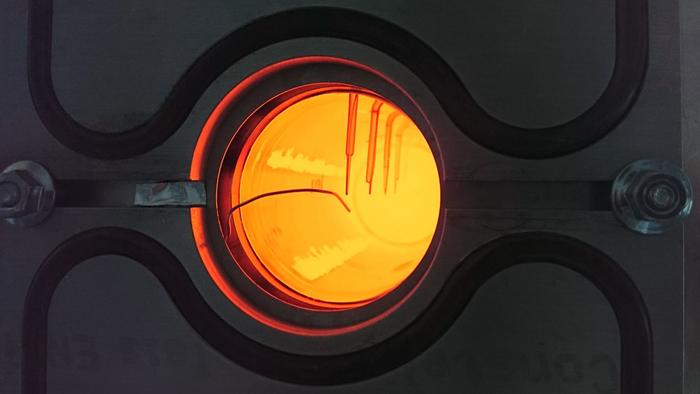
Researchers at ETH Zurich in Switzerland have recently demonstrated a new method of obtaining high-temperature heat based on solar radiation.  They have engineered a device called a thermal trap.  It consists of a quartz rod coupled to a ceramic absorber that can efficiently absorb sunlight and convert it to heat.

In laboratory-scale experiments, they exposed a foot-long quartz rod to artificial light 135 times more intensive than sunlight and were able to produce temperatures as high as 1,900 degrees.  The artificial light source was needed to mimic the effects of concentrated solar energy plants that typically make use of large numbers of mirrors to direct intense solar energy onto a small area.

There are already concentrated solar power plants that operate at temperatures as high as 1,100 degrees and use the heat to operate turbines to generate electricity.  These plants lose efficiency at higher temperatures because of radiative heat losses.  The Zurich thermal trap minimizes these losses and permits higher temperature operation.

The hope is that at a large scale, the new approach may make it possible to use solar energy to decarbonize energy-intensive industrial processes.

**********

Web Links

Using solar energy to generate heat at high temperatures

Photo courtesy of ETH Zurich / Emiliano Casati.

Earth Wise is a production of WAMC Northeast Public Radio
Caterpillars And Light Pollution | Earth Wise

May 3, 2023 By EarthWise Leave a Comment

Most of us are familiar with air pollution, water pollution, soil pollution, and even noise pollution.  But it turns out that light can be a pollutant as well, and it’s a consequence of industrial civilization.  In fact, nighttime light pollution now covers approximately 23% of the globe and over 80% of inhabited regions. 

Light pollution affects more than just our view of the stars.  For example, light pollution can alter our circadian rhythm, disrupting our sleep cycle.  In nature, light pollution can kill baby turtles by causing them to head inland instead of into the ocean, can cause birds to migrate during the wrong season, and can deter nighttime pollinators like bats.  And those are just a few of the examples.    

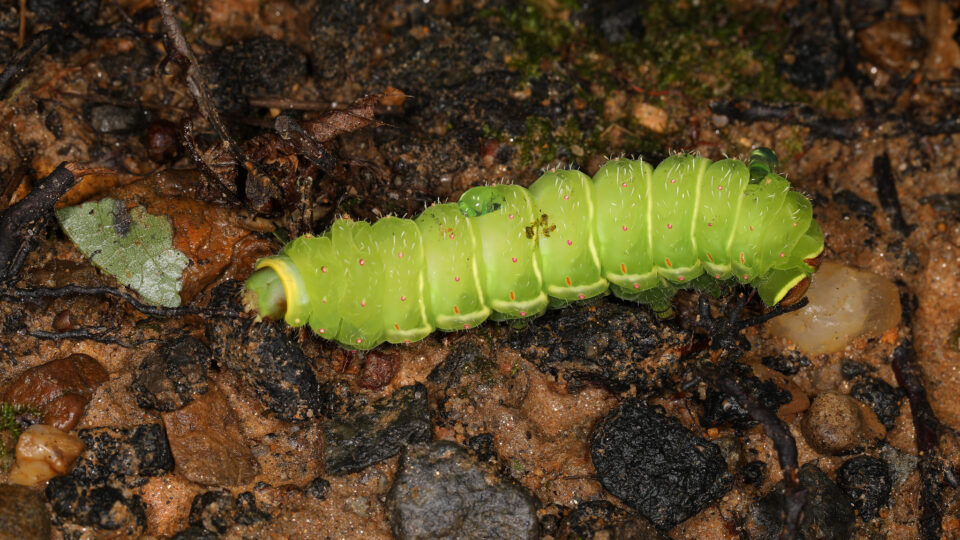
According to new research from scientists at Cornell University, moderate levels of artificial light at night – like a porch light – attract caterpillar predators and reduce the chance that caterpillars grow up to become moths. 

In the study, which was recently published in the journal Proceedings of the Royal Society B: Biological Sciences, the researchers placed 552 lifelike caterpillar replicas made of soft clay in a forest to measure predation rates compared to a control group.  They found that predation rates on clay caterpillars and the abundance of arthropod predators were significantly higher on the artificial light at night treatment plots.  In fact, of the 552 clay caterpillars deployed and glued to leaves to look authentic, 521 models were recovered and 249 of them- or 47.8% – showed predatory marks from arthropods during the summer-long nighttime study.

In addition to light pollution, caterpillars also face major threats from habitat loss, pollution, invasive species, and climate change.

**********

Web Links

Artificial light at night aids caterpillar predators

Photo, posted July 23, 2020, courtesy of Judy Gallagher via Flickr.

Earth Wise is a production of WAMC Northeast Public Radio
Global Light Pollution

October 14, 2021 By EarthWise 1 Comment

Light pollution increasing globally

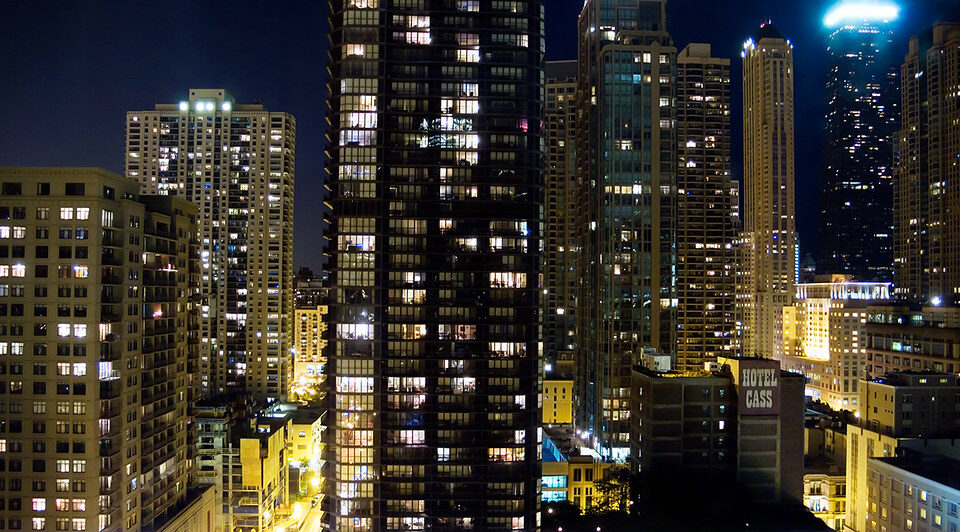
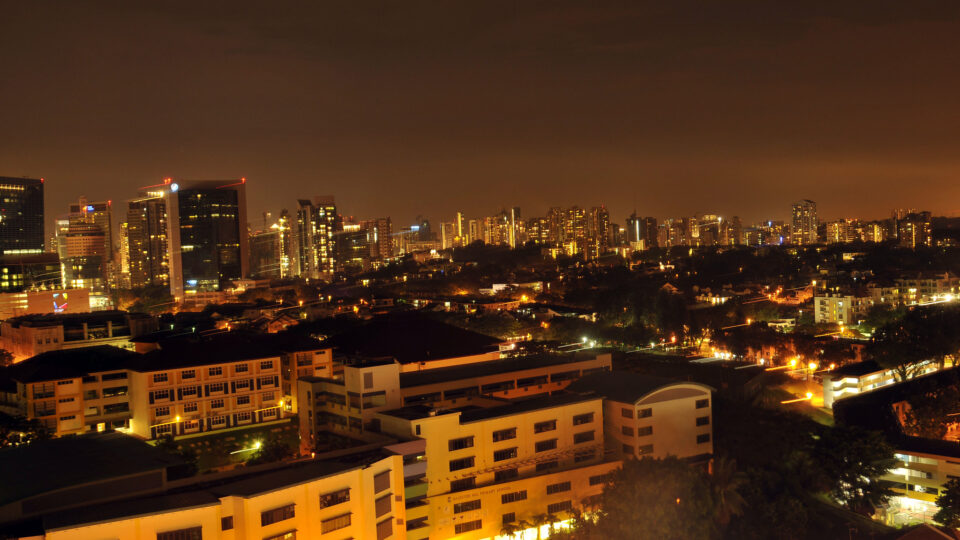
Light pollution is excessive or obtrusive artificial light. It’s a consequence of industrial civilization.  Too much artificial light can cause a host of problems, including disrupting ecosystems, causing adverse health effects, and wasting energy. 

According to a new study led by researchers from the University of Exeter in the U.K., global light pollution has increased by at least 49% over 25 years.  But this figure only includes light visible via satellites.  Scientists estimate that the true increase may be significantly higher – up to 270% more globally. 

That’s because there is a hidden impact of LED technology that isn’t accounted for in the satellite data. LEDs emit more blue light than previous lighting technologies, but satellite sensors fail to pick up this blue light.   This leads to a large underestimate of global light pollution.

The researchers examined light pollution from 1992 to 2017.  They found persistently increasing light pollution in Asia, South America, Oceania and Africa.  In Europe, detected light increased until around 2010, after which it leveled off.  In North America, artificial light appears to be on the decline.  However, the researchers point out that the satellites inability to detect blue light of LEDs means that light pollution has likely actually increased in most locations.

Light pollution has widespread impacts on both animals and plants.  For example, light pollution can confuse the migratory patterns of animals and change predator-prey relationships.   It’s also been shown to cause trees to bud earlier in spring.      

While there’s no off switch for the planet, there are ways that we could reduce the amount of light drastically with little impact on our lives. 

**********

Web Links

Rapid increase in global light pollution

Photo, posted November 2, 2008, courtesy of Timothy Tsui via Flickr.

XXXXXXXXXXXXXXXXXX

Artificial Light And Nature | Earth Wise

December 4, 2020 By EarthWise Leave a Comment

Light pollution has far reaching consequences

Most of us are familiar with air pollution, water pollution, soil pollution, and noise pollution.  But it turns out that light can also be a pollutant as well. 

Light pollution is a consequence of industrial civilization.  Sources of light pollution include building interior and exterior lighting, advertising billboards, factories, commercial properties, streetlights, and sporting venues.      

According to findings in a new report from the University of Exeter, artificial nighttime lighting has a wide range of effects across the natural world and should be limited wherever possible.  The research team analyzed more than 100 studies and found that artificial lighting has widespread impacts on both animals and plants. 

In the study, which was funded by the Natural Environment Research Council in the U.K., researchers consistently found changes to animals’ bodies and behavior as a result of artificial lighting.  In particular, levels of the sleep cycle-regulating hormone melatonin were reduced by exposure to artificial lighting at night in all animal species studied. 

Exposure to artificial nighttime lighting also affected the timing of animals’ activities.  For rodents, which are largely nocturnal, the duration of activity was often reduced by exposure to nighttime lighting.  On the other hand, for diurnal birds, exposure to nighttime lighting led to an extension of the duration of their activities.  

Previous studies have found other wide-ranging impacts of nighttime lighting, from reducing pollination by insects to trees budding earlier in spring.  

Artificial nighttime lighting is human driven and very disruptive to the natural world.  While there’s no off switch for the planet, we could reduce the amount of light pollution drastically with no impact on our lives. 

**********

Web Links

Artificial night lighting has widespread impacts on nature

Photo, posted July 29, 2017, courtesy of spacedust2019 via Flickr.

Earth Wise is a production of WAMC Northeast Public Radio.

Sea Turtles Prospering During The Shutdown | Earth Wise

May 14, 2020 By EarthWise Leave a Comment

Sea turtles thriving during Coronavirus shutdown

Our stories often discuss how human activities change the natural environment.  With most of us confined to our homes, the lack of human activities is having profound effects on the environment.  We are talking about some of these this week.

Seven different species of sea turtles are found in the world’s oceans and play important roles in marine ecosystems.  Over time, human activities have tipped the scales against the survival of these animals.  They have been hunted for their eggs, meat, skin, and shells and face habitat destruction and accidental capture in fishing gear.  Their nesting grounds in beaches are constantly disturbed and endangered by human activity.

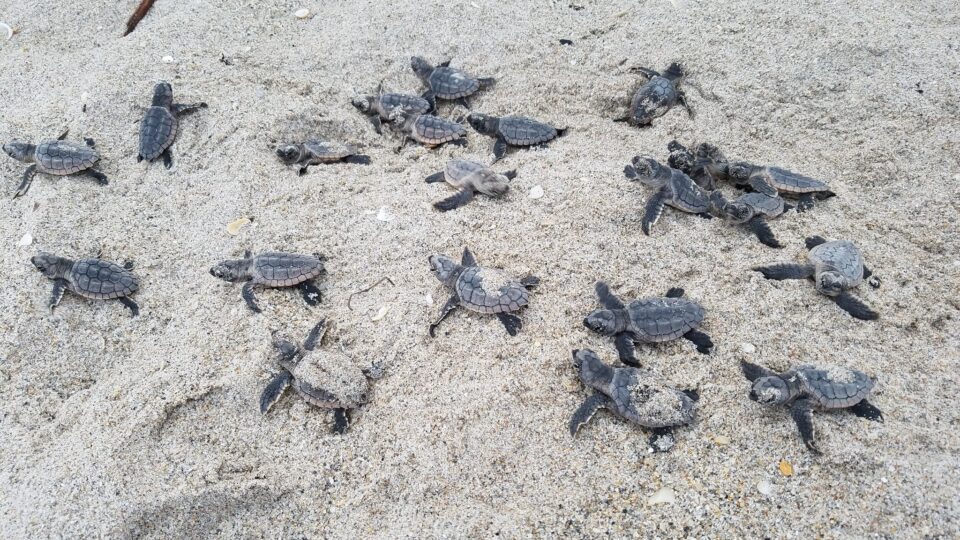
With the beaches in Florida closed in the effort to stop the spread of coronavirus, there is less plastic waste, fewer people and vehicles, and fewer artificial lights on the beach that disorient emerging turtle hatchlings.  Because of all of these factors, sea turtles have been building their nests without disruptions.

In April, it was nesting season for leatherback turtles, the largest of all sea turtles. In May, loggerhead turtles arrive in Florida.  Later in the summer, green turtles will arrive.

It takes about 60 days for sea turtle eggs to incubate and to hatch.  During that period, lots of things can happen to a nest on an active beach – it can get trampled, people can dig it up, and artificial light can confuse the hatchlings as they try to find their way to the water.  With the current shutdown, it should be a productive nesting season for sea turtles.

On the other hand, when beaches reopen, there may well be a major influx of people flocking to the beach because they have been stuck indoors for an extended period of time.

**********

Web Links

Sea turtles are thriving as coronavirus lockdown empties Florida beaches

Photo, posted August 9, 2016, courtesy of Florida Fish and Wildlife via Flickr.

Earth Wise is a production of WAMC Northeast Public Radio.

Light Pollution And Early Spring

August 17, 2016 By WAMC WEB

https://earthwiseradio.org/wp-content/uploads/2016/08/EW-08-17-16-Light-Pollution-and-Spring.mp3

We have talked about the impact of light pollution on our ability to see stars and the Milky Way.  We have also discussed its impact on our circadian rhythms.   Recently, scientists in Great Britain published a report on the relationship between light pollution and the timing of when trees produce their buds.  The results of the study suggest that light pollution is causing plants to jump the gun on spring.

[Read more…] about Light Pollution And Early Spring

Outdoor Lights Dim Nature

August 8, 2016 By WAMC WEB

https://earthwiseradio.org/wp-content/uploads/2016/08/EW-08-08-16-Night-Lights.mp3

At night our planet is now bathed in artificial light, ranging from streetlights and floodlights to burning gas flares in oil fields. There are few places that are truly dark at night. 

[Read more…] about Outdoor Lights Dim Nature

Primary Sidebar

Recent Episodes

  • An uninsurable future
  • Clean energy and jobs
  • Insect declines in remote regions
  • Fossil fuel producing nations ignoring climate goals
  • Trouble for clownfishes

WAMC Northeast Public Radio

WAMC/Northeast Public Radio is a regional public radio network serving parts of seven northeastern states (more...)

Copyright © 2026 ·