• Skip to primary navigation
  • Skip to main content
  • Skip to primary sidebar

Earth Wise

A look at our changing environment.

  • Home
  • About Earth Wise
  • Where to Listen
  • All Articles
  • Show Search
Hide Search
You are here: Home / Archives for arctic sea ice

arctic sea ice

It’s only getting warmer

July 2, 2025 By EarthWise Leave a Comment

Global warming continues and the planet cannot withdraw from its consequences

Climate science is not popular with the current administration.  Phrases like “climate crisis”, “clean energy”, and “climate science” itself are prohibited from websites, reports, regulations, and other communications by government employees and federal funding recipients.  Once again, the United States is turning away from climate mitigation efforts and will have a drastically reduced ability to forecast disasters and head off their worst consequences.

Meanwhile, global warming continues, and the planet can’t withdraw from its consequences.

The hottest year in nearly two centuries was recorded in 2024.  According to a new report by the World Meteorological Organization, there is an 80% chance that at least one year over the next four will surpass 2024 as the warmest year on record. 

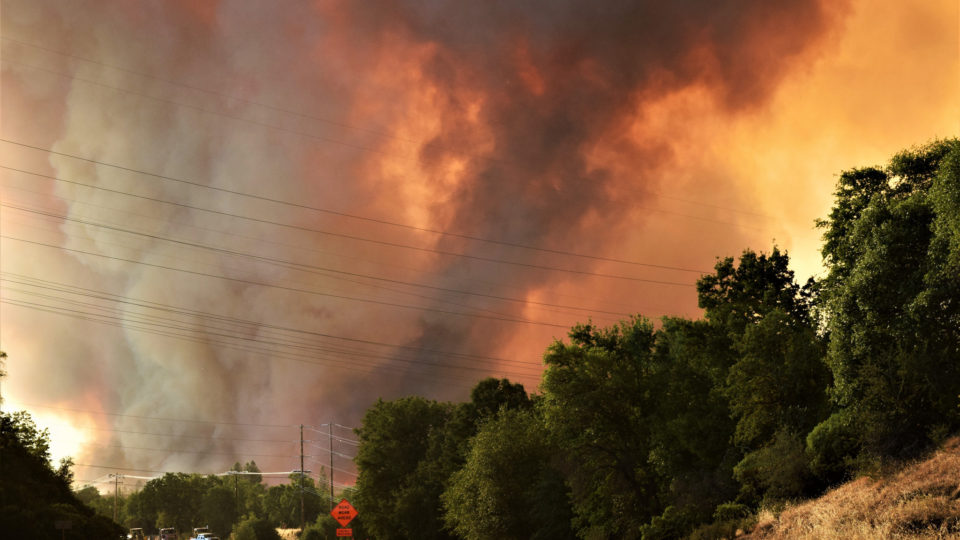
The consequences of warming will probably vary widely across the world.  But likely occurrences include rapid thawing of Arctic Sea ice, drier seasons in the Amazon, excess rain in places like Alaska, northern Europe, and the Sahel in north-central Africa.  Hotter temperatures lead to more evaporation of water from plants and soil, leading to droughts and failed crop seasons.  The warmer atmosphere holds more moisture, which increases the chance of flooding from downpours and stronger hurricanes.

Ignoring what is going on with the climate or thinking that it will only impact other people in other places is nothing short of foolhardy.  The planet does not care about politics.  What is happening to the climate will be in just about everyone’s backyard soon enough.

**********

Web Links

‘It’s pretty bleak’: A warming planet is poised to get even hotter, forecasters warn

Photo, posted December 1, 2015, courtesy of Adam Matsumoto via Flickr.

Earth Wise is a production of WAMC Northeast Public Radio
Trouble For Emperor Penguins | Earth Wise

September 18, 2023 By EarthWise Leave a Comment

Emperor penguins are in trouble

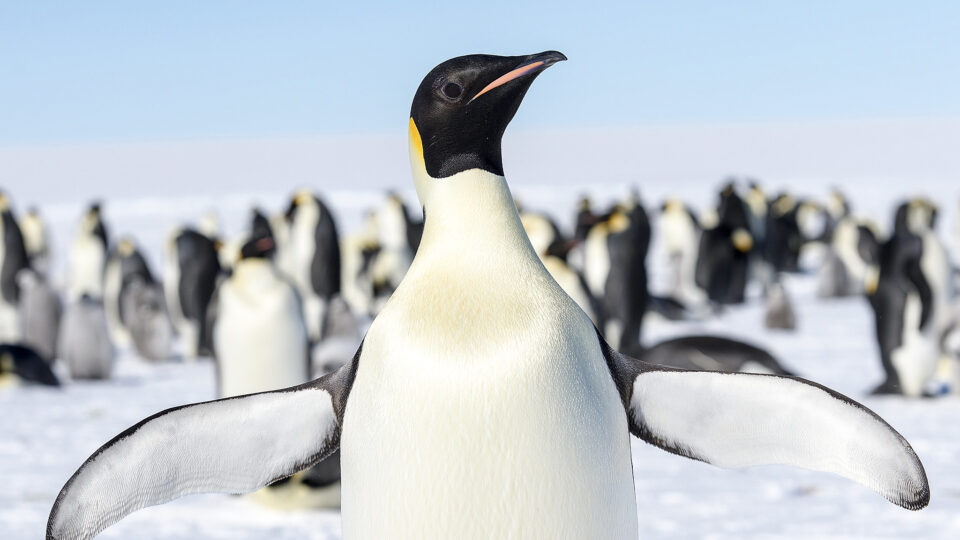
Emperor penguins are the tallest and heaviest of all living penguin species.  The loss of sea ice in Antarctica last year has led to unprecedented breeding failure in some emperor penguin colonies.

In a study published by the British Antarctic Survey, researchers found that no chicks survived from four of the five known emperor penguin colonies in the central and eastern Bellinhausen Sea.   Satellite images showed the loss of sea ice at breeding sites, well before chicks would have developed waterproof feathers.

Emperor penguins are dependent on stable sea ice that is firmly attached to the shore from April through the end of the year.  Arctic sea ice reached an all-time low in December 2022 with the most extreme loss seen in the central and eastern Bellinghausen Sea where there was a 100% loss of sea ice late the year.

This year, the sea ice extent in Antarctica is still far below all previous records for this time of year.  As of August, when oceans normally are freezing up, there were still areas that were ice-free.

Emperor penguin populations have not had to contend with large-scale hunting, habitat loss, overfishing, or other human-caused problems in the modern era, but climate change may be their undoing.  They have previously responded to incidents of sea ice loss by moving to more stable sites in the following year.  But this strategy will not be successful if the sea ice habitat is affected across entire regions of Antarctica.

Scientists are predicting that 90% of emperor penguin colonies will be quasi-extinct by the end of the century, assuming current global warming trends continue.

**********

Web Links

Loss of sea ice causes catastrophic breeding failure for emperor penguins

Photo, posted October 7, 2017, courtesy of Christopher Michel via Flickr.

Earth Wise is a production of WAMC Northeast Public Radio

Climate Change And Harsh Winters

July 15, 2019 By EarthWise Leave a Comment

In recent years, there have been some unusually harsh winters in North America and Central Europe. This past January, the Midwestern US experienced extreme cold temperatures. We have all become familiar with the term ‘polar vortex’ and its role in sending cold air to middle latitudes and it is generally agreed that unusual behavior by the jet stream is the primary cause of the extreme winter weather.

For years, climate researchers around the world have been investigating the question as to whether the increasingly common wandering of the jet stream is a product of climate change or is a random phenomenon associated with natural variations in the climate system.

The jet stream is a powerful band of westerly winds over the middle latitudes that push major weather systems from west to east.  These days, the jet stream is increasingly faltering.  Instead of blowing along a straight course parallel to the equator, it sweeps across the Northern Hemisphere in massive waves, producing unusual intrusions of Arctic air into the middle latitudes.

Atmospheric researchers at the Alfred Wegener Institute in Germany have now developed a climate model that can accurately predict the frequently observed winding course of the jet stream.  The breakthrough combines their global climate model with a new machine learning algorithm on ozone chemistry.  Using their new combined model, they can now show that the jet stream’s wavelike course in winter and subsequent extreme weather outbreaks are the direct result of climate change.  The changes in the jet stream are to a great extent caused by the decline in Arctic sea ice, according to the results of the investigations.  The results are not surprising but there is now a detailed model to support the hypothesis.

**********

Web Links

A warming Arctic produces weather extremes in our latitudes

Photo, posted January 11, 2011, courtesy of Carl Wycoff via Flickr.

Earth Wise is a production of WAMC Northeast Public Radio.

Microplastics And Humans

November 27, 2018 By EarthWise Leave a Comment

https://earthwiseradio.org/wp-content/uploads/2018/10/EW-11-27-18-Microplastics-and-Humans.mp3

Microplastics are everywhere.  The tiny plastic particles pose a massive environmental challenge.  Microplastics are polluting oceans at an alarming rate.  Much of the oceanic microplastics result from the breakdown of plastic litter.  Another source of microplastics pollution is microbeads.  Microbeads, which are commonly added to cleansing and exfoliating personal care products, pollute the environment when they get flushed down the drain.   

[Read more…] about Microplastics And Humans

Rapid Response To Climate Change More Important Than Ever

October 17, 2018 By EarthWise Leave a Comment

https://earthwiseradio.org/wp-content/uploads/2018/10/EW-10-17-18-Rapid-Response-to-Climate-Change.mp3

The Intergovernmental Panel on Climate Change has issued a new report emphasizing the importance of taking rapid action to limit global warming to 1.5 degrees Celsius and examining the consequences of allowing temperatures to rise 2 degrees instead.

[Read more…] about Rapid Response To Climate Change More Important Than Ever

Primary Sidebar

Recent Episodes

  • An uninsurable future
  • Clean energy and jobs
  • Insect declines in remote regions
  • Fossil fuel producing nations ignoring climate goals
  • Trouble for clownfishes

WAMC Northeast Public Radio

WAMC/Northeast Public Radio is a regional public radio network serving parts of seven northeastern states (more...)

Copyright © 2026 ·