• Skip to primary navigation
  • Skip to main content
  • Skip to primary sidebar

Earth Wise

A look at our changing environment.

  • Home
  • About Earth Wise
  • Where to Listen
  • All Articles
  • Show Search
Hide Search
You are here: Home / Archives for aquatic

aquatic

The Snail Darter Is Safe | Earth Wise

November 14, 2022 By EarthWise Leave a Comment

The snail darter population has recovered

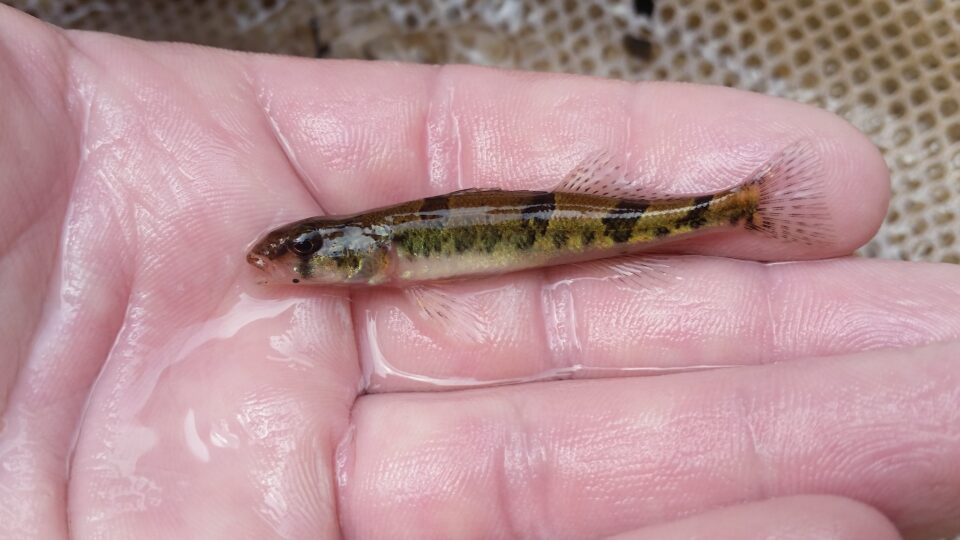
The snail darter is a three-inch-long snail-eating fish that was once only found in the Little Tennessee River.  When that river was going to be dammed by the Tellico Dam under construction in the 1970s, the snail darter was listed on the endangered species list and the little fish subsequently became the subject of a legal battle that made it all the way up to the U.S. Supreme Court.   With the dam project 95% complete in 1978, the Supreme Court blocked further construction, citing the Endangered Species Act.  A year later, Congress exempted the project from the requirements of the Act, thereby clearing the way for the completion of the dam.

In order to save the snail darter, biologists transplanted the fish into several other nearby rivers and waterways.  In addition, the Tennessee Valley Authority modified the operation of the Tellico Dam to release more oxygen-rich water downstream.  Beyond those measures, the river cleanup under the Clean Water Act further aided the fish’s recovery.

In 1984, the snail darter was removed from the endangered species list and was listed as threatened or vulnerable.  Recently, the U.S. Department of the Interior officially removed the snail darter from the federal list of threatened and endangered wildlife. 

The snail darter is the fifth fish species to be delisted because its population has recovered.  It is the first in the eastern United States.  With better management of water releases at dams, many other imperiled aquatic species could be recovered.

Overall, more than 50 plants and animals have recovered under federal protection, including American alligators, humpback whales, peregrine falcons, and bald eagles.

**********

Web Links

Once at Center of Controversial Case, the Snail Darter Fish Is No Longer Threatened

Photo, posted July 22, 2015, courtesy of The U.S. Fish and Wildlife Service via Flickr.

Earth Wise is a production of WAMC Northeast Public Radio

Cleaning Up Urban Rivers With Nature’s Tools | Earth Wise

October 7, 2022 By EarthWise Leave a Comment

Fifty years after the passage of the Clean Water Act, urban waterways across the United States are continuing their comeback and are showing increasing signs of life.  A strategy that is being adopted in many places is to use natural restoration techniques focused on bolstering plants and wildlife to improve water quality.

A nonprofit called the Upstream Alliance has focused on public access, clean water, and coastal resilience in the Delaware, Hudson, and Chesapeake watersheds.  Working with the Center for Aquatic Sciences and with support from the EPA and the National Fish and Wildlife Foundation, the alliance has been repopulating areas of an estuary of the Delaware River near Camden, New Jersey with wild celery grass, which is a plant vital to freshwater ecosystems.

In many places, scientists, nonprofits, academic institutions, and state agencies are focusing on organisms like bivalves (typically oysters and mussels) along with aquatic plants to help nature restore fragile ecosystems, improve water quality, and increase resilience.

Bivalves and aquatic vegetation improve water clarity by grounding suspended particles, which allows more light to penetrate.  These organisms also cycle nutrients both by absorbing them as food and by making them more available to other organisms.

Underwater restoration projects have been underway in New York Harbor for more than a decade, where the Billion Oyster Project has engaged 10,000 volunteers and 6,000 students. 

The hope is that bringing back bivalves and aquatic plants can create a lasting foundation for entire ecosystems.  It is restoring nature’s ability to keep itself clean.

**********

Web Links

How Using Nature’s Tools Is Helping to Clean Up Urban Rivers

Photo, posted December 19, 2019, courtesy of Scott via Flickr.

Earth Wise is a production of WAMC Northeast Public Radio
Artificial Aquatic Polyps | Earth Wise

September 16, 2020 By EarthWise Leave a Comment

Aquatic robots can clean water

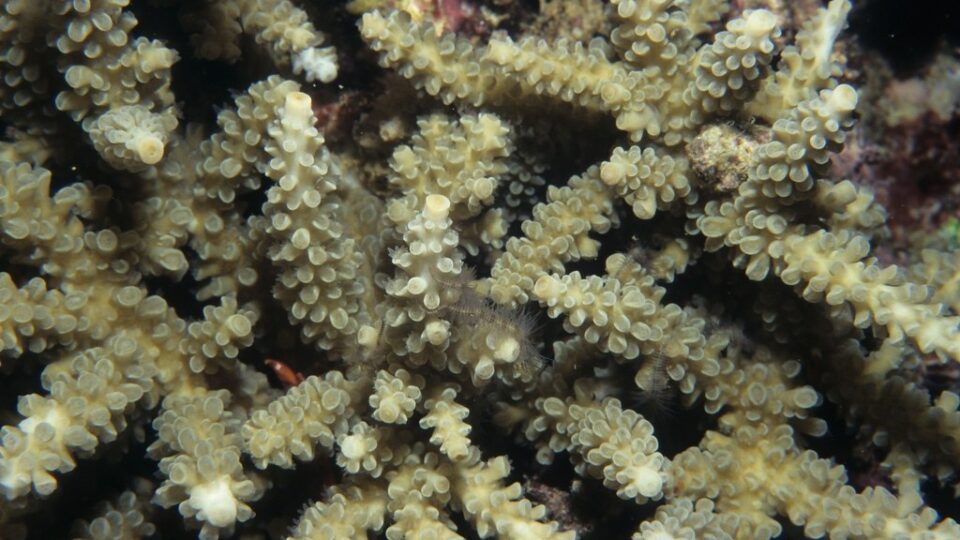
Corals are often mistaken for rocks because of their hardened surfaces.  And, since they attach or “take root” to the sea floor, they are often mistaken for plants.  But unlike rocks, corals are alive.  And unlike plants, corals do not make their own food.  Corals are actually animals. 

Most of these structures that we call “coral” are made up of hundreds to thousands of tiny coral creatures called polyps.  A coral polyp, which is often no thicker than a nickel, has a saclike body and mouth that is encircled by stinging tentacles.  Polyps are responsible for a host of ecosystem services, including nourishing corals, and aiding coral survival by generating self-made currents through the motion of their soft bodies. 

Inspired by these marine organisms, researchers from the University of Warwick in the UK and Eindhoven University of Technology in the Netherlands have collaborated to develop an artificial aquatic polyp capable of removing contaminants from water.  The 1 square centimeter wireless robot polyp can attract, grasp, and release objects, moving under the influence of a magnetic field and whose “tentacles” are triggered by light. 

The next step for the researchers is to see if the technology can be successfully scaled up from laboratory to pilot scale.  In order for that to happen, the team has to design an array of artificial polyps capable of working harmoniously together.   

Corals are an incredibly important part of ocean ecosystems.  And while it remains to be seen how much value artificial polyps can achieve in future applications, it serves as another example of scientists emulating nature to create more sustainable designs. 

**********

Web Links

Aquatic robots can remove contaminant particles from water

An artificial aquatic polyp that wirelessly attracts, grasps, and releases objects

Photo, posted April 14, 2011, courtesy of Derek Keats via Flickr.

Earth Wise is a production of WAMC Northeast Public Radio.

Microplastics And Florida’s Birds of Prey | Earth Wise

June 19, 2020 By EarthWise Leave a Comment

Microplastics found in Florida's birds of prey

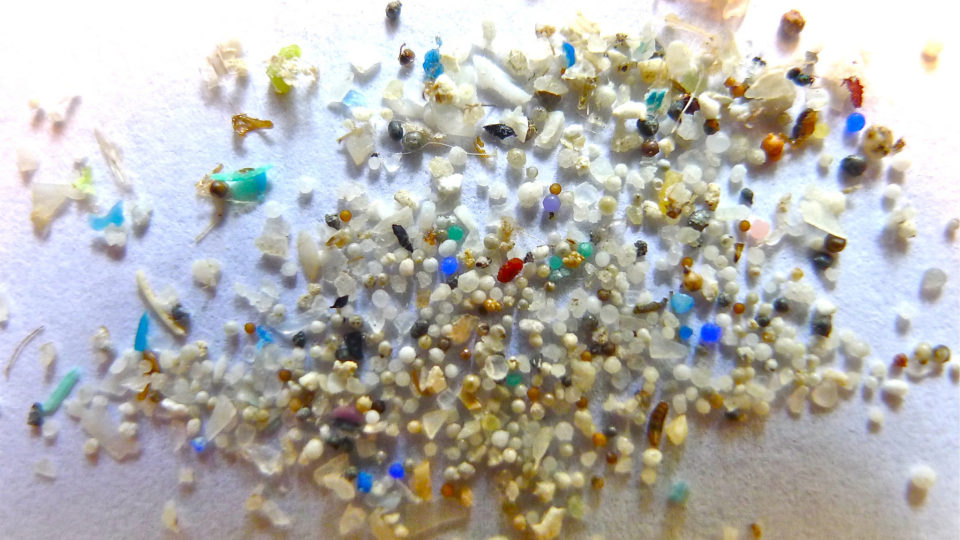
Plastic debris comes in all different shapes and sizes, but those that are less than five millimeters in length are called microplastics.  Some microplastics come from larger plastic debris that degrades into smaller bits over time.  Another type of microplastics – called microbeads – are intentionally manufactured tiny plastic beads that are added as exfoliants to some health and beauty products. 

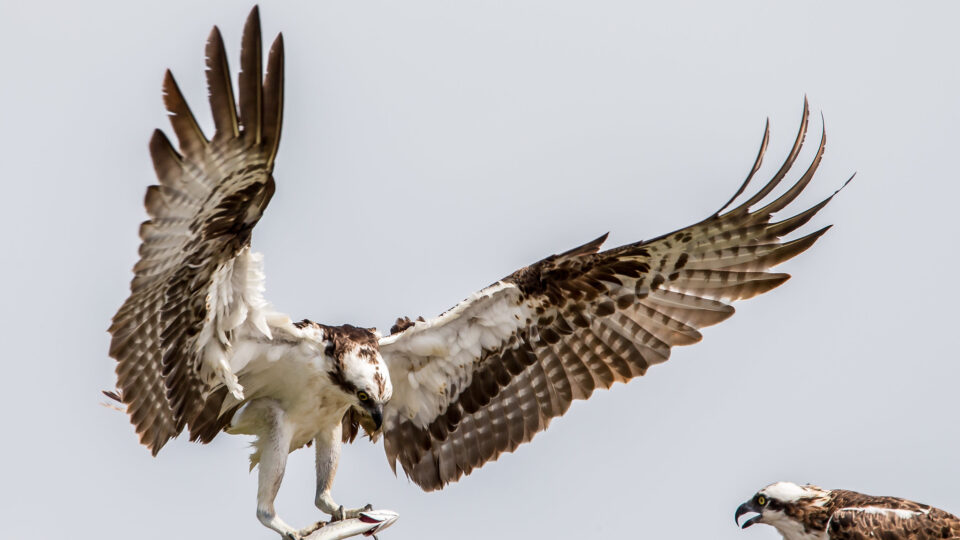
According to a new study published in the journal Environmental Pollution, researchers have confirmed and quantified the presence of microplastics in terrestrial and aquatic birds of prey in Florida for the first time.  This research is important because these birds of prey, including ospreys, hawks, and owls, are critical to maintaining a healthy ecosystem.  The accumulation of microplastics in their digestive systems could lead to a myriad of health issues, including starvation.  

Working with the Audubon Center for Birds of Prey in Florida, the research team from the University of Central Florida was able to examine the stomachs of 63 deceased birds.  The team found microplastics in every bird it examined, extracting nearly 1,200 pieces of plastic in total.  Microfibers represented 86% of the plastic pieces. 

It’s common for plastic microfibers to enter ecosystems through the wastewater from washing machines.  A 2016 study found that 700,000 plastic fibers come off in a typical wash.  While there are lots of variables, synthetic fabrics account for 60% of the material used in clothing worldwide. 

To help cut down on plastic in the environment, the research team suggests removing plastics from open landfills, purchasing only natural fabrics and clothing, and modifying water treatment facilities to capture microplastics. 

**********

Web Links

Microplastics found in Florida’s birds of prey for first time

Photo, posted April 15, 2016, courtesy of Andy Morffew via Flickr.

Earth Wise is a production of WAMC Northeast Public Radio.

The Problem Of Microplastics

February 15, 2019 By EarthWise Leave a Comment

In recent years, there have been multiple reports of microplastic contamination seemingly everywhere:  in the ocean, in lakes and rivers, in beverages and foods, and in the bodies of birds, fish, and even people.  As the world tries to come to grips with this growing problem, there are many things that we simply don’t know.

Microplastics are usually formed by the breakdown of larger pieces of plastic.  Shopping bags and cups degrade into microplastics.  Microfiber clothing generates microplastics in washing machines.  And some manufacturers still intentionally add microplastics to personal care products like toothpaste and facial scrubs.

Technically, a microplastic is any piece of plastic measuring five millimeters in size down to one micron – which is one thousandth of a millimeter.  But there can be even smaller plastic particles classified as sub-microplastics and even nanoplastics.

A real concern is that it is not actually clear how dangerous microplastics are for living organisms.  We know that aquatic and terrestrial species – including humans – can and do absorb microplastic particles, but whether there is actual toxicity and the nature of any detrimental effects is not yet well understood.

Another real problem is that it is actually not easy to distinguish microplastics from other particles in a given sample.   When you are looking at a particle that is smaller than a millimeter in size, it is not easy to tell whether it is a grain of sand, a bit of cellulose from a plant, or a microplastic.  There are reliable and definitive ways to analyze samples for microplastics, but they are not as simple and commonplace as just looking through a microscope.

Microplastics are a rapidly growing problem and we don’t even really know how big and how bad the problem is.

**********

Web Links

How dangerous is microplastic?

Photo, posted January 10, 2015, courtesy of Daria Nepriakhina via Flickr.

Earth Wise is a production of WAMC Northeast Public Radio.

Wildfires And The Water Supply

November 12, 2018 By EarthWise Leave a Comment

https://earthwiseradio.org/wp-content/uploads/2018/10/EW-11-12-18-Wildfires-and-the-Water-Supply.mp3

Hotter and dryer conditions are leading to an increasing number of wildfires in North America and elsewhere around the world.  The damage they cause is well-known.  But one aspect of that damage that tends to be overlooked is the impact on aquatic environments and drinking water supplies.

[Read more…] about Wildfires And The Water Supply

Microplastics In Soil

May 4, 2018 By EarthWise Leave a Comment

https://earthwiseradio.org/wp-content/uploads/2018/05/EW-05-04-18-Microplastics-in-Soil.mp3

Many of us are well aware of the environmental challenge faced because of the proliferation of plastics.  Since plastic does not decompose naturally, most of it remains in our environment. Only 12% has been incinerated and only 9% has been recycled.  A great deal of plastic ends up in the ocean and other bodies of water.  Much of it breaks down into small particles – microplastics – which are now ubiquitous in the oceans.  There are also microplastics that started out that way in the form of little beads used in the cosmetics industry.  Studies have found microplastics in the bodies of 73% of fish from the North Atlantic.

[Read more…] about Microplastics In Soil

Terrestrial Plants and Lake Ecosystems

May 4, 2017 By EarthWise

https://earthwiseradio.org/wp-content/uploads/2017/05/EW-05-04-17-Terrestial-Plants-and-Lake-Ecosystems.mp3

Most of the planet’s freshwater stores are found in the northern hemisphere, a region that is changing rapidly in response to human activity and shifting climate trends. A recent study analyzed 147 northern lakes and found that many rely on nutrients from tree leaves, pine needles, and other land-grown plants to feed aquatic life.

[Read more…] about Terrestrial Plants and Lake Ecosystems

Primary Sidebar

Recent Episodes

  • An uninsurable future
  • Clean energy and jobs
  • Insect declines in remote regions
  • Fossil fuel producing nations ignoring climate goals
  • Trouble for clownfishes

WAMC Northeast Public Radio

WAMC/Northeast Public Radio is a regional public radio network serving parts of seven northeastern states (more...)

Copyright © 2026 ·