• Skip to primary navigation
  • Skip to main content
  • Skip to primary sidebar

Earth Wise

A look at our changing environment.

  • Home
  • About Earth Wise
  • Where to Listen
  • All Articles
  • Show Search
Hide Search
You are here: Home / Archives for affluent

affluent

Extending the shelf life of produce

July 10, 2025 By EarthWise Leave a Comment

More than 30% of the world’s food is lost after it has been harvested.  That’s enough to feed more than a billion people.  Much of that loss is fruits and vegetables that go bad before they can be eaten.

Refrigeration is the most common way to preserve foods, but the energy and infrastructure required is not always available, especially in less affluent regions of the world.

Researchers at MIT and Singapore-based collaborators have demonstrated that they can extend the shelf life of harvested plants by injecting them with melatonin using biodegradable microneedles.

Silk microneedles are tiny, nontoxic, and biodegradable and represent a means of delivering nutrients to plants without triggering a stress response.

Melatonin is a natural hormone that plants already use.  Injecting it was shown to extend vegetables’ shelf life.  The tests used pak choy, an important Asian crop that is very perishable.  Untreated plants at room temperature yellowed within two or three days.  In contrast, treated plants stayed green for five days.  Overall, treated plants retained saleable value for 8 days.  Refrigerated plants had their shelf life extended considerably as well.  However, the most significant value of the technique is that it could enhance the shelf life of perishable produce like pak choy without needing access to refrigeration.

The dose of melatonin delivered to the plants is so low that it is fully metabolized by the crops, so it would not significantly increase the amount normally present in the food.  People would not ingest more melatonin than usual.  The researchers believe that their technique should work with all kinds of produce.

**********

Web Links

A new technology for extending the shelf life of produce

Photo, posted May 6, 2010, courtesy of Jessica Spengler via Flickr.

Earth Wise is a production of WAMC Northeast Public Radio
Lifestyle And Carbon Footprint | Earth Wise

March 23, 2020 By EarthWise Leave a Comment

lifestyle impacts our carbon footprint

Many studies have shown, to no great surprise, that affluent lifestyles lead to larger carbon footprints. Households in Switzerland enjoy a high standard of living and a team of researchers there has been studying the consumption and travel habits of Swiss citizens to better understand the impact of various factors on carbon footprint. Key factors include household composition and income, and whether the households are in the city or the countryside – even though, in the end, people’s lifestyles do not differ greatly from one environment to another. 

A team of researchers at EPFL’s School of Architecture, Civil and Environmental Engineering analyzed data from Switzerland’s household budget survey for 2008, 2011 and 2014.  They combined that data with an environmentally extended input-output analysis to assess households’ carbon footprints by measuring their direct and indirect emissions.

Overall, households in the countryside have larger carbon footprints than those in the city, mainly because they travel more and use more energy in their homes. But urban households have larger carbon footprints than their rural counterparts when it comes to food, clothing, cultural activities and air travel.  

A household’s composition directly influences its carbon footprint. A two-person household has the largest per-capita carbon footprint, and it falls as the size of the family grows since many of the same resources are shared by more people. 

Income levels play an important role.  People consume without much thought because they can afford to and enjoy doing it. But there is a trend towards people becoming more conscious of their levels of consumption and trying to be more responsible in Switzerland.  Overall consumption has actually declined over the years studied.  

**********

Web Links

Our carbon footprint is highly impacted by how we live

Photo, posted December 19, 2017, courtesy of Alexander Kozik via Flickr.

Earth Wise is a production of WAMC Northeast Public Radio.

Cooling Down Urban Heat Islands

November 6, 2019 By EarthWise Leave a Comment

Researchers have known about and studied the urban heat island effect for quite some time.  Since large cities began to emerge in the 19th century, it has been understood that various aspects of the urban environment lead to warmer temperatures than the surrounding countryside.

Researchers led by a group at Portland State University in Oregon have been utilizing a new way of studying the urban heat island effect.  They have used citizen science volunteers in 24 cities around the world to map temperatures in the cities at ground level in great detail using mobile sensors attached to slow-moving vehicles.  Previous studies have used data from satellite or stationary sensors.  They have learned that the urban heat island effect is more complicated, more varied, and subtler than the earlier data indicated.

They found that there are six things that affect urban heat. Three are living — the volume of the tree canopy, the height of the tree canopy, and the ground level vegetation. Three are human-built — the volume of buildings, the difference in building heights, and the coloring of the buildings.

Buildings can have both negative and positive effects. Tall buildings that cast shade actually lower relative afternoon temperatures, while densely packed shorter buildings, like the big-box stores in suburban areas, lead to hotter afternoon temperatures. The studies show that increasing the difference in building heights in an area creates more air circulation, which has a cooling effect.

The study also showed that urban heat is a social justice issue.  Lower-income neighborhoods largely barren of trees have considerably higher temperatures than more affluent, tree-shaded areas.

Such detailed research can be used to guide decisions in urban planning with regard to trees, building heights, and the color and type of surfaces in our urban spaces.

**********

Web Links

Can We Turn Down the Temperature on Urban Heat Islands?

Photo, posted July 21, 2009, courtesy of Daniel Dionne via Flickr.

Earth Wise is a production of WAMC Northeast Public Radio.

Too Much Waste

October 4, 2016 By WAMC WEB

https://earthwiseradio.org/wp-content/uploads/2016/10/EW-10-04-16-Too-Much-Waste.mp3

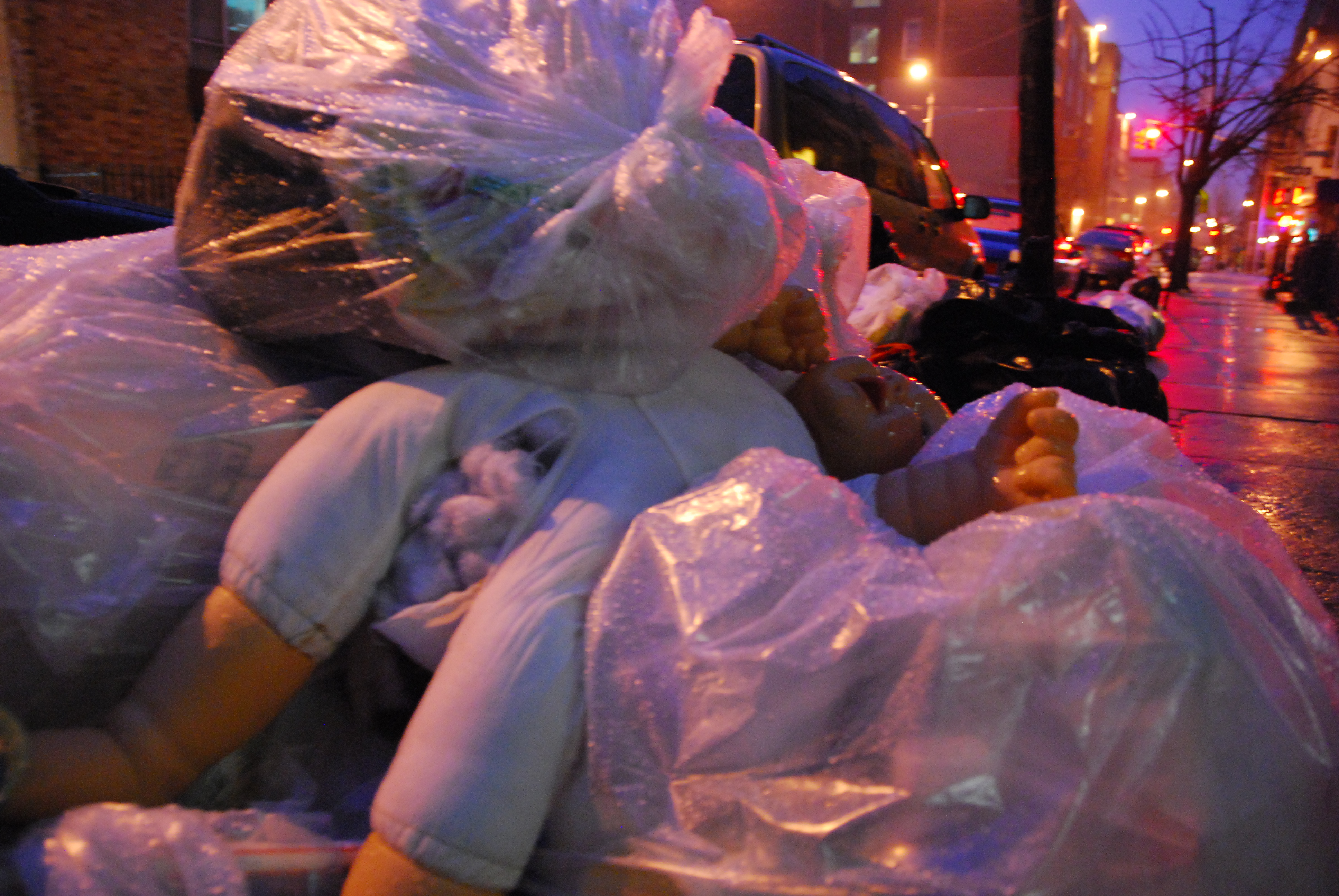
As the world’s population grows and becomes more urban and affluent, the amount of solid waste we produce grows and grows.  Over the past century, the total amount has risen tenfold.  By 2025, the world-wide total is expected to double again. The average person in the United States throws away their body weight in garbage every month. 

[Read more…] about Too Much Waste

Primary Sidebar

Recent Episodes

  • An uninsurable future
  • Clean energy and jobs
  • Insect declines in remote regions
  • Fossil fuel producing nations ignoring climate goals
  • Trouble for clownfishes

WAMC Northeast Public Radio

WAMC/Northeast Public Radio is a regional public radio network serving parts of seven northeastern states (more...)

Copyright © 2026 ·