• Skip to primary navigation
  • Skip to main content
  • Skip to primary sidebar

Earth Wise

A look at our changing environment.

  • Home
  • About Earth Wise
  • Where to Listen
  • All Articles
  • Show Search
Hide Search
You are here: Home / Archives for activity

activity

Volcano monitoring

May 16, 2025 By EarthWise Leave a Comment

Researchers develop a new method to monitor volcanoes

Researchers at the University of Alaska Fairbanks and the U.S. Geological Survey have developed a radar-based volcano monitoring system.  The purpose is to provide situational awareness of volcano behavior and identify volcanoes that are becoming restless before other more obvious indications like earthquake activity occur.

The system is called VolcSARvatory and makes use of interferometric synthetic aperture radar to detect ground movement changes as small as one centimeter.  It utilizes two or more radar images from satellites taken at different times.  The images are used to create a time series of data from a single location.

The system has been in operation since early 2022 and proved to be valuable in studying the unexpected activity at the long-quiet Mount Edgecumbe volcano near Sitka, Alaska where conventional monitoring was not taking place.

According to the researchers, the technology has evolved to the point where it can be operational at a national level.  The goal is to provide a consistent approach to monitoring active volcanoes.

Volcanoes are not a rare and unlikely source of potential danger in this country.  The volcanoes of Hawaii are the best-known active volcanoes in the United States, but Alaska has about 140 volcanoes that are technically classified as active, with more than 50 that have been active within the past 300 years.  In total, 169 U.S. volcanoes are classified as active including ones in Arizona, California, Colorado, Idaho, Nevada, New Mexico, Oregon, Utah, Washington and Wyoming.

**********

Web Links

Alaska-developed volcano monitoring system will expand across U.S.

Photo, posted March 18, 2013, courtesy of Jeffrey Wickett / USFS via Flickr.

Earth Wise is a production of WAMC Northeast Public Radio

Tigers in India

March 17, 2025 By EarthWise Leave a Comment

The Anthropocene is the term that describes the current era in Earth’s history when human activities are having a significant impact on the planet.  It is an epoch filled with species extinction and species attrition in both numbers and range.  The population of large carnivores are among the most affected species and recovering these animals that play important roles in ecosystems is a formidable challenge.

Tigers in Asia are a prime example of extirpation – removal of a species from a specific area.  They have been eliminated in more than 90% of their historic Asian range over the past century.  A new study, published in Science has found that tigers in India are making a comeback.

India’s National Tiger Conservation Authority estimates that between 2010 and 2022, India’s tiger population grew from 1,706 to 3,682.  Tigers are thriving not only on protected lands but also near some human communities.

Tigers are gone from poorer areas where poaching was prevalent and from areas affected by the violent conflict associated with India’s Maoist rebellion.  On the other hand, the big cats can be found near some prosperous communities where poaching is rare.  Farmers keep cattle in enclosures to protect them from tigers.  

The success in protecting tigers in India could provide some insights for Europe where wolves are making a comeback, and perhaps even in the American West where the resurgence of wolf populations is triggering a violent backlash.

Large predators can survive in the modern world with creative thinking and willingness to find a balance between protection and coexistence.

**********

Web Links

India Doubled its Tiger Population in a Little More Than a Decade

Photo, posted January 8, 2014, courtesy of Roderick Eime via Flickr.

Earth Wise is a production of WAMC Northeast Public Radio

Rats and climate change

March 10, 2025 By EarthWise Leave a Comment

Rat populations are exploding as temperatures warm

Human activity has made rats one of the most prolific mammals on the planet. Our waste, buildings, and ships provide food, shelter, and transport.  In the United States alone, rats cost the country approximately $27 billion each year in damage to infrastructure, crops, and contaminated food supplies. Additionally, rats carry and spread over 50 zoonotic pathogens and parasites, impacting public health around the world.

Now, climate change is adding to the problem. According to a new study recently published in the journal Science Advances, urban rat populations are exploding as global temperatures rise.  The researchers found that Washington DC, San Francisco, Toronto, New York City, and Amsterdam had the greatest population increases.  In fact, over the past decade, rats increased by a whopping 390% in Washington DC, 300% in San Francisco, 186% in Toronto, and 162% in New York City.  The study, which examined data from 16 cities globally, found that 11 of them showed significant increases in rat numbers.

Only Tokyo, Louisville, and New Orleans bucked the trend with declining rat numbers.

According to the researchers, the best pest management strategies involve making the urban environment less rat-friendly as opposed to removing rodents that are already there.  An example would be putting trash in containers instead of bags on the street. 

There aren’t many perks to the changing climate – unless, of course, you’re a rat. 

**********

Web Links

Increasing rat numbers in cities are linked to climate warming, urbanization, and human population

‘Perfect rat storm’: urban rodent numbers soar as the climate heats, study finds

Photo, posted September 25, 2018, courtesy of Tim Felce via Flickr.

Earth Wise is a production of WAMC Northeast Public Radio

Big Tech and emissions

September 23, 2024 By EarthWise Leave a Comment

Most of the well-known largest technology companies have established ambitious clean energy goals.  They are on record for achieving net-zero emissions for all their operations and supply chains in many cases by 2030.  As a result, they have been investing heavily in renewable energy in various ways.  Despite these lofty goals and sincere efforts, many of them are struggling to reduce emissions.  The reason is simple:  big data.

A good example is Google, which started investing in renewable energy in 2010 and since 2017 has been purchasing renewable energy on an annual basis to match the electricity consumption of its global operations. However, Google’s greenhouse gas emissions have increased nearly 48% since 2019.  This is primarily a result of data center energy consumption.

The expanding use of artificial intelligence technology is consuming large amounts of electricity.  For example, a single ChatGPT query uses nearly 10 times as much electrical energy as a traditional Google search.

Google is by no means unique in having this problem.  Microsoft’s carbon emissions have risen by nearly 30% since 2020.  Amazon is struggling to reach net-zero across its operations by 2040.

All of these companies are entering into large power agreements with renewable energy companies all across the country.  The AI arms race for more and more computational power is driving a race to install more and more large-scale renewable energy.   Power purchase agreements for solar power, wind power, and even geothermal power are becoming a major activity for most of the largest tech companies.

**********

Web Links

Can Google gobble up enough renewables?

Photo, posted February 12, 2023, courtesy of Geoff Henson via Flickr.

Earth Wise is a production of WAMC Northeast Public Radio
Emissions and the Great Salt Lake

September 4, 2024 By EarthWise Leave a Comment

Emissions and the Great Salt Lake

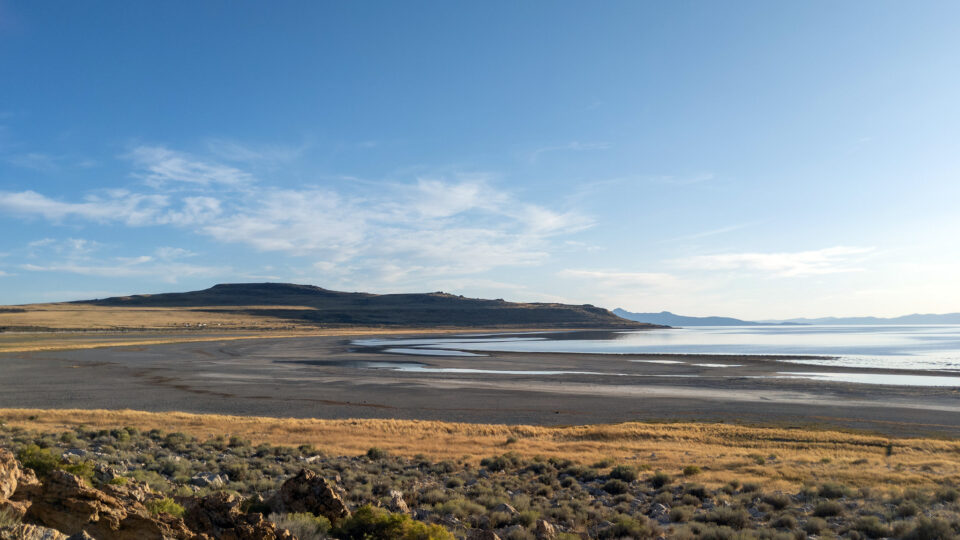
The Great Salt Lake in Utah has been described as a puddle of its former self.  The lake’s size fluctuates naturally with seasonal and long-term weather patterns, but the lake has been experiencing decline for decades as Utahans take water out of the rivers and streams that once fed the lake.  Over recent decades, the lake has lost 73% of its water and 60% of its surface area.

For years, scientists and environmental leaders have warned that the Great Salt Lake is headed toward a catastrophic decline.  Recent research has found that the lake’s desiccating shores are becoming a significant source of greenhouse gas emissions.  Scientists have calculated that the dried-out portions of the lakebed released about 4.1 million tons of carbon dioxide and other greenhouse gases in 2020.

The recent study, published in the journal One Earth, suggests that the Great Salt Lake – which is largest saltwater lake in the Western Hemisphere – as well as other shrinking saline lakes around the world could become major contributors of climate-warming emissions.

The shrinking back of the water has exposed a dusty lakebed that is laced with arsenic, mercury, lead, and other toxic substances.  Some are naturally occurring, and others are the residue of mining activity in the region.  These substances threaten to increase rates of respiratory conditions, heart and lung disease, and cancers.

As the lake shrinks, it is becoming saltier and uninhabitable to native flies and brine shrimp and may increasingly become unable to support the 10 million migratory birds and wildlife that frequent it.

The new research about greenhouse gas emissions just adds to a dire list of environmental consequences brought on by the lake’s steep decline.

**********

Web Links

Shrinking Great Salt Lake Becoming Source of Heat-Trapping Gas

Photo, posted January 20, 2020, courtesy of Matthew Dillon via Flickr.

Earth Wise is a production of WAMC Northeast Public Radio
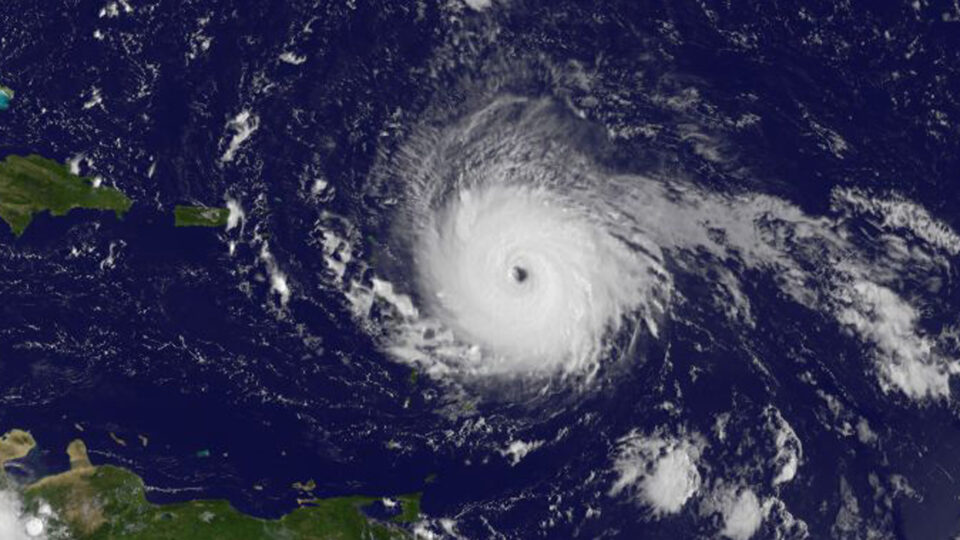
An active hurricane season

May 13, 2024 By EarthWise Leave a Comment

The Atlantic hurricane season officially runs from June 1st until November 30th.  Forecasters at Colorado State University have issued forecasts of Atlantic basin hurricane activity since 1984 based on the pioneering work of Professor William Gray.  This year’s forecast, issued in April, predicts a higher-than-average number of Atlantic storms.  In fact, it may be one of the most active seasons on record.

On average, there are 14 named storms each season.  This year, the prediction is for 23 of them.  On average, there are 7 hurricanes each season.  This year, the prediction is for 11. The prediction is for 5 major hurricanes among them.  These predictions are among the highest on record, although in 2020 they predicted 12 hurricanes.  In fact, that year there were 14 that actually took place.

Among the factors at play are that the El Niño that was occurring last year has dissipated and there is a good chance of a La Niña forming, which suppresses upper-level winds thereby making conditions ideal for hurricane formation and intensification.  But the overarching factor is global warming which is driving ocean temperature rise.  The water in the Atlantic, especially in the eastern Atlantic where most hurricanes form, has seen record-breaking warmth.  More warm water means more chances for storms.

Other research groups echo the predictions from Colorado State and, in some cases, see ever greater chances for an extremely active hurricane season.  The University of Pennsylvania forecast calls for 33 named storms.

The overall forecast is for a well above-average probability for major hurricanes making landfall along the continental United States coastline and the Caribbean. 

**********

Web Links

Weather tracker: US experts predict one of most active hurricane seasons on record

Photo, posted September 5, 2017, courtesy of NASA/NOAA GOES Project via Flickr.

Earth Wise is a production of WAMC Northeast Public Radio

Progress on offshore wind in New York

April 1, 2024 By EarthWise Leave a Comment

New York has now conditionally awarded two offshore wind projects that will move towards operation in 2026.  The projects, totaling more than 1,700 megawatts of power, will be the largest power generation projects in New York state in more than 35 years.  It is an important milestone toward achieving the state’s goal of developing 9,000 megawatts of offshore wind by 2035.

Empire Wind I, located 15 miles southeast of Long Island, and Sunrise Wind, located more than 30 miles east of the eastern point of Long Island, have already completed most federal and state permitting requirements.  Empire Wind I received final approval of their Construction and Operation Plan from the Bureau of Ocean Energy Management in late February.

Both projects are expected to ramp up construction activity this year.  Previous awards by NYSERDA for the projects in 2019 included contract provisions for specific economic benefits to New York communities and commitments for purchasing iron and steel from American sources.   Empire Wind I is being developed by Equinor, an international energy company headquartered in Norway.  Sunrise Wind, originally a joint project by Ørsted and Eversource, is now solely being developed by Ørsted, a global energy company based in Denmark.

Following successful execution of the contracts for the two projects, NYSERDA payments under these awards will only begin once the projects have obtained all required permits and approvals, the construction has been completed, and the projects begin delivering clean energy to New York.

**********

Web Links

New York selects Empire Wind I and Sunrise Wind offshore projects

Photo, posted June 14, 2022, courtesy of Lissa Eng / BOEM via Flickr.

Earth Wise is a production of WAMC Northeast Public Radio
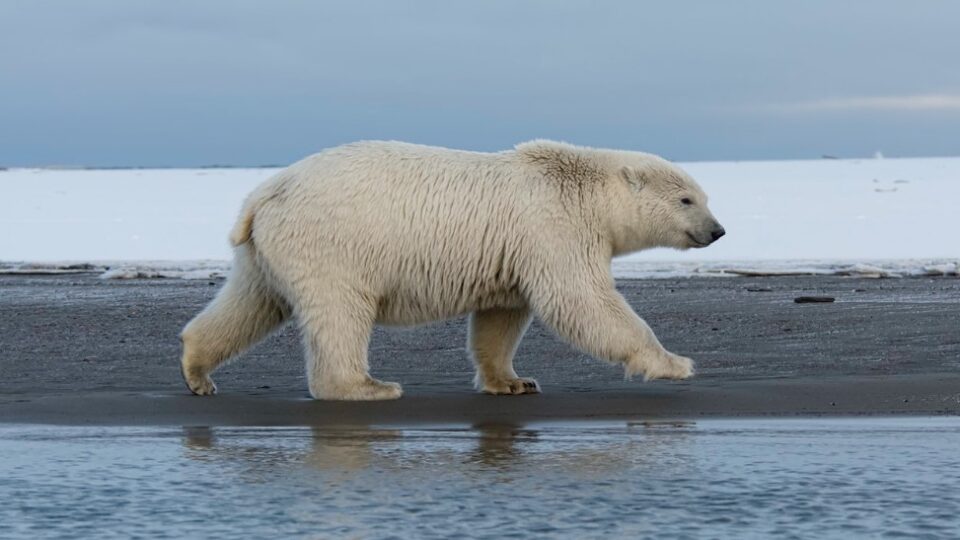
Polar bears and the changing climate

March 7, 2024 By EarthWise Leave a Comment

Polar bears struggling as the climate warms

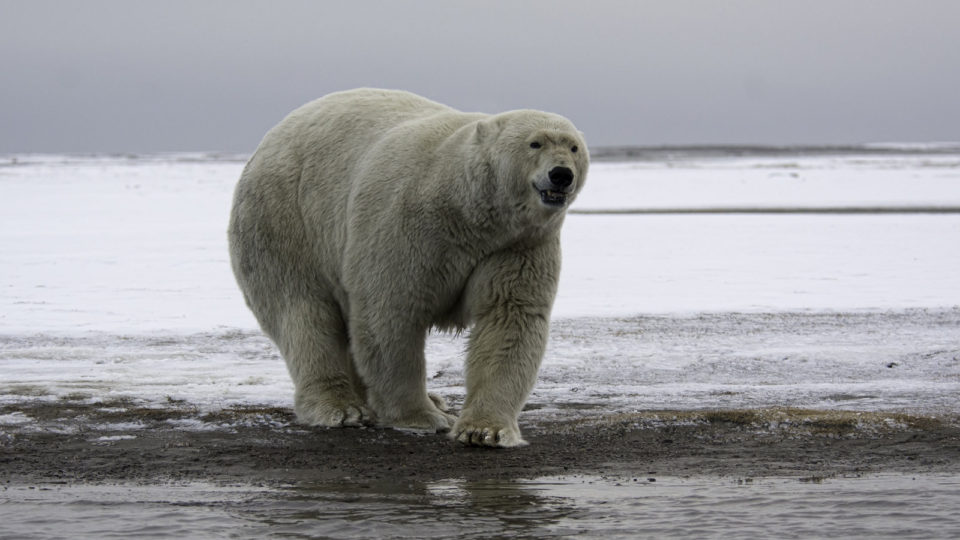
The changing climate poses a major threat to polar bear survival.  Polar bears, whose native range lies largely within the Arctic Circle, depend on sea ice for nearly all of their lifecycle functions.  Rising global temperatures are causing this sea ice to disappear.

With less sea ice, polar bears are forced to stay longer on land.  However, according to a new study led by researchers from Washington State University, more time stranded on land leads to a greater risk of polar bear starvation. 

During three summer weeks in Manitoba, Canada, 20 polar bears observed by researchers tried different strategies to maintain energy reserves.  But the research team found that nearly all of them lost weight – losing about 2.2 pounds per day on average.     

Some scientists have speculated that polar bears might be able to adapt to the changing climate by acting more like grizzly bears by either resting or eating terrestrial food.  But the polar bears tried versions of both strategies – with little success.

Polar bears can weigh nearly twice as much as grizzly bears.  To maintain this size, polar bears rely on the energy-rich fat of seals, which they best catch on ice.

In the study, which was recently published in Nature Communications, the researchers found that some polar bears laid down to conserve energy, while others searched on land for food.  But neither the activity nor the lack thereof paid off.  In fact, only one bear out of the 20 gained weight after stumbling across a dead marine mammal on land.

Polar bears across the Arctic are at risk of starvation as the ice-free period continues to grow.

**********

Web Links

Polar bears unlikely to adapt to longer summers

Photo, posted November 16, 2015, courtesy of Anita Ritenour via Flickr.

Earth Wise is a production of WAMC Northeast Public Radio
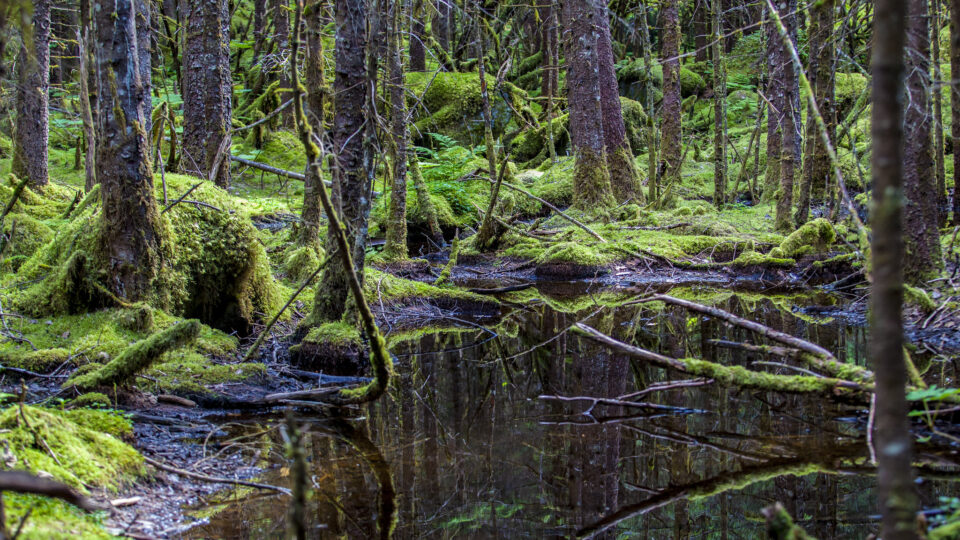
The importance of Alaska’s National Forests

December 22, 2023 By EarthWise Leave a Comment

The world’s forests play a crucial role in taking carbon out of the atmosphere and mitigating the effects of climate change.  An analysis of U.S. national forests shows that two southern Alaskan forests are key to meeting climate and biodiversity goals.

The Tongass Forest in Alaska is America’s largest national forest, encompassing 16.7 million acres.  Alaska’s Chugach Forest is the country’s second largest at just under 7 million acres.  These two forests are not only the largest national forests, they are also the most intact. 

A study by researchers at the Oregon State University College of Forestry looked at 152 national forests and compared them in terms of carbon density and accumulation, total biomass carbon stocks, habitat for eagles, bears, and wolves, and landscape integrity – which is the extent of modification by human activity.  According to the study, almost 31% of all high-landscape-integrity area found in national forests is in the Tongass and Chugach forests.  The Tongass alone represents over 25%.

These forests are cool and wet.  Their carbon stocks are only minimally affected by wildfire, unlike many other forests in the lower 48 states.  Given the size and stability of the two forests, protecting them is a high priority for making it possible to meet global goals relating to climate and diversity of species.

Ecosystems remove about 30% of all the carbon dioxide humans put into the atmosphere and intact forests with high carbon density do most of that work.  Protecting Alaska’s forests is crucial.

**********

Web Links

Southern Alaska’s national forests key to meeting climate, conservation goals, OSU study shows

Photo, posted August 4, 2014, courtesy of Jeff Canon via Flickr.

Earth Wise is a production of WAMC Northeast Public Radio
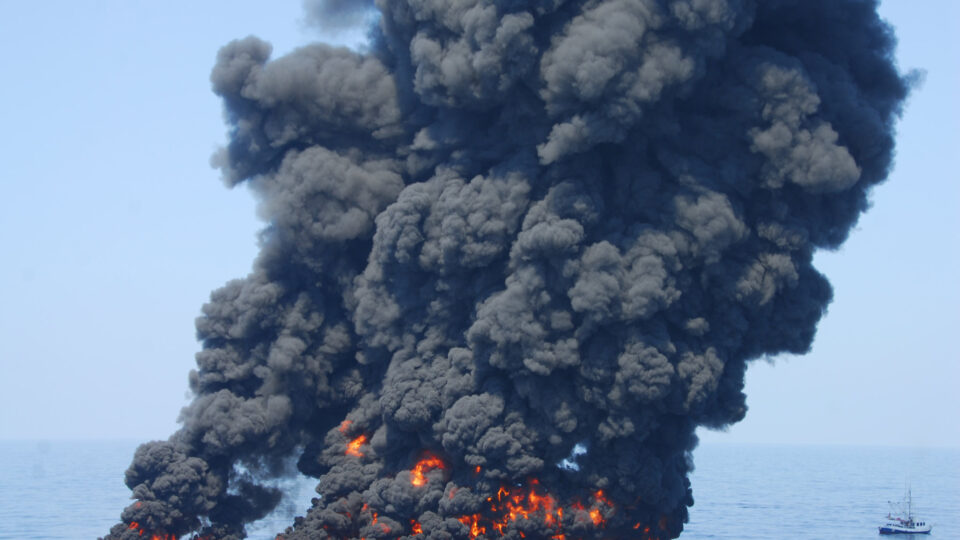
Biosurfactants And Oil Spills | Earth Wise

August 22, 2023 By EarthWise Leave a Comment

About 400 million gallons of oil leaks into the ocean every year.  This is a major source of environmental pollution.  Oil contains many hazardous compounds that are toxic or mutagenic for marine organisms. 

When oil spill incidents occur, large quantities of chemical dispersants, sometimes as much as millions of gallons, are applied to dissolve oil slicks, prevent oil from reaching coastlines, and enhance the dispersion of the oil in the water.  The hope for doing this is that microbial oil degradation will be enhanced as a result.  Certain microorganisms present in the water can feed on crude oil components and break them down into harmless substances.

A study at the University of Stuttgart in Germany in 2015 showed that chemical dispersants in fact can slow down microbial oil degradation and therefore inhibit water purification.  The oil components need to be broken down sufficiently for them to be bioavailable to microorganisms.  The study found that dispersants were not accomplishing this.

A new study by the same group along with researchers from the University of Tubingen in Germany and the University of Georgia has found that using biosurfactants rather than chemical dispersants stimulates different microbial oil degraders with respect to their growth and activity and can enhance our ability to deal with oil spills.   Treating the water with the biosurfactant rhamnolipid rather than any of the generally-used dispersants provided much higher rates of microbial breakdown of oil components.

The hope is that this work can lead to the development of effective and environmentally friendly approaches to combatting oil spills.

**********

Web Links

Biosurfactants might offer an environmentally friendly solution for tackling oil spills

Photo, posted June 11, 2010, courtesy of Deepwater Horizon Response via Flickr.

Earth Wise is a production of WAMC Northeast Public Radio

Fungus And Carbon Storage | Earth Wise

July 26, 2023 By EarthWise Leave a Comment

It is well-known that plants and trees store enormous amounts of carbon.  What has not been common knowledge is that the vast underground network of fungi across the world’s lands stores billions of tons carbon, roughly equivalent to 36% of yearly global fossil fuel emissions.

These mycorrhizal fungi form symbiotic relationships with almost all land plants.  The fungi transport carbon, converted by sugars and fats by plants, into soil.  They have been supporting life on land for at least 450 million years and form sprawling underground networks everywhere – even beneath roads, gardens, and houses – on every continent on earth.

An international team of scientists analyzed hundreds of studies looking at plant-soil processes to understand how much carbon is being stored by fungi on a global scale.  The findings, published in the journal Current Biology, revealed that over 13 billion tons of CO2 is transferred from plants to fungi each year, more than China emits annually.  This process transforms the soil beneath our feet to a massive carbon pool and constitutes the most effective carbon storage activity in the world.

Given that fungi have such a crucial role in mitigating carbon emissions, the researchers are recommending that fungi should be considered in biodiversity and conservation policies. More needs to be done in protecting the underground networks of mycorrhizal fungi. The UN has warned that human activities are degrading soils and that 90% of the world’s soils could be degraded by 2050.  Not only would this obviously be very bad for the productivity of crops and plants, but we now know this could be catastrophic for curbing climate change and rising temperatures.

**********

Web Links

Fungi stores a third of carbon from fossil fuel emissions and could be essential to reaching net zero

Photo, posted May 28, 2023, courtesy of Geoff McKay via Flickr.

Earth Wise is a production of WAMC Northeast Public Radio
Birds Bees And Coffee | Earth Wise

May 3, 2022 By EarthWise Leave a Comment

Biodiversity adds value to agriculture

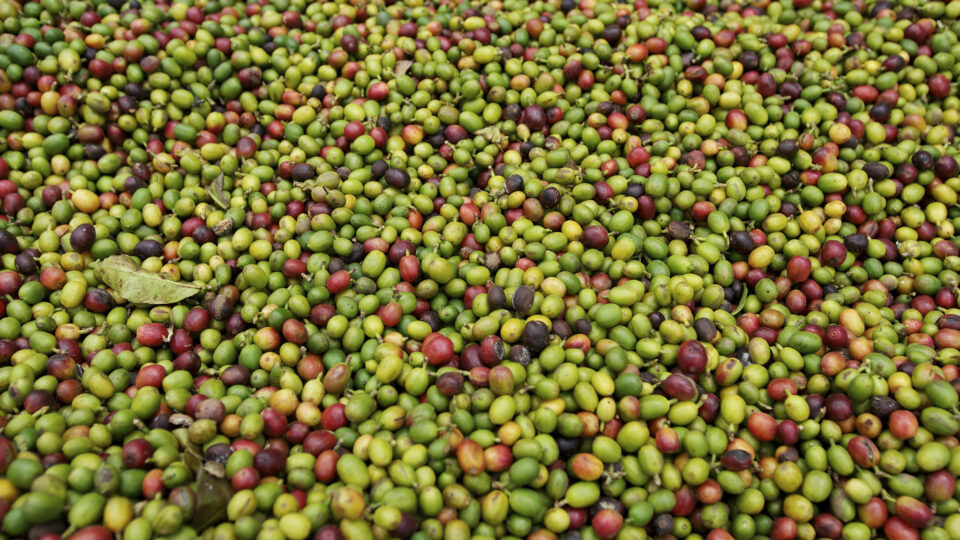
A new study by the University of Vermont in collaboration with researchers from three Latin American countries looked at the effects of birds and bees on coffee crops.  They found that coffee beans are bigger and more plentiful when birds and bees team up to protect and pollinate coffee plants.

The real-world study manipulated coffee plants across 30 farms by excluding birds and bees with a combination of large nets and small lace bags.  They looked at four scenarios:  bird activity alone (pest control), bee activity alone (pollination), no bird and bee activity at all, and a natural environment where birds and bees were free to pollinate and eat insects that otherwise damage coffee plants.

The study looked at fruit set, fruit weight, and fruit uniformity – important factors that determine the quality and price of the coffee crop.  The results were that the combined positive effects of birds and bees were greater than their individual effects.   Without birds and bees, the average coffee yield on the farms declined nearly 25%.  That is important information for the $26 billion coffee industry.

A surprising result of the study is that many birds providing pest control to coffee plants in Costa Rica had migrated thousands of miles from Canada and the U.S.

Previous studies looked at the benefits of natural factors separately and then added them up.  But the new study demonstrates that nature is an interacting system with both synergies and trade-offs.  Past assessments of individual ecological services may have underestimated the benefits biodiversity provides to agriculture and human wellbeing.  Ecosystems services are more valuable together than separately.

**********

Web Links

The Secret to Better Coffee? The Birds and the Bees

Photo, posted March 2, 2012, courtesy of Caroline Gluck/Oxfam via Flickr.

Earth Wise is a production of WAMC Northeast Public Radio.

July Was A Scorcher | Earth Wise

September 2, 2021 By EarthWise Leave a Comment

Record setting July 2021 was the hottest month ever

July 2021 has the unfortunate distinction as being the world’s hottest month ever recorded according to global data from the National Oceanic and Atmospheric Administration.   July is typically the warmest month of the year, but this July was the warmest month of any year on record.

The combined global land and ocean surface temperature was 62.07 degrees Fahrenheit, which is 1.67 degrees above the 20th century average.  This was the highest monthly average since records began 142 years ago.  It broke the previous record set in July 2016 and tied in 2019 and 2020.

The Northern Hemisphere was 2.77 degrees above average.  Asia had its hottest July on record.  Europe had its second hottest July on record.  Places like Africa, Australia, and New Zealand all had top-ten warmest Julys.

Other aspects of the changing climate included the observation that Arctic sea ice coverage for July was the fourth-smallest in the 43-year record.  Interestingly, Antarctic sea ice extent was actually above average in July.  Global tropic cyclone activity this year so far is above normal for the number of named storms.  In the Atlantic basin, the formation of the storm Elsa on July 1 was the earliest date for a 5th named storm.

It remains very likely that 2021 will rank among the 10 hottest years on record.  Extreme heat is a reflection on the long-term climate changes that were outlined recently in a major report released by the Intergovernmental Panel on Climate Change.  These latest global observations add to the disturbing and disruptive path that the changing climate has set for the world.

**********

Web Links

It’s official: July was Earth’s hottest month on record

Photo, posted July 15, 2021, courtesy of Lori Iverson/National Interagency Fire Center via Flickr.

Earth Wise is a production of WAMC Northeast Public Radio.

Post-COVID Emissions Rebound | Earth Wise

May 28, 2021 By EarthWise Leave a Comment

Emissions are on the rise as COVID crisis lessons

The extensive shutdowns associated with the COVID-19 pandemic resulted in reduced activity across many sectors of the global economy.  As a result, global pollution and greenhouse gas emissions also saw lower levels.  As the COVID crisis lessens, an economic recovery is growing and as that occurs, emissions are on the rise.

The International Energy Agency forecasts that energy-related carbon dioxide emissions are projected to increase by 1.5 billion tons this year, the second-largest increase in history.

The emissions increase in 2021 is expected to be nearly 5%, reversing most of last year’s emissions decline caused by the pandemic. This would be the largest annual rise since the 2010 recovery from the global financial crisis.  In many places across the globe, people are making up for lost time and doing more of all the things that cause carbon emissions.

A key driver of the emissions increase is a rise in coal use.  The forecast is that coal-burning in 2021 would come close to the all-time peak of 2014.  Both natural gas and oil use are also expected to increase this year.  These increases are in spite of a predicted 17% increase in electricity generation from wind power and an 18% increase in solar-power generation. 

Atmospheric concentrations of CO2 are now at 417 parts per million and have increased by 3 PPM in the past year.  If human CO2 emissions are not reined in, atmospheric concentrations of planet-warming greenhouse gases could double those of pre-Industrial levels by mid-century, which would have disastrous impacts on the climate.

**********

Web Links

Global CO2 Emissions Set to Surge in 2021 in Post-Covid Economic Rebound

Photo, posted October 22, 2020, courtesy of Hospital Clínic Barcelona via Flickr.

Earth Wise is a production of WAMC Northeast Public Radio.

Earth Day

April 22, 2019 By EarthWise Leave a Comment

Today is Earth Day.  On April 22, 1970, millions of Americas took to the streets in peaceful demonstrations in favor of environmental reform.  Since that first time, Earth Day has now become a global event each year.  Estimates are that as many as a billion people in 192 countries take part in Earth Day events.

This year, the theme for Earth Day is “Protect our Species.”  The focus is on the fact that the world is facing the greatest rate of extinction since the demise of the dinosaurs more than 60 million years ago.

But unlike the extinctions from that time that were linked to so-called acts of god like asteroid collisions, the rapid extinction of species in our world today is mostly the result of human activity.

The global destruction and rapid reduction of plant and wildlife populations are directly linked to climate change, deforestation, habitat loss, trafficking and poaching, unsustainable agriculture, pollution, and pesticides.

In order to stem the tide of destruction, the Earth Day Network is asking people to help raise awareness about the accelerating rate of extinction of millions of species and the causes and consequences of this phenomenon.  We need to push for the creation of policies that protect broad groups of species as well as individual species and their habitats.  There needs to be a global movement that embraces nature and its values. And we need to eat less meat and curtail the use of pesticides and herbicides.

We share the planet with many species, and we need them to be here in order to sustain our own species.  Something to remember on Earth Day 2019.

**********

Web Links

Earth Day Network

Photo, posted January 24, 2012, courtesy of Jonas Bengtsson via Flickr.

Earth Wise is a production of WAMC Northeast Public Radio.

Fire-Driven Thunderstorms

March 6, 2019 By EarthWise Leave a Comment

In 2016 and 2017, wildfires in western Canada spawned thunderstorms that ignited additional fires, in some cases tens of miles away from the original fire.  These fire-triggered thunderstorms are technically known as pyrocumulonimbus clouds, or “pyroCb’s”.

The physics of pyroCb’s is complex.  When super-heated updrafts from an intense fire suck smoke, ash, burning materials, and water vapor high into the air, these elements cool and form so-called fire clouds that look and act like the cumulonimbus clouds associated with classic thunderstorms.  What is different is that the heat and particulates in the smoke almost always arrest the ability of the cloud to produce rain.  Instead, what remains is a lightning storm that moves across the landscape, triggering more fires.

These PyroCb events appear to be happening far more often, producing more energy, and erupting in places where they have never been seen before.  As the world warms, wildfires themselves are becoming larger and hotter.  In the past decade, wildfires have been burning more than twice as many acres as they did before the turn of the 21st century.  Along with the growth in wildfire activity, there has been an increase in PyroCb events, and there are now an average of 25 per year in western North America.

Apart from starting new fires, pyroCb’s also have similar effects as moderate-sized volcanic eruptions.  Smoke and aerosols from wildfires can rise high into the stratosphere, where they can linger for months.  Eventually, the particles carried aloft in the atmosphere do come down, dumping dangerous chemicals on far flung regions of the earth.  But unlike volcanic eruptions, which are relatively rare events, pyroCb’s are happening more and more each year.

**********

Web Links

Fire-Induced Storms: A New Danger from the Rise in Wildfires

Photo, posted July 31, 2013, courtesy of Loren Kerns via Flickr.

Earth Wise is a production of WAMC Northeast Public Radio.

Polar Bears Are Struggling To Find Food

March 9, 2018 By EarthWise Leave a Comment

https://earthwiseradio.org/wp-content/uploads/2018/03/EW-03-09-18-Polar-Bears-Struggling.mp3

Climate change continues to pose a major threat to polar bear survival.  Polar bears, whose native range largely lies within the Arctic Circle, depend on sea ice for nearly all of their life cycle functions.  And rising global temperatures are causing that sea ice to disappear. 

[Read more…] about Polar Bears Are Struggling To Find Food

Primary Sidebar

Recent Episodes

  • An uninsurable future
  • Clean energy and jobs
  • Insect declines in remote regions
  • Fossil fuel producing nations ignoring climate goals
  • Trouble for clownfishes

WAMC Northeast Public Radio
WAMC/Northeast Public Radio is a regional public radio network serving parts of seven northeastern states (more...)

Copyright © 2025 ·