
• Skip to primary navigation
  • Skip to main content
  • Skip to primary sidebar

Earth Wise

A look at our changing environment.

  • Home
  • About Earth Wise
  • Where to Listen
  • All Articles
  • Show Search
Hide Search
You are here: Home / Archives for absorption

absorption

Tracking Down Gluten Sensitivity | Earth Wise

October 6, 2020 By EarthWise Leave a Comment

Exploring gluten sensitivity

Celiac disease is a well-documented autoimmune disease triggered by exposure to the dietary proteins found in wheat, rye, and barley.  Celiac disease affects less than 1% of Americans yet many more people claim to be sensitive to gluten.

When people with celiac disease eat gluten, their body mounts an immune response that attacks the small intestine.  These attacks lead to damage on the villi, the small projections that line the small intestine that promote nutrient absorption.  Symptoms range from various digestive problems to fatigue, weight loss, bloating, and anemia.  Ultimately, it can lead to a variety of serious health complications.

Until recently, there was a tendency by doctors to dismiss the complaints of people who claimed to be sensitive to gluten but do not have celiac disease.  That is starting to change, in part as a result of studies conducted at Columbia University that looked at the biological basis for non-celiac gluten sensitivity.

The new study shows that people with non-celiac gluten sensitivity produce a high level of anti-gluten antibodies but that these antibodies are different from the ones triggered by celiac disease and that the inflammatory responses they instigate are also different.  The more restrained inflammatory response is much less likely to be associated with autoimmune activity and intestinal cell damage.  In addition, the immune system of people with non-celiac gluten sensitivity appears to be able to gradually reduce its inflammatory response over time.

Discovery of these antibodies could be used in the future to help doctors more readily identify people with non-celiac gluten sensitivity, which now is difficult to diagnose.  The researchers also believe that their work could lead to potential new therapies for celiac disease, which is currently treated only with dietary restrictions.

**********

Web Links

Unique Antibody Profile Sets Gluten Sensitivity Apart from Celiac Disease

Photo, posted November 27, 2010, courtesy of Francis Storr via Flickr.

Earth Wise is a production of WAMC Northeast Public Radio.

Detecting Methane

December 23, 2019 By EarthWise Leave a Comment

Natural gas has become a huge industry in the United States, increasingly replacing coal in power plants, and otherwise contributing to energy independence.  Unfortunately, it also contributes to climate change.  Methane – the primary component of natural gas – is a powerful greenhouse gas that is estimated to be responsible for as much as a quarter of atmospheric warming.

Not all of the emissions from natural gas come from its use.  In the United States, so-called fugitive emissions from the oil and gas industry total an estimated 13 million metric tons per year.  These emissions basically consist of leakage of various types from the extraction, transportation, and processing of natural gas and cost the industry $2 billion in lost revenue each year.  Globally, that figure is estimated to be $30 billion.

Research labs and startup companies are working on developing and deploying novel technologies to address the growing issue of methane leaks across the fossil fuel supply chain.

One company called LongPath Technologies – a spinout from the University of Colorado – uses frequency comb laser technology that can pinpoint a leak to about a 50 square-foot area from half a mile away.  Other companies use different variations on laser absorption technology to be able to measure methane concentrations from a distance. 

Methane is a much more powerful greenhouse gas than carbon dioxide, but it stays in the atmosphere for much less time.  As a result, reducing methane emissions can pay off much more quickly than reducing carbon dioxide emissions.

The current EPA is trying to eliminate emissions regulations on the natural gas industry, but it is in the industry’s economic interest to curb those emissions even if they were unconcerned about the environment.

**********

Web Links

Methane Detectives: Can a Wave of New Technology Slash Natural Gas Leaks?

Photo, posted October 22, 2016, courtesy of Flickr.

Earth Wise is a production of WAMC Northeast Public Radio.
A Battery That Eats Carbon Dioxide

October 30, 2018 By EarthWise Leave a Comment

https://earthwiseradio.org/wp-content/uploads/2018/10/EW-10-30-18-A-Battery-That-Eats-CO2.mp3

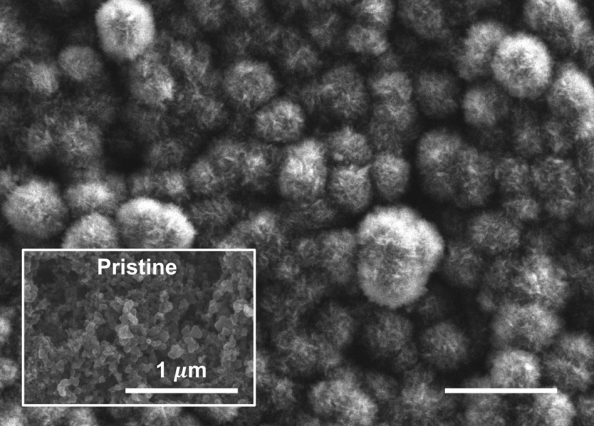
Fossil fuel-based power plants are increasingly considering the use of carbon capture technologies as a way to reduce emissions.  The biggest challenge to the wide-spread adoption of such technology is its energy cost, which of course equates to economic cost.  Present-day power plants equipped with carbon capture systems can use up to 30% of the electricity they generate just to power the capture, release, and storage of carbon dioxide.

[Read more…] about A Battery That Eats Carbon Dioxide

Primary Sidebar

Recent Episodes

  • An uninsurable future
  • Clean energy and jobs
  • Insect declines in remote regions
  • Fossil fuel producing nations ignoring climate goals
  • Trouble for clownfishes

WAMC Northeast Public Radio

WAMC/Northeast Public Radio is a regional public radio network serving parts of seven northeastern states (more...)

Copyright © 2026 ·