• Skip to primary navigation
  • Skip to main content
  • Skip to primary sidebar

Earth Wise

A look at our changing environment.

  • Home
  • About Earth Wise
  • Where to Listen
  • All Articles
  • Show Search
Hide Search
You are here: Home / Archives for 2017

2017

Thawing permafrost in the Arctic

February 18, 2025 By EarthWise Leave a Comment

Permafrost covers about a quarter of the landmass in the Northern Hemisphere.  It stores vast quantities of organic carbon in the form of dead plant matter.  As long as it stays frozen, it is no threat to the climate.  But as permafrost thaws, microorganisms start breaking down that plant matter and large amounts of carbon are released into the atmosphere in the form of carbon dioxide and methane.

Scientists estimate that there could be two and a half times as much carbon trapped in Arctic permafrost as there is in the atmosphere today.

Thawing permafrost poses various risks to the Arctic environment and the livelihoods of its people.  According to a new study led by researchers from the University of Vienna in Austria, Umeå University in Sweden, and the Technical University of Denmark, thawing permafrost threatens the way of life of up to three million people.

To identify these risks, the research team studied four Arctic regions in Norway, Greenland, Canada, and Russia between 2017 and 2023.  The research, which was recently published in the journal Communications Earth and Environment, identified five key hazards posed by the thawing permafrost: infrastructure failure, disruption of mobility and supply, decreased water quality, challenges for food security, and exposure to diseases and contaminants.

These are present developments – not future dangers.  Global scientific cooperation, policy interventions, and investment in research are critical to mitigate the impact of thawing permafrost and address the broader consequences it brings.

**********

Web Links

A transdisciplinary, comparative analysis reveals key risks from Arctic permafrost thaw

Thawing permafrost threatens up to three million people in Arctic regions

Photo, posted February 9, 2017, courtesy of Benjamin Jones / USGS via Flickr.

Earth Wise is a production of WAMC Northeast Public Radio

Global coral bleaching

May 22, 2024 By EarthWise Leave a Comment

The world’s coral reefs are in the midst of a global bleaching event being driven by extraordinarily high ocean temperatures.  This is the fourth such global event on record and is predicted to be the largest one ever.  Coral bleaching occurs when corals are stressed by heat and eject the symbiotic algae within them that they need to survive.  Bleached corals can recover if water temperatures cool soon enough.  Otherwise, they die.

Each of the three previous coral bleaching events has been worse than the last.  The first, in 1998, affected 20% of the world’s reefs.  The second, in 2010, affected 35%.  The third, from 2014 to 2017, affected 56% of reefs.

The current bleaching event was confirmed by satellite observations early in April and was already seen to be affecting more than half of the world’s coral areas across the Pacific, Indian, and Atlantic Oceans.  The ongoing event is expected to be the worst bleaching ever experienced by Australia’s Great Barrier Reef.  A small saving grace is that the current bleaching event is not expected to be of extremely long duration because the El Niño in the Pacific has abated.

Coral bleaching events are becoming more severe and frequent due to increased marine heat waves driven by climate change.  Last year was particularly difficult for corals as global sea temperatures reached record high levels for several months.

Widespread coral bleaching impacts economies, livelihoods, food security, and more.  Coral reefs provide ecosystem services essential to marine life and human populations as well.  Global action will be needed for coral interventions and restorations.

**********

Web Links

Satellites watch as 4th global coral bleaching event unfolds

Photo, posted March 23, 2012, courtesy of Oregon State University via Flickr.

Earth Wise is a production of WAMC Northeast Public Radio
Have We Reached Peak Internal Combustion Engine? | Earth Wise

August 3, 2021 By EarthWise 1 Comment

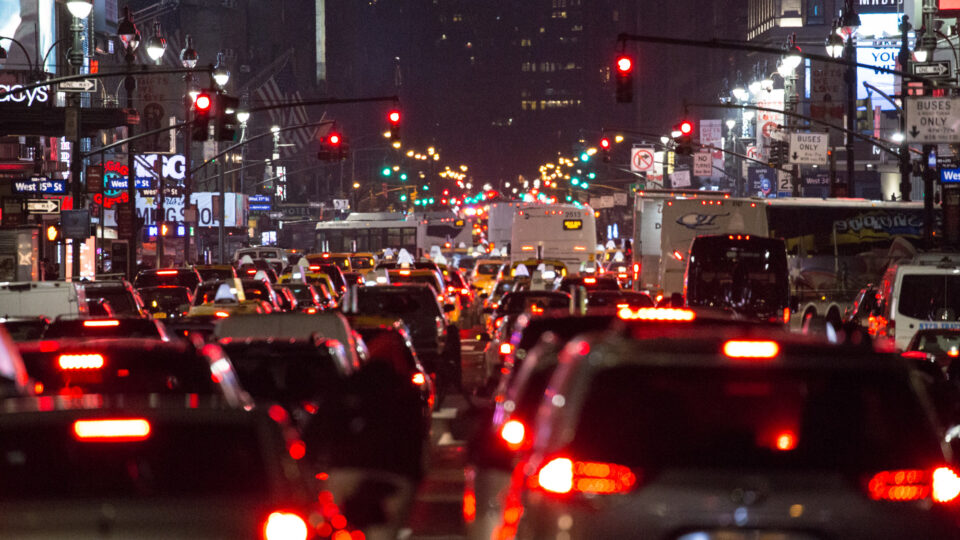
Global sales of gas-powered cars may have peaked in 2017

According to new analysis from Bloomberg New Energy Finance, global sales of gas-powered cars may well have peaked in 2017, representing a significant milestone in the transition to electric vehicles.

Demand for gas cars dropped in 2018 and 2019, and then plummeted in 2020 as a result of the coronavirus pandemic.  While sales are surely picking up as the pandemic ebbs, the increasing demand (and supply as well) for plug-in vehicles is likely to put gas-powered cars in a state of permanent decline.

Global EV sales are projected to go from 3.1 million last year to 14 million in 2025.  The growth is being driven by falling battery prices, government policies, and increasing choices of vehicles.  Virtually all automobile manufacturers are introducing electric vehicles over the next couple of years and increasing numbers of them are planning a complete transition to EVs in the near future.  Projections are that EVs will account for the majority of new car sales by 2035.

While all this progress is encouraging, there are still over a billion gas- and diesel-powered cars on the road and the fleet turns over slowly.  The current average operating life of cars here in the US is 12 years.

To reach the net-zero carbon emission goals by 2050 as many governments have mandated, additional policies and regulations will be needed.  For example, electric cars will need to account for essentially all new sales by 2035, not just the majority.  Reaching net-zero by mid-century will require all hands on deck, including trucks and heavy commercial vehicles that have barely started to become electrified.

**********

Web Links

New Analysis Suggests We Have Already Hit Peak Internal Combustion Engine

Photo, posted December 23, 2017, courtesy of Davide Gambino via Flickr.

Earth Wise is a production of WAMC Northeast Public Radio.

The Cost Of Rising Seas

October 1, 2019 By EarthWise Leave a Comment

Coastal cities in the United States are grappling with the need for extensive infrastructure projects to protect against rising seas and worsening storms.  The cost of these projects will be enormous, and it is unclear how to pay to them.

Boston has many neighborhoods in low-lying areas, and it is estimated that $2.4 billion will be needed to protect the city from flooding.  The city abandoned plans to build a harbor barrier that would have cost $6 to $12 billion because it was economically unfeasible.

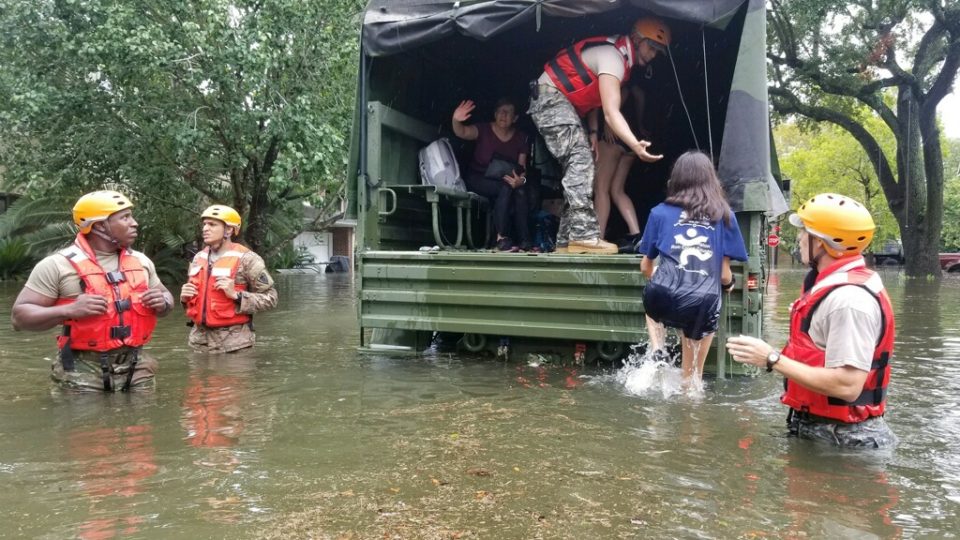
Charleston, South Caroline needs $2 billion to reduce flooding that occurs regularly during high tides.  The Houston, Texas area needs $30 billion to provide protection against a 100-year flood.  Hurricane Harvey caused $125 billion in damages in Texas in 2017.  New York City is considering a $10 billion storm surge barrier and floodgates to shield parts of the city from rising waters.

Florida faces the greatest exposure to flooding with an estimated $76 billion in costs to address some of its problems.

At the federal level, multiple agencies represent potential funding sources, but none offer the kind of money required to address the need.  This places a heavy burden on state and local governments.  Various states have passed legislation related to shoreline resiliency and flood abatement, but relatively little funding has been approved.  Some bond measures have passed, but the totals are small compared with what is needed.

Educating people about the costs of not doing anything or not doing enough soon enough is essential.  As Hurricane Katrina demonstrated, not spending a large amount of money on resilience can result in having to spend a colossal amount of money on recovery.

**********

Web Links

Who Will Pay for the Huge Costs of Holding Back Rising Seas?

Photo, posted December 26, 2013, courtesy of Flickr.

Earth Wise is a production of WAMC Northeast Public Radio.

A Disastrous Year

February 5, 2019 By EarthWise Leave a Comment

The number and economic impact of natural disasters around the world have increased dramatically over the past 30 years.  In dollar terms, the amount has actually more than doubled.  While 2017 and especially 2011 hold the records for worldwide economic damage, 2018 was pretty disastrous in its own right, totaling at least $160 billion.

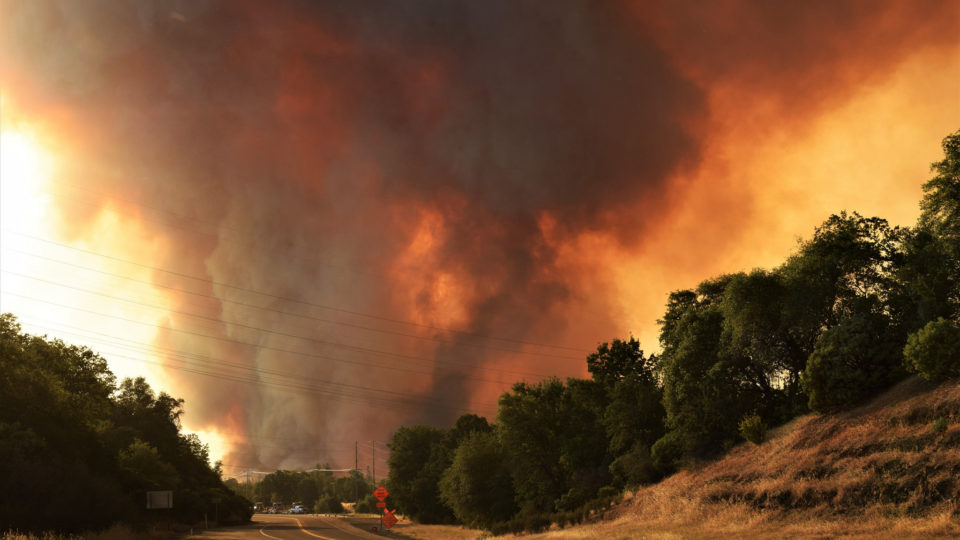
The year was dominated by costly wildfires in California and tropical storms in the United States and Asia.   According to a recent report by the reinsurance company Munich Re, the Camp and Woolsey fires in California alone caused losses of $21.7 billion, $16.5 billion of which was insured.

Overall, insurance companies paid out $80 billion in damage claims from natural disasters last year.  This was less than the $140 billion in 2017 but is still double the 30-year average.

Losses from wildfires have increased dramatically in recent years and summers continue to get hotter and dryer, a likely consequence of climate change.  These mounting costs bring into question whether people can continue to build in high-risk wildfire areas without dramatic changes in materials and the aggressive use of other protective measures.

Twenty-nine natural disaster events in 2018 caused more than a billion dollars in damage each.  Tropical storms including hurricanes Michael and Florence in the United States and three Asian typhoons caused $57 billion in damage.

A severe drought in Europe that set off major wildfires and caused agricultural losses caused $3.9 billion in losses.  Only about $280 million of this damage was covered by insurance companies since farmers in Europe don’t typically purchase insurance against drought.  For them, 2018 was truly a disastrous year.

**********

Web Links

Natural Disasters Caused $160 Billion in Damage in 2018

Photo, posted July 26, 2018, courtesy of Bureau of Land Management California via Flickr.

Earth Wise is a production of WAMC Northeast Public Radio.

2017 Was Hot

March 1, 2018 By EarthWise Leave a Comment

https://earthwiseradio.org/wp-content/uploads/2018/03/EW-03-01-18-2017-Was-Hot.mp3

There’s no argument to be made about whether 2017 was hot or not. The only uncertainty is whether it was the second or third warmest year ever recorded. 

[Read more…] about 2017 Was Hot

Learning From Fire

December 28, 2017 By EarthWise Leave a Comment

https://earthwiseradio.org/wp-content/uploads/2017/12/EW-12-28-17-Learning-from-Fire-1.mp3

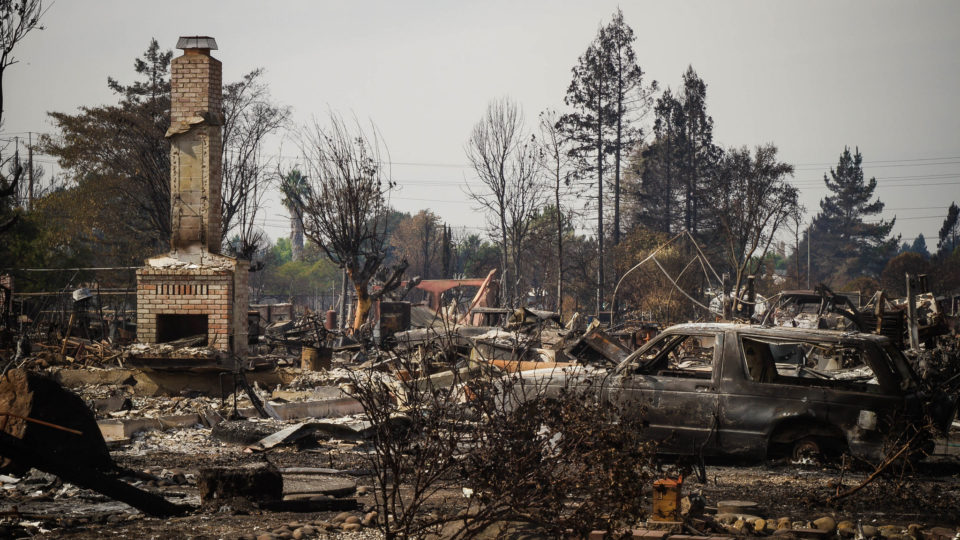
The Tubbs Fire was the huge wildfire that burned parts of Napa, Sonoma and Lake counties in Northern California in October.  Between that fire and several smaller ones going on at the same time, at least 43 people died and over 8,400 homes and buildings were destroyed.  The Tubbs Fire alone burned over 36,000 acres. The even larger December wildfires in Southern California scorched hundreds of thousands of acres in multiple counties.

[Read more…] about Learning From Fire

The Terminology Of Extreme Weather

September 19, 2017 By EarthWise Leave a Comment

https://earthwiseradio.org/wp-content/uploads/2017/09/EW-09-19-17-The-Terminology-of-Extreme-Weather.mp3

We often hear the terms “100-year” and “500-year” used to describe instances of extreme flooding.  But as the climate changes, these extreme weather events are expected to become more frequent.  So what’s with the terminology then anyways? 

[Read more…] about The Terminology Of Extreme Weather

Acorns And Lyme Disease

November 20, 2015 By WAMC WEB

In New York’s Hudson Valley, it’s hard to go outside without stepping on an acorn. Oaks have ‘boom and bust’ acorn production cycles. In lean years, trees produce a handful of nuts. In boom years, acorns seem to rain down from the sky. We are currently experiencing an acorn bumper-crop, or what ecologists call a ‘mast’ year.

In some forests, there can be more than 100 acorns per square meter.  This is welcome news to animals like mice, chipmunks, and squirrels. They can gorge on the bounty and stock their larders. Acorn caches help wildlife avoid predators and survive the lean months of winter. They even give well-fed rodents a jump-start on the breeding season.

For this reason, acorn “mast” years are also harbingers of future Lyme disease risk. In the summer following acorn booms, white-footed mouse numbers explode. In New York’s Hudson Valley, these mice play a major role in infecting blacklegged ticks with the agents that cause Lyme disease, Babesiosis, and Anaplasmosis.

Cary Institute disease ecologist Rick Ostfeld explains.

“The ticks that are emerging as larvae in August  – just as the mice and chipmunks are reaching their population peaks – they have tons of excellent hosts to feed from.  They survive well and they get infected with tick-borne pathogens.  And that means that two years following a good acorn crop we see high abundance of infected ticks, which represents a risk of human exposure to tick borne disease.”

Predictions are based on 20 years of field studies that have confirmed the relationship among acorn mast years, mouse outbreaks, and the prevalence of infected ticks. Mark your calendars – 2017 will likely be a bad year for Lyme disease.

**********


Web Extra

Full interview with Rick Ostfeld, a disease ecologist at the Cary Institute of Ecosystem Studies 

https://earthwiseradio.org/wp-content/uploads/2015/11/Ostfeld_full_web.mp3


Web Links

The acorn connections, with Dr. Rick Ostfeld: ticks, gypsy moths, songbirds and more

Photo, posted August 16, 2012, courtesy of Rabiem22 via Flickr.

EW Extra: Interview With Rick Ostfeld

XXXXXXXXX

Primary Sidebar

Recent Episodes

  • An uninsurable future
  • Clean energy and jobs
  • Insect declines in remote regions
  • Fossil fuel producing nations ignoring climate goals
  • Trouble for clownfishes

WAMC Northeast Public Radio

WAMC/Northeast Public Radio is a regional public radio network serving parts of seven northeastern states (more...)

Copyright © 2026 ·