• Skip to primary navigation
  • Skip to main content
  • Skip to primary sidebar

Earth Wise

A look at our changing environment.

  • Home
  • About Earth Wise
  • Where to Listen
  • All Articles
  • Show Search
Hide Search
You are here: Home / Archives for Earth Wise

Earth Wise

Wind And Solar Pass Coal | Earth Wise

August 3, 2023 By EarthWise Leave a Comment

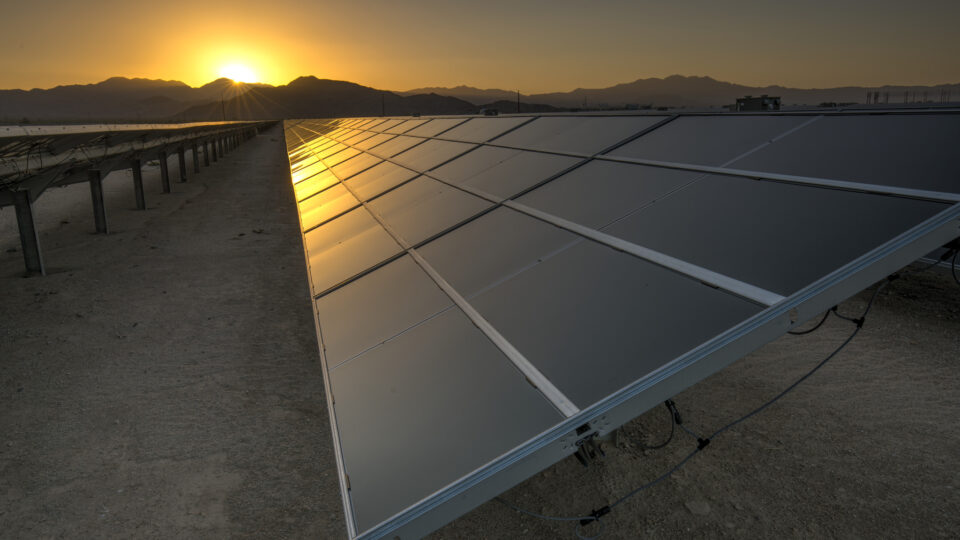
For the first five months of this year, wind and solar generated more electricity than coal in the United States.  This is a first.  Total renewable energy generation exceeded coal-fired power in both 2020 and 2022, but that counted hydroelectric power as one of the renewable sources.

This year, wind and solar alone generated a total of 252 terawatt-hours of energy through May compared with coal’s output of 249 terawatt-hours.  Hydropower generated an additional 117 terawatt-hours during that period.

While solar and wind power have been expanding at a rapid rate, the biggest change this year has been a precipitous drop in coal-fired generation due to a combination of low natural gas prices, a mild winter, and a series of coal plant retirements.

Coal generated almost half of the country’s electricity as recently as 2008.  Since then, coal has steadily declined as older coal plants shut down and were replaced by natural gas plants and renewable energy sources.  The coal industry had a bit of a reprieve last year when natural gas prices spiked in response to the disruptions in gas supplies in Europe due to the war in Ukraine.  The benchmark for natural gas prices – known as Henry Hub – was $8.81 in August 2022.  In May of this year, it was $2.15.  Given this trend, the demand for coal has steadily declined. 

The US has retired another 7% of the coal fleet – 14 gigawatts of capacity – since the start of 2022.  Meanwhile, power companies have added 22.5 GW of wind and solar capacity in just the past 12 months.

**********

Web Links

In a First, Wind and Solar Generated More Power Than Coal in U.S.

Photo, posted September 20, 2016, courtesy of Bureau of Land Management via Flickr.

Earth Wise is a production of WAMC Northeast Public Radio

Cryo Conservation | Earth Wise

August 2, 2023 By EarthWise Leave a Comment

Recent studies have shown that there has been a 69% decline in global animal populations since 1970.  There is a biodiversity crisis in the world.  In the face of this situation, there is a growing interest in using cold storage to preserve genetic samples taken from animals threatened with extinction.

Just as egg-freezing is used to preserve human fertility for a later date, the cryogenic freezing of genetic material from animals could be important in reducing species extinctions.  Living cell banks – also known as cryobanks – could preserve genetic materials from animals that include skin cells, embryos, semen, and live tissues.  These materials could be cultured and used for various applications including DNA extraction, assisted reproduction, ensuring genetic diversity in animal populations, and potentially reintroducing species back into their natural habitats.

There is a facility called the Frozen Zoo at the San Diego Wildlife Alliance which has genetic material from 965 different species, including 5% of the vertebrates currently listed as threatened on the IUCN Red List.  Further sampling from zoos and aquariums could increase that representation to almost 17%.

Genetic samples of 50% of the species currently listed as extinct in the wild are already represented in the Frozen Zoo.  Further sampling from the zoological community could increase this number to 91%.  This could provide a critical lifeline for these species that are on the brink of extinction.  As wildlife populations continue to decline around the world, it is more critical than ever to collect and preserve genetic samples from threatened species.

**********

Web Links

Cryo conservation – a cool solution to saving species from extinction

Photo, posted September 30, 2018, courtesy of Andy Morffew via Flickr.

Earth Wise is a production of WAMC Northeast Public Radio

Shrinking Glaciers And Methane | Earth Wise

August 1, 2023 By EarthWise Leave a Comment

Shrinking glaciers pose an underestimated climate risk

The Arctic region is warming much faster than the rest of the planet.  In fact, according to a study published last year in the journal Nature, the Arctic has been warming nearly four times faster than the rest of the globe during the last 43 years.  This rapid warming is leading to substantial reductions in sea ice, thawing of permafrost, shifts in wildlife populations, and changes in ocean circulation patterns, among other changes. 

According to new research recently published in the journal Nature Geoscience, shrinking glaciers in the warming Arctic are exposing bubbling groundwater springs, which could provide an underestimated source of methane, a potent greenhouse gas.  Methane is more than 25 times as potent as carbon dioxide at trapping heat in the atmosphere.

The study, which was led by researchers from the University of Cambridge and the University Centre in Svalbard, Norway, found large sources of methane gas leaking from groundwater springs unveiled by melting glaciers. 

As glaciers retreat in the Norwegian archipelago of Svalbard and leave behind newly exposed land, groundwater beneath the Earth seeps upward and forms springs. In 122 out of the 123 springs studied, the research team found that the water was highly concentrated with dissolved methane.  When the spring water reaches the surface, the excess methane can escape to the atmosphere. 

Researchers are concerned that additional methane emissions released by the Arctic thaw could dramatically increase human-induced global warming.  If this phenomenon in the Svalbard archipelago is found to be more widespread across the Arctic — where temperatures are quickly rising and glaciers melting — the methane emissions could have global implications. 

**********

Web Links

The Arctic has warmed nearly four times faster than the globe since 1979

Shrinking Arctic glaciers are unearthing a new source of methane

Photo, posted October 22, 2022, courtesy of David Stanley via Flickr.

Earth Wise is a production of WAMC Northeast Public Radio

An Electric Cruise Ship | Earth Wise

July 31, 2023 By EarthWise Leave a Comment

Electrifying cruise ships

The shipping industry accounts for about 3% of global manmade greenhouse gas emissions.  In 2018, the International Maritime Organization, the UN body that regulates global shipping, set a target to cut the industry’s greenhouse gas emissions by at least half by 2050.

This goal has led to a variety of designs for eco-friendly ships, including car carriers, superyachts, and cargo ships with retractable sails.  But most of the designs still rely to at least some extent on engines that run on fossil fuels.

The Norwegian cruise ship company Hurtigruten has announced that it will build a zero-emissions electric cruise ship with retractable sails covered in solar panels.  The ship is expected to set sail in 2030.  Hurtigruten is a relatively small company, with a fleet of eight ships, each with a capacity of 500 passengers.  But the company hopes that its innovative plan will inspire the entire maritime industry.

The ship will predominantly run off of electric motors powered by 60 megawatt batteries that can be charged in port with renewable energy.  To reduce reliance on the battery, when it is windy, three retractable sails will rise out of the deck, reaching a maximum height of 164 feet.  The sails will be covered in solar panels that will generate energy to top off the batteries while sailing.

The ship will have 270 cabins to hold 500 passengers and 99 crew members.  The streamlined shape of the ship will result in less air resistance to further reduce energy use.

Hurtigruten already has a hybrid, battery-supported cruise ship and is currently in the process of converting its entire fleet to hybrid battery power.

**********

Web Links

An electric cruise ship with gigantic solar sails is set to launch in 2030

Photo, posted January 15, 2023, courtesy of Bernard Spragg via Flickr.

Earth Wise is a production of WAMC Northeast Public Radio

Renewables In China | Earth Wise

July 28, 2023 By EarthWise Leave a Comment

A couple of years ago, China set an ambitious goal for renewable energy capacity – which includes wind, solar, hydroelectric, and nuclear power – for it to exceed fossil fuel capacity by 2025.  According to a recent report by Reuters, China has hit this goal two years ahead of schedule.  Renewables now make up 50.9% of the country’s power capacity.

The rapid growth in renewable capacity has largely been driven by investments in wind and solar megaprojects in the sparsely populated west of the country that export power to the manufacturing centers in the east.  China’s most recent 5-year plan calls for 570 gigawatts of wind and solar power to be installed over that period, which more than doubles its installed capacity.  The plan makes use of what it called “clean energy bases”, which utilize sandy and rocky deserts, other types of barren lands, and wastelands left behind by coal mining.  The largest clean energy bases make use of vast deserts in Inner Mongolia and Gansu.

One cautionary note is that power capacity refers to the maximum amount of electricity that a power plant can produce under ideal conditions.  Thus, for example, it refers to how much electricity a solar farm can generate at noon on a cloudless day.  So, the new figures from China don’t necessarily reveal how much electricity China is actually drawing from renewables.  In reality, China still gets a great deal of its power from coal.

China is the world’s largest emitter of carbon dioxide – more than twice as much as the United States, albeit from nearly 4 times the population.  The rapid growth of renewables is at least moving that country in the right direction.

**********

Web Links

Fossil Fuels Now Account for Less Than Half of China’s Power Capacity

Photo, posted December 2, 2015, courtesy of IBM via Flickr.

Earth Wise is a production of WAMC Northeast Public Radio

The World’s Hottest Day | Earth Wise

July 27, 2023 By EarthWise Leave a Comment

Early in July – for four days in a row – the average global temperature was the highest ever recorded.  As many places around the world endured dangerous heatwaves, the average global temperature on the fourth of July reached 62.92 degrees Fahrenheit, the highest ever recorded by human-made instruments.  On July 6th, the global temperature climbed even further to 63.01 degrees.

The average global temperature on an annual basis was about 56.7 degrees from the 1880s through the 1910s.  Temperatures rose a bit after that but ended up about 57.2 degrees until the 1980s.  After that, temperatures have risen fairly steadily as heat-trapping gases have accumulated in the atmosphere driving the current average above 58 degrees.

Global temperatures have only been directly measured since the mid-20th century.  There are proxy measurements from sources like tree rings, ice core samples, glacier measurements, and more that indicate that the recent readings may be the warmest days the earth has seen in millennia.

Average global temperature is determined using temperature readings at thousands of locations on both land and sea across the entire planet.  Those readings are compared with average temperatures at those locations for the date and the difference (known as the temperature anomaly) used to calculate a global average.

With the recent arrival of the El Niño in the Pacific Ocean, it is likely that the warming already being driven by greenhouse gas accumulation will intensify further. 

In a summer already marked by extreme heatwaves in many locations, having the entire planet 4 or 5 degrees hotter than normal is a very big deal and most certainly not a record to celebrate.

**********

Web Links

Earth reaches hottest day ever recorded 4 days in a row

Photo, posted October 29, 2008, courtesy of Darek via Flickr.

Earth Wise is a production of WAMC Northeast Public Radio

Fungus And Carbon Storage | Earth Wise

July 26, 2023 By EarthWise Leave a Comment

It is well-known that plants and trees store enormous amounts of carbon.  What has not been common knowledge is that the vast underground network of fungi across the world’s lands stores billions of tons carbon, roughly equivalent to 36% of yearly global fossil fuel emissions.

These mycorrhizal fungi form symbiotic relationships with almost all land plants.  The fungi transport carbon, converted by sugars and fats by plants, into soil.  They have been supporting life on land for at least 450 million years and form sprawling underground networks everywhere – even beneath roads, gardens, and houses – on every continent on earth.

An international team of scientists analyzed hundreds of studies looking at plant-soil processes to understand how much carbon is being stored by fungi on a global scale.  The findings, published in the journal Current Biology, revealed that over 13 billion tons of CO2 is transferred from plants to fungi each year, more than China emits annually.  This process transforms the soil beneath our feet to a massive carbon pool and constitutes the most effective carbon storage activity in the world.

Given that fungi have such a crucial role in mitigating carbon emissions, the researchers are recommending that fungi should be considered in biodiversity and conservation policies. More needs to be done in protecting the underground networks of mycorrhizal fungi. The UN has warned that human activities are degrading soils and that 90% of the world’s soils could be degraded by 2050.  Not only would this obviously be very bad for the productivity of crops and plants, but we now know this could be catastrophic for curbing climate change and rising temperatures.

**********

Web Links

Fungi stores a third of carbon from fossil fuel emissions and could be essential to reaching net zero

Photo, posted May 28, 2023, courtesy of Geoff McKay via Flickr.

Earth Wise is a production of WAMC Northeast Public Radio

Electric Motors For Aviation | Earth Wise

July 25, 2023 By EarthWise Leave a Comment

Aviation contributes about 3% of global greenhouse gas emissions.  Its carbon footprint is one of the more difficult ones to reduce.  Electrifying planes would shrink that footprint considerably, but it represents a significant technical challenge.  To date, only small all-electric planes have gotten off the ground.  The electric motors in those planes generate hundreds of kilowatts of power.  To power large planes, like commercial airliners, megawatt-scale motors are required.

A team of MIT engineers is developing a 1-megawatt motor that could be a key step towards electrifying commercial aircraft.  They have designed and tested major components of the motor and have calculated how the completed design could generate one megawatt of power at a weight and size competitive with existing small aircraft engines.

To be suitable for aircraft use, motors have to be compact and lightweight.  The more power electric motors generate, the bigger they are and the more heat they produce.  Cooling motors requires additional components that take up space and add significant weight.  The MIT motor design and associated power electronics are each about the size of a typical checked suitcase and weigh less than an adult passenger.

Once the MIT team can demonstrate an entire functional motor, the design could be used to power regional aircraft and could be the enabling element of hybrid-electric propulsion systems for jet aircraft.  Possible future configurations could make use of multiple one-megawatt motors powering multiple fans distributed along aircraft wings.

Electrification of aircraft is a slow but steady area of development and technologies such as that being developed at MIT could end up meeting the practical needs of the aircraft of the future.

**********

Web Links

Megawatt electrical motor designed by MIT engineers could help electrify aviation

Photo, posted September 14, 2019, courtesy of Dylan Agbagni via Flickr.

Earth Wise is a production of WAMC Northeast Public Radio

Decontaminating Drinking Water | Earth Wise

July 24, 2023 By EarthWise Leave a Comment

Researchers are developing a new method for decontaminating drinking water

At least two billion people around the world often drink water that is contaminated with disease-causing microbes.  Waterborne diseases are responsible for two million deaths each year, mostly among children under the age of five.

There are various ways to decontaminate water, including chemicals that can themselves produce toxic byproducts as well as using ultraviolet light, which takes fairly long to disinfect the water and requires a source of electricity. 

Scientists at Stanford University and the SLAC National Accelerator Laboratory have recently invented a low-cost, recyclable powder that kills thousands of waterborne bacteria every second when the water containing it is exposed to ordinary sunlight.  The discovery of this ultrafast disinfectant could be a tremendous benefit to the nearly 30% of the world’s population with no reliable access to safe drinking water.

The new disinfectant is a harmless metallic powder that works by absorbing both ultraviolet and high-energy visible light from the sun.  It consists of nano-sized flakes of aluminum oxide, molybdenum sulfide, copper, and iron oxide.  The key innovation is that when these four metallic ingredients are immersed in water, they all function together by reacting with the surrounding water and generating chemicals that quickly kill bacteria. The chemicals themselves don’t last long.  They quickly break down in the water leaving completely safe drinking water.

The nontoxic powder is recyclable.  It can be removed from water with a magnet.  It can also be reused at least 30 times.  Apart from its uses in less developed parts of the world, it could be valuable for hikers and backpackers who want to drink water from natural sources of unknown quality.

**********

Web Links

New nontoxic powder uses sunlight to quickly disinfect contaminated drinking water

Photo, posted February 27, 2013, courtesy of Petras Gagilas via Flickr.

Earth Wise is a production of WAMC Northeast Public Radio
Greenhouse Gas Emissions Are Still Increasing | Earth Wise

July 21, 2023 By EarthWise Leave a Comment

Greenhouse gas emissions are still rising

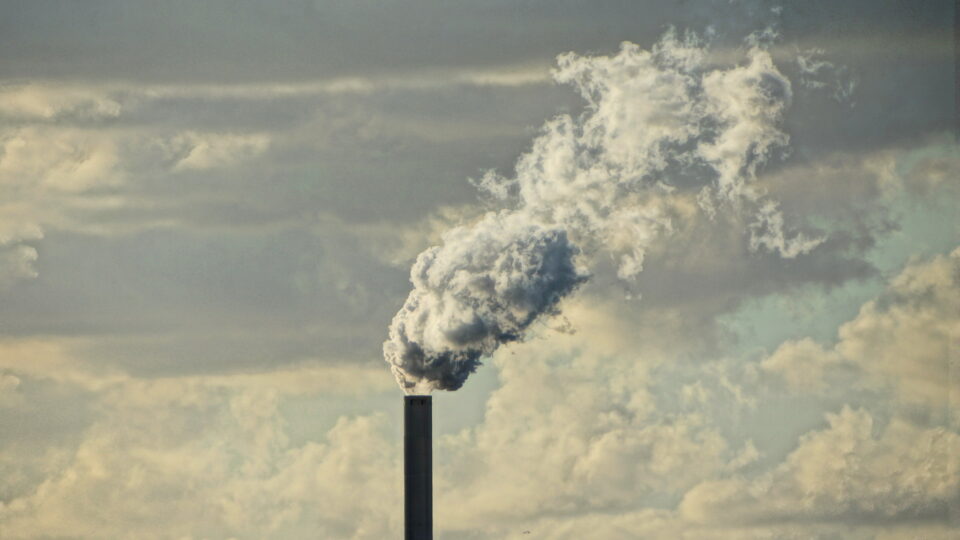
Recent research has found that the level of greenhouse gases emitted by human activity has reached an all-time high level of nearly 60 billion tons a year.  Despite increasing public attention, policy measures, and adoption of green technologies, the pace at which these changes have been taking place has simply not kept up with the ongoing burning of fossil fuels by increasingly industrialized societies.  The rate at which greenhouse gas emissions has increased over time has indeed slowed, but emissions need to start decreasing and as soon and as much as possible.

Human-induced warming has reached a ten-year average from 2013-2022 of 1.14 degrees Celsius above pre-industrial levels, up from a 1.07 degrees average between 2010-2019. 

Scientists have calculated a carbon budget that describes how much more carbon dioxide can be emitted before global warming exceeds the threshold of 1.5 degrees Celsius that is widely predicted to lead to potentially catastrophic changes to the climate.  In 2020, the Intergovernmental Panel on Climate Change calculated that the remaining carbon budget was about 500 billion tons of carbon dioxide.  Over the past three years, nearly half of that carbon budget has already been exhausted by the continuing onslaught of carbon emissions.

Researchers describe their study as a timely wake-up call that the pace and scale of climate action to date has been insufficient and that we need to change policy and approaches in light of the latest evidence about the state of the climate system.  Time is no longer on our side in trying to stave off the worst effects of climate change.

**********

Web Links

Greenhouse gas emissions at ‘an all-time high’, warn scientists

Photo, posted September 18, 2015, courtesy of In Hiatus via Flickr.

Earth Wise is a production of WAMC Northeast Public Radio

A Below-Average Dead Zone In The Gulf of Mexico | Earth Wise

July 20, 2023 By EarthWise Leave a Comment

The Gulf of Mexico dead zone, or hypoxic area, is an area of low oxygen content that can kill fish and other marine life.  It occurs every summer and is mostly a result of excess nutrient pollution from human activities in cities and farms throughout the Mississippi River watershed.  The nutrients carried by the river into the gulf stimulate an overgrowth of algae, which eventually die and decompose, which depletes oxygen in the water as the algae sink to the bottom.

The resultant low oxygen levels near the bottom of the gulf cannot support most marine life.  Fish and shrimp often leave the area seeking better places to be.  Animals that can’t swim away – like mussels and crabs – can be stressed by the low oxygen level or even killed.

The National Oceanic and Atmospheric Administration produces a dead zone forecast each year based on a suite of models developed by NOAA and partners at multiple universities. 

The latest forecast, completed in May, found that the discharge of nutrients in the rivers was about one-third below the long-term average between 1980 and 2022.  Nitrate loads were down 42% and phosphorous levels down 5%.

Based on these measurements, the scientists forecast a summer dead zone that will cover an estimated 4,155 square miles, which is 22% lower than the 36-year average of 5,364 square miles.  Ongoing efforts by the Interagency Mississippi River and Gulf of Mexico Hypoxia Task Force to reduce nutrient levels seem to be paying off.

**********

Web Links

NOAA forecasts below-average summer ‘dead zone’ in Gulf of Mexico

Photo, posted September 6, 2013, courtesy of NOAA Photo Library via Flickr.

Earth Wise is a production of WAMC Northeast Public Radio
A Big Year For Rooftop Solar | Earth Wise

July 19, 2023 By EarthWise Leave a Comment

Rooftop solar growing around the globe

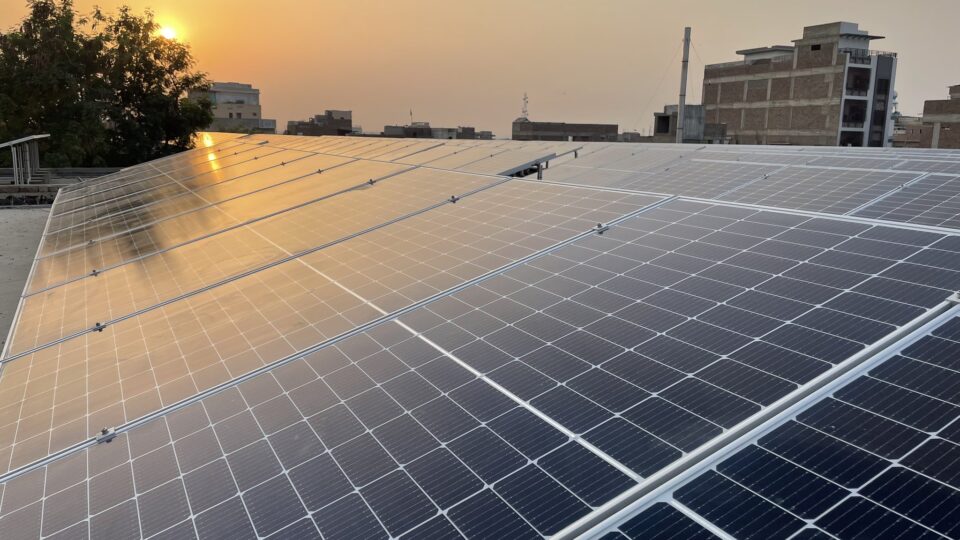
The global capacity of rooftop solar power grew by 49% in 2022.  Overall, the installed amount of rooftop solar grew from 79 gigawatts to 118 gigawatts last year and it is projected to reach 159 gigawatts by the end of this year.  By comparison, a typical nuclear power plant can produce 1 gigawatt; a gas-powered power plant is typically half a gigawatt.

Rooftop solar constitutes a relatively small fraction of the total global installed solar capacity, which is dominated by utility-scale solar arrays.  Total installed solar capacity rose from 950 gigawatts to 1,177 gigawatts last year and is projected to reach 1,518 gigawatts this year.  That is enough power to meet more than half the electricity demand of the European Union.

The rapid growth of solar power can only continue if there is more energy storage put in place to manage the peaks and troughs in solar output.  Countries will also need to upgrade their power grids to be able to transport excess solar power from where it is generated to where it is needed.   Bottlenecks in the grids of most of the leading solar-producing nations are already interfering with further solar development.

The overall potential for rooftop solar is based on the number of rooftops that would be suitable for solar power, which depends on the size, shading, orientation, and location of the roofs.  According to the National Renewable Energy Laboratory, rooftops in the United States have the potential for more than 1,000 gigawatts of solar capacity. Currently, only about 4% of US homes have rooftop solar. 

**********

Web Links

Rooftop Solar Grew Nearly 50 Percent Globally Last Year

Photo, posted November 16, 2022, courtesy of Oliver Knight via Flickr.

Earth Wise is a production of WAMC Northeast Public Radio

Moss And Carbon Storage | Earth Wise

July 18, 2023 By EarthWise 1 Comment

All plants, including algae and cyanobacteria, carry out photosynthesis. During the process of photosynthesis, plants remove carbon dioxide from the air and release oxygen to the air.  As a result, plants play a crucial role in the fight against climate change. 

According to a new study recently published in the journal Nature Geoscience, mosses – those tiny plants often found on the ground or rocks – might be important antidotes to climate change.  The study, which was led by scientists from the University of New South Wales in Australia and the Institute of Natural Resources and Agrobiology in Spain, uncovered evidence that mosses have the potential to store a massive amount of carbon in the soil beneath them.

The researchers found that mosses sequester around seven billion tons more carbon in the soil than is stored in the bare patches of soil typically found near them.  To put that figure in perspective, that is six times the annual global carbon emissions caused by global land use change, which includes things like deforestation, urbanization, and mining.  The researchers also found that moss-covered soil possessed heightened levels of vital nutrients and fewer instances of soil-borne plant pathogens on average compared to moss-less soil.

Mosses cover an area of more than 3.6 million square miles, which is similar in size to Canada, and can thrive in challenging environments.  The widespread presence and hardiness of mosses is why they can have such a significant impact on soil biodiversity and carbon sequestration. 

The research team hopes future work will focus on understanding the role of all types of vegetation, not just mosses and trees, in capturing carbon.

**********

Web Links

Study: Modest moss supports billions of tons of carbon storage

Photo, posted August 23, 2017, courtesy of Peter Handke via Flickr.

Earth Wise is a production of WAMC Northeast Public Radio

Water For Arizona | Earth Wise

July 17, 2023 By EarthWise Leave a Comment

Arizona looking for creative solutions to solve its water crisis

The Phoenix area is the fastest growing region in the country.  Arizona’s two major sources of water – groundwater and the Colorado River – are dwindling from drought, climate change, and overuse.  Officials in the state are considering a radical plan to construct a desalination plant off the Mexican coast that will take the salt out of seawater, and then pipe that water hundreds of miles, much of it uphill, to Phoenix.

The project is the brainchild of the Israeli company, IDE, which is one of the world’s largest desalination companies.  IDE has asked Arizona to sign a 100-year contract to buy water from the project. 

There are multiple complications surrounding the plan.  Desalination plants are common in California, Texas, and Florida, and in more than 100 other countries.  But the Arizona project is unusual because of the distance involved and because the state is landlocked.  The water would have to travel 200 miles and climb 2,000 feet along the way.

There is also the issue of waste brine, which is a major output of desalination plants.  In this case, the brine would flood the northern Gulf of California, potentially threatening a productive fishery.  In addition, the pipeline, as well as electrical transmission lines, would have to go through the Organ Pipe Cactus National Monument, a UNESCO biosphere reserve.

The plant would be located in Puerto Peñasco, a struggling town with its own water problems.

With booming home construction going on in the Phoenix area, the need for more water continues to grow.  Whether this plan will be approved by Arizona and by Mexico remains to be seen.

**********

Web Links

Arizona, Low on Water, Weighs Taking It From the Sea. In Mexico.

Photo, posted September 26, 2008, courtesy of Dan via Flickr.

Earth Wise is a production of WAMC Northeast Public Radio

Saving Our Soil | Earth Wise

July 14, 2023 By EarthWise Leave a Comment

Saving our soil is critical for our food security and climate change mitigation

The majority of food we eat is grown in topsoil, that carbon-rich, black soil that nurtures everything from carrots to watermelons.  The fertility of this soil has developed over eons.    

But over the past 160 years, the Midwestern United States has lost 63.4 billion tons of topsoil due to farming practices.  In fact, Midwestern topsoil is eroding between 10 and 1,000 times faster than it did in the pre-agricultural era.  The rate of erosion is 25 times greater than the rate at which topsoil forms.

According to new research from the University of Massachusetts-Amherst, this rapid and unsustainable rate of topsoil erosion can be drastically reduced by utilizing an agricultural method already in practice: No-till farming.  This method, which is currently practiced on 40% of cropland acres in the Midwest, can extend our current level of soil fertility for the next several centuries.   

In the study, which was recently published in the journal Earth’s Future, the research team looked at the current business-as-usual method, under which approximately 40% of the midwestern U.S.’s acres are no-till farmed, all the way up to 100% adoption of no-till methods. 

If the U.S.’s current agricultural practices remain largely unchanged, approximately 9.6 billion tons of topsoil will be lost over the next century alone.  However, approximately 95% of the erosion in the business-as-usual scenario could be prevented by adopting 100% no-till farming practices. 

Saving our soil by improving our farming methods has implications for everything from food security to climate change mitigation. 

**********

Web Links

Saving Our Soil: How to Extend U.S. Breadbasket Fertility for Centuries

Photo, posted January 19, 2022, courtesy of Terri Dux via Flickr.

Earth Wise is a production of WAMC Northeast Public Radio

Europe Is Warming Very Quickly | Earth Wise

July 13, 2023 By EarthWise Leave a Comment

Europe is warming faster than most of the world

According to a new report from the World Meteorological Organization, Europe is warming faster than any other inhabited continent.  The result of the rising temperatures has been increasingly severe heat waves, flood, and wildfires.

The Paris Climate Agreement has set a goal of limiting warming to no more than 2 degrees Celsius above pre-industrial levels and, if at all possible, to no more than 1.5 degrees.  To date, the planet has warmed by 1.2 degrees and, with greenhouse gas emissions continuing at record levels, the temperature keeps going up.

These numbers refer to the global average.  Some places have warmed more and others less.  The Arctic has been warming four times quicker than the rest of the world.  In terms of direct impact on large populations, Europe has already surpassed the 2-degree mark, having reached 2.3 degrees last year.  In 2022, many countries in western and southwestern Europe had their warmest year on record. Weather-related economic damages totaled $2 billion, mostly as a result of storms and floods.

Europe is trying to do its part in mitigating climate change by making major gains on clean energy.  Wind and solar generated 22% of Europe’s power in 2022, which is more than either natural gas or coal produced.  Europe is trying to do its share, but the warming climate is a global phenomenon and will require a global effort to mitigate its effects.

The record-breaking heat stress experienced by Europeans last year cannot be considered a one-off occurrence.  It is part of a pattern that will make weather extremes more frequent and more intense over time.

**********

Web Links

The Fastest-Warming Continent, Europe Has Already Heated by More Than 2 Degrees C

Photo, posted September 26, 2011, courtesy of Ben Ramirez via Flickr.

Earth Wise is a production of WAMC Northeast Public Radio

Rain Gardens And Residential Pollution | Earth Wise

July 12, 2023 By EarthWise Leave a Comment

Rain gardens are a solution to residential pollution of waterways

Stormwater runoff has become the largest source of residential pollution for waterways.  As rainwater runs down roofs, over driveways and patios, and off other hard surfaces, it can pick up pollutants as it flows directly into streams, wetlands, lakes, and groundwater aquifers.  That water is typically routed directly through stormwater pipes and ditches with little filtering or treatment.  The main emphasis is on getting the water off of people‘s property as quickly and efficiently as possible to avoid flooding.

Many municipalities are dealing with the problem by installing rain gardens, which are a type of green infrastructure in commercial spaces that slow down and treat water before it enters streams, wetlands, and other bodies of waters.  When designed and installed properly with appropriate plants, rain gardens are like miniature water treatment facilities   Water gathers in the rain garden, soaks into the soil, and is taken up by plants.  The plants filter nutrients, sediments, and toxic materials from the runoff before excess water ever gets to waterways.

Homeowners are being encouraged to build their own rain gardens.  They need to familiarize themselves with how runoff from their roof, driveway, sidewalk, and roads is currently being routed and treated.  The idea is to try to incorporate that runoff into a rain garden design with sufficient area and infiltration rates.  The runoff would ultimately flow out from a safe, designated location into storm drains at a slower rate than from the previous impervious surfaces.  Homeowners would need to work with their local jurisdictions to find out the requirements for re-routing water in their area and make sure any modifications prevent erosion and protect nearby homes, roads, and other infrastructure.

**********

Web Links

Rain gardens help keep pollutants out of waterways

Photo, posted March 3, 2017, courtesy of Jeremy Jeziorski / Oregon Convention Center via Flickr.

Earth Wise is a production of WAMC Northeast Public Radio

Orcas Versus Boats | Earth Wise

July 11, 2023 By EarthWise Leave a Comment

Orcas are attacking boats

Over the past three years, orcas (also known as killer whales) have been attacking boats off the coasts of Portugal and Spain.  The subpopulation of orcas in this region has been harassing boats, most often by biting at their rudders.

There have been over 500 reported instances of orcas reacting to boats.  Sometimes they simply approach the vessels, but some of the time they actually attack.  Almost 20% of the attacks have caused enough damage to disable the vessels.  In three cases, including one in May in the Strait of Gibraltar, the animals damaged a boat so badly that it sank.  To date, no one has been injured during these attacks.

Orca researchers have observed several different killer whales during these attacks.  They seem to come from two separate groups: a trio of juveniles occasionally joined by a fourth, as well as a mixed-age group consisting of an adult female, two of her offspring, and two of her sisters.  The attacks typically last less than 30 minutes but can go on for up to 2 hours.

Researchers don’t really know why orcas are going after watercraft.  This behavior has not been observed anywhere else in the world.  One theory is that the orcas have invented a new fad.  That’s actually something that they are known to do.  Much as with people, orca fads are often spearheaded by juveniles.  An alternative theory is that the attacks may be a response to a bad past experience involving a boat.  The fact that nobody has been injured in any of these attacks, even when the boats sank, suggests that only the boats themselves are the target of the attacks and not the people on them.

**********

Web Links

Why Has a Group of Orcas Suddenly Started Attacking Boats?

Photo, posted May 24, 2023, courtesy of Pedro Szekely via Flickr.

Earth Wise is a production of WAMC Northeast Public Radio

Electric Cars And Apartments | Earth Wise

July 10, 2023 By EarthWise Leave a Comment

Lack of charging options for people who rent hinder wider electric vehicle adoption

The transition to electric cars is underway.  People are increasingly buying them, carmakers are switching over to making them, and governments are providing incentives as well as legislating the changeover.  More and more consumers want to lower their carbon footprints and stop burning fossil fuels.  But one very large group of consumers faces an uphill battle in switching to electric cars:  people who rent their dwellings.

About one third of our country lives in rented apartments or houses.  These nearly 110 million Americans are more likely to be in the bottom half of income and net worth and are more likely to be people of color.  These people are less likely to have the spare cash to make upgrades to their property such as car chargers and may not be able to get permission from their landlords to do it anyway.

Renters face what is known as the “split-incentive problem” or the “landlord-tenant problem.”  Three-quarters of tenants in the US pay their own utility bills, so they have a strong incentive to conserve electricity, water, and gas.  Their landlords, on the other hand, have little incentive to upgrade appliances and systems to be more environmentally responsible.  Studies have shown that on average renters use 3% more energy than homeowners for this reason.

There are some landlords who are being proactive and installing facilities for charging cars on their properties.   This will undoubtedly become an increasingly sought-after feature for renters.  But in the meantime, millions of them have a more difficult time driving electric cars.  They can charge at public chargers or perhaps at work.  But at the moment, homeowners are three times more likely than renters to own an electric car.

**********

Web Links

The coming battle between Americans who want to go electric and their landlords

Photo, posted July 22, 2022, courtesy of Chris Yarzab via Flickr.

Earth Wise is a production of WAMC Northeast Public Radio

Big Oil And Big Lithium | Earth Wise

July 7, 2023 By EarthWise Leave a Comment

Big Oil entering the lithium market

The world’s big oil companies have worked pretty hard to prolong society’s dependence on petroleum.  When there are trillions of dollars at stake, there is plenty of motivation.  But those companies do see the writing on the wall.

An Exxon Mobil-funded study last year estimated that light-duty vehicle demand for combustion engine fuels could peak in 2025 and that electric vehicles of various types could grow to more than 50% of new car sales by 2050.  This is pretty pessimistic compared with most other surveys, but it is still a big number.  Exxon also projected that the global fleet of EVs could reach 420 million by 2040.

As a result of all this, Exxon is preparing for a future far less dependent on gasoline by drilling for lithium rather than oil.  The company recently purchased mining rights to a sizable chunk of Arkansas land for over $100 million from which it aims to produce lithium for electric car batteries.

Exxon’s consultants estimated that the 120,000 acres in the Smackover formation of southern Arkansas could have as much as 4 million tons of lithium carbonate, enough to power 50 million cars and trucks. 

Exxon plans to spend $17 billion through 2027 on cutting carbon emissions and developing low carbon technologies.  Other large oil producers have also been looking at the lithium business.  At the same time, some large oil companies like BP and Shell are investing in renewable energy.

The prospect of EVs dominating transportation in the coming decades is a strong incentive for oil-and-gas companies to adapt their businesses to the new world.

**********

Web Links

Exxon Joins Hunt for Lithium in Bet on EV Boom

Photo, posted August 16, 2014, courtesy of Mike Mozart via Flickr.

Earth Wise is a production of WAMC Northeast Public Radio
  • « Go to Previous Page
  • Page 1
  • Interim pages omitted …
  • Page 28
  • Page 29
  • Page 30
  • Page 31
  • Page 32
  • Interim pages omitted …
  • Page 99
  • Go to Next Page »

Primary Sidebar

Recent Episodes

  • An uninsurable future
  • Clean energy and jobs
  • Insect declines in remote regions
  • Fossil fuel producing nations ignoring climate goals
  • Trouble for clownfishes

WAMC Northeast Public Radio

WAMC/Northeast Public Radio is a regional public radio network serving parts of seven northeastern states (more...)

Copyright © 2026 ·