• Skip to primary navigation
  • Skip to main content
  • Skip to primary sidebar

Earth Wise

A look at our changing environment.

  • Home
  • About Earth Wise
  • Where to Listen
  • All Articles
  • Show Search
Hide Search
You are here: Home / Archives for wind speed

wind speed

Saving Money By Predicting The Wind | Earth Wise

July 1, 2022 By EarthWise Leave a Comment

Managing an electrical grid that utilizes significant amounts of intermittent generation sources – solar and wind power – brings with it some unique challenges.  There are abundant wind resources in this country and more and utilities are taking advantage of these resources.   But there are times when there is more wind, times when there is less wind, and times when there is no wind at all.   Utilities need accurate wind forecasts to determine when they need to generate or purchase energy from alternative sources.

Poor wind forecasts can cost utilities a lot of money.  If there is overprediction – that is, when there is less wind than predicted – utilities have to purchase energy off the spot market at higher prices.  If there is underprediction – more wind than predicted – utilities may needlessly burn fossil fuels and waste money that way. 

The National Oceanic and Atmospheric Administration produces wind forecasts using its High-Resolution Rapid Refresh (HRRR) weather model, which provides hourly updated forecasts for every part of the United States looking forward up to 48 hours.  The model generates predictions of wind speed and direction at multiple levels of the atmosphere, information that utilities can use to predict the output of their wind turbines.

A new study by economists and scientists from Colorado State University and NOAA estimated the financial impact of the HRRR model on wind farm production.  The research team calculated that increasingly accurate weather forecasts over the last decade have saved consumers over $150 million a year.   Estimates are that if the newest model was in use in previous years, the savings would have been over $300 million a year.

**********

Web Links

NOAA wind forecasts result in $150 million in energy savings every year

Photo, posted May 2, 2022, courtesy of California Energy Commission via Flickr.

Earth Wise is a production of WAMC Northeast Public Radio.

The Atmosphere Is Thirstier | Earth Wise      

May 9, 2022 By EarthWise Leave a Comment

The American West is in the throes of a two-decade-long drought.  The climate there is getting warmer and drier, which has led to increasing demand for water resources from both humans and ecosystems.  According to a new study by the Desert Research Institute and collaborators, the atmosphere across much of the U.S. is also demanding a greater share of water than it used to.

Evaporative demand, which is also called atmospheric thirst, is a measure of the potential loss of water from the earth’s surface up to the atmosphere.  It is a function of temperature, humidity, wind speed, and solar radiation.  The study, published in the Journal of Hydrometeorology, assessed trends in evaporative demand during a 40-year period from 1980-2020.

The study’s findings showed substantial increases in atmospheric thirst across much of the Western U.S. over that period, with the largest increases centered around the Rio Grande and Lower Colorado rivers.  This is important because atmospheric thirst is a persistent force in pushing Western landscapes and water supplies toward drought.

The study found that, on average, increases in temperature were responsible for 57% of the changes observed in atmospheric thirst, humidity 26%, and the other factors playing lesser roles.

For farmers and other water users, increases in atmospheric thirst mean that, in the future, more water will be required to meet existing water needs.  Crops already require more water than they did in the past and can be expected to require more water in the future.  Over time, for every drop of precipitation that falls, less and less water is likely to drain into streams, wetlands, aquifers, or other water bodies.

**********

Web Links

New study shows robust increases in atmospheric thirst across much of U.S. during past 40 years

Photo, posted August 9, 2007, courtesy of William Clifford via Flickr.

Earth Wise is a production of WAMC Northeast Public Radio.
Predicting Lightning Strikes

November 19, 2019 By EarthWise Leave a Comment

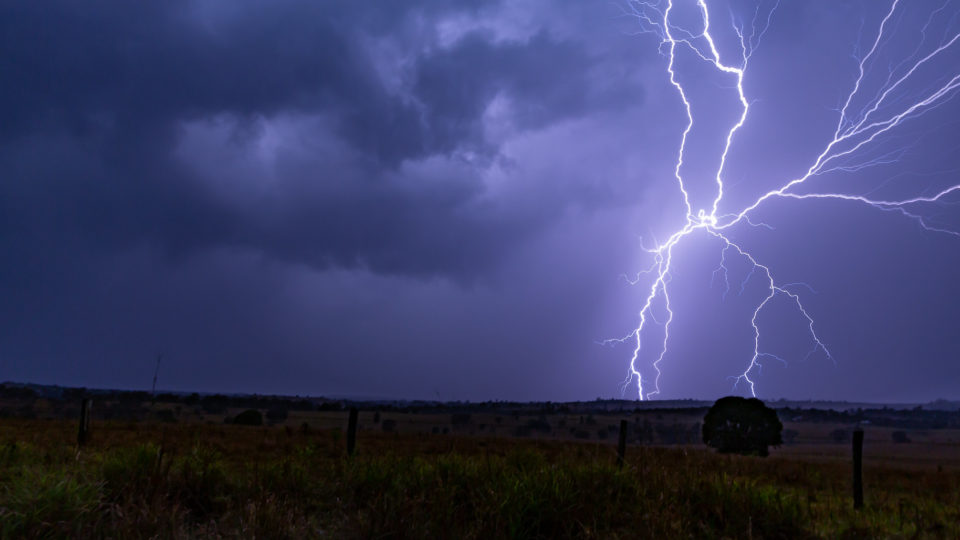
Lightning is one of the most unpredictable phenomena in nature.  Approximately 100 lightning bolts strike earth’s surface every second, and each lightning bolt can contain up to one billion volts of electricity.  Lightning regularly kills both people and animals and sets homes and forests on fire.  It’s also been known to ground airplanes. 

Researchers at EPFL – a research institute and university in Switzerland – have developed a novel way to predict where and when lightning will strike.  The system relies on a combination of standard data from weather stations and artificial intelligence to predict lightning strikes to the nearest 10 to 30 minutes and within a radius of less than 20 miles.  The simple and inexpensive system was outlined in a research paper recently published in Climate and Atmospheric Science, a Nature partner journal.   

According to researchers, the current systems for predicting lightning strikes are slow, expensive, and complex, relying on external data acquired by satellite and radar.  The new inexpensive system from EPFL uses real time data that can be obtained from any weather station, meaning it can cover remote regions that are out of radar and satellite range and where communication networks are lacking.  The quick predictions from the system allow alerts to be issued before a storm has even formed. 

The system uses a machine-learning algorithm that’s been trained to recognize conditions that lead to lightning.  The researchers took into account atmospheric pressure, air temperature, relative humidity, and wind speed, among other things.  After training the algorithm, the system was able to predict lightning strikes accurately nearly 80% of the time.

This system is a simple way to predict a complex phenomenon. 

**********

Web Links

Using AI to predict where and when lightning will strike

Photo, posted December 14, 2018, courtesy of Flickr.

Earth Wise is a production of WAMC Northeast Public Radio.
Agrivoltaics

September 24, 2019 By EarthWise Leave a Comment

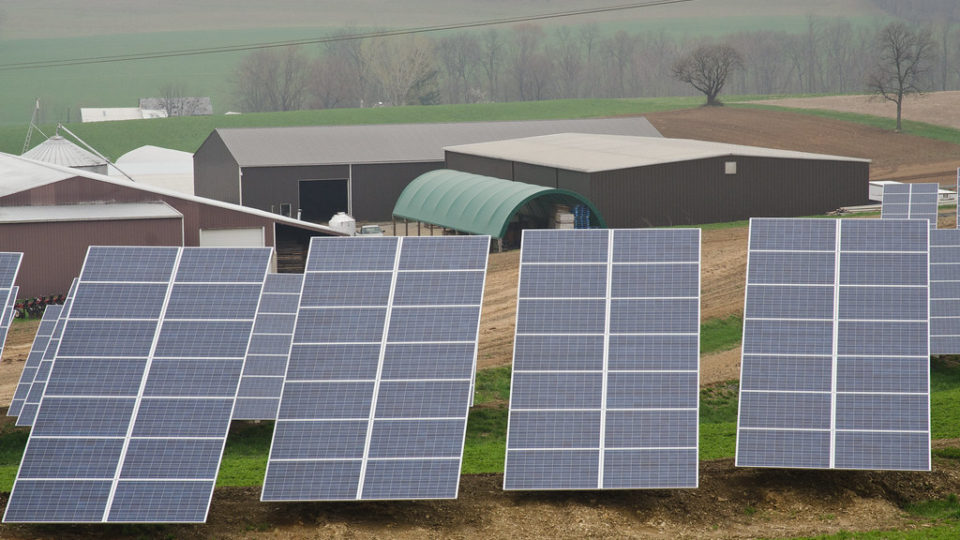
A new study by Oregon State University has found that the most productive places on Earth for solar power are farmlands.   In fact, if less than 1% of agricultural land was converted to solar panels, it would be sufficient to fulfill global electricity demand.

The concept of co-developing the same area of land for both solar photovoltaic power and conventional agriculture is known as agrivoltaics.

The synergy between agriculture and solar power is not surprising.   People have been growing crops around the planet for at least 8,000 years and, long ago, farmers found the best places to grow them which turn out to also the best places to harvest solar energy.  The needs for solar panels are pretty similar to those of food crops.  The efficiency of the panels decreases if they get too hot.  Barren land is hotter than cropland, so the productivity of solar panels is less in such places.

The Oregon State Study analyzed power production data collected by Tesla, which had installed five large grid-tied, ground-mounted solar electric arrays owned by Oregon State.  The researchers monitored air temperature, relative humidity, wind speed, wind direction, soil moisture, and incoming solar energy.  With the data, they developed a model for the best conditions for solar panel productivity and they coincide with excellent conditions for agriculture.  Solar panels are kind of like people with regard to the weather:  they are happier when it is cool and breezy and dry.

Previously-published research shows that solar panels actually increase crop yields on pasture or agricultural fields.

These new results have implications for the current practice of constructing large solar arrays in deserts.  Agricultural lands may be a much better option for both solar production and crop production.

**********

Web Links

Installing solar panels on agricultural lands maximizes their efficiency, new study shows

Photo, posted April 20, 2011, courtesy of U.S. Department of Agriculture via Flickr.

Earth Wise is a production of WAMC Northeast Public Radio.
A Floating Wind Farm

May 2, 2016 By WAMC WEB

https://earthwiseradio.org/wp-content/uploads/2016/04/EW-05-02-16-Floating-Wind-Farm.mp3

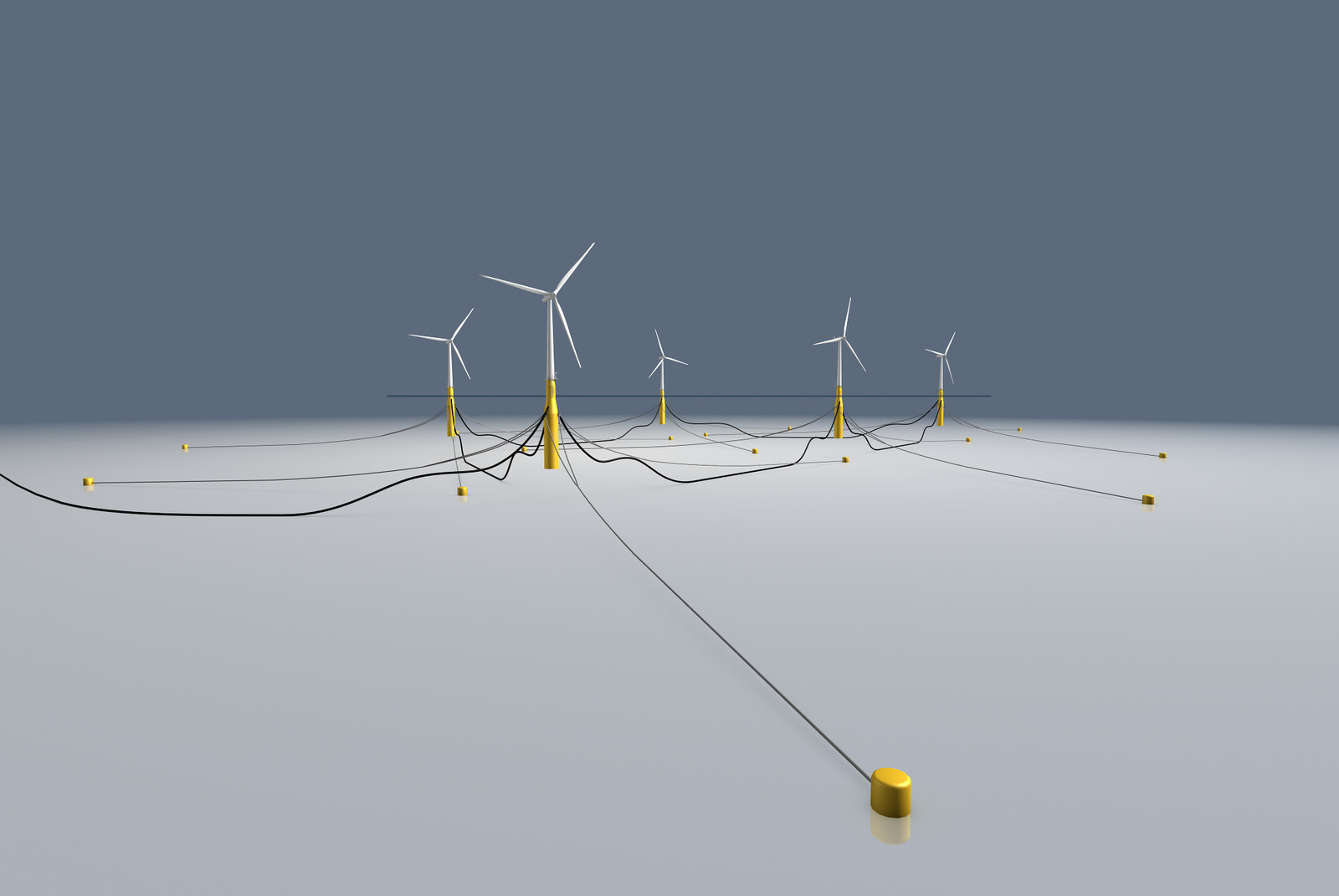
The world’s first floating wind farm is being built 15 miles off the northeast coast of Scotland.  The Hywind pilot park, expected to come online late next year, will generate enough power for 20,000 homes.  The location will take advantage of average local North Sea wind speeds in excess of 20 miles per hour.

[Read more…] about A Floating Wind Farm

Primary Sidebar

Recent Episodes

  • An uninsurable future
  • Clean energy and jobs
  • Insect declines in remote regions
  • Fossil fuel producing nations ignoring climate goals
  • Trouble for clownfishes

WAMC Northeast Public Radio

WAMC/Northeast Public Radio is a regional public radio network serving parts of seven northeastern states (more...)

Copyright © 2026 ·