• Skip to primary navigation
  • Skip to main content
  • Skip to primary sidebar

Earth Wise

A look at our changing environment.

  • Home
  • About Earth Wise
  • Where to Listen
  • All Articles
  • Show Search
Hide Search
You are here: Home / Archives for whale

whale

An Ecological Trap For Polar Bears | Earth Wise

March 17, 2020 By EarthWise Leave a Comment

shrinking sea creates ecological trap

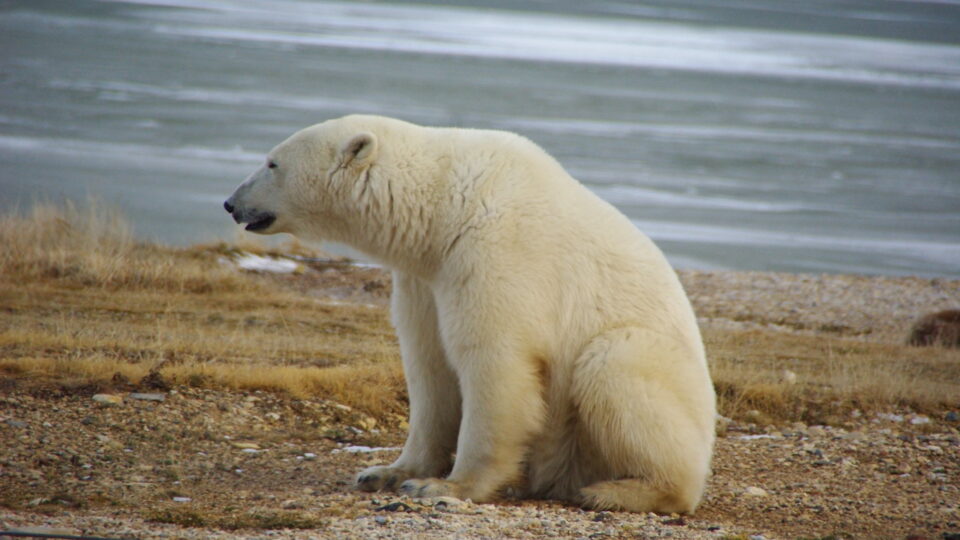
Climate change has been shrinking Arctic sea ice and this is causing changes in the behavior of polar bears.   The Southern Beaufort Sea, located where the northern edges of Alaska and Canada meet, is home to one of the 19 population groups of polar bears.  Historically, the polar bears in this region remained on sea ice year-round.  But in recent decades, about a quarter of them have chosen to come on land instead of staying on the shrinking summer ice platform.

A recent study by San Diego Zoo Global, the U.S. Geological Survey, and Polar Bears International looked at the energetic consequences of the bears’ behavior.  The decision of each individual bear to stay on the ice or move to land appears to be linked to the energetic cost or benefit of the choice.

Bears who moved to land expended more energy during the summer than bears that remained on the sea ice.  In late summer, as the ice became even more restricted, a greater amount of energy was expended by bears swimming to land.  So, the immediate energy cost of moving to land is much greater than remaining on the receding pack ice.

On the other hand, bears on land in this region have access to whale carcasses in the summer while bears on the sea ice appear to be fasting.  As a result, it may be the case that the declining population of bears in this region is in part caused by the ecological trap of bears staying on the ice to avoid expending all the energy needed to move to land.  The shrinking polar ice is a real problem for polar bears.

**********

Web Links

Energetics Study Indicates that Shrinking Sea Ice Is Creating an Ecological Trap for Polar Bears

Photo, posted October 30, 2011, courtesy of Martin Lopatka via Flickr.

Earth Wise is a production of WAMC Northeast Public Radio.
Narwhal Tusks And Stories Teeth Can Tell | Earth Wise

February 4, 2020 By EarthWise Leave a Comment

teeth can tell stories narwhal tusks

Teeth and particularly narwhal tusks are getting some unusual press recently when one of them was the weapon of choice to fend off the London Bridge attacker, which was a good choice according to Harvard dental researcher Dr. Martin Nweeia.  Turns out that narwhal tusks have some pretty amazing physical features.  They exhibit both extreme strength and flexibility at the same time.  The narwhal is known as the unicorn of the sea, a pale-colored, medium-sized whale found in Arctic coastal waters and rivers.  In males, the more prominent tooth grows into a sword like, spiral tusk up to 8.8 feet long.

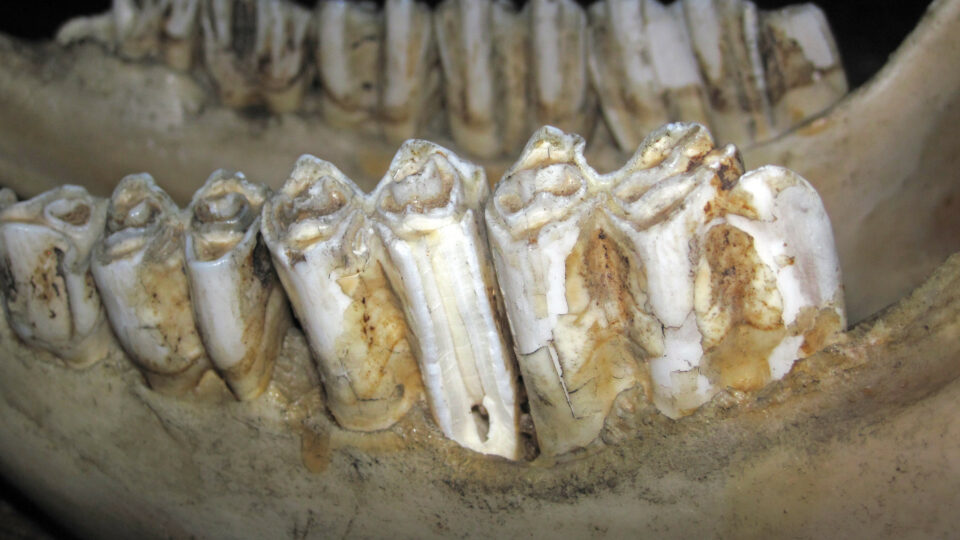
Changes in the shape of teeth over time can tell us about climate change. Adaptations in horse teeth 55 million years ago from North America were observed and caused by changes in climate, favoring different food sources.  The horses changed their diets from fruit to more favorable grasses and their teeth changed in response. For this same reason, the teeth of elephants adapting in different environments of Asia and Africa have different tooth forms.  Both eat plants but Asian elephants, with more ridges on their teeth, eat larger amounts of grasses while African elephants, with wider spread ridges, eat more leaves. 

Teeth have been used to link land mass theories like the Bering Land Strait Theory, hypothesizing that North America and Asia were once one land mass. The teeth shape and form of people on both sides of the Bering Land Bridge shared a common “mongoloid dentition” with unique features. And so, can the narwhal tusk tell us something about a changing Arctic?  Scientists have discovered that the narwhal tusk is a giant sensory organ that is able to continually monitor its environment and has the ability to detect ice formation, and melt, both capabilities helpful for surviving in a changing Arctic.

**********

–Earth Wise acknowledges script contribution from Dr. Martin Nweeia of Harvard University.

Web Links

Fossil teeth reveal new facts about a mass extinction 260 million years ago

From the Horse’s Mouth: Teeth Reveal Evolution

Photo, posted April 3, 2019, courtesy of James St. John via Flickr.

Earth Wise is a production of WAMC Northeast Public Radio.

Primary Sidebar

Recent Episodes

  • An uninsurable future
  • Clean energy and jobs
  • Insect declines in remote regions
  • Fossil fuel producing nations ignoring climate goals
  • Trouble for clownfishes

WAMC Northeast Public Radio

WAMC/Northeast Public Radio is a regional public radio network serving parts of seven northeastern states (more...)

Copyright © 2026 ·