• Skip to primary navigation
  • Skip to main content
  • Skip to primary sidebar

Earth Wise

A look at our changing environment.

  • Home
  • About Earth Wise
  • Where to Listen
  • All Articles
  • Show Search
Hide Search
You are here: Home / Archives for waste management

waste management

Carbon capture with plastic waste

October 7, 2025 By EarthWise Leave a Comment

Polyethylene Terephthalate (otherwise known as PET plastic) is a clear, strong, lightweight plastic used for food and beverage containers, textiles, and many other things.  It is one of the most pervasive forms of plastic piling up in the world’s oceans, in landfills, and elsewhere.  Getting rid of it is a real challenge.

Scientists at the University of Copenhagen in Denmark have found a way to make use of waste PET plastic to address the pervasive problem of carbon dioxide emissions.  There are a variety of methods in use for capturing the carbon dioxide in the exhaust from industrial facilities.  They make use of various chemicals and sorbent materials that soak up the CO2 from the gas stream.  Some are expensive, or unstable at higher temperatures, or require hard-to-get ingredients.

The Copenhagen researchers have developed a way to break down PET plastic by adding a chemical called ethylenediamine.  The result is a new material they call BAETA, which is very effective in pulling carbon dioxide out of the air and binding it.

BAETA is a powdery substance that can be pelletized.  In an industrial plant, exhaust would be transmitted through BAETA-containing units, which would cleanse it of CO2.  The BAETA eventually gets saturated and then would be heated up in a chamber where the carbon dioxide would be collected and either stored underground or used for various purposes.

This cutting-edge invention is an example where one man’s trash could become another man’s treasure.  It just might be a way to get rid of lots of waste plastic and carbon dioxide at the same time.

**********

Web Links

Scientists transform plastic waste into efficient CO2 capture materials

Photo, posted June 8, 2021, courtesy of Ivan Radic via Flickr.

Earth Wise is a production of WAMC Northeast Public Radio

Waste colonialism

September 24, 2025 By EarthWise 1 Comment

Plastic pollution is a pervasive environmental problem that manifests itself in multiple ways.  Very little plastic is recycled; most of it ends up in landfills or is burned, both solutions having serious shortcomings.  High-income countries – such as many in Europe, the United States, Japan, and Australia – facing increasingly strict regulations in disposing of waste, have long grappled with the problem.

One approach they have often pursued for dealing with plastic waste is to export the waste elsewhere, preferably to countries with weaker waste regulations.  For over 20 years, China was the place to send plastic waste.  In the 1980s-90s, China accepted trash from richer countries to salvage raw materials from it.  This led to serious pollution, health risks, and illegal dumping.  In 2018, China banned the import of plastic waste.

Since then, Western countries have sent their waste to other parts of Asia and Africa. These waste exports are often advertised as contributions to recycling, but mostly, it is just a charade that simply makes the waste someone else’s problem – namely less developed countries, often with inadequate waste management infrastructure. 

This practice of developed nations consuming excessively and exporting their waste to less developed countries is known as waste colonialism.  It is a modern incarnation of historical colonialism, where natural resources and labor were stripped from colonized regions. 

Its inherent injustice aside, the practice does not solve any of the problems created by waste.  It just moves them somewhere else.

**********

Web Links

Waste Colonialism: A Brief History of Dumping Rich Countries’ Trash in the Global South

Photo, posted February 13, 2011, courtesy of Dan DeLuca via Flickr.

Earth Wise is a production of WAMC Northeast Public Radio
Politics and plastic

December 19, 2024 By EarthWise Leave a Comment

Political differences are blocking plastic reforms

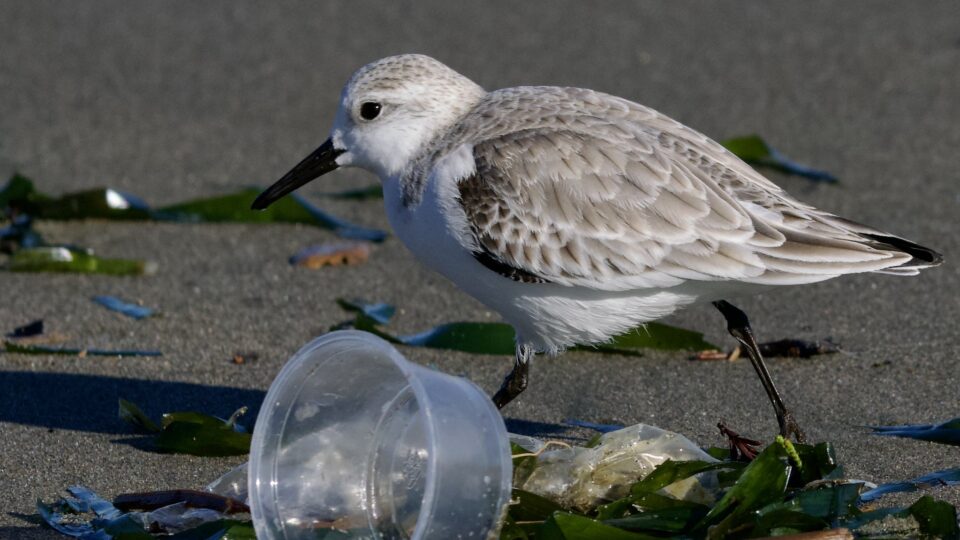
The world currently produces nearly half a billion tons of plastic each year.  This is more than twice the amount it produced 20 years ago.  Half of all plastics ever manufactured have been made in the past 20 years.  Plastic waste is everywhere.  About eight million tons of plastic waste escapes into the ocean each year.

Environmental groups have urged nations to adopt a legally binding treaty to address the ever-growing problem of plastic pollution. The United Nations climate conference in South Korea last month took up the issue of reaching agreement on such a treaty.  At what was supposed to be the final round of talks on the topic, delegates could not bridge wide differences on what such a treaty should contain.

The main bone of contention was whether the treaty should include limits on plastic production itself.  Saudi Arabia, Russia, Kuwait, and other oil-producing countries opposed any curbs on plastic production.   They also opposed the phase-out of harmful chemicals used in the production of plastic.

The Saudi delegation claimed that if the issue of plastic pollution is addressed, there should be no problem with producing plastics.  They said the problem is pollution itself, not plastics.  They proposed a focus on improving recycling and waste management.

Of course, preventing plastic pollution from occurring is an extremely challenging thing to do.  Delegates from countries pushing for a wide-ranging treaty – led by Rwanda – were unwilling to accept a toothless theory lacking real constraints on the plastics industry.

As the conference ended, delegates said that they would reconvene in future months to try again to produce a treaty.  No date or place has been announced.

**********

Web Links

Nations Fail to Reach an Agreement on Plastic Pollution

Photo, posted February 4, 2023, courtesy of Ingrid Taylar via Flickr.

Earth Wise is a production of WAMC Northeast Public Radio
Ending plastic separation anxiety

December 27, 2023 By EarthWise Leave a Comment

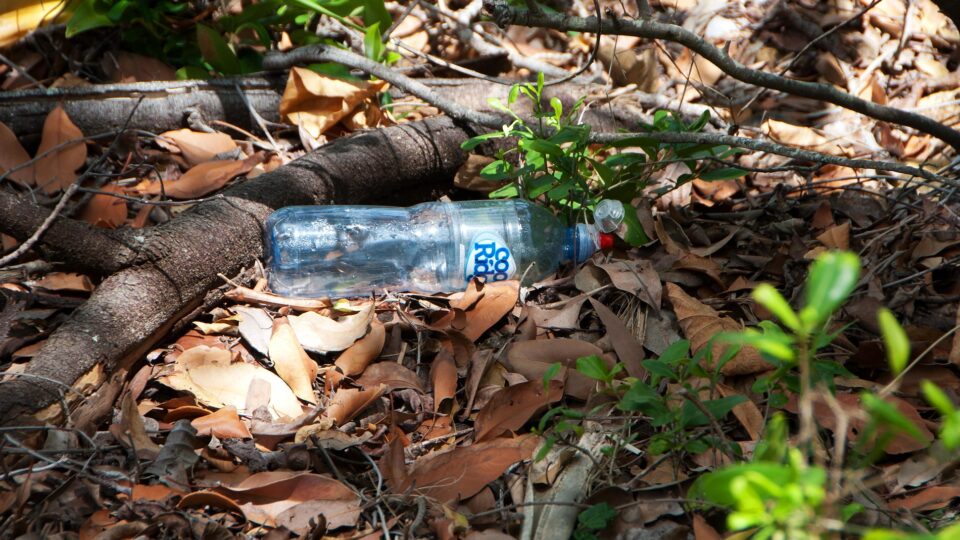
Petroleum-based plastics are one of the biggest environmental problems we face.  They mostly end up in landfills – or worse, in the oceans and elsewhere in the environment – and they basically don’t decompose over time.  Bio-based plastics were invented to help solve the plastic waste crisis.  These materials do break down in the environment providing a potential solution to the problem.  But it turns out that they can actually make plastic waste management even more challenging.

The problem is that bioplastics look and feel so similar to conventional plastics that they get mixed in with the petroleum-based plastics rather than ending up in composters, where they can break down as designed.

Mixtures of conventional and bioplastics end up in recycling streams where they get shredded and melted down, resulting in materials that are of very poor quality for making functional products.  The only solution is to try to separate the different plastics at recycling facilities, which is difficult and expensive to do.

Scientists at Lawrence Berkeley National Laboratory, the Joint BioEnergy Institute, and the incubator company X have invented a simple “one pot” process to break down mixtures of different types of plastic using naturally derived salt solutions and specialized microbes and then produce a new type of biodegradable polymer that can be made into fresh commodity products.

The team is experimenting with various catalysts to find the optimum way to break down polymers at the lowest cost and are modeling how their processes can work at the large scales of real-world recycling facilities. Chemical recycling of plastics is a hot topic but has been difficult to make happen economically at the commercial scale.

**********

Web Links

Putting an End to Plastic Separation Anxiety

Photo, posted November 28, 2016, courtesy of Leonard J Matthews via Flickr.

Earth Wise is a production of WAMC Northeast Public Radio
xemeaino [test]

Regulating Plastic Pollution | Earth Wise

August 11, 2021 By EarthWise Leave a Comment

Instituting regulations for plastics that transcend borders is complicated but necessary

Much of the world is united in the desire to do something about the problem of plastic waste.  But putting in place regulations that transcend national borders is complicated.

One hundred fifteen countries have established bans on plastic bags, but globally, there are seven different definitions of what is considered a plastic bag.  Things like bag thickness can determine whether something even counts as a plastic bag.  These differences create loopholes that enable illegal bags to be used.  For a global company like Nestle, which sells food products in 187 countries, it means complying with 187 different sets of national regulations on plastic packaging.

At least 100 nations have expressed support for a global plastic treaty.  Preliminary talks are dealing with issues like setting a specific date to eliminate plastic from spilling into the ocean, creating a harmonized set of definitions and standards, coordination of national targets and plans, and creating a fund to build waste management facilities where they are most needed in less developed countries.

New plastic waste is created at a rate of over 300 million tons a year.   To date, 75% of all plastic ever produced has become waste, and plastic production is expected to triple by 2050.

With public concern about plastic waste growing and increasing support by countries around the world, there is growing optimism that a global treaty to address plastic waste could be approved on a pace that could make a difference.  Negotiations for international treaties can drag on for a decade or more.  There is not that kind of time to spare in this case, so perhaps urgency will drive more efficient action.

**********

Web Links

Global treaty to regulate plastic pollution gains momentum

Photo, posted February 3, 2015, courtesy of Thad Zajdowicz via Flickr.

Earth Wise is a production of WAMC Northeast Public Radio.

Fishers Helping To Clean The Oceans

August 2, 2019 By EarthWise Leave a Comment

Marine litter – particularly plastics – is a global, persistent, and increasing threat to the oceans.  Much of it comes from discarded materials on shore that makes their way to the sea but waste from the fishing industry is a also a major contributor to the problem. 

Commercial fishers are acutely aware of the potential for marine litter to damage and even destroy their livelihoods and are starting to try to be part of the solution instead of just part of the problem.

An initiative called Fishing for Litter, which has been operating around the British coastline since 2006, is an example.

With hubs in Scotland and South West of England, FFL aims to reduce the amount of marine litter in the sea by physically removing it while also highlighting the importance of good waste management in the fishing fleet.  Fishers have to assume responsibility for their own waste and dispose of it in a responsible manner.  They also have a unique ability to access remote and hard to reach marine litter caused by others.

A survey of 120 commercial fishers revealed that they often found marine litter in their hauls and that keeping the sea and coasts clean was important to them. 

The responsibility for reducing marine litter does not belong to any single industry or organization.  It requires a collective global change of behavior.  The problem directly affects fishers, so they are especially motivated to do something about it.   They can make an important contribution to an issue that ultimately affects us all.  Groups like Fishing for Litter are providing a model for behavior that we can only hope that others around the world can emulate.

**********

Web Links

Fishers keen to help address the problem of marine litter

Photo, posted July 9, 2009, courtesy of Rennett Stowe via Flickr.

Earth Wise is a production of WAMC Northeast Public Radio.

Fighting Methane With Bacteria

June 14, 2018 By EarthWise Leave a Comment

https://earthwiseradio.org/wp-content/uploads/2018/06/EW-06-14-18-Fighting-Methane-with-Bacteria.mp3

Bacteria may have an important role to play in the effort to reduce greenhouse gas emissions.  A group of researchers at the University of Alberta are genetically engineering non-hazardous bacteria that consume methane and turn it into fuel.

[Read more…] about Fighting Methane With Bacteria

Renewable Energy Trends

February 5, 2018 By EarthWise Leave a Comment

https://earthwiseradio.org/wp-content/uploads/2018/02/EW-02-05-18-Renewable-Energy-Trends.mp3

There are major trends going on in the renewable energy world.  Several will merit close attention this year.

[Read more…] about Renewable Energy Trends

Primary Sidebar

Recent Episodes

  • An uninsurable future
  • Clean energy and jobs
  • Insect declines in remote regions
  • Fossil fuel producing nations ignoring climate goals
  • Trouble for clownfishes

WAMC Northeast Public Radio

WAMC/Northeast Public Radio is a regional public radio network serving parts of seven northeastern states (more...)

Copyright © 2026 ·