• Skip to primary navigation
  • Skip to main content
  • Skip to primary sidebar

Earth Wise

A look at our changing environment.

  • Home
  • About Earth Wise
  • Where to Listen
  • All Articles
  • Show Search
Hide Search
You are here: Home / Archives for warming potential

warming potential

Are today’s refrigerants safe?

March 21, 2025 By EarthWise Leave a Comment

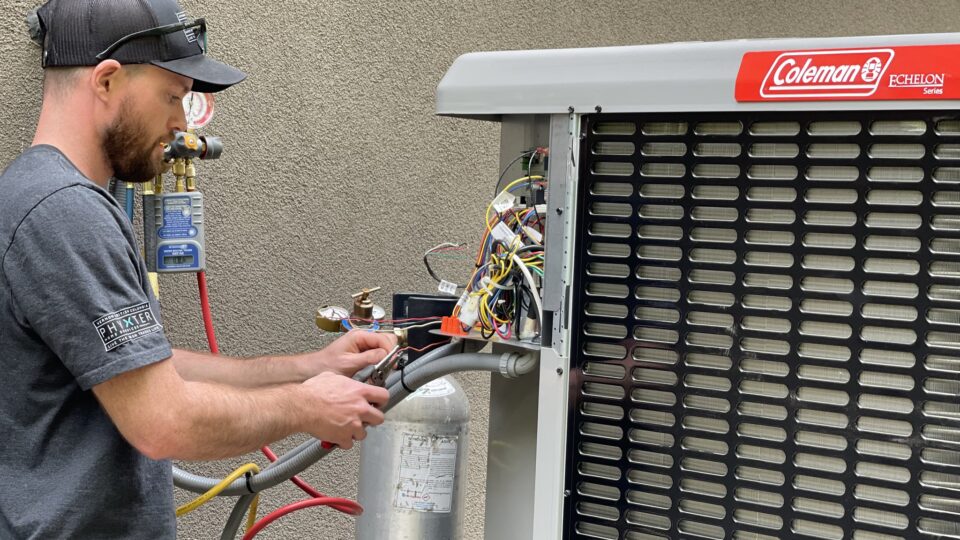
The refrigerants being used today may not be safe

Refrigeration is based on heat transfer mediums that absorb heat from the area being cooled and transfer it to the outside environment.

The earliest refrigerants were dangerous substances like ammonia.  In the 1930s, chlorofluorocarbons (CFCs) like Freon became the standard refrigerant for use in refrigeration systems and even in aerosol cans.  When these substances were found to be depleting the earth’s ozone layer, the Montreal Protocol dictated their phaseout and by the mid-1990s, CFCs were largely replaced by hydrofluorocarbons (HFCs).

HFCs don’t deplete the ozone layer, but they were eventually determined to be potent greenhouse gases, thousands of times more planet-warming than carbon dioxide.   As a result, the global phaseout of HFCs began in 2016, and have been increasingly replaced by hydrofluoroolefins (HFOs), which are considered a more environmentally-friendly alternative to all their predecessors.

Trying to not be surprised by additional unpleasant discoveries about refrigerants, researchers are studying the potential environmental impacts of HFOs.  Researchers at the University of New South Wales in Australia have found that HFOs can break down in the atmosphere and that some small amounts of the resultant products are in fact fluoroforms, which are the HFC with the greatest global warming potential and can stay in the atmosphere for up to 200 years.

That only a small amount of HFC gets into the atmosphere is good, but nevertheless it reveals that the consequences of replacing widely-used chemicals are not a simple matter to determine.

**********

Web Links

Are our refrigerants safe? The lingering questions about the chemicals keeping us cool

Photo, posted July 19, 2021, courtesy of Vernon Air Conditioning via Flickr.

Earth Wise is a production of WAMC Northeast Public Radio
Capturing Methane To Feed Fish | Earth Wise

December 30, 2021 By EarthWise Leave a Comment

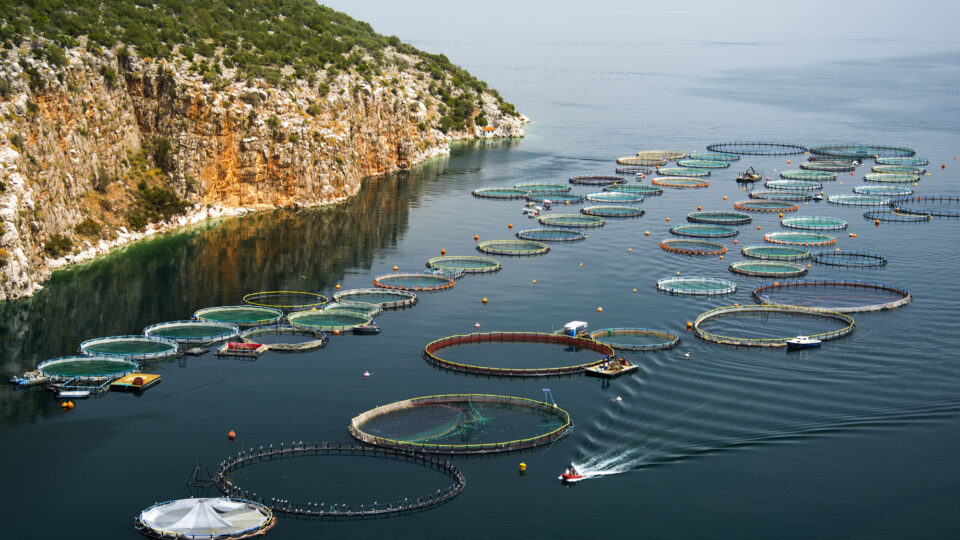
Using captured methane as food for fish

Methane in the atmosphere is an extremely potent greenhouse gas.  Its warming potential is about 85 times that of carbon dioxide over a 20-year period.  It also worsens air quality by increasing atmospheric ozone.  Many human activities add methane to the atmosphere, notably emissions from landfills and oil and gas facilities.

Capturing methane from these sources for subsequent use is currently uneconomical but new research from Stanford University analyzes the market for using the methane to feed bacteria to produce fishmeal.

Methane-consuming bacteria called methanotrophs can be grown in chilled, water-filled bioreactors containing pressurized methane, oxygen, and nutrients.  The bacteria produce a protein-rich biomass that can be used as fishmeal in aquaculture.  This could offset demand for fishmeal made from small fish or plant-based feeds that require land, water, and fertilizer.

Some companies already do this using natural gas provided by utility pipelines, but it would be far better for the environment to use methane emitted at large landfills, wastewater treatment plants, and oil and gas facilities.

Consumption of seafood has more than quadrupled since 1960, depleting wild fish stocks.  Farmed fish now provide half of all the animal-sourced seafood we eat.

The Stanford research analyzed the cost of methanotrophic fishmeal production under various scenarios and found it to be very competitive with and in some cases considerably cheaper than current market prices for fishmeal. 

According to the study, this process could profitably supply total global demand for fishmeal with methane captured in the U.S. alone.

**********

Web Links

Stanford researchers reveal how to turn a global warming liability into a profitable food security solution

Photo, posted April 30, 2017, courtesy of Artur Rydzewski via Flickr.

Earth Wise is a production of WAMC Northeast Public Radio.

Primary Sidebar

Recent Episodes

  • An uninsurable future
  • Clean energy and jobs
  • Insect declines in remote regions
  • Fossil fuel producing nations ignoring climate goals
  • Trouble for clownfishes

WAMC Northeast Public Radio

WAMC/Northeast Public Radio is a regional public radio network serving parts of seven northeastern states (more...)

Copyright © 2026 ·