• Skip to primary navigation
  • Skip to main content
  • Skip to primary sidebar

Earth Wise

A look at our changing environment.

  • Home
  • About Earth Wise
  • Where to Listen
  • All Articles
  • Show Search
Hide Search
You are here: Home / Archives for warming oceans

warming oceans

Rivers And Climate Change | Earth Wise

October 11, 2023 By EarthWise Leave a Comment

Our planet is heating up.  Scientists have concluded that the changing climate is primarily the result of increased greenhouse gas emissions from human activities.  Some of the effects of global climate change include thawing permafrost, rising seas, intensifying storms and wildfires, and warming oceans.   

According to a new study led by researchers from Penn State University, rivers are warming and losing oxygen even faster than oceans.  The study, which was recently published in the journal Nature Climate Change, found that warming occurred in 87% and oxygen loss occurred in 70% of the nearly 800 rivers studied.

The research team projects that within the next 70 years some river systems, especially those in the American South, will experience such low oxygen levels that the rivers could “induce acute death” for some fish species and threaten the aquatic diversity of river ecosystems. 

The research team used artificial intelligence and deep learning to analyze water quality data from nearly 800 rivers across the U.S. and central Europe.  The researchers found that rivers are warming up and deoxygenating faster than oceans, which could have serious implications for both aquatic life and humans.

While climate change has led to warming and oxygen loss in oceans and lakes around the world, the researchers did not expect to find warming and deoxygenation in shallower, flowing rivers.  Since life in water depends on temperature and dissolved oxygen, the researchers hope this study serves as a wake up call.  Warming and deoxygenating rivers have significant implications for water quality and the health of aquatic ecosystems worldwide.

**********

Web Links

Rivers are rapidly warming, losing oxygen; aquatic life at risk

Photo, posted June 2, 2017, courtesy of Francisco Anzola via Flickr.

Earth Wise is a production of WAMC Northeast Public Radio
Sea Urchins And Climate Change | Earth Wise

August 1, 2022 By EarthWise Leave a Comment

Sea urchins thriving amidst a changing climate

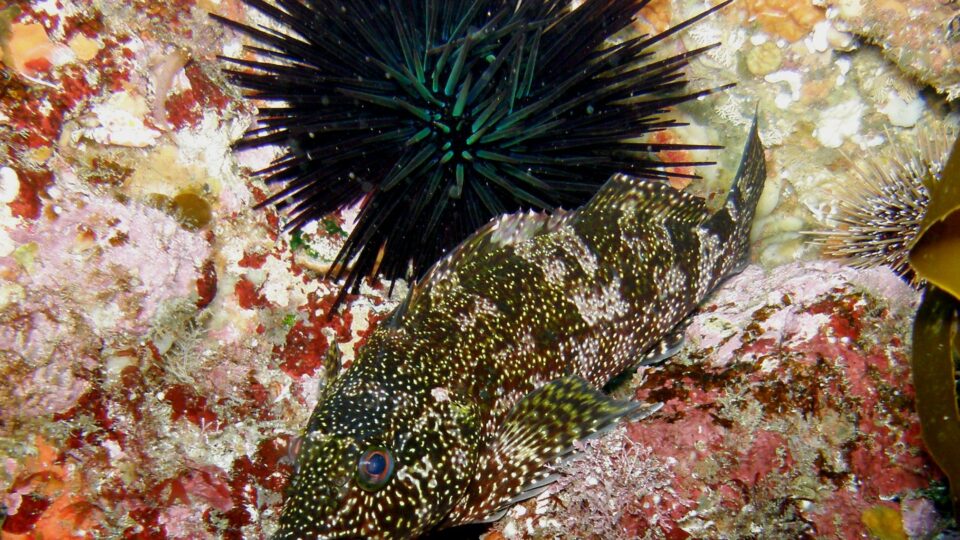
There is a thriving population of black sea urchins in bubbling volcanic vents off the coast of Ishia, a small island in the Gulf of Naples.  The oceanic environment there is very acidic, high in carbon dioxide, and very warm.   The environment represents a proxy for what is gradually happening to oceans around the world.

Researchers from the University of Sydney have determined that the ability of sea urchins to prosper in such an environment means that these animals, which are already abundant in the Mediterranean Sea are likely to spread further afield as oceans continue to warm and become more acidic.  The Mediterranean Sea is warming 20% faster than the global average.

Sea urchins are already an environmental problem in many places around the world.  When their numbers increase disproportionately, they decimate kelp forests and algae, leading to the demise of other species that depend on these things for food or shelter.  The result is something called an urchin barren, which is a rocky, sandy, urchin-filled seafloor devoid of other life.

Urchin barrens are increasingly common in many places, including the east coast of Australia and the coastline in the Americas stretching from Nova Scotia to Chile.

In Australia, for example, sea urchin populations have multiplied, and their range has expanded considerably, overgrazing kelp and damaging abalone and lobster farms.

Tests run by the Sydney researchers found that it is difficult to stress sea urchins.  They appear to tolerate conditions that other creatures simply cannot.   The only real positive is that understanding the urchins’ remarkable survival abilities might offer insights into adaptations that other animals might need in order to survive as the oceans become warmer and more acidic.

**********

Web Links

Colonising sea urchins can withstand hot, acidic seas

Photo, posted January 31, 2010, courtesy of Anna Barnett via Flickr.

Earth Wise is a production of WAMC Northeast Public Radio.

Sunscreen For Corals | Earth Wise

August 6, 2021 By EarthWise Leave a Comment

Scientists examine why some corals are better equipped to survive a changing environment

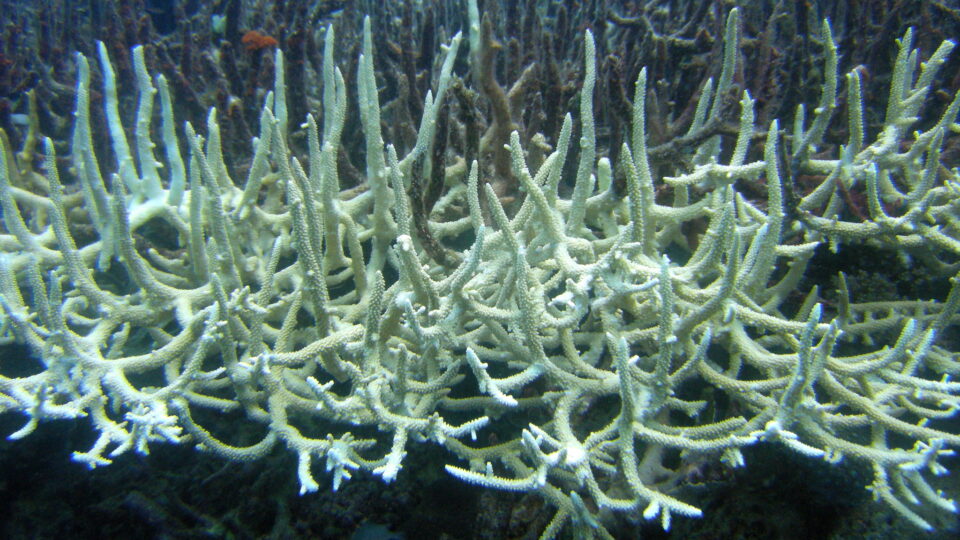
Sunscreen from beachgoers entering ocean waters is one of the greatest threats to coral reefs and there are global efforts to reduce or eliminate the use of many of the most harmful chemicals people use to protect themselves from the sun’s rays.  However, scientists at the Smithsonian Conservation Biology Institute have found that some corals have a natural sunscreen of their own that helps protect them from the effects of climate change.

Hawaiian blue rice corals feature a deep blue pigment that is created by chromoprotein that filters out harmful ultraviolet radiation from the sun.  UV damage has harmful impacts to reproduction in many coral species, but it appears not to have the same effect on blue rice coral.

In a study published in Scientific Reports, Smithsonian researchers studied the devastating effects that bleaching had on brown rice coral in the Hawaiian bleaching events of 2014 and 2015.  During the same events, blue rice coral either recovered quickly or was not affected by the elevated ocean temperature at all.

The blue-pigmented corals had dramatically greater reproductive vigor than the brown-pigmented version.  The key factor appears to be the sun-screening ability of the blue pigment in the particular symbiotic algae that lives inside the coral tissue known as zooxanthellae.  The coral protects the algae and in turn the algae provide the coral with food in the form of sugars produced as a waste product from photosynthesis.  In the case of the blue version, the algae also produce sunscreen for the coral.

By better understanding the role UV-protective pigments play in mitigating the adverse effects of climate change and warming oceans, scientists can learn why some species are better equipped to survive in a changing environment.

**********

Web Links

Smithsonian Conservation Biology Institute Scientists Find Corals’ Natural “Sunscreen” May Help Them Weather Climate Change

Photo, posted September 28, 2009, courtesy of Matt Kieffer via Flickr.

Earth Wise is a production of WAMC Northeast Public Radio.

Primary Sidebar

Recent Episodes

  • An uninsurable future
  • Clean energy and jobs
  • Insect declines in remote regions
  • Fossil fuel producing nations ignoring climate goals
  • Trouble for clownfishes

WAMC Northeast Public Radio

WAMC/Northeast Public Radio is a regional public radio network serving parts of seven northeastern states (more...)

Copyright © 2026 ·