• Skip to primary navigation
  • Skip to main content
  • Skip to primary sidebar

Earth Wise

A look at our changing environment.

  • Home
  • About Earth Wise
  • Where to Listen
  • All Articles
  • Show Search
Hide Search
You are here: Home / Archives for warming ocean

warming ocean

New Orleans is sinking

August 14, 2025 By EarthWise Leave a Comment

As climate change accelerates, rising sea levels are putting coastal communities at greater risk of flooding and storm surge. Driven by melting glaciers and warming oceans, global sea levels are rising at an increasing rate. For low-lying cities like New Orleans, even small increases can have serious consequences. And that risk is compounded by another factor: the land itself is sinking.

Much of New Orleans already sits at or below sea level, and parts of the city and its surrounding wetlands are gradually sinking. While most of the city remains stable, a new study by researchers from Tulane University suggests that sections of the region’s $15 billion post-Katrina flood protection system may require ongoing upgrades to keep pace with long-term subsidence.

The study, recently published in the journal Science Advances, used satellite data to track changes in ground elevation across Greater New Orleans between 2002-2020.  The researchers found that some areas – including neighborhoods, wetlands, and even concrete floodwalls – are sinking by more than an inch each year. In some spots, the land is dropping by nearly two inches annually.

Alarmingly, some of the concrete floodwalls and levees built to protect the city after Hurricane Katrina are themselves sinking. In a few cases, they are losing elevation faster than sea levels are rising, reducing their capacity to block storm surges.

The study highlights how satellite monitoring can play a critical role in guiding infrastructure maintenance and urban planning – not just in New Orleans – but in vulnerable coastal cities around the world.

**********

Web Links

Vertical land motion in Greater New Orleans: Insights into underlying drivers and impact to flood protection infrastructure

Photo, posted September 22, 2010, courtesy of U.S. Army Corps of Engineers via Flickr.

Earth Wise is a production of WAMC Northeast Public Radio
Climate change and fish migration

May 17, 2024 By EarthWise Leave a Comment

Climate change is changing the distribution of fish species

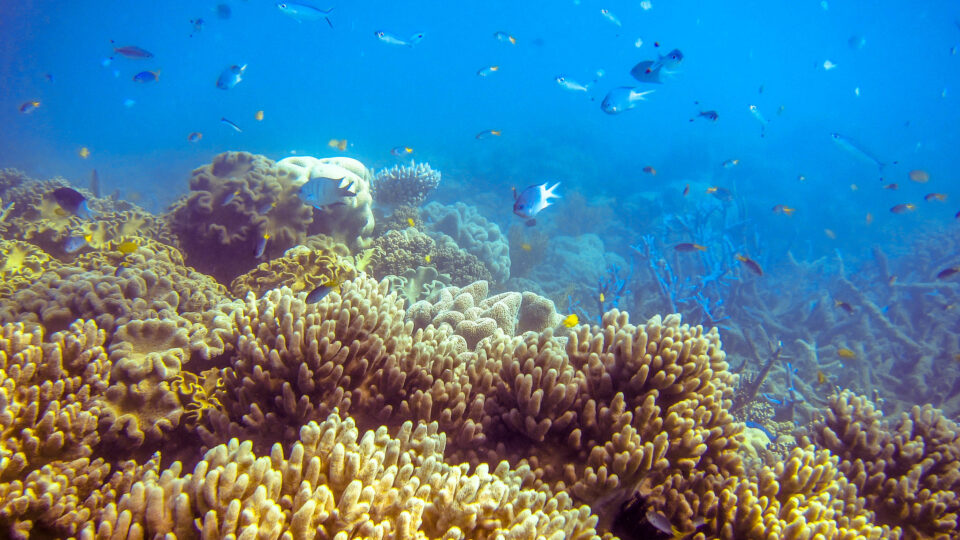
The warming climate is changing the distribution of fish species.  Researchers at the University of Adelaide in Australia have observed that tropical fish species are moving into temperate Australian waters.

The Eastern Australian Current is strengthening as the climate warms and larvae of tropical fish are getting caught in the current and moving into more temperate regions.  These larvae would not normally survive in the cooler Australian ocean water, but the warming current keeps the baby fish warm and increases their chances for survival.  The fish migration observed in the study is an ongoing process that has strengthened in the last few decades due to ocean warming.

The novel populations of tropical fish in these temperate ecosystems are not having much impact at the present time, but they may do so in the future.  The water is still cooler than the fishes’ natural environment and therefore they do not grow to their maximum size.  As a result, they don’t represent stiff competition for the native species – at least not yet.

As the ocean temperatures continue to rise, these tropical species will eventually grow to their full size and their diets will overlap more and more with those of temperate fish species.  Tropical herbivores tend to overgraze temperate kelp while the impact of tropical fish that eat invertebrates is less well understood.  Tropical fish with varied diets are the most successful invaders.  The ultimate effects on temperate ecosystems remain to be seen but survival may become difficult for the native fish in rapidly warming temperate ocean environments.

**********

Web Links

Tropical fish are invading Australian ocean water

Photo, posted March 28, 2017, courtesy of Ryan McMinds via Flickr.

Earth Wise is a production of WAMC Northeast Public Radio
Disappearing snow crabs

November 21, 2023 By EarthWise Leave a Comment

Snow crabs disappeared

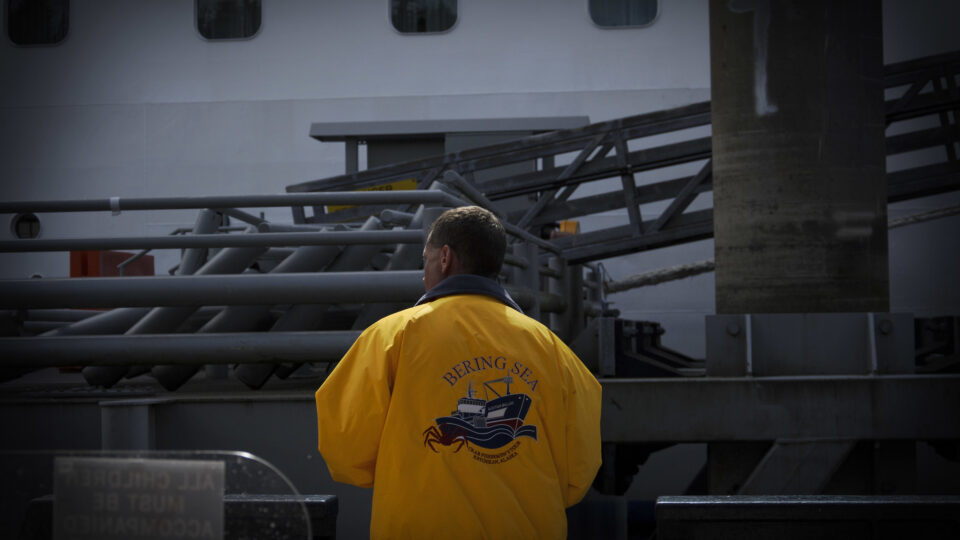
Alaska snow crabs are a cold-water species found off the coast of Alaska in the Bering, Beaufort, and Chukchi Seas. They are one of ten commercially-fished species in Alaskan waters. The perils of crab fishing in this region have been well documented for many years in the reality TV series Deadliest Catch.

Last year, officials in Alaska canceled the winter snow crab season for the first time ever due to a sharp population decline. While the number of juvenile snow crabs was at record highs just a few years earlier, approximately 90% of snow crabs mysteriously disappeared ahead of the 2021 season. 

This year, officials in Alaska have once again canceled the snow crab harvest season for the second year in a row, citing the overwhelming numbers of crabs – in the billions – missing from Alaskan waters. 

Scientists have suspected that the warming ocean temperatures triggered this snow crab population collapse.  But did the crabs move someplace else or die off?  According to a new study recently published by scientists at the National Oceanic and Atmospheric Administration, warmer ocean temperatures likely caused the snow crabs to starve to death.  The research team found a significant link between recent marine heat waves in the eastern Bering Sea and the sudden disappearance of the snow crabs that began showing up in surveys in 2021.

According to the study, warmer ocean water dramatically increases snow crabs’ caloric needs. But with the warmer water also disrupting much of the region’s food web, snow crabs had a hard time foraging for food and weren’t able to keep up.

Researchers expect the population may eventually find refuge in colder waters further north.

**********

Web Links

Climate Change And Crabs

Billions of crabs went missing around Alaska

Photo, posted August 28, 2013, courtesy of Boris Kasimov via Flickr.

XXXXXXXXXXXXXXXXXXXXX

The Threat From Thwaites | Earth Wise

January 20, 2022 By EarthWise Leave a Comment

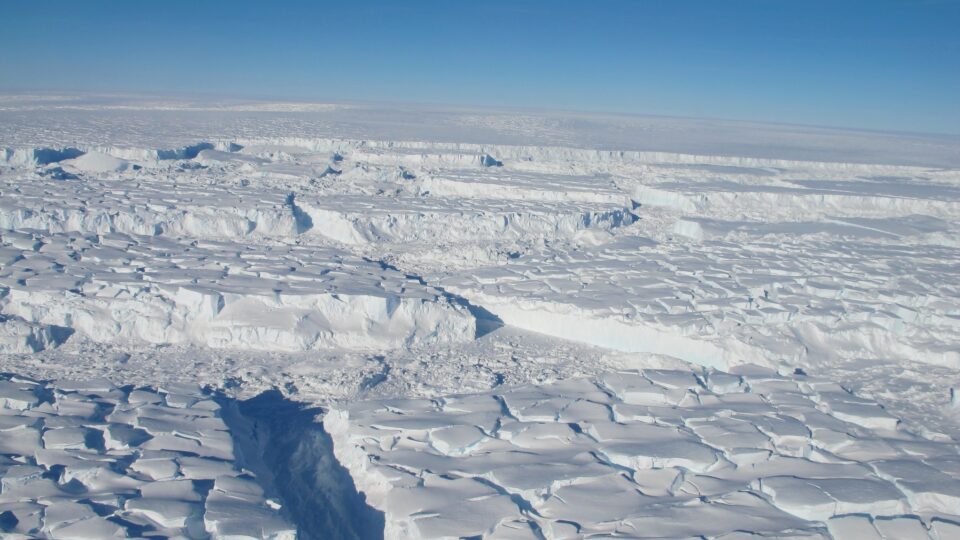
The Thwaites Glacier is melting

The Thwaites Glacier in Antarctica is the widest glacier in the world. It is about 80 miles across and in places extends to a depth of about 2,600 to 3,900 feet.  The glacier is roughly the size of Florida, and it currently contributes 4% of annual global sea level rise as it continues to retreat from a warming ocean.

The International Thwaites Glacier Collaboration is a team of nearly 100 scientists dedicated to studying the glacier.  According to the scientists, Thwaites has doubled its outflow speed within the last 30 years.  The glacier in its entirety holds enough water to raise global sea levels by over two feet, which would be catastrophic.

A third of the glacier flows more slowly than the rest because it is braced by a floating ice shelf that is held in place by an underwater mountain.  The concern is that the brace of ice slowing the glacier may not last for long.

Beneath the surface, warmer ocean water is attacking the glacier from all angles.  The water is melting the ice directly beneath the glacier causing it to lose its grip on the underwater mountain.  Massive fractures have formed and are growing.

Warm water is also a threat for what is called the grounding zone, which is the area where the glacier lifts off the seabed. There are many possible scenarios under which there could be a major ice loss from the glacier.  It is unclear how quickly it could occur.  It might take decades, or it could be centuries.  The threat is large enough and real enough that continued observation and research is essential.

**********

Web Links

The Threat from Thwaites: The Retreat of Antarctica’s Riskiest Glacier

Photo, posted October 16, 2012, courtesy of J. Yungel / NASA Ice via Flickr.

Earth Wise is a production of WAMC Northeast Public Radio.

Primary Sidebar

Recent Episodes

  • An uninsurable future
  • Clean energy and jobs
  • Insect declines in remote regions
  • Fossil fuel producing nations ignoring climate goals
  • Trouble for clownfishes

WAMC Northeast Public Radio

WAMC/Northeast Public Radio is a regional public radio network serving parts of seven northeastern states (more...)

Copyright © 2025 ·