• Skip to primary navigation
  • Skip to main content
  • Skip to primary sidebar

Earth Wise

A look at our changing environment.

  • Home
  • About Earth Wise
  • Where to Listen
  • All Articles
  • Show Search
Hide Search
You are here: Home / Archives for varroa mites

varroa mites

More trouble for bees

August 12, 2025 By EarthWise Leave a Comment

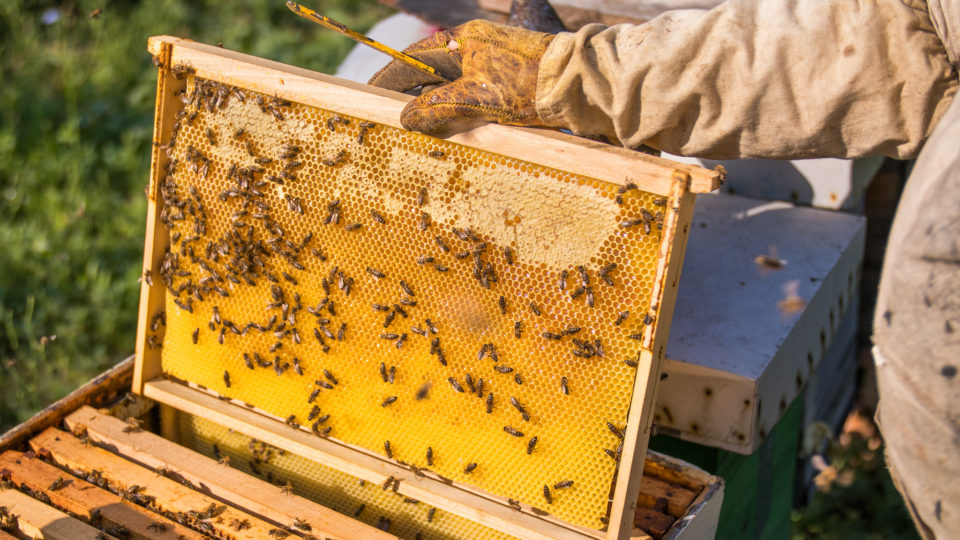
Honeybees are a critical resource for American agriculture.  The western honeybee, Apis mellifera, pollinates more than 130 types of nuts, fruits, and vegetables, adding up to $15 billion worth of crops every year.  Honeybee health has been harmed by a combination of factors:  weather extremes, habitat loss, pesticides, and disease.  One of the biggest problems has been a parasite called varroa destructor, which is a Southeast Asian mite that first entered the United States in the 1980s.  The mites spread viruses to the bees.

The past year has been a particularly bad one for the bees.  Nearly 56% of managed honeybee colonies died off in the past year, the worst rate since annual reporting began in 2011. 

Even while American beekeepers seek solutions to the varroa problem, a potentially worse threat is on the horizon.  Another Southeast Asian mite, tropilaelaps, has been making its way across Asia and into Europe. If these mites arrive in North America, the results would be disastrous, wreaking havoc on honeybees and ravaging the nation’s food supply.

Western honeybees are the only honeybee species that is not native to Southeast Asia.  As the cradle of development of the bees, Southeast Asia has given rise to a bounty of parasites and viruses that are dependent upon them.  In turn, bees native to that region have had time to evolve defenses against these pathogens.  Western honeybees have not.

Beekeepers and authorities are taking measures to delay or prevent the arrival of tropilaelaps mites.  The stakes are very high.

**********

Web Links

After Devastating Winter Losses, Another Threat Looms for U.S. Beekeepers

Photo, posted April 14, 2013, courtesy of Paul Rollings via Flickr.

Earth Wise is a production of WAMC Northeast Public Radio
Protecting Bees From Pesticides | Earth Wise

July 15, 2021 By EarthWise Leave a Comment

A new technology that can protect bees from pesticides

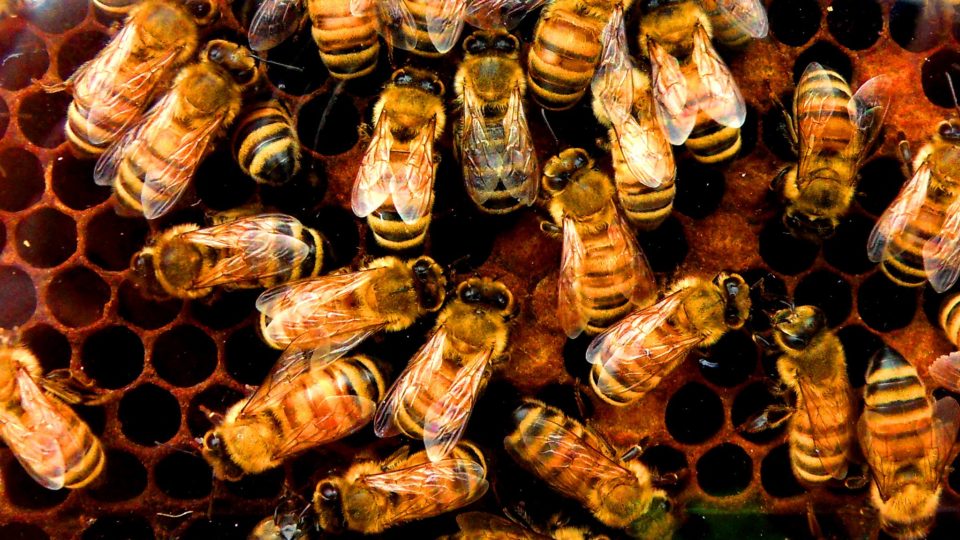
Studies have shown that the wax and pollen in 98% of beehives in the U.S. are contaminated with an average of six pesticides.  These substances lower bees’ immunity to devastating varroa mites and other pathogens.  By some estimates, pesticides cause beekeepers to lose about a third of their hives every year on average.

Researchers at Cornell University have developed a new technology that effectively protects bees from insecticides.  The insecticide antidote delivery method is now the basis of a new company called Beemunity.

The Cornell researchers developed a uniform pollen-sized microparticle filled with enzymes that detoxify organophosphate insecticides before they are absorbed and can harm bees.  Organophosphate insecticides account for about a third of the insecticides on the market.  The microparticles have a protective casing that allows the enzymes to move past the bees’ crop (basically the stomach), which is acidic and would otherwise break them down.  The safeguarded enzymes then enter the midgut, where digestion occurs and where toxins and nutrients are absorbed.  There the enzymes act to break down and detoxify the organophosphate insecticides.

In experimental tests, bees that were fed the enzyme-filled microparticles had a 100% survival rate after exposure to the insecticide malathion.  Unprotected control bees died within days.

The Cornell work appears to represent a low-cost, scalable solution to the insecticide toxicity issue and may help to protect essential pollinators.

**********

Web Links

Pollen-sized technology protects bees from deadly insecticides

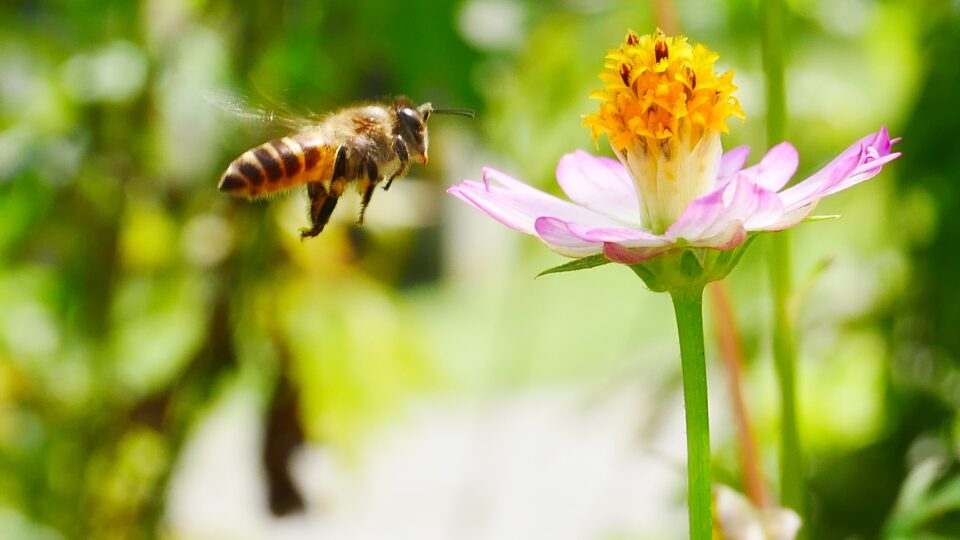
Photo, posted January 30, 2020, courtesy of George Tan via Flick.

Earth Wise is a production of WAMC Northeast Public Radio.

Falling Bee Populations

September 9, 2019 By EarthWise Leave a Comment

For many years, scientists have been sounding the alarm on the global struggle of pollinators.  A reported 40% of invertebrate pollinator species, including bees and butterflies, are facing extinction. And since as much as three-quarters of the world’s food crops depend on pollination, the decline of these pollinators poses a major threat to global food security.

Pollinators aid in the production of all sorts of crops, including coffee, cacao, cotton, apples, and almonds – to name a few.  The global value of crops requiring pollination ranges from $235-$577 billion annually.

Honey bees are among the struggling pollinators.  Over the past 15 years, bee colonies have been disappearing at an alarming rate in what is known as the “colony collapse disorder.”  Some regions have seen losses of up to 90%. 

In the United States, managed honey bee populations declined by nearly 40% over this past winter, the largest such winter decline since surveying began in 2006.

In recent months, mass honey bee declines have also been reported in Russia, according to the BBC.  Russia, which produces a whopping 110,000 tons of honey annually, expects that figure to drop by as much as 20%.  The widespread bee decline is likely to not only push up honey prices, but the prices of other popular foods as well.  Many staple food crops in Russia, including sunflowers, buckwheat, and fruit trees, rely on bees for pollination.

Experts have blamed the bee decline crisis on a combination of factors, including pesticides (most notably neonicotinoids), varroa mites, and climate change.   

Bees play a vital role in food production, and their continued decline will have devastating consequences. 

**********

Web Links

Russia alarmed by large fall in bee populations

Photo, posted July 28, 2019, courtesy of Ivan Radic via Flickr.

Earth Wise is a production of WAMC Northeast Public Radio.

Another Bad Year For Bees

August 6, 2019 By EarthWise Leave a Comment

The latest annual nationwide survey of beekeepers in the US revealed that honeybees are still dying off at an alarming rate.  According to the survey, beekeepers across the country lost 40.7% of their honey bee colonies from April 2018 to April 2019. 

This annual loss represents a slight increase over the average annual loss of 38.7%.  Of greater concern is that winter losses of 37.7% were the highest reported since these annual surveys began 13 years ago and are almost 9% higher than the survey average.

These results are very troubling considering that the elevated losses are continuing even after a decade of intense work trying to understand and reduce colony loss.  Evidently, there has not been much progress.

The number one concern among beekeepers is varroa mites, which are lethal parasites that can readily spread from colony to colony.  These mites have been decimating bee colonies for years.  Products developed to remove mites seem to be getting less and less effective.

But mites are not the only problem for bees.  Land use changes have resulted in reduced availability of pollen sources for bees.  Add to that pesticide exposures, environmental factors, and even problems with beekeeping practices.   In addition, extreme weather conditions such as wildfires and floods are only adding to the problems facing bees.

The tools that used to work for beekeepers seem to be failing and they are already stretched to their limits trying to keep their bees alive. Honey bees pollinate $15 billion worth of food crops in the United States each year. The problems facing bees are a problem for all of us.

**********

Web Links

U.S. Beekeepers Suffered Higher than Average Colony Loss Last Year, with Winter Losses the Highest Recorded, According to UMD-Led Annual Survey

Photo, posted June 3, 2009, courtesy of Jennifer C via Flickr.

Earth Wise is a production of WAMC Northeast Public Radio.

Primary Sidebar

Recent Episodes

  • An uninsurable future
  • Clean energy and jobs
  • Insect declines in remote regions
  • Fossil fuel producing nations ignoring climate goals
  • Trouble for clownfishes

WAMC Northeast Public Radio

WAMC/Northeast Public Radio is a regional public radio network serving parts of seven northeastern states (more...)

Copyright © 2026 ·