• Skip to primary navigation
  • Skip to main content
  • Skip to primary sidebar

Earth Wise

A look at our changing environment.

  • Home
  • About Earth Wise
  • Where to Listen
  • All Articles
  • Show Search
Hide Search
You are here: Home / Archives for use

use

Recycling solar panels

September 2, 2025 By EarthWise Leave a Comment

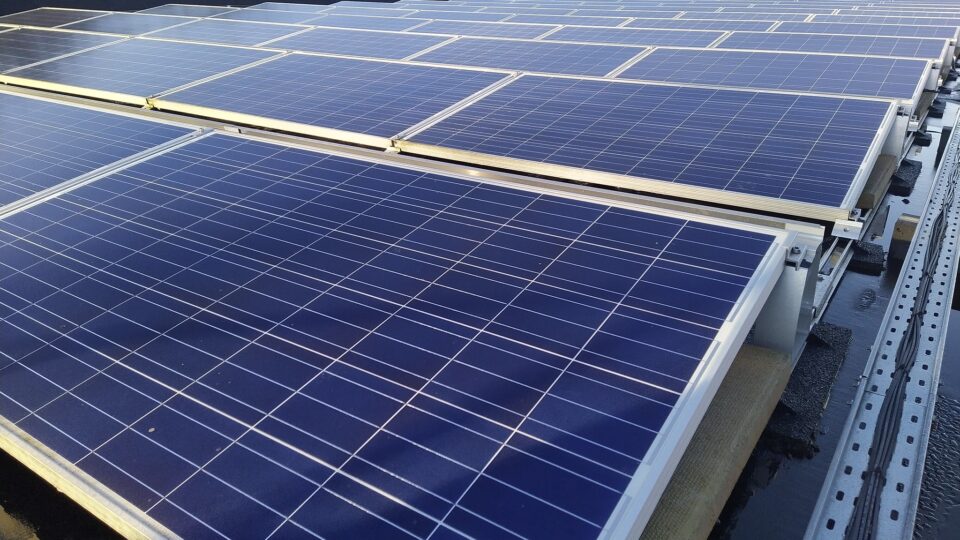
As the use of solar continues to grow, recycling old solar panels presents a new challenge

The use of solar energy has been growing by leaps and bounds in recent years. It is the fastest growing source of energy in the U.S.   Solar panels have a useful life of about 25 to 30 years and there are growing numbers that have been around that long.  They contain valuable materials, including silver, copper, and aluminum, as well as some hazardous materials, so just committing them to landfills is a bad idea from many perspectives.

Recycling solar panels is a relatively new but increasingly important business.  At the present time, roughly 90% of panels that have lost their efficiency due to age or that are defective end up in landfills because that is much cheaper than recycling them.  The best option is to reuse them where their reduced efficiency is acceptable.  This includes in developing nations or in other places that are able to make use of the lower power in exchange for lower installation cost.

Estimates are that the area covered by solar panels in the U.S. that are due to retire by 2030 would cover about 3,000 football fields.   The amount of potential waste contained in all of those panels is quite substantial.

There are new companies dedicated to solar panel recycling such as one called SolarCycle that are trying to change this situation.  It is much more expensive to have SolarCycle take away solar panels than to send them to landfills, but it is difficult to find landfills that accept panels and many clients want to minimize the environmental impact of their old panels.

Only 10% of retired solar panels are currently recycled. That that is likely to change as economics and regulations continue to evolve.

**********

Web Links

As Millions of Solar Panels Age Out, Recyclers Hope to Cash In

Photo, posted November 23, 2024, courtesy of Mussi Katz via Flickr.

Earth Wise is a production of WAMC Northeast Public Radio

Sun powered carbon capture

June 30, 2025 By EarthWise Leave a Comment

Using solar power to help capture carbon

As the world struggles to implement technologies and find the political will to reduce carbon emissions, there are also ongoing efforts to find ways to capture carbon from emitting sources and from the atmosphere itself.  After capturing carbon dioxide, there is then the need to safely store it or make use of it.

Current methods for capturing and then releasing carbon dioxide are expensive and energy intensive.  In fact, some methods even require the use of fossil fuels.  Recently, researchers at Cornell University have developed a method for capturing carbon dioxide that is powered by sunlight.

The Cornell method mimics the mechanisms that plants use to store carbon which involves using sunlight to make a reactive enol molecule that grabs carbon dioxide.  

Existing chemical-based carbon capture techniques make use of amines, which are organic ammonia-derived compounds that react selectively with carbon dioxide.  But amines are not stable in the presence of oxygen and don’t last, which necessitates the energy-intensive production of more and more amines.

The Cornell method uses the same method that the plant enzyme RuBisCo uses in photosynthesis.  It is based on an inexpensive sorbent material that is capable of a high rate of carbon capture.

The researchers tested the system using flue samples from Cornell’s Combined Heat and Power Building, an on-campus power plant that burns natural gas.  The system was successful in isolating carbon dioxide.

Ultimately, they would like to stage the reaction on what looks like a solar panel, but one that would capture carbon instead of generating electricity.

**********

Web Links

In a first, system uses sunlight to power carbon capture

Photo, posted August 8, 2015, courtesy of Holly Victoria Norval via Flickr.

Earth Wise is a production of WAMC Northeast Public Radio

Recycling lithium-ion batteries

March 28, 2025 By EarthWise Leave a Comment

Lithium-ion batteries are used to power computers and cellphones and, increasingly, vehicles.  The batteries contain lithium as well as various other valuable metals such as nickel, cobalt, copper, and manganese.  Like other batteries, lithium-ion batteries have a finite lifetime before they can no longer perform their intended function.

Recycling lithium-ion batteries to recover their critical metals is an alternative to mining those metals.  A recent study by Stanford University analyzed the environmental impact of obtaining those metals using lithium-ion battery recycling compared with mining.  They found that the recycling process is associated with less than half of the greenhouse gas emissions of conventional mining.  The process uses about one-fourth of the water and energy of mining new metals.  North America’s largest industrial-scale lithium-ion battery recycling facility is Redwood Materials, located in Nevada, which uses a clean energy mix that includes hydropower, geothermal, and solar power.

These calculated advantages are associated with recycling batteries that have been in use.  The advantages are even greater for recycling scrap:  defective material from battery manufacturers.

The advantages of recycling are dependent on the sources of electricity at the recycling plant and the availability of fresh water. 

At present, the U.S. recycles about half of its available lithium-ion batteries.  By comparison, 99% of lead-acid batteries (like those found in cars and trucks) have been recycled for decades.  As the supply of used lithium-ion batteries continues to increase, it is important for the availability of industrial-scale battery recycling to keep pace. 

**********

Web Links

Recycling lithium-ion batteries delivers significant environmental benefits

Photo, posted May 7, 2020, courtesy of Mark Vletter via Flickr.

Earth Wise is a production of WAMC Northeast Public Radio
Capturing hot carbon dioxide

December 13, 2024 By EarthWise Leave a Comment

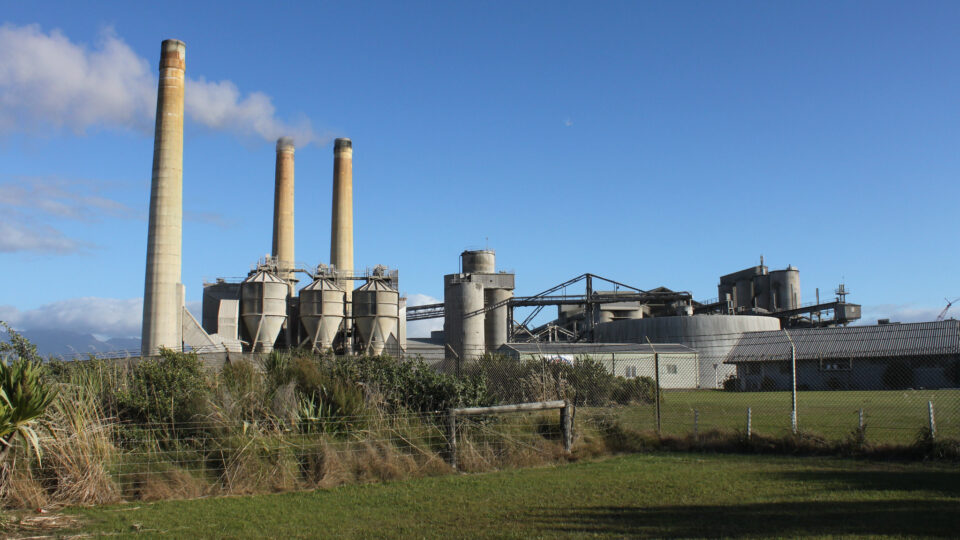
Researchers are developing new methods to capture hot carbon dioxide

Decarbonizing industries like steel and cement is a difficult challenge.  Both involve emitting large amounts of carbon dioxide both from burning fossil fuels and from intrinsic chemical reactions taking place.  A potential solution is to capture the carbon dioxide emissions and either use them or store them away.  But this sort of carbon capture is not easy and can be quite expensive.

The most common method for capturing carbon dioxide emissions from industrial plants uses chemicals called liquid amines which absorb the gas.  But the chemical reaction by which this occurs only works well at temperatures between 100 and 140 degrees Fahrenheit.  Cement manufacturing and steelmaking plants produce exhaust that exceeds 400 degrees and other industrial processes produce exhaust as hot as 930 degrees.

Costly infrastructure is necessary to cool down these exhaust streams so that amine-based carbon capture technology can work. 

Chemists at the University of California, Berkeley, have developed a porous material – a type of metal-organic framework – that can act like a sponge to capture CO2 at temperatures close to those of many industrial exhaust streams.  The molecular metal hydride structures have demonstrated rapid, reversible, high-capacity capture of carbon dioxide that can be accomplished at high temperatures.

Removing carbon dioxide from industrial and power plant emissions is a key strategy for reducing greenhouse gases that are warming the Earth and altering the global climate.  The captured CO2 can be used to produce value-added chemicals or can be stored underground or chemically-reacted into stable substances.

**********

Web Links

Breakthrough in capturing ‘hot’ CO2 from industrial exhaust

Photo, posted March 3, 2010, courtesy of Eli Duke via Flickr.

Earth Wise is a production of WAMC Northeast Public Radio

Greenhouses and the environment

July 25, 2024 By EarthWise Leave a Comment

The use of greenhouses around the world has been growing dramatically.  A new satellite mapping exercise estimated the total land area covered with permanent greenhouses at 3.2 million acres, which is an area the size of Connecticut.  More than half of this is in China, where the growth of greenhouses has been driven by the rapid urbanization of the country and by a more prosperous population increasingly consuming produce like tomatoes, cucumbers, peppers, and eggplants.

The intensive agricultural methods employed within greenhouses can be harmful to local environments because of overtaxing water supplies and by polluting rivers and soils with nutrients, pesticides, and plastic waste.  But the effects of vast areas of plastic coverings on local temperatures can be even more dramatic, and often beneficial.

There are so many plastic and glass roofs in many areas that they are reflecting sufficient amounts of solar radiation to cool local temperatures.  Greenhouse roofs increase the albedo – the reflectivity – of the land surface typically by a tenth.

All these greenhouses are just the tip of the albedo iceberg.  Many farms now temporarily cover crops with reflective plastic sheets.  If these coverings are included in the satellite survey, the total reflective area would be about ten times greater – roughly the size of New York State.

A study in Almeria, on the Mediterranean coast of Spain, which grows about 3 million tons of fruit and vegetables annually, determined the cooling effects of greenhouses.  Weather stations amid the greenhouses showed an average cooling of 1.3 degrees Fahrenheit compared with the surrounding area.

Greenhouses are an accidental and benign form of climate engineering. The cooling provided by greenhouses is similar to the effect of white roofs in urban areas. 

**********

Web Links

Could the Global Boom in Greenhouses Help Cool the Planet?

Photo, posted September 6, 2017, courtesy of Lance Cheung / USDA via Flickr.

Earth Wise is a production of WAMC Northeast Public Radio

California renewable energy

June 12, 2024 By EarthWise Leave a Comment

Renewable energy in California exceeding 100% of energy demand

California has aggressively pursued the use of renewable energy, particularly solar and wind power.  Last year, renewables supplied 54% of the state’s electricity needs.  This year, California has been achieving some remarkable milestones with its renewable energy.

As of May 26th, California had produced more than 100% of its electricity demand with wind, solar, and hydropower for parts of 51 straight days and 75 out of 81 days.  On May 25th, California’s grid ran entirely on renewable energy for 10.1 straight hours and renewables provided 83% of the state’s electricity for the entire 24-hour period.  California uses more electricity than any other state apart than Texas, which uses more than half its energy for operating refineries and petrochemical plants.

Excess power in California is either exported to other states or is used to charge up the state’s growing arrays of energy storage batteries.  California has the largest grid-connected battery storage facility in the world, located in Kern County.  The facility can store nearly 3,300 megawatt-hours of energy.

The ability to produce more power than the state needs occurs during the day when the sun is shining, and when many people are not at home.  At night, demand goes up and solar power is not available.  But as the quantity of energy storage available continues to grow along with additional solar installations, California will ultimately be able to wean off of the gas-fueled power plants it predominantly uses at night.

According to some experts, California may operate entirely on renewables and battery storage as soon as 2035. 

**********

Web Links

California exceeds 100% of energy demand with renewables over a record 30 days

Photo, posted January 11, 2016, courtesy of Jared Eberhardt via Flickr.

Earth Wise is a production of WAMC Northeast Public Radio
The end of coal in New England

May 3, 2024 By EarthWise Leave a Comment

Photo, posted October 14, 2015, courtesy of Eversource NH via Flickr.

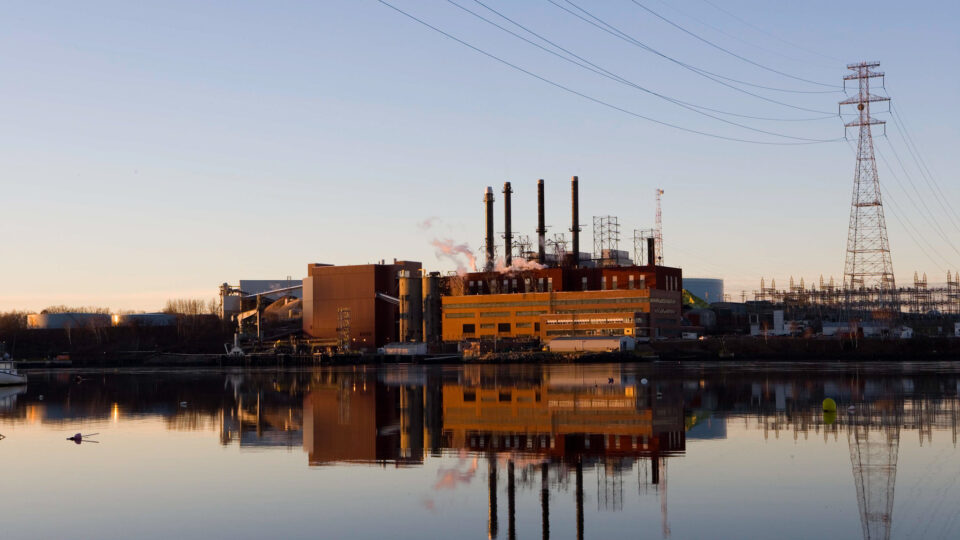
The last two coal-fired power plants in New England are scheduled to close by 2025 and 2028.  The New Hampshire-based plants are operated by Granite Shore Power.  The Schiller Station plant began operations in 1949 and the Merrimack Station was built in the 1960s.

Granite Shore Power has come to an agreement with the Environmental Protection Agency as part of a settlement of lawsuits by the Conservation Law Foundation and the Sierra Club.  The two power plants were the subject of a five-year legal battle waged by clean energy advocates

Granite Shore Power intends to turn both of the sites into renewable energy parks.  The plants will be converted into solar farms and battery units that can be used to store electricity generated by offshore wind turbines along the Atlantic Coast.  Granite Shore Power bought the two power plants in 2018 with the intention of transitioning the coal generation systems into less polluting operations.

The battery storage system at the Schiller Station site in Portsmouth will be named the Jacona II in honor of a self-propelled floating power barge that brought power to parts of Maine and New Hampshire between 1919 and 1930.

Coal use has dropped dramatically in the United States in recent years as natural gas and renewable sources like wind and solar have become less expensive.  As of last year, coal only produced about 17% of American electricity and its use continues to decline. 

Coal is the dirtiest fossil fuel.  In 2021, when it generated less than a quarter of the electricity produced in the US, it accounted for 59% of carbon emissions from electricity generation.

**********

Web Links

The Last Coal-Fired Power Plants in New England Are to Close

Photo, posted October 14, 2015, courtesy of Eversource NH via Flickr.

Earth Wise is a production of WAMC Northeast Public Radio

The world’s largest energy plant

April 19, 2024 By EarthWise Leave a Comment

The largest energy plant in the world is being built in India.  In an area of barren desert in western India near the Pakistani border, Adani Green Energy Limited (or AGEL) is building a sprawling solar and wind power plant that will cover more than 200 square miles.  It will be five times the size of Paris and will produce enough electricity to power 16 million homes.

The Khavda Renewable Energy Park will cost about $20 billion to build and will take about five years to complete.

The success of the plant is critical to India’s efforts to reduce pollution and meet its climate goals.  India is the world’s third-largest energy consuming country.  Even though its energy use and emissions per person are less than half the global average, its enormous population offsets that advantage and its expanding economy and ongoing modernization are driving rapid growth of energy demand.  Energy demand has doubled since 2000 and 80% is still being met by coal, oil, and solid biomass.  India uses massive amounts of coal, and, in fact, the Adani Group of companies is India’s biggest coal importer and a leading miner of the fossil fuel.   Adani represents two sides of the coin.

More than 600 million people in India will be coming into middle and upper income over the next 10 to 15 years and they will have increasing energy needs.  India is in a race to develop clean energy capacity.  If it simply follows the torturous path that China, Europe, and US all have done, the prospects for the global climate are bleak.

Building the world’s largest clean energy plant is just a first small step in the necessary direction.

**********

Web Links

A coal billionaire is building the world’s biggest clean energy plant and it’s five times the size of Paris

Photo, posted February 25, 2010, courtesy of Bhavin Toprani via Flickr.

Earth Wise is a production of WAMC Northeast Public Radio
Iceland power

March 15, 2024 By EarthWise Leave a Comment

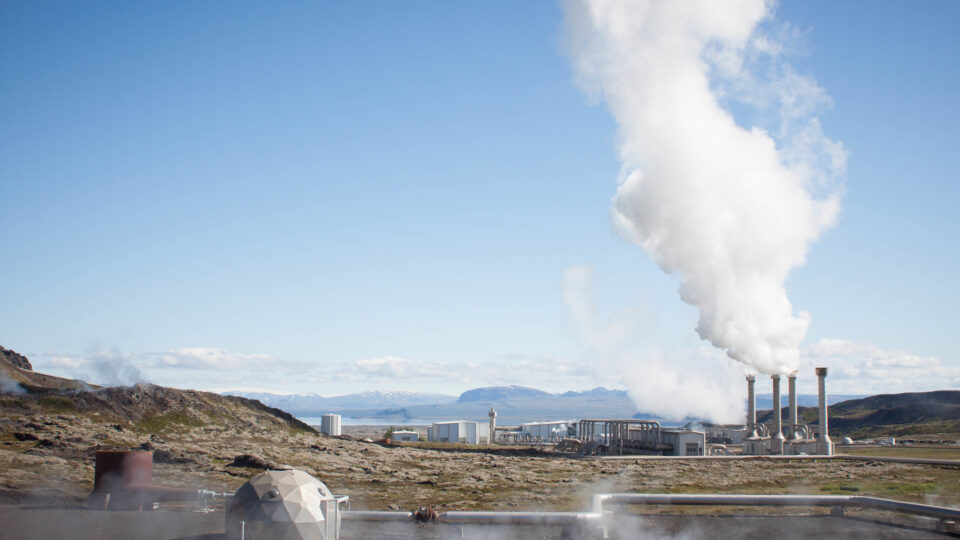
Iceland burns very little fossil fuel to power its economy and heat its homes.  About 85% of its energy comes from geothermal power and hydropower.  Its unique geology provides it with the highest percentage of renewable energy in the world.  The fossil fuel that Iceland does burn is primarily used to power cars and trucks as well as boats in its fishing fleet.  And Iceland is rapidly embracing the use of electric vehicles.

Iceland can make far more electricity than its 373,000 people can use.  The majority of its electricity is essentially exported as bars of aluminum.  Iceland is one of the world’s largest refiners of aluminum.  The aluminum ore comes from other countries but gets shipped to Iceland where electricity is cheap.  Refining aluminum is so energy-intensive that some say that aluminum is basically just pure electricity in solid metal form.

Electricity-rich Iceland is finding other ways to make use of its resources.  There is a proposed project called Icelink, which is an electricity interconnector between Iceland and Great Britain.  The high-voltage direct current link would run between 620 and 750 miles and would be the longest sub-sea power interconnector in the world.  It is controversial in Iceland and it may or may not happen.

Another technology that is establishing an early foothold in Iceland is carbon capture.  An Icelandic company called Carbix is doing leading work on taking captured carbon dioxide and sequestering it underground.  Capturing and storing carbon dioxide is energy-intensive and the promise of cheap, clean geothermal power makes Iceland an attractive place to do it.

**********

Web Links

Iceland Is Living in our Future

Photo, posted July 2, 2012, courtesy of  Emily Qualey / PopTech via Flickr.

Earth Wise is a production of WAMC Northeast Public Radio

AI’s Environmental Footprint

March 13, 2024 By EarthWise Leave a Comment

AI is leaving a massive environmental footprint

Artificial intelligence is everywhere these days.  Some say it is the biggest development since the discovery of fire.  There is a lot of hype regarding AI, and it will be a while before the hype is sorted out from the reality.  But one thing that is certain is that AI is resource-intensive and has a large environmental footprint.

AI use directly produces carbon emissions from its consumption of non-renewable electricity and is also responsible for the consumption of billions of gallons of fresh water.

Various forms of AI run on many types of devices, but the kind of AI we hear about the most – such as ChatGPT – requires specialized computer equipment that runs in large cloud data centers.  There are roughly 10,000 such centers worldwide and more are under construction.  Estimates are that electricity consumption from data centers will double between 2022 and 2026 to a total of 1,000 terawatts, roughly as much electricity as all of Japan uses.

These estimates include all data center activities, not just AI.  Most operators of data centers don’t reveal what percentage of their energy use comes from AI.  One exception is Google, which says machine learning accounts for about 15% of its data center energy use.

Data centers also consume a great deal of water to cool delicate electronics.  In 2022, Google’s data centers consumed about 5 billion gallons of fresh water.

AI has the potential to improve the efficiency of systems, improve climate models, and perhaps help develop new ways to help reduce humanity’s environmental footprint.  But at the moment, it represents an increasing burden on the environment that cannot just be ignored.

**********

Web Links

As Use of A.I. Soars, So Does the Energy and Water It Requires

Photo, posted January 23, 2023, courtesy of Aileen Devlin / Jefferson Lab via Flickr.

Earth Wise is a production of WAMC Northeast Public Radio

Solar forests

January 22, 2024 By EarthWise Leave a Comment

To plant trees or install solar panels is the question

Forests are one of the most iconic symbols of the power and diversity of nature but beyond that, their thick vegetation is crucial to the stability and balance of the Earth’s climate.  This is because the photosynthesis that powers the growth of plants removes carbon dioxide from the air.  Cutting down forests – especially the evergreen forests of the tropics – has played a significant role in the increasing climate crisis.  For this reason, many environmental initiatives focus on restoring destroyed forests and planting new trees.

But the truth is, even if we were to cover the entire surface of the planet with trees, there would still not be enough photosynthesis going on to absorb the huge surplus of carbon dioxide that people have been pumping into the atmosphere for the past 150 years.

A study by the Weizmann Institute of Science in Israel looked at the impact of erecting fields of dark covered solar panels – so-called solar forests – that would generate electricity, thereby replacing power stations that use fossil fuels.  But dark fields absorb heat which eventually returns to the atmosphere.

The question is:  what is the best use of a plot of land in terms of the effect on the climate?  Planting a forest or erecting fields of solar panels?

The answer depends on where the land is.  In arid environments, building solar farms is far more effective and practical than planting forests.  But in humid places, forests currently absorb close to a third of humanity’s annual carbon emissions. 

The study concludes that combining planting and rehabilitating forests in humid regions and erecting fields of solar panels in arid regions is the most effective strategy.

**********

Web Links

The Solar Forest

Photo, posted December 27, 2015, courtesy of Gerry Machen via Flickr.

Earth Wise is a production of WAMC Northeast Public Radio
Record high emissions

January 3, 2024 By EarthWise Leave a Comment

Record high emissions in 2023

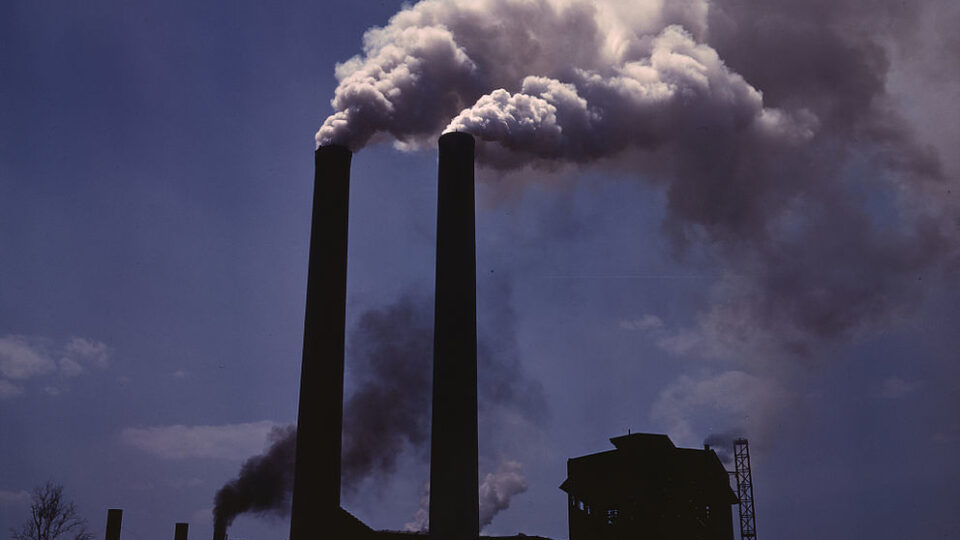
The world is adding solar and wind power to the grid.   We are driving more and more electric cars.  Countries are pledging to cut back fossil fuel use.  There are highly visible international conferences on the climate crisis.   But despite all of these things, global carbon emissions from fossil fuels have risen once again in 2023, reaching all-time record high levels of more than 40 billion tons, about 1.1% more than the previous year.

In some places, including Europe and the U.S., fossil fuel CO2 emissions are falling, but globally, they are still rising.  Emissions continued to increase in India and China.  Global action to cut fossil fuel use is not happening fast enough to prevent the increasingly dangerous effects of climate change.

Global CO2 emissions include both the contributions of fossil fuel use and the effects of land use change.  Adding the two together, in 2023 the total was about 45 billion tons, basically unchanged from last year. 

Adding insult to injury are the emissions from fires.  The extreme wildfire seasons in Canada, Australia, and other places have contributed CO2 emissions much larger than historical averages.

About half of all the carbon dioxide emitted on Earth is absorbed by carbon sinks on land and the oceans.  The other half remains in the atmosphere, where levels are now averaging 419 parts per million, 51% above pre-industrial levels.

Current efforts are simply not profound enough or widespread enough to put global emissions on a downward trajectory.  Some climate policies in some places are proving effective, but much more needs to be done.

**********

Web Links

Fossil CO2 emissions at record high in 2023

Photo, posted December 18, 2013, courtesy of Steve Nelson via Flickr.

Earth Wise is a production of WAMC Northeast Public Radio

Action on the toxic chemical from tires

December 13, 2023 By EarthWise Leave a Comment

Toxic chemicals from tire debris

Since the 1990s, populations of coho salmon in streams and urban creeks up and down the West Coast have been dying in large numbers.  Scientists at the University of Washington began studying the mysterious deaths and it took years to figure out what was going on.  They analyzed water samples from urban creeks and found that chemicals from vehicle tires were present.  By soaking tires in water, they found that more than 2,000 chemicals were present.  It took three years to narrow down the suspect list to one chemical:  a toxin called 6PPD-quinone, which is produced when the common tire preservative 6PPD mixes with oxygen.  It is that chemical that was responsible for the salmon die-off.

6PPD-quinone is toxic enough to quickly kill some fish.  Studies showed that concentrations of the chemical in stormwater were found to be lethal for coho salmon following exposures lasting only a few hours.

Despite the discovery, the tire industry has continued to use the chemical in its products.  The industry says 6PPD is an antioxidant and antiozonant that helps prevent degradation and cracking of tires in the environment and is essential for the performance and safety of vehicles.

Last year, California regulators directed the tire industry to seek out substitutes for 6PPD.  The U.S. Tire Manufacturers Association pledged to investigate possible safer alternatives to the chemical.

In November, spurred by a petition by West Coast tribes whose lifeways depend on coho salmon, the EPA said it will study the impact of 6PPD with an eye to potentially banning its use. 

**********

Web Links

After Salmon Deaths, EPA Takes Aim at Toxic Chemical Issuing from Car Tires

Photo, posted May 31, 2021, courtesy of Chris Yarzab via Flickr.

Earth Wise is a production of WAMC Northeast Public Radio

Hydrogen And The Methane Problem | Earth Wise

April 24, 2023 By EarthWise Leave a Comment

Theoretically, hydrogen could be the fuel of the future.  It is the most common element in the universe and its combustion produces no harmful emissions.  Most industrial hydrogen comes from a process called steam reforming that extracts it from natural gas – basically methane.  Carbon dioxide is a byproduct of the process.   But it is also possible to get hydrogen by breaking down water resulting only in oxygen as a byproduct.   There is a great deal of ongoing development of so-called green hydrogen.

New research from Princeton University and the National Oceanic and Atmospheric Administration has uncovered a potential problem associated with the use of hydrogen as a clean fuel. 

There is a molecule in the atmosphere called the hydroxyl radical.  It is known as “the detergent of the troposphere”.  It plays a critical role in eliminating greenhouse gases such as methane and ozone from the atmosphere.  It turns out that the hydroxyl radical also reacts with any hydrogen gas in the atmosphere and there is only so much hydroxyl to go around.  If large amounts of hydrogen were to enter the atmosphere, much of the hydroxyl radical would be used up reacting with it and there would be much less available to break down methane.  As a result, there would end up being more methane in the atmosphere, and methane is a powerful greenhouse gas.

The bottom line is that there would need to be proactive efforts to limit the amount of hydrogen getting into the atmosphere whether from producing it, transporting it, or anyplace else in the value chain.  Otherwise, the hydrogen economy would cancel out many of the climate benefits of eliminating fossil fuels.

**********

Web Links

Switching to hydrogen fuel could prolong the methane problem

Photo, posted June 12, 2021, courtesy of Clean Air Task Force via Flickr.

Earth Wise is a production of WAMC Northeast Public Radio
Solar Power At Night | Earth Wise

March 16, 2023 By EarthWise Leave a Comment

The use of solar power has grown tremendously in recent years as it has declined in price and become far more competitive with other forms of electricity generation.  Its fundamental drawback, of course, is that it only works when the sun is shining.  Solar panels don’t produce any power at night.  That is, until now, apparently.

A team of engineers at Stanford University have developed a new kind of solar cell that is capable of generating at least some electricity at night.  Published in the journal Applied Physics Letters, the research describes a device that can be a continuous renewable power source for both day and nighttime.

The device incorporates a thermoelectric generator that produces electricity from the small difference in temperature between the ambient air and the solar cell itself.  The amount of power produced is far less than the solar cell generates from sunlight, but the device can provide nighttime standby lighting and power in off-grid and mini-grid applications.

Mini-grid applications are independent electricity networks that are used for small populations that may be too isolated to be connected to the main power grid.  Nearly 600 million people in Africa currently live without access to electricity, primarily in rural areas.  A standalone solar system operating independently of any power grid can meet many electricity needs such as phone charging and lighting, but such systems may not be able to handle large electrical need such as powering machinery and agricultural equipment.  Mini-grids are larger installations that can provide power to a small rural community.

With innovations like the new Stanford device, a solar mini-grid may be able to keep running at some level even at night.

**********

Web Links

Solar panels that can generate electricity at night have been developed at Stanford

Photo, posted December 15, 2021, courtesy of Pete via Flickr.

Earth Wise is a production of WAMC Northeast Public Radio

Global Decline In Wildlife | Earth Wise

October 14, 2020 By EarthWise Leave a Comment

global wildlife declining rapidly

According to a new report released by the World Wildlife Fund, global populations of mammals, birds, amphibians, reptiles, and fish have declined by 68% in less than half a century. 

The report presents a comprehensive overview of the state of the natural world based on the tracking of almost 21,000 populations of more than 4,000 vertebrate species between 1970 and 2016. 

The report shows that the main cause of the dramatic decline in species populations on land is habitat loss and degradation, which includes deforestation driven by food production.  Additional factors include land-use change and the use and trade of wildlife.

Wildlife populations found in freshwater habitats have suffered a decline of 84%, which is the steepest decline in any biome.

Insect populations have declined rapidly in many places, but most of the information about insects comes from a small number of countries in the northern hemisphere.  There is very little information from large parts of the world, such as Africa, South America, and Asia, where land-use change and agricultural expansion are happening fast.  What happens to insects matters a lot to humanity.  Insects play central roles in the world’s ecosystems as waste processors, pollinators, predators, and prey. 

The report is clear evidence of the damage human activity is doing to the natural world.  Threats to the integrity of ecosystems endanger humans and all of nature.  This is especially apparent in the midst of a global pandemic.  It is now more important than ever to take coordinated global action to halt and reverse the loss of biodiversity and wildlife populations across the globe.

**********

Web Links

Living Planet Report reveals 68% decline in global wildlife populations since 1970

Photo, posted May 7, 2020, courtesy of Bernard Spragg via Flickr.

Earth Wise is a production of WAMC Northeast Public Radio.

Recycling Solar Panels | Earth Wise

October 1, 2020 By EarthWise Leave a Comment

Solar panels need to be recycled

It is inevitable that the things we make and use eventually outlive their useful lives and become waste that we have to deal with.  Solar panels, despite their impressively long lifetime, can’t escape this general principle.   As pioneering solar panels near the end of their 30-year electronic lives, they could well become the world’s next big wave of e-waste.

According to the International Renewable Energy Agency, nearly 90 million tons of solar panels will have reached their end of life by the year 2050, resulting in about 7 million tons of new solar e-waste per year.

Solar photovoltaic deployment has grown at unprecedented rates in recent years.  The total global installed capacity is about 600 GW today; projections are that there will be 1,600 GW by 2030 and 4,500 GW by 2050.

Solar panels contain valuable materials, including silver and high-purity silicon.  But current recycling procedures are not cost-effective.   Only about 10% of panels are currently recycled in the U.S.   The rest go to landfills or are shipped overseas to become another country’s problem.

Before solar waste becomes a major problem, the industry needs to better address the issue.  Strategies include improving the design of panels to align with recycling capabilities as well as developing new recycling methods that can more efficiently extract and purify the valuable materials in the panels.  Industry researchers are also looking into ways to repair and resell panels that are still in good condition and to repurpose old panels for less demanding functions like e-bike charging stations and housing complexes.

Like most things, solar panels do fail over time and with a rapidly growing number of them in the world, we need to figure out how to avoid them adding to the world’s problems.

**********

Web Links

Solar Panels Are Starting to Die. Will We be Able to Recycle the E-Waste?

Photo, posted January 6, 2006, courtesy of Flickr.

Earth Wise is a production of WAMC Northeast Public Radio.

Making Use Of Invasive Seaweed | Earth Wise

June 26, 2020 By EarthWise Leave a Comment

In recent years, millions of tons of brown Sargassum seaweed have formed gigantic blooms stretching all the way across the Atlantic Ocean from West Africa to the Gulf of Mexico.  The seaweed has become a problem for shorelines in the Caribbean, the Gulf of Mexico, and the east coast of Florida.  The massive increase in seaweed populations is related to changes in ocean chemistry resulting from nutrients from fertilizer use entering the water as well as from changes to the climate affecting ocean currents and temperatures.  The seaweed is harming the tourism industry as well as fisheries and ocean ecosystems.

Cleaning up the seaweed that washes ashore is labor-intensive and therefore expensive.  A research team led by two British universities has developed a cheap and simple way to pre-process seaweed to facilitate making it into bulk chemicals and biofuels.  With the new process, cleaning up the seaweed can be both economically and environmentally viable.

Previous techniques for processing seaweed generally required removing it from the saltwater, washing it in fresh water, and drying it – all of which add significant costs.  The new technique makes use of catalysts to release sugars from untreated seaweed that feed a yeast to produce a palm oil substitute.  At the same time, the process creates heat and pressure, turning the residual materials into a bio-oil that can be processed further into fuels, and a high-quality, low-cost fertilizer.

Apart from getting economic value out of the seaweed that is collected, any plastic collected alongside the seaweed can be converted to useful materials as well. 

It appears that the seaweed scourge is here to stay, so finding an economically viable way to deal with it is a welcome development.

**********

Web Links

Solve invasive seaweed problem by turning it into biofuels and fertilisers

Photo, posted August 10, 2015, courtesy of Flickr.

Earth Wise is a production of WAMC Northeast Public Radio.

Primary Sidebar

Recent Episodes

  • An uninsurable future
  • Clean energy and jobs
  • Insect declines in remote regions
  • Fossil fuel producing nations ignoring climate goals
  • Trouble for clownfishes

WAMC Northeast Public Radio

WAMC/Northeast Public Radio is a regional public radio network serving parts of seven northeastern states (more...)

Copyright © 2026 ·